Abrasion: Causes, Types, Symptoms & Treatment
An abrasion is a minor skin injury caused by friction that removes the top skin layer. It leads to pain, redness, and slight bleeding. Types include linear, grazed, and patterned. Most heal with cleaning and care, but improper treatment may cause infection, requiring medical attention.

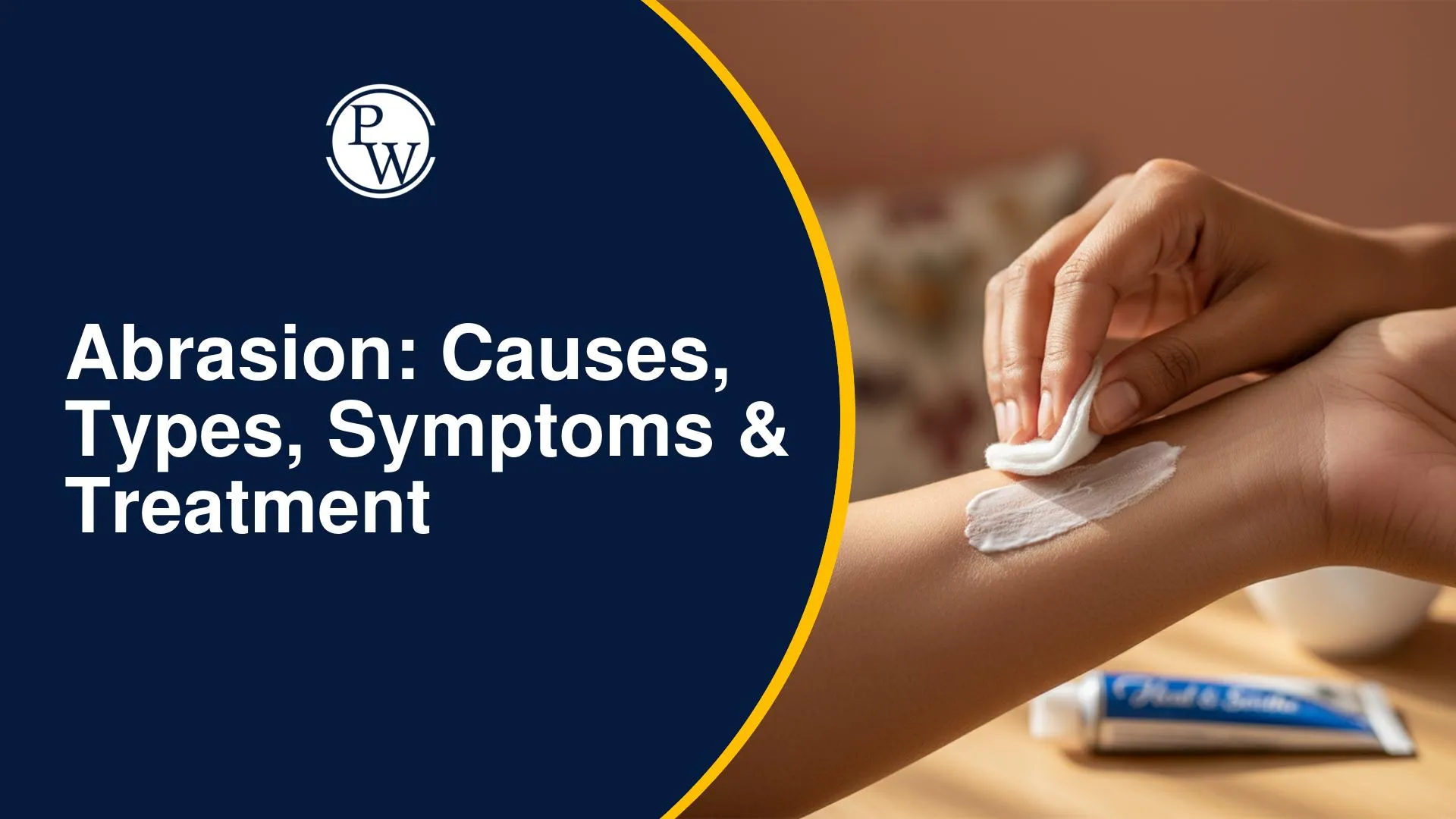
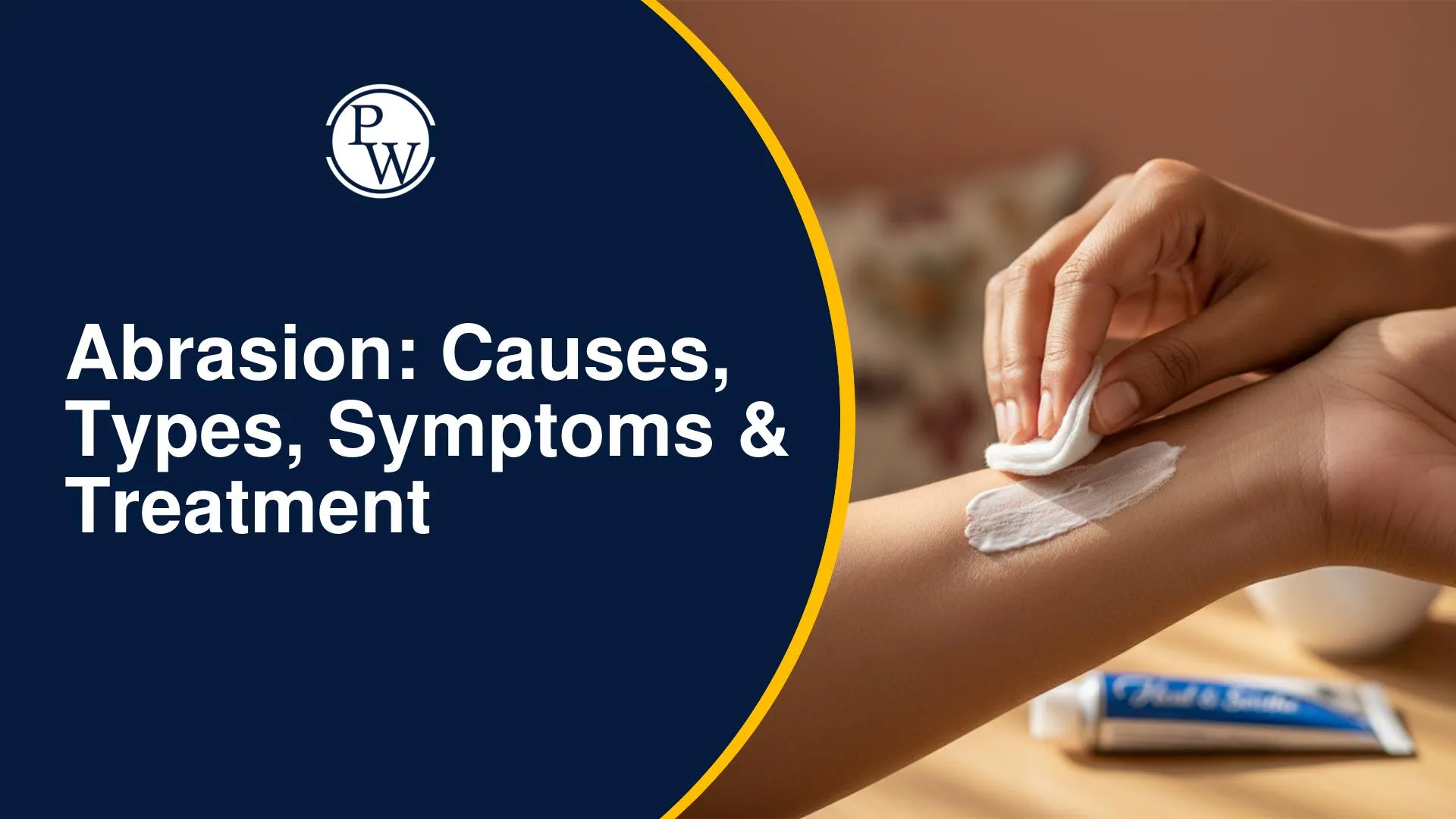
An Abrasion is a superficial skin injury caused by friction when the skin rubs against a rough surface. It usually leads to mild pain, slight bleeding, and redness. Common types include linear (scratch), grazed (scraped skin), and patterned abrasions, depending on how the injury occurs.
Most abrasions can be treated at home with proper cleaning, ointment, and bandaging. Maintaining hygiene helps prevent infection, which is the most common complication. However, deeper or severe wounds may require medical attention.
Taking simple precautions like wearing protective gear and avoiding rough surfaces can help prevent abrasions.
Abrasion
An abrasion is a superficial wound. It happens when the outermost layers of your skin rub off. This friction can result from various accidental contacts. Common abrasions might bleed a little and cause some pain. They rarely go deeper than the top skin layers. Knowing about abrasions is key to quick and effective self-care or seeking medical advice.
Types Of Abrasions
Abrasions appear in different forms based on how they occur. Recognising these types helps in understanding the injury better.
-
Linear: This is often called a scratch. It forms a line-like pattern on the skin. A sharp object, such as a thorn, often causes it.
-
Grazed: A grazed abrasion happens when skin brushes against a rough surface. This type can cover a larger area. A common example is a scraped knee from falling.
-
Patterned: This abrasion takes the shape of the object that caused it. It results from forceful contact or rubbing. Cat scratches show the pattern of the animal's claws.
Causes Of Abrasions
Friction is the main reason behind an abrasion. It occurs when a hard, uneven, or rough surface touches your skin. Many everyday events can lead to this injury.
-
Falling onto rough ground like stone or gravel.
-
Sliding in sports, such as baseball.
-
Road rash from falling off a moving vehicle.
-
Carpet burns from rubbing against a rug.
Symptoms Of Abrasions
Symptoms of an abrasion are usually clear and easy to spot. These signs help you assess the injury.
-
Mild pain at the injury site.
-
Some bleeding, often light.
-
Changes in skin color, appearing pink or dark red.
-
Clear or yellowish fluid oozing from the wound.
-
The scraped skin may look paler, spotted, or wet. It can also collect at one edge and peel.
Abrasions frequently occur on bony areas like elbows and knees. They can happen anywhere on the body, including the mouth (dental abrasion) or eye (corneal abrasion).
Diagnosis Of Abrasions
Most minor abrasions do not need a doctor's diagnosis. You can manage them at home. However, serious injuries may need medical help. A medical expert will visually check the wound.
They will look at:
-
The abrasion's type and nature.
-
Its size and shape.
-
Where it is on your body.
-
How deep the wound goes into the skin.
-
If debris or other material is stuck in the wound.
The doctor will also ask questions about the injury. This includes when and how it happened, and if there is pain. This helps them choose the best treatment.
Treatment Of Abrasions
Proper wound care is essential for treating an abrasion. Most minor cases are treatable at home.
For home care:
-
Wash the wound gently with soap and water.
-
Use tweezers to remove small, visible debris like stones. Do not try to remove large or deep debris; seek medical help instead.
-
Clean and dry the wound area. Use a fresh, clean cloth.
-
Apply an antibiotic ointment to prevent infection.
-
Cover the wound with a dressing or bandage. Very small abrasions might not need a bandage.
-
Clean and protect the wound daily until it heals. Use a new bandage each time.
For animal-related wounds, a doctor may suggest tetanus shots or antibiotics. This helps prevent serious illness. Do not pick at the wound during healing. Picking can worsen the injury or cause infection.
Prevention Of Abrasions
Most abrasions result from accidents. You can reduce your risk by taking simple steps.
-
Be aware of your surroundings. Watch for animals, uneven ground, and sharp objects.
-
Wear suitable clothing, equipment, or protective gear. This is important for work or sports.
-
Avoid risky areas with sharp items or rough surfaces.
-
Listen to your body. Rest if you are tired. Avoid dangerous activities when not alert.
-
Remove tripping hazards from walking areas.
Complications Of Abrasions
The most common problem from an abrasion is infection. An infection can occur if the wound is not cleaned properly. Dirt, debris, and germs can enter the open skin.
Signs of an infection include:
-
Increased pain.
-
Swelling around the wound.
-
Yellow or cloudy pus or a bad-smelling fluid.
-
A wound that does not heal.
-
Fever.
If you notice any of these symptoms, see a doctor. Untreated infections can become serious.
Abrasion FAQs
What is an Abrasion?
Can an Abrasion bleed?
What are the main types of Abrasions?
Can abrasions become infected?