Nerve Supply of Hand: Key Mechanism

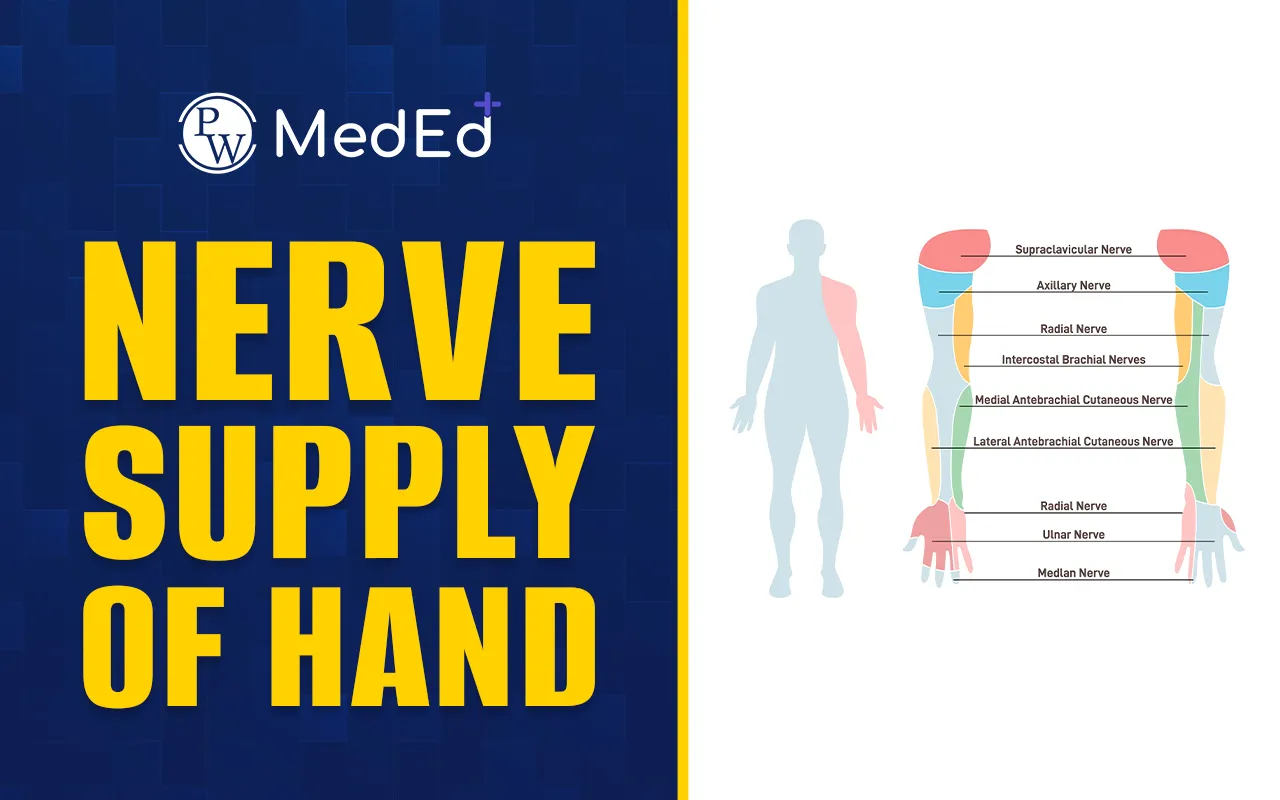
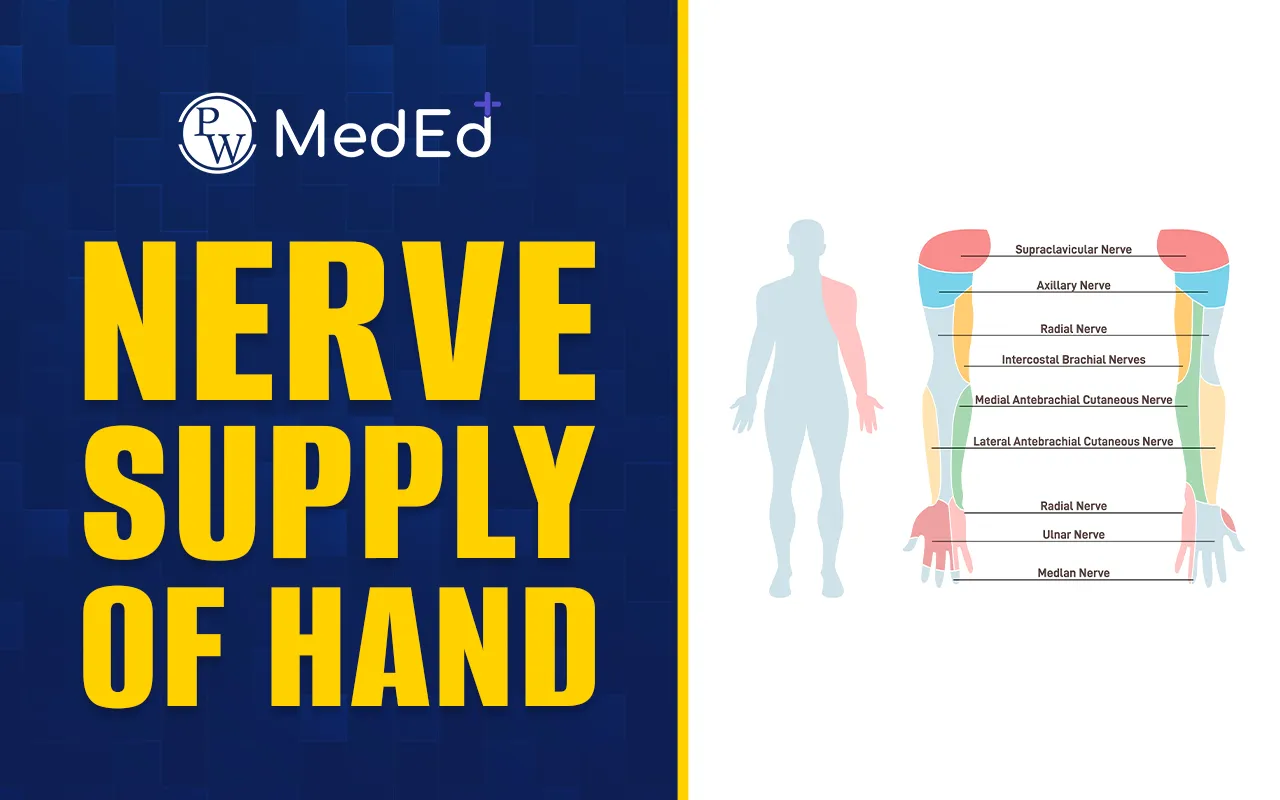
Nerve Supply of Hand: The human hand can move, bend, hold, and feel because of special nerves. These nerves will act like small wires. They will carry signals from the brain and spinal cord. These signals will help the hand perform many actions. To understand the nerve supply of hand, students must study the two main nerves: the ulnar nerve and the median nerve. Together, these nerves will allow smooth the movement and proper sensation in the hand.
What is Nerve Supply of Hand?
The nerve supply of hand means that the way nerves reach the hand and help its muscles and skin work. These nerves will help the hand flex, extend, spread, close, and feel touch. The nerve supply of hand is mainly controlled by two big nerves. These nerves travel from the arm into the palm and fingers. When these nerves work well, the hand can perform everyday tasks without difficulty.
Nerve Supply of Hand Overview
The nerve supply of hand will depend on the ulnar nerve, the median nerve, and the radial nerve for skin sensation. Each nerve has its own pathway. Each nerve will control specific muscles. Each nerve also helps some certain parts of the skin feel touch, pain, temperature, and pressure. The hand will become strong, steady, and coordinated because of these nerve actions.
One important area to understand is the Ulnar and Median Nerve in Axilla Region. This part will explain how these nerves arise from the brachial plexus and move toward the hand. The Ulnar and Median Nerve in Axilla Region helps us see how both nerves begin their long journey through the arm.
1. Ulnar Nerve
The ulnar nerve plays a major role in the nerve supply of hand. It supplies many muscles in the hand. These muscles help in fine movements. The ulnar nerve also supports strong grip actions.
Ulnar Nerve in the Forearm
The ulnar nerve supplies two muscles in the anterior forearm. These muscles help in bending the wrist and controlling the ring and little fingers. When this nerve sends signals, the small movements of these fingers become smooth.
Ulnar Nerve in the Hand
The ulnar nerve supplies many hand muscles. These muscles help the fingers move in separate directions. They also help the thumb move inward at the joint. The interossei muscles, lumbricals of certain fingers, and small muscles near the little finger receive signals from this nerve. These actions support grip and steady finger control.
2. Median Nerve
The median nerve also plays an important part in the nerve supply of hand. It helps in actions like bending the wrist, bending the fingers, and rotating the forearm. It supports many muscles in the anterior forearm and some in the hand.
Median Nerve in the Forearm
The median nerve supplies most of the muscles in the front part of the forearm. These muscles bend the wrist and fingers. A branch called the anterior interosseous nerve supplies deeper muscles. These muscles help move the thumb and index finger.
Median Nerve in the Hand
The median nerve supplies several thumb muscles and two lumbrical muscles. These muscles help in thumb opposition. This movement allows a person to touch the thumb with different fingers. This action is very important for writing, holding, and picking objects.
3. Radial Nerve Contribution
The radial nerve does not supply hand muscles. But it supplies the skin on the back of the hand. This helps with basic sensations. It supports the overall nerve supply of hand by allowing the brain to sense touch on certain parts of the dorsum.
4. Cutaneous Supply of Hand
Another important area is the Cutaneous Supply of Hand. This part refers to the skin areas supplied by each nerve. The Cutaneous Supply of Hand helps us understand which nerve is responsible for sensation in different finger regions.
-
The ulnar nerve supplies the little finger and half of the ring finger on both the front and back.
-
The median nerve supplies the front of the thumb, index finger, middle finger, and half of the ring finger.
-
The radial nerve supplies skin on the back of certain fingers except for the nail beds supplied by the median nerve.
These divisions help identify which nerve is affected when a person feels numbness or tingling in specific areas.
Key Mechanisms of Nerve Supply of Hand
The nerve supply of hand works through simple but important mechanisms. These mechanisms allow movement, control, and skin sensation. Without these processes, the hand cannot function naturally. Below are the key mechanisms.
1. Muscle Activation
The ulnar nerve and the median nerve activate different muscle groups in the hand. Key points include:
-
Movement of small hand muscles
-
Thumb movements
-
Finger movements in different directions
2. Sensory Signals
Sensory signals travel from the skin to the brain. These signals help us feel:
-
Touch
-
Temperature
-
Pain
3. Coordination of Movements
The nerve supply of hand helps many muscles work together. This coordination supports:
-
Holding
-
Writing
-
Typing
-
Picking small objects
4. Balanced Finger Control
Ulnar nerve and the median nerve together give the hand balanced finger control. This balance helps:
-
Smooth bending
-
Opening of fingers
-
Gentle movements
5. Thumb Function
The thumb receives nerve signals from both the ulnar and the median nerves.
This helps in:
-
Thumb bending
-
Thumb rotation
-
Thumb opposition
6. Wrist Stability
The nerve supply of hand also helps the wrist stay steady.
This stability helps in:
-
Lifting objects
-
Supporting weight
-
Keeping the hand firm during activities
7. Communication Between Hand and Brain
The nerves send signals in two ways.
They carry:
-
Commands from the brain to hand
-
Sensations from the hand to brain
This two-way communication keeps movements safe and controlled.
Nerve Supply of Hand FAQs
Which nerves control the movement of the hand?
What does the ulnar nerve do in the hand?
What is the role of the median nerve in the hand?