







BDS 1st Year Biochemistry Phospholipids, and Their Role

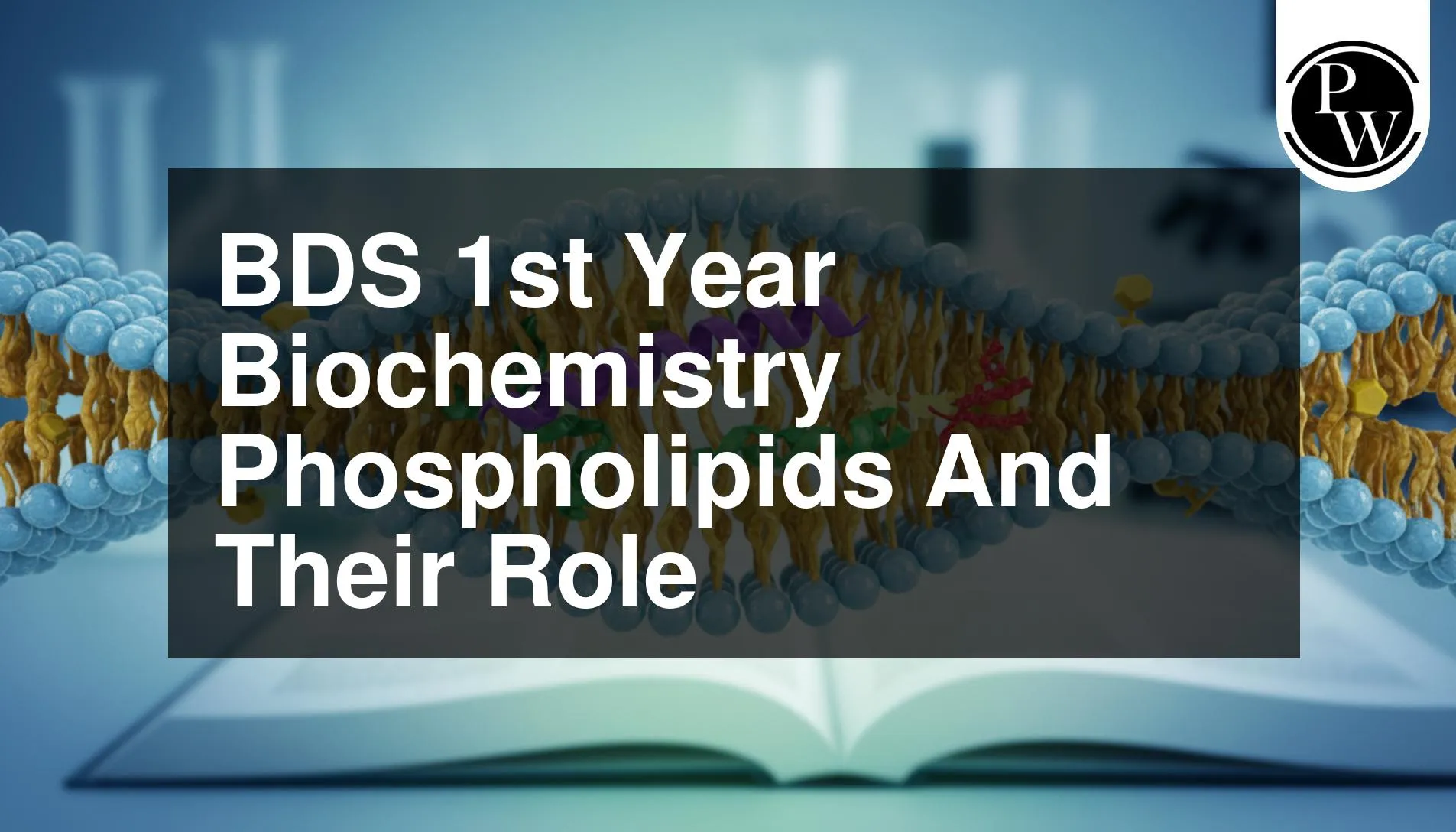
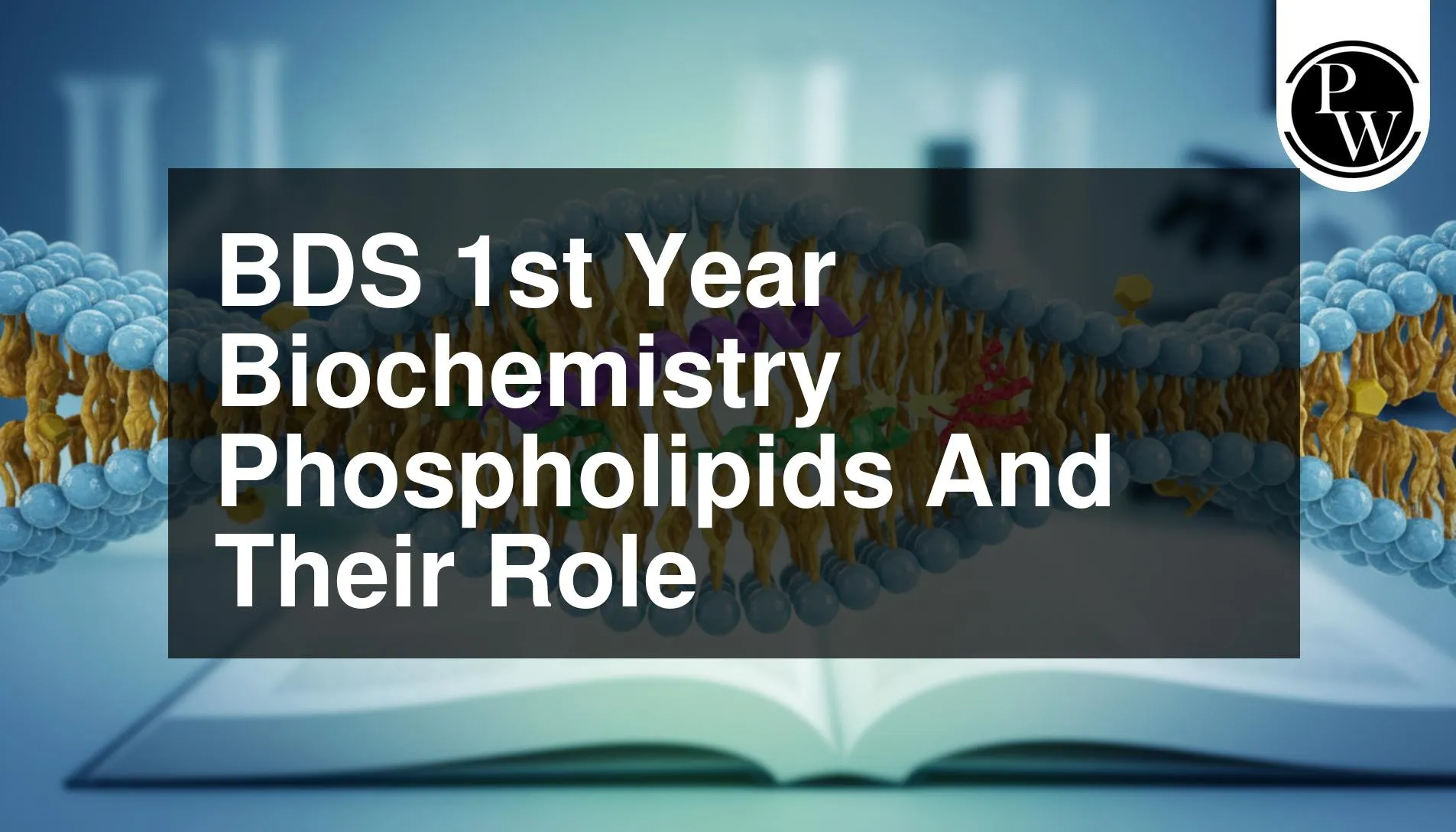
Phospholipids are one of the most important topics in BDS 1st Year Biochemistry because they are major components of cell membranes and play an important role in many biological functions.
They help maintain cell structure, support nerve conduction, participate in signaling pathways, and assist in lung function. Questions related to phospholipids are commonly asked in theory examinations, viva, and short notes.
Understanding phospholipids is important for learning membrane biology, lipid metabolism, physiology, and several clinical conditions. Their role in respiratory distress syndrome, apoptosis, and nerve function makes this topic highly important for dental and medical students.
What Are Phospholipids?
Phospholipids are a type of compound lipid. They contain:
-
Fatty acids
-
Alcohol
-
Phosphate group
-
Additional nitrogenous or non-nitrogenous base
They are amphipathic molecules. This means they contain both:
-
Hydrophilic (water-attracting) part
-
Hydrophobic (water-repelling) part
Because of this property, phospholipids form the basic structure of plasma membranes.
Definition of Lipids
Lipids are a heterogeneous group of compounds that are insoluble in water but soluble in organic solvents. They are related to fatty acids and are important for energy storage, membrane formation, and cellular functions. The basic composition of lipids is: Fatty acid + Alcohol
Classification of Lipids
Lipids are classified into four major groups.
| Type of Lipid | Composition | Examples |
| Simple Lipids | Fatty acid + alcohol | Fats, oils, waxes |
| Compound Lipids | Fatty acid + alcohol + additional group | Phospholipids, glycolipids, lipoproteins |
| Derived Lipids | Derived from simple and compound lipids | Cholesterol, steroids, fatty acids |
| Miscellaneous Lipids | Lipid-like compounds | Carotenoids, prenyl compounds |
Compound Lipids
Compound lipids contain an additional group along with fatty acids and alcohol.
Types of Compound Lipids
| Type | Additional Group |
| Phospholipids | Phosphate |
| Glycolipids | Carbohydrate |
| Lipoproteins | Protein |
Among these, phospholipids are the most important in membrane biology.
Structure of Phospholipids
A phospholipid contains:
-
Two fatty acid chains
-
Alcohol
-
Phosphate group
-
Nitrogenous or non-nitrogenous base
The phosphate-containing head is polar. The fatty acid tail is non-polar. This structure allows phospholipids to arrange themselves into bilayers in cell membranes.
Functions of Phospholipids
Phospholipids perform several important functions in the body.
-
Structural Function: They form the structural framework of plasma membranes and organelle membranes.
-
Selective Transport: They help regulate the movement of substances across the cell membrane.
-
Cell Signaling: Some phospholipids participate in hormone signaling and second messenger systems.
-
Nerve Function: Certain phospholipids help in nerve conduction and myelin sheath formation.
-
Lung Function: Phospholipids act as lung surfactants and prevent alveolar collapse.
Classification of Phospholipids
Phospholipids are classified based on the alcohol present in their structure.
| Type | Alcohol Component | Examples |
| Glycero-phospholipids | Glycerol | Lecithin, cephalin, cardiolipin |
| Sphingo-phospholipids | Sphingosine | Sphingomyelin |
Glycero-Phospholipids
These phospholipids contain glycerol as the alcohol component.
Phosphatidic Acid
Phosphatidic acid is the simplest phospholipid.
Structure
It contains:
-
Glycerol
-
Two fatty acids
-
Phosphate group
Function
-
Acts as a precursor for other phospholipids
-
Important in lipid synthesis
Lecithin (Phosphatidylcholine)
Lecithin contains choline as the nitrogenous base.
Functions of Lecithin
-
Major component of plasma membrane
-
Acts as lung surfactant
-
Prevents collapse of alveoli
-
Helps in reverse cholesterol transport
-
Serves as a storage form of choline
Clinical Importance of Lecithin
Lecithin is very important in fetal lung maturity. A special form called dipalmitoyl lecithin acts as a surfactant in lungs. Deficiency of lecithin in premature infants can cause Respiratory Distress Syndrome (RDS).
Lecithin/Sphingomyelin Ratio
The Lecithin/Sphingomyelin (L/S) ratio in amniotic fluid helps assess fetal lung maturity.
| L/S Ratio | Interpretation |
| More than 2 | Mature lungs |
| Less than 1 | Risk of Respiratory Distress Syndrome |
Cephalin (Phosphatidylethanolamine)
Cephalin contains ethanolamine as the nitrogenous base.
Functions of Cephalin
-
Component of the plasma membrane
-
Helps in blood clotting
-
Assists in the conversion of prothrombin to thrombin
Phosphatidylserine
Phosphatidylserine contains serine as the nitrogenous base.
Functions of Phosphatidylserine
-
Important in apoptosis
-
Helps identify damaged or dying cells
-
Participates in membrane signaling
Apoptosis is programmed cell death. It is important for normal tissue maintenance.
Phosphatidylinositol
Phosphatidylinositol contains inositol as the base. It is a non-nitrogenous phospholipid.
Functions of Phosphatidylinositol
-
Acts as a precursor for second messengers
-
Produces DAG (Diacylglycerol)
-
Produces IP3 (Inositol triphosphate)
-
Important in hormone signaling
These molecules help transmit signals inside cells.
Cardiolipin
Cardiolipin is a special phospholipid present mainly in mitochondria.
Structure of Cardiolipin
It contains:
-
Two phosphatidic acid molecules
-
One glycerol molecule
Functions of Cardiolipin
-
Present in the inner mitochondrial membrane
-
Important in the electron transport chain
-
Helps in energy production
Clinical Importance
Autoantibodies against cardiolipin may cause mitochondrial disorders and autoimmune conditions.
Ether-Containing Phospholipids
These phospholipids contain an ether bond instead of an ester bond at the C1 position.
Plasmalogen
Plasmalogen is abundant in neuronal tissues.
Functions
-
Component of the neuronal membrane
-
Acts as antioxidant
-
Protects cells from oxidative damage
Platelet Activating Factor (PAF)
PAF is another ether-linked phospholipid.
Functions
-
Helps in platelet aggregation
-
Participates in inflammation
-
Important in the immune response
Sphingo-Phospholipids
These phospholipids contain sphingosine instead of glycerol.
Sphingomyelin
Sphingomyelin is the most important sphingo-phospholipid.
Structure of Sphingomyelin
It contains:
-
Sphingosine
-
Fatty acid
-
Phosphate group
-
Choline
Functions of Sphingomyelin
-
Forms myelin sheath around nerves
-
Helps in nerve conduction
-
Maintains membrane stability
Damage to the myelin sheath can affect nerve transmission.
Importance of Phospholipids in Cell Membrane
Phospholipids are the main components of biological membranes. Their amphipathic nature allows them to form a lipid bilayer. This bilayer:
-
Maintains membrane fluidity
-
Supports membrane proteins
-
Controls the movement of substances
-
Protects cellular contents
Without phospholipids, cells cannot maintain their structure and function.
Clinical Significance of Phospholipids
Phospholipids are associated with many important clinical conditions.
-
Respiratory Distress Syndrome (RDS): Occurs mainly in premature infants because of insufficient lung surfactant. Main cause: Deficiency of dipalmitoyl lecithin.
-
Neurological Disorders: Abnormal sphingomyelin metabolism can affect nerve conduction and myelin sheath integrity.
-
Mitochondrial Disorders: Defects involving cardiolipin may disturb electron transport and energy production.
-
Inflammatory Conditions: Platelet Activating Factor contributes to inflammatory responses and platelet activation.
Phospholipids are essential compound lipids with important structural and functional roles in the human body. They form the basic framework of cell membranes and participate in transport, signaling, nerve conduction, blood clotting, and lung function.
Different phospholipids perform specialized functions. Lecithin acts as a lung surfactant, cephalin participates in clotting, phosphatidylinositol helps in signaling, and sphingomyelin supports nerve function. Cardiolipin is important in mitochondrial energy production, while ether-linked phospholipids provide antioxidant and inflammatory functions.
The clinical importance of phospholipids makes this topic highly important for BDS 1st Year Biochemistry examinations and future understanding of physiology and pathology.
BDS 1st Year Biochemistry Phospholipids, and Their Role FAQ
What are phospholipids in BDS 1st Year Biochemistry?
Why are phospholipids important in cell membranes?
What is the difference between glycero-phospholipids and sphingo-phospholipids?






Get Free Counselling Today
and Clear up all your Doubts
 Live & recorded classes available at easeDashboard for progress trackingLakhs of practice questions

