CPR Procedure, Check Detailed Procedure

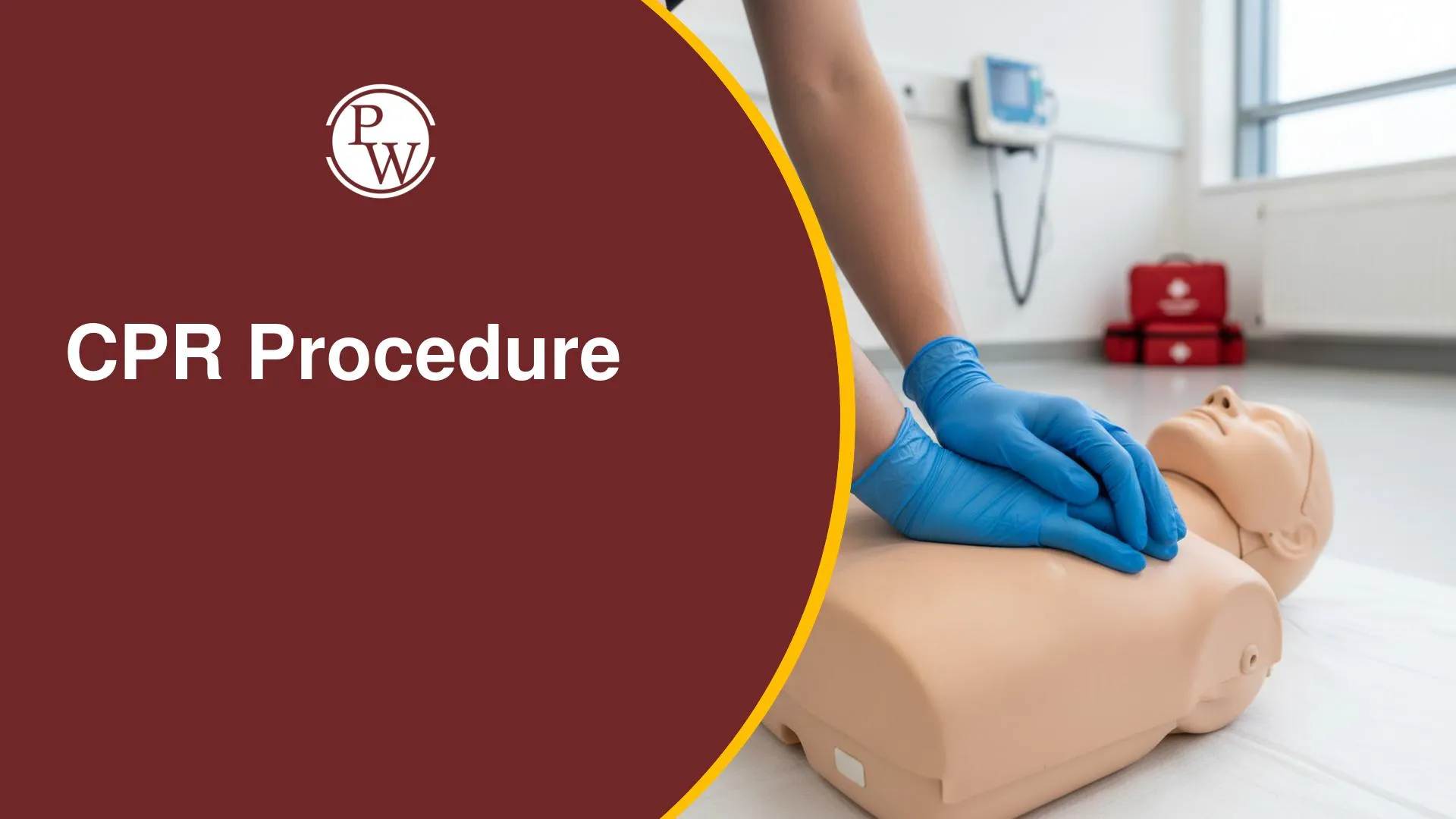
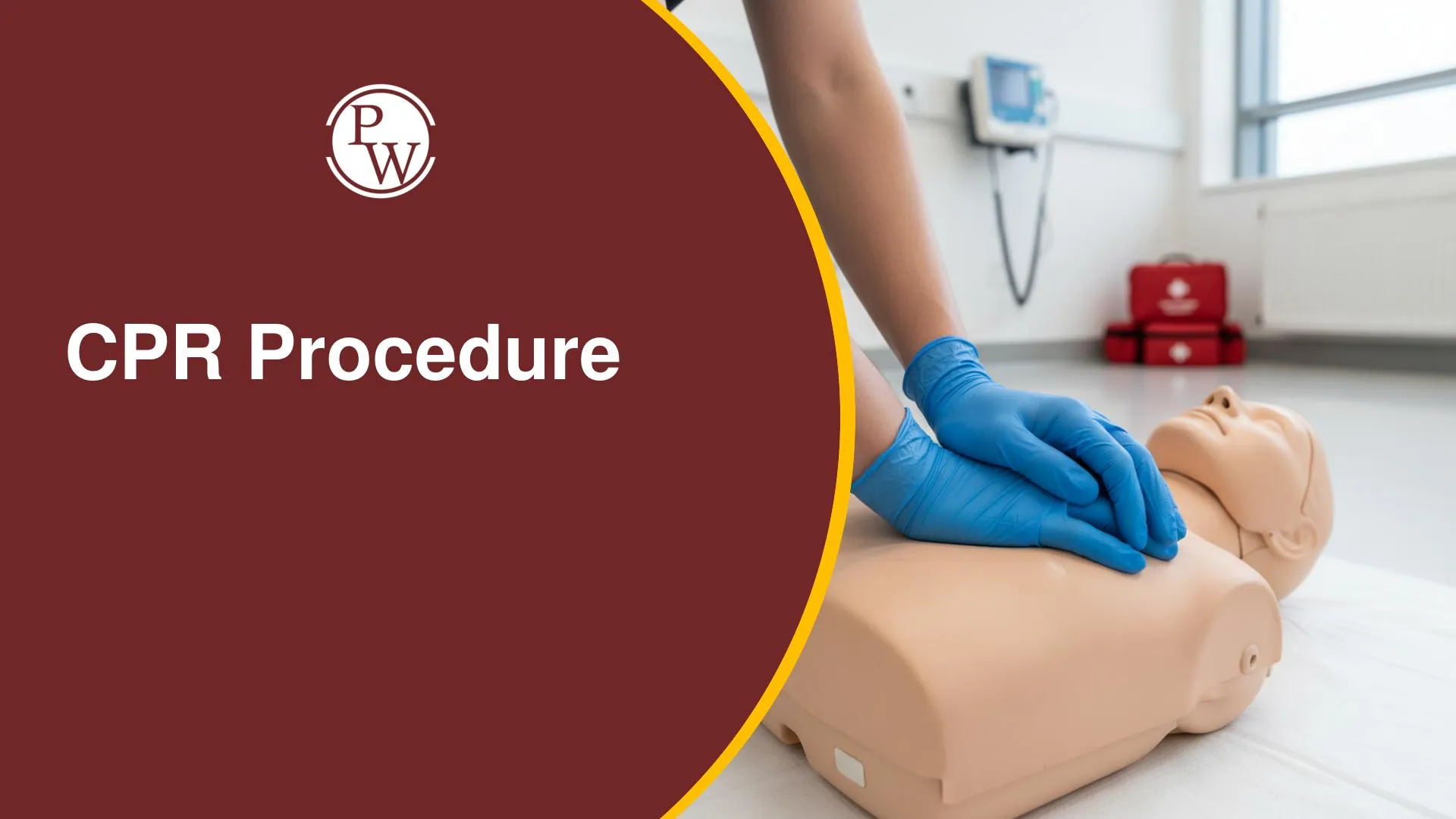
Cardiopulmonary Resuscitation (CPR) is a critical life-saving procedure performed when a person becomes unresponsive and has no pulse, most commonly during cardiac arrest. A timely and correct CPR procedure helps maintain blood flow and oxygen supply to the brain and vital organs until advanced medical care is available. Understanding when to start CPR, how to assess responsiveness and pulse, and how to deliver effective chest compressions and rescue breaths is essential for all healthcare providers and first responders.
Cardiopulmonary Resuscitation (CPR)
CPR (Cardiopulmonary Resuscitation) is a life-saving procedure that all medical professionals must master. It is critical to know when to initiate CPR and when not to, as improper application can have severe consequences. The primary objective is to deliver blood to the brain to keep the brain alive during cardiac arrest, buying time for further medical intervention.
Importance and Criteria for CPR
The main goal of CPR is to ensure the brain receives vital blood supply when the heart fails, preventing brain death. This provides a window for identifying and addressing the underlying cause of cardiac arrest.
Criteria for Initiating CPR
Two conditions must exist simultaneously to initiate CPR:
-
The patient should be unresponsive.
-
The patient should not have a pulse.
Assessing Patient Status for CPR Readiness
Before initiating CPR, a systematic assessment of the patient's status is crucial.
Assessing Unresponsiveness
To check for unresponsiveness:
-
Call out the patient's name loudly or use "Sir/Madam."
-
If there's no response, tap them on the chest and ask loudly, "Do you hear me?"
-
A response means the patient is conscious, and CPR is not needed.
-
No response indicates the patient is unresponsive.
Assessing for Pulse
Checking for a pulse is the second vital step. A present pulse means the brain is being perfused, making CPR unnecessary. The absence of a pulse puts the brain at risk.
Pulse Assessment Sites
Pulse assessment is an important step before starting CPR because it helps determine whether the heart is still pumping blood. During emergencies, healthcare providers check specific arteries to identify the presence or absence of circulation.
|
Pulse Assessment Sites |
|||
|---|---|---|---|
|
Assessment Site |
Reliability in Emergency |
Reason |
Safety Note
|
|
Radial Artery |
Not reliable |
In conditions like shock, peripheral vasoconstriction can make the radial pulse easily missed, even with cardiac function. |
|
|
Carotid Artery |
Ideal location |
Provides direct assessment of central circulation. |
Feel only one side, not bilaterally, to avoid cutting off blood supply to the brain. |
Initiating and Performing High-Quality CPR
High-quality CPR is essential for maintaining blood flow to the brain and vital organs during cardiac arrest. Proper technique, correct body positioning, and continuous chest compressions improve the chances of survival until advanced medical care is available.
Before starting CPR, the patient should be placed on a firm and flat surface to allow effective chest compressions. The rescuer should position their hands on the center of the chest, specifically on the lower half of the sternum, and use proper body mechanics to apply force vertically downward.
Effective chest compressions should be delivered at a depth of at least 5 cm and at a rate of 100–120 compressions per minute. It is also important to allow complete chest recoil after each compression so that the heart can refill with blood properly.
After every 30 chest compressions, two rescue breaths should be given to provide oxygen to the body. The cycle of 30 compressions and 2 breaths should continue without unnecessary interruptions. To maintain CPR quality, providers should rotate every 2 minutes because fatigue can reduce compression effectiveness.
Stopping CPR and Advanced Life Support
CPR continues until signs of recovery or brain death are observed.
When to Stop CPR
CPR should be continued until:
-
The patient shows signs of brain death.
-
The patient shows signs of recovery.
Signs of Recovery: Return of Spontaneous Circulation (ROSC)
ROSC signifies Return of Spontaneous Circulation, meaning the patient's pulse has returned spontaneously. Once ROSC is achieved, CPR can cease, and focus shifts to treating the underlying condition.
Pulse Checks During CPR
-
Do NOT check for a pulse during active chest compressions. Compressions create an artificial pulse, and pausing interrupts vital blood flow to the brain.
-
The only appropriate time to check for a pulse to assess for ROSC is during the CPR provider rotation, within the brief handover window.
Basic Life Support (BLS) vs. Advanced Cardiac Life Support (ACLS)
Basic Life Support (BLS) and Advanced Cardiac Life Support (ACLS) are important emergency medical procedures used during cardiac arrest and other life-threatening conditions. While BLS focuses on the basic steps needed to maintain circulation and breathing, ACLS includes advanced medical interventions and specialized treatment methods.
|
Basic Life Support (BLS) vs. Advanced Cardiac Life Support (ACLS) |
||
|---|---|---|
|
Feature |
Basic Life Support (BLS) |
Advanced Cardiac Life Support (ACLS)
|
|
Focus |
Fundamental principles of effective CPR and oxygenation. |
Advanced management of critical cardiac states. |
|
Components |
Core techniques and protocols (compressions, breaths, assessment). |
Includes BLS principles plus additional interventions: stimulating heart with drugs like adrenaline, antiarrhythmic drugs, defibrillators. |
CPR Procedure FAQs
What is the primary objective of CPR?
What two conditions must be met simultaneously to initiate CPR?
Why is the radial artery not a reliable pulse assessment site during emergencies?
What are the key parameters for effective chest compressions during CPR?