






Development of Brain for NEET PG: Neural Tube, Vesicles, Ventricles, CSF Drainage
 Priyanka Yadav31 Mar, 2026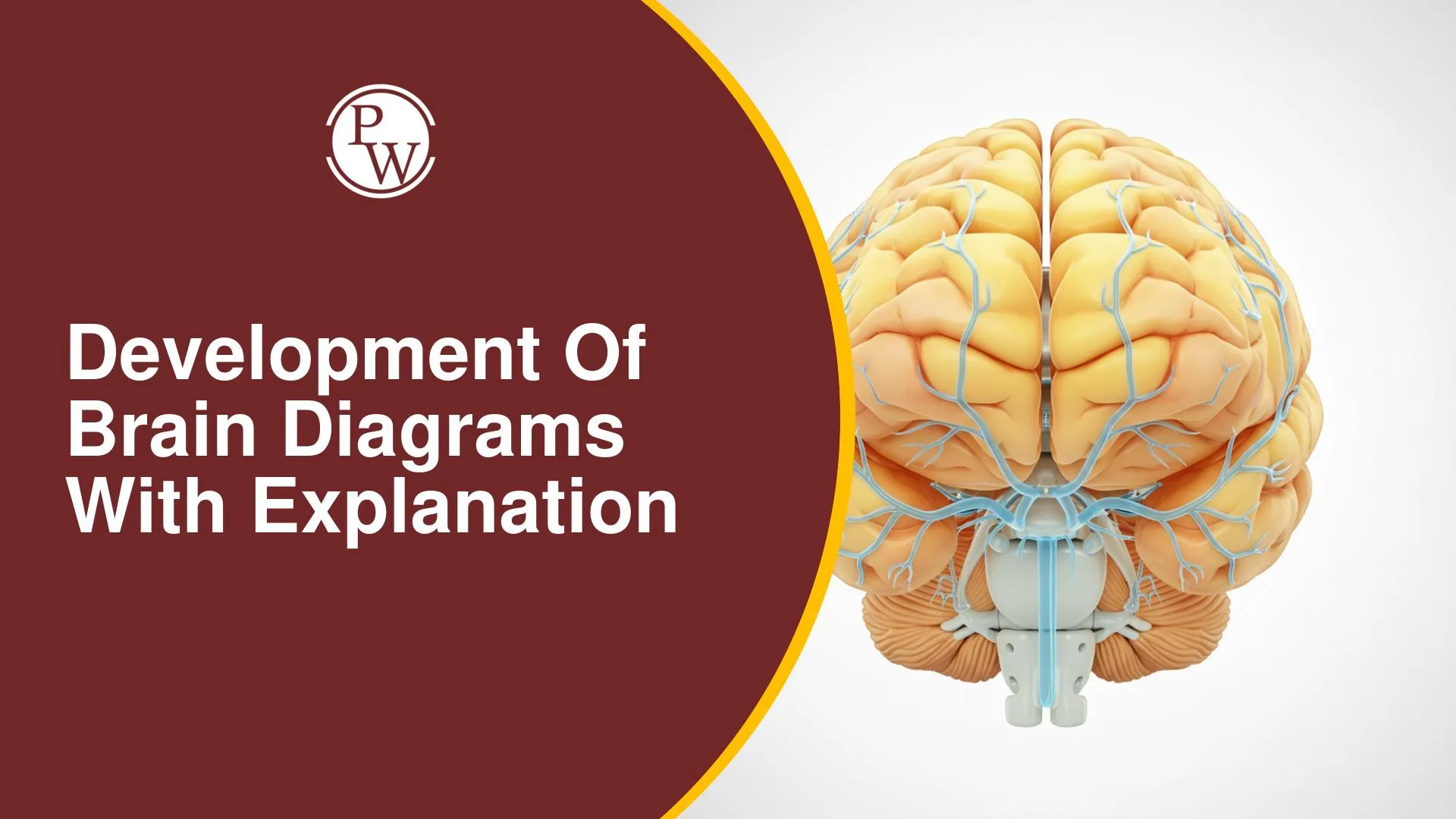
NEET PG is expected soon. Brain development (neuroembryology) is a crucial topic for NEET PG preparation, as it frequently appears in both conceptual and clinical questions. Understanding how the brain evolves from a simple neural tube into a complex organ helps in linking embryology with anatomy, radiology, and pediatrics.
These detailed notes of brain development cover all stages, derivatives, and clinical correlations in a structured manner.
What is Brain Development?
Brain development is a complex process detailing how the central nervous system forms from the embryonic neural tube. This intricate journey shapes the brain from simple vesicles into highly specialized structures. Understanding this process is vital for medical studies, as it explains adult brain anatomy and potential congenital anomalies.
Development of Primary and Secondary Brain Vesicles
The neural tube first forms three primary vesicles, which then divide into five secondary vesicles. These secondary vesicles give rise to all adult brain structures. The brain also takes on a distinct C-shape, particularly the forebrain regions. Initially, the neural tube is straight, but flexures introduce this characteristic curve.
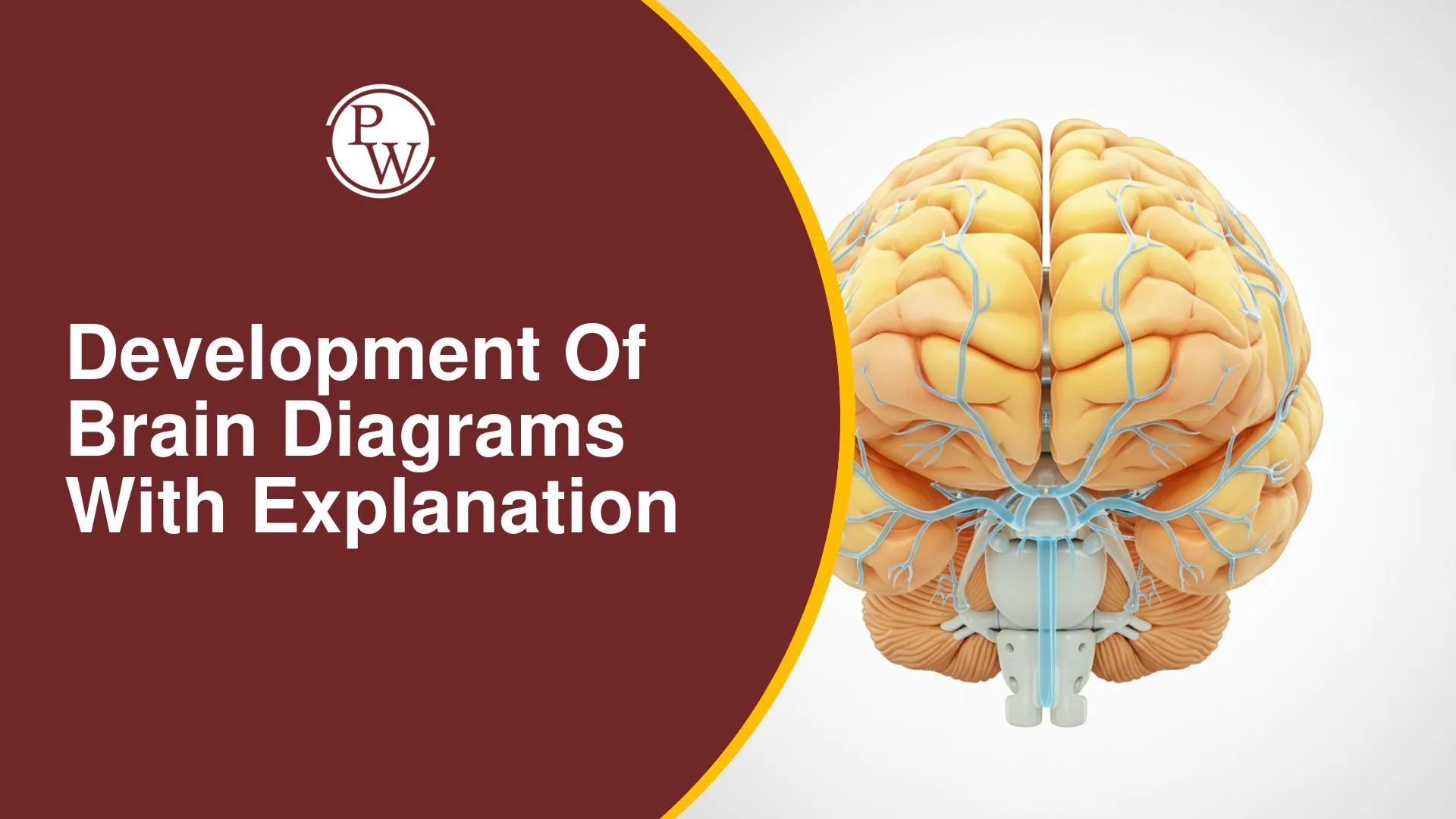
Anterior View of the Developing Brain and Ventricles
The developing brain includes several key divisions, each associated with specific ventricles.
-
Forebrain (Prosencephalon):
-
Telencephalon: Develops into the cerebral hemispheres and basal ganglia. It houses the first and second (lateral) ventricles.
-
Diencephalon: Forms the thalami. It encloses the third ventricle, located centrally.
-
Midbrain (Mesencephalon): Remains largely undivided. It contains the cerebral aqueduct of Sylvius, a midline channel.
-
Hindbrain (Rhombencephalon):
-
Metencephalon: Develops into the pons and cerebellum.
-
Myelencephalon: Forms the medulla oblongata.
-
Both metencephalon and myelencephalon contribute to the fourth ventricle, which is diamond-shaped. The medulla oblongata extends downwards as the spinal cord. The fourth ventricle continues into the spinal cord as the central canal.
CSF (Cerebrospinal Fluid)
CSF is a clear fluid that cushions the brain and spinal cord. It also delivers nutrients and removes waste.
-
The choroid plexus within the ventricles produces CSF.
-
Lateral ventricles produce most CSF due to their large size.
-
Choroid plexuses exist at both rostral (anterior) and caudal (posterior) locations.
Cranial Nerves
Twelve pairs of cranial nerves emerge directly from the brain. They control various sensory and motor functions.
-
CN I (Olfactory): Responsible for smell, originates from the Telencephalon.
-
CN II (Optic): Responsible for vision, arises from the Diencephalon.
-
CN III to XII: Originate from the brainstem.
-
CN VIII (Vestibulocochlear): Controls hearing and balance, arises from the ponto-medullary junction.
-
Notably, CN I, II, and VIII are purely sensory nerves.
Parts of the Adult Brain
The adult brain structures are direct derivatives of the embryonic vesicles. The intricate folds and sulci develop from the initial smooth surfaces. The ventricular system, which holds CSF, also matures alongside the brain.
Derivatives of the brain
The table below outlines the transformation from primary vesicles to adult brain structures.
|
Primary Vesicles |
Secondary Vesicles |
Adult Derivatives |
|---|---|---|
|
Prosencephalon |
Telencephalon |
Cerebral hemispheres, caudate, putamen, amygdaloid, claustrum, lamina terminalis, olfactory bulbs, hippocampus. |
|
Diencephalon |
Epithalamus, subthalamus, thalamus, hypothalamus, mammillary bodies, neurohypophysis, pineal gland, retina, iris, ciliary body, optic nerve, optic chiasm, optic tract. |
|
|
Mesencephalon |
Mesencephalon |
Midbrain |
|
Rhombencephalon |
Metencephalon |
Pons, Cerebellum |
|
Myelencephalon |
Medulla Oblongata |
CSF Drainage
After production, CSF circulates through the ventricular system and subarachnoid space. It then drains into the venous system, primarily via arachnoid granulations. This continuous flow maintains intracranial pressure and brain health.
Aqueduct Stenosis - It is blockage at Sylvius Aqueduct
Aqueduct Stenosis, a blockage at the cerebral aqueduct of Sylvius, causes significant issues.
-
This obstruction prevents CSF flow, leading to hydrocephalus.
-
Specifically, it results in internal hydrocephalus.
-
The condition causes dilation of the third and lateral ventricles. This increased pressure can flatten the forebrain.
-
The midbrain tectum has four rounded swellings, the Corpora quadrigemina (two superior and two inferior colliculi).
-
During metencephalon development, the pons forms earlier than the cerebellum.
-
The developing cerebellum connects to the brainstem (midbrain, pons, medulla) via three cerebellar peduncles: superior (to midbrain), middle (to pons), and inferior (to medulla).
-
The fourth ventricle sits between the brainstem anteriorly and the cerebellum posteriorly.
Sagittal View and C-shaped Development
The brain develops into a C-shape, prominently around the thalamus axis. This curvature is fundamental to its adult form.
-
The first commissure, the anterior commissure, connects the left and right brain.
-
The second commissure to develop is the fornix. It is the hippocampus's output tract and is vital for short-term memory. It also becomes C-shaped.
-
The third commissure, the corpus callosum, connects the cerebral hemispheres. It too adopts a C-shape.
-
The thalamus serves as a central axis for this C-shaped development.
-
Cerebral hemispheres also become C-shaped, forming lobes like frontal, occipital, and temporal.
-
The hippocampus migrates inferiorly during development, ending up in the adult brain's temporal lobe.
-
The choroid plexus similarly changes its position, moving posteriorly and inferiorly relative to the thalamus.
Common Developmental Anomalies
Understanding brain development anomalies is a high-yield topic for NEET PG. These defects generally stem from issues during primary neurulation, prosencephalic cleavage, or neuronal migration.
1. Neural Tube Defects (NTDs)
These occur due to the failure of the neural tube to close during the 3rd and 4th weeks of gestation. High maternal Alpha-Fetoprotein (AFP) and Acetylcholinesterase (AChE) in amniotic fluid are key markers.
-
Anencephaly: Failure of the rostral (cephalic) neuropore to close. Characterized by the absence of the calvarium and brain (frog-like appearance).
-
Encephalocele: Herniation of brain tissue and meninges through a cranial defect (most commonly occipital).
-
Spina Bifida Occulta: Failure of bony spinal canal closure; no herniation. Usually marked by a tuft of hair or dimple.
-
Meningocele/Myelomeningocele: Herniation of meninges (Meningocele) or both meninges and spinal cord (Myelomeningocele) through a vertebral defect.
2. Ventral Induction Defects (Cleavage)
These occur when the prosencephalon fails to divide into two cerebral hemispheres (weeks 5–6).
-
Holoprosencephaly: The most severe form.
-
Alobar: Single primitive ventricle, fused thalami.
-
Semilobar & Lobar: Partial separation.
-
Associations: Patau Syndrome (Trisomy 13), Sonic Hedgehog ($SHH$) gene mutations, and midline facial defects (cyclopia, cleft lip/palate).
3. Posterior Fossa Anomalies
Focus on the development of the cerebellum and the fourth ventricle.
-
Chiari I Malformation: Ectopia of cerebellar tonsils (>5 mm below foramen magnum). Associated with syringomyelia; presents in adulthood with headaches.
-
Chiari II Malformation (Arnold-Chiari): Downward displacement of cerebellar vermis and tonsils through the foramen magnum.
-
Key Association: Always associated with lumbar myelomeningocele and obstructive hydrocephalus.
-
Dandy-Walker Malformation: Agenesis of the cerebellar vermis leading to cystic dilation of the 4th ventricle and an enlarged posterior fossa.
4. Neuronal Migration & Proliferation Disorders
Occur between the 2nd and 5th months of gestation as neurons move from the ventricular zone to the pial surface.
|
Anomaly |
Description |
Pathophysiology |
|
Lissencephaly |
"Smooth brain." Absence of sulci and gyri. |
Failure of neuronal migration. |
|
Pachygyria |
Broad, thick gyri. |
Incomplete neuronal migration. |
|
Polymicrogyria |
Too many small, disorganized gyri. |
Late migration or post-migratory insult. |
|
Schizencephaly |
Gray matter-lined clefts extending from the ventricle to the cortex. |
Focal destruction of the germinal matrix. |
|
Heterotopia |
Normal neurons in abnormal locations (e.g., periventricular). |
Neurons "stuck" along the radial glial path. |