Development of the Cardiovascular System, Check Notes
Development of the Cardiovascular System begins with the formation of the heart tube in the third week. Explained here is the cardiac looping process, the complex septation of the heart, and how vasculogenesis and angiogenesis build the arterial network. Development of the Cardiovascular System also includes vital fetal shunts like the foramen ovale that close immediately after birth.

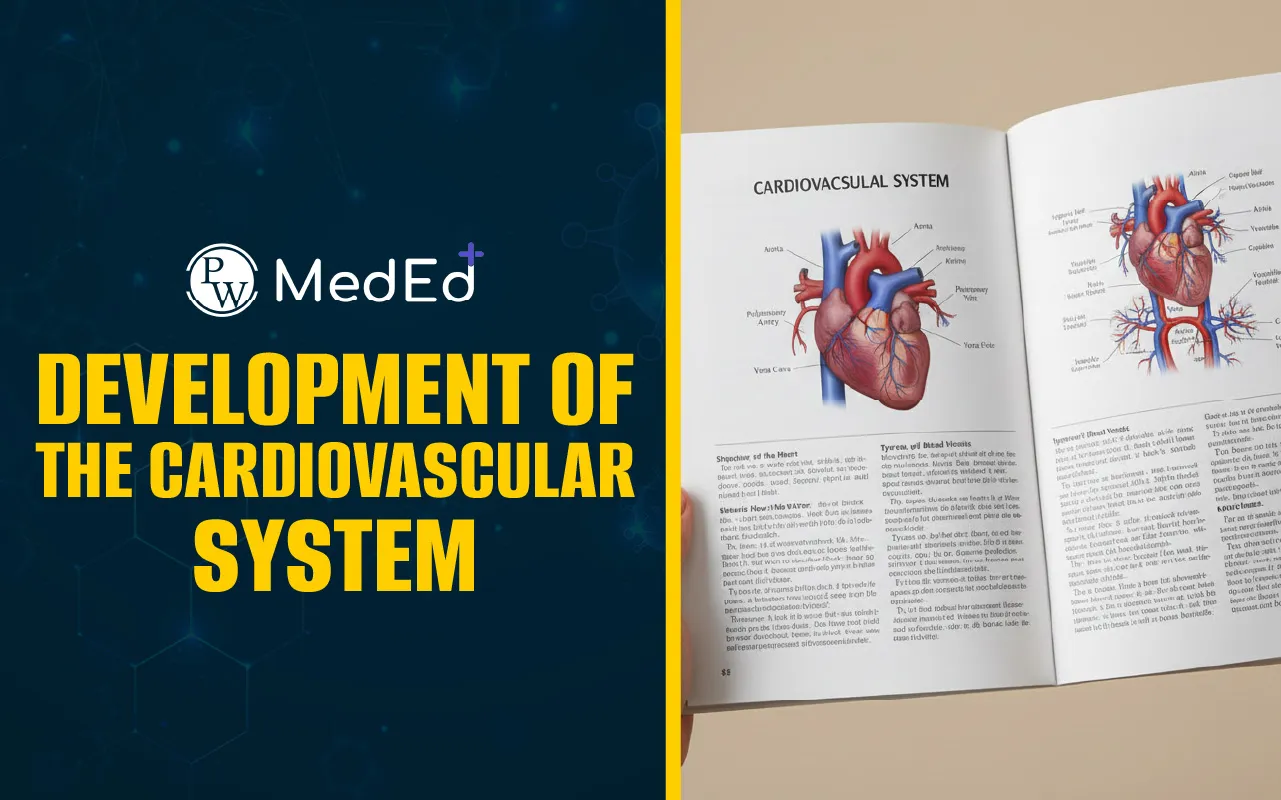
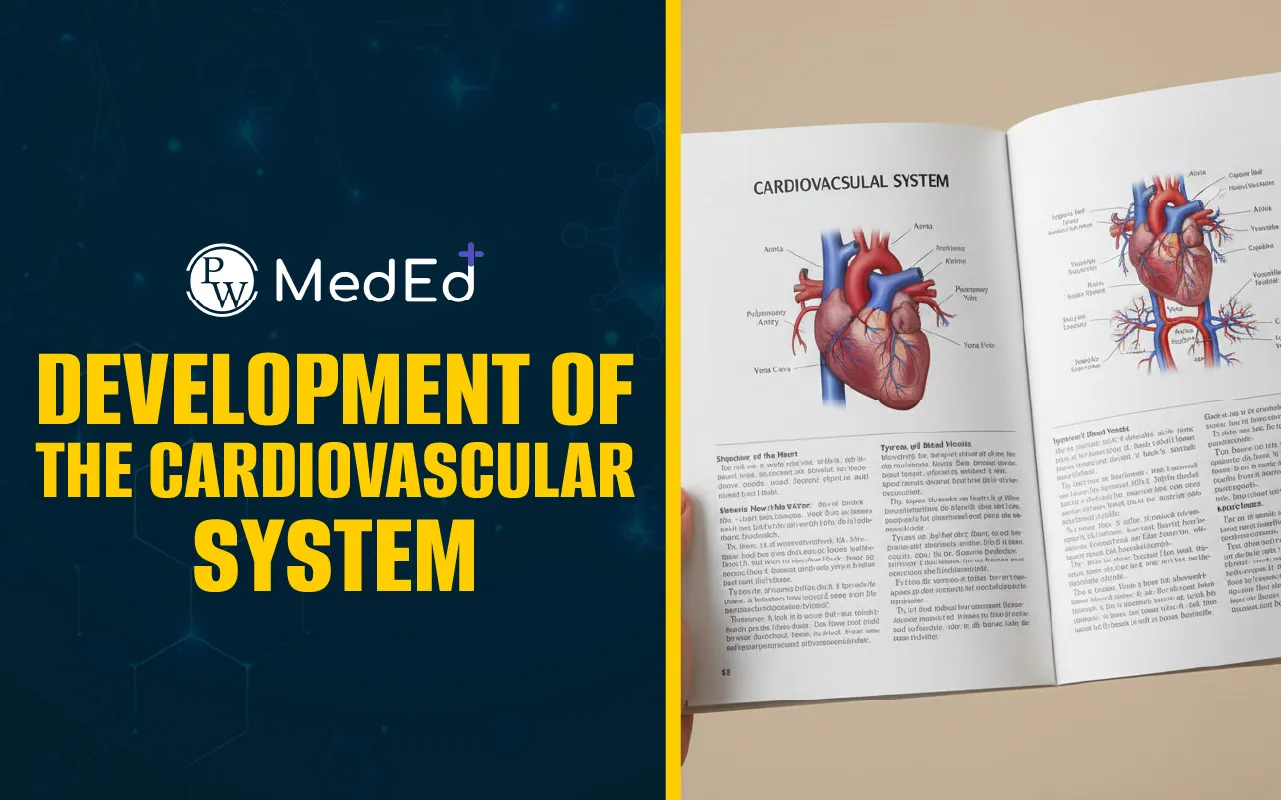
Development of the Cardiovascular System represents one of the most critical phases in human embryology. As the first functional organ system to emerge, it ensures that the growing embryo receives the nutrients and oxygen necessary for survival when simple diffusion is no longer sufficient. By the start of the fourth week, the primitive heart begins its rhythmic contractions, marking a pivotal milestone in life.
Formation of the Primitive Heart
The Development of the Cardiovascular System begins during the third week of gestation. This process initiates in the splanchnic mesoderm, where specialized cardiac progenitor cells migrate to form a horseshoe-shaped region known as the cardiogenic field.
Heart Tube Formation
As the embryo undergoes lateral and cephalocaudal folding, two endocardial tubes fuse at the midline. This fusion creates a single primitive heart tube. Initially, this tube is suspended within the pericardial cavity by the dorsal mesocardium, which later disappears to allow the heart more room to grow.
By the end of the third week, the heart tube consists of five distinct regions:
-
Truncus Arteriosus: The future roots of the aorta and pulmonary trunk.
-
Bulbus Cordis: Eventually forms the right ventricle and outflow tracts.
-
Primitive Ventricle: Develops into the left ventricle.
-
Primitive Atrium: Forms the rough-walled parts of both atria.
-
Sinus Venosus: Becomes the smooth-walled part of the right atrium and the coronary sinus.
The Cardiac Looping Process
Because the heart tube grows faster than the surrounding pericardial cavity, it must bend and twist to fit. This cardiac looping process occurs around day 23 to 28 and is essential for establishing the correct anatomical relationship between the chambers.
During this stage, the bulbus cordis moves down, forward, and to the right. Simultaneously, the primitive ventricle and atrium move upward and backward toward the left. This transformation changes the straight tube into an S-shaped structure, positioning the future atria superior to the ventricles. Successful looping is a prerequisite for the subsequent septation of the heart.
Septation of the Heart
The septation of the heart is the complex process of dividing the single-channel heart into four distinct chambers. This occurs primarily between the fourth and seventh weeks of development and involves the growth of tissue masses called endocardial cushions.
Atrial Septation
The division of the atria involves a series of septa and openings:
-
Septum Primum: This grows from the roof of the atrium toward the endocardial cushions. The gap remaining before fusion is the ostium primum.
-
Septum Secundum: A second, thicker wall grows to the right of the septum primum.
-
Foramen Ovale: An opening in the septum secundum remains, acting as a valve. This allows blood to flow from the right atrium to the left atrium, bypassing the lungs.
Ventricular and Outflow Septation
The septation of the heart also requires the division of the ventricles. A muscular wall grows upward from the floor of the common ventricle. The remaining gap is closed by a thinner, membranous portion derived from the endocardial cushions.
In the outflow tract, the truncus arteriosus is divided by a spiral septum. This twisting wall separates the aorta from the pulmonary artery, ensuring that oxygenated and deoxygenated blood follow their respective paths.
Formation of Blood Vessels Embryology
The formation of blood vessels embryology involves two distinct but related processes: vasculogenesis and angiogenesis.
Vasculogenesis and Angiogenesis
-
Vasculogenesis: This is the de novo formation of blood vessels from precursor cells called hemangioblasts. These cells differentiate into endothelial cells that cluster together to form the first vascular plexuses, such as the dorsal aorta.
-
Angiogenesis: This process involves the sprouting of new vessels from those already established. It is responsible for the expansion and remodeling of the vascular network throughout the rest of development.
The Aortic Arches
The early arterial system develops from six pairs of aortic arches that connect the heart to the dorsal aortae. Over time, these arches are remodeled into the major vessels seen in adults:
-
3rd Arch: Becomes the common carotid arteries.
-
4th Arch: Forms the arch of the aorta (left) and the right subclavian artery (right).
-
6th Arch: Becomes the pulmonary arteries and the ductus arteriosus.
Fetal Circulatory Shunts
During gestation, the lungs are non-functional and filled with fluid. The Development of the Cardiovascular System includes three vital shunts that redirect blood flow to prioritize the brain and placenta:
|
Fetal Circulatory Shunts |
||
|
Shunt Name |
Function |
Adult Remnant |
|
Ductus Venosus |
Bypasses the liver to the IVC |
Ligamentum venosum |
|
Foramen Ovale |
Shunts blood from right to left atrium |
Fossa ovalis |
|
Ductus Arteriosus |
Shunts blood from pulmonary artery to aorta |
Ligamentum arteriosum |
At birth, the first breath causes a drop in pulmonary resistance. This shifts the pressure within the heart, causing these shunts to close and establishing the adult circulatory pattern.
Clinical Relevance: Tetralogy of Fallot
Errors during the Development of the Cardiovascular System can lead to congenital heart defects. One of the most common is Tetralogy of Fallot, which occurs due to an unequal division of the truncus arteriosus. This condition involves four specific defects:
-
Pulmonary Stenosis: Narrowing of the exit to the lungs.
-
Ventricular Septal Defect (VSD): A hole between the ventricles.
-
Overriding Aorta: The aorta sits directly over the VSD.
-
Right Ventricular Hypertrophy: Thickening of the right heart muscle.
Modern surgical techniques typically address these issues within the first year of life to ensure a healthy transition to adulthood.