Ear Pt - 1 | ENT Rapid Revision

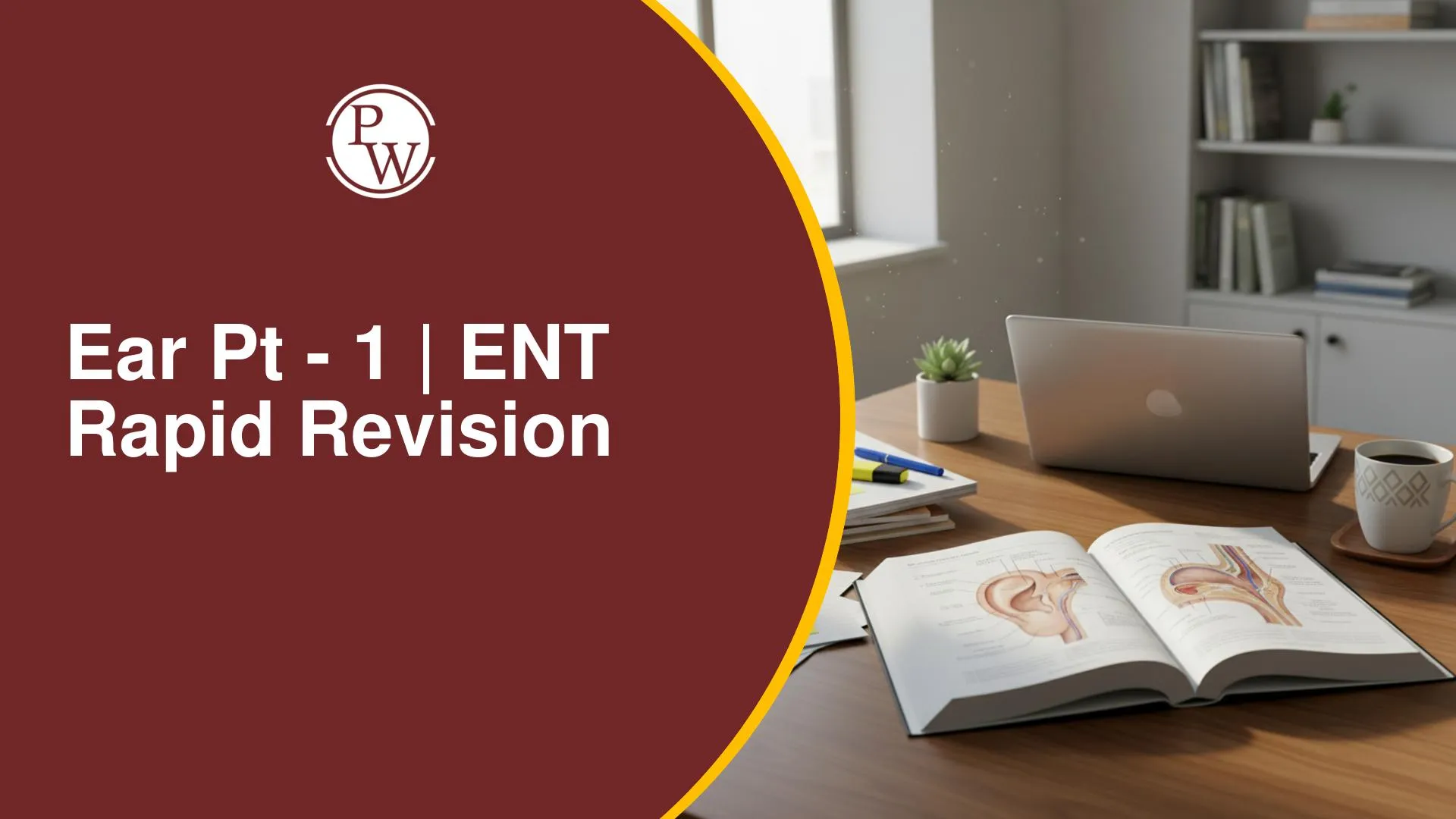
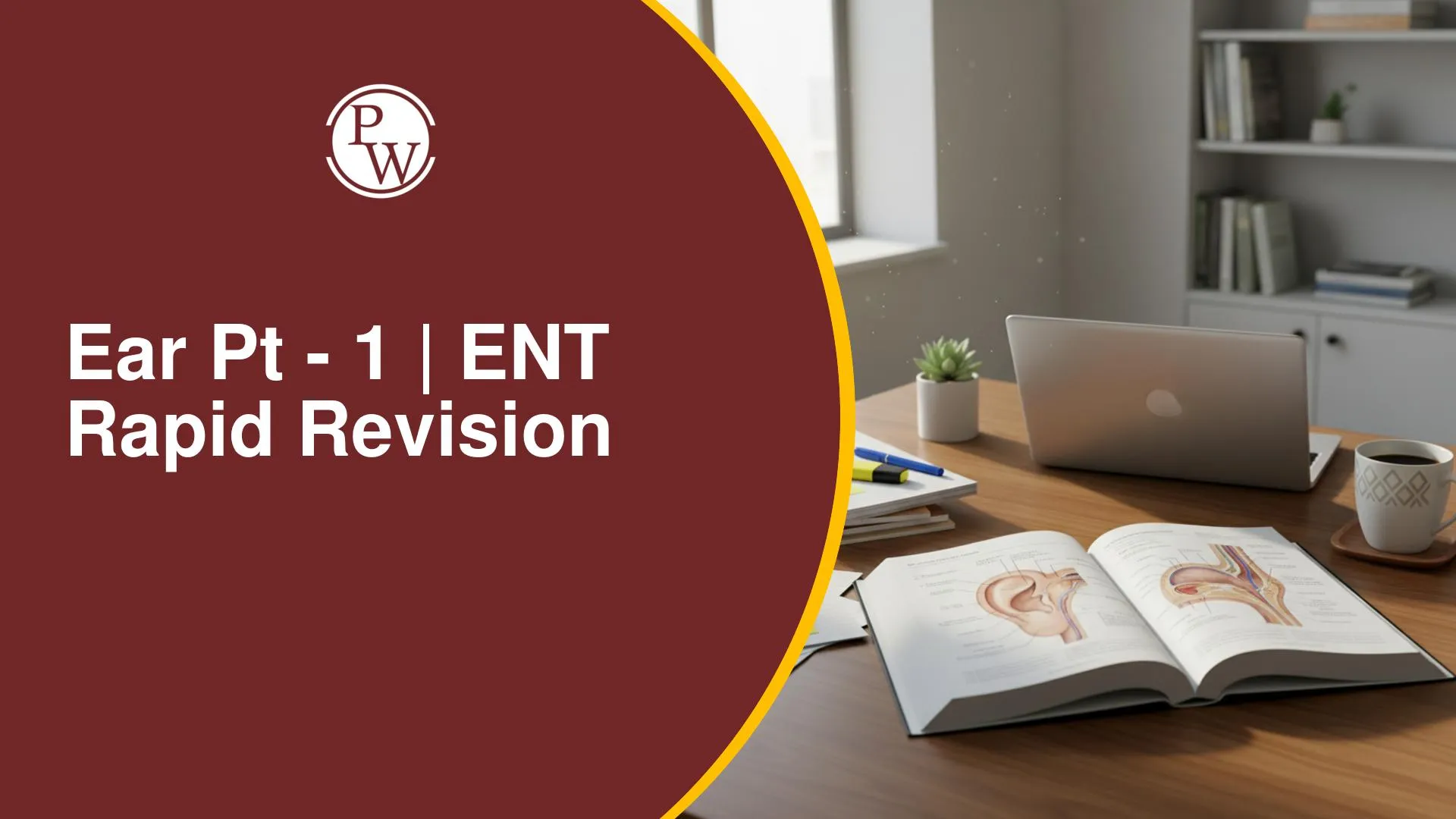
Ear- ENT Rapid Revision provides a comprehensive overview of important ear anatomy, diagnostic investigations, and commonly asked ENT disorders for quick revision. The topic covers the tympanic membrane, middle ear anatomy, audiometry techniques like BERA, Tympanometry, and OAE, along with important clinical conditions such as otomycosis, furunculosis, malignant otitis externa, sudden sensorineural hearing loss, and otitis media with effusion.
Tympanic Membrane Introduction
The tympanic membrane (TM), commonly called the eardrum, is a thin semi-transparent membrane that separates the external ear from the middle ear cavity. It plays a vital role in hearing by transmitting sound vibrations from the external auditory canal to the ossicles of the middle ear. Knowledge of the tympanic membrane is extremely important in ENT because many ear diseases, infections, perforations, and hearing disorders are diagnosed through its examination. Questions related to the anatomy, blood supply, nerve supply, and quadrants of the tympanic membrane are frequently asked in ENT theory exams, viva, and clinical discussions.
Tympanic Membrane (TM)
The tympanic membrane is an oval-shaped semi-translucent membrane that is placed obliquely between the external auditory canal and the middle ear cavity. It forms the lateral wall of the middle ear and acts as a vibrating structure that converts sound waves into mechanical vibrations.
General Configuration and Dimensions of Tympanic Membrane
The tympanic membrane measures approximately 9–10 mm in height, 8–9 mm in width, and nearly 0.1 mm in thickness. It forms an angle of about 55 degrees with the floor of the external auditory canal, which is known as the tympanomeatal angle. The tympanic membrane has a concavo-convex shape. Its lateral surface is concave toward the external auditory canal, while its medial surface is convex toward the middle ear cavity. The maximum concavity is present at the umbo.
Orientation of Right and Left Tympanic Membranes
The tympanic membrane is tilted in an oblique direction. The direction of the tilt helps in differentiating the right tympanic membrane from the left tympanic membrane. In the right ear, the membrane tilts toward the right side, whereas in the left ear it tilts toward the left side.
Quadrants of the Tympanic Membrane
The tympanic membrane is divided into four quadrants by drawing two imaginary lines. One line passes along the handle of the malleus, and the second line passes perpendicular to it through the umbo. These lines divide the membrane into four quadrants:
-
Anterosuperior quadrant
-
Anteroinferior quadrant
-
Posterosuperior quadrant
-
Posteroinferior quadrant
These quadrants are clinically important because different ear pathologies commonly involve specific regions of the tympanic membrane.
Layers of the Tympanic Membrane
The tympanic membrane consists of three layers.
Outer Layer
The outer layer is ectodermal in origin and is lined by stratified squamous epithelium.
Middle Fibrous Layer
The middle layer is fibrous in nature and contains radial and circular fibers that provide strength and elasticity to the membrane. These fibers condense at the periphery to form the annulus tympanicus. This fibrous layer is absent in the pars flaccida region.
Inner Mucosal Layer
The inner layer is endodermal in origin and is lined by cuboidal epithelium continuous with the mucosa of the middle ear cavity.
Normal Appearance of Tympanic Membrane
A healthy tympanic membrane appears pearly gray, translucent, and shiny during otoscopic examination. The cone of light is normally seen in the anteroinferior quadrant. Important landmarks visible on the tympanic membrane include the handle of the malleus, lateral process of the malleus, and the umbo. Through the translucent membrane, structures such as the incudostapedial joint and round window niche may also be visualized.
Nerve Supply of Tympanic Membrane
The anterior part of the tympanic membrane receives sensory supply from the auriculotemporal nerve, while the posterior part is supplied by Arnold’s nerve, which is a branch of the vagus nerve.
Blood Supply of Tympanic Membrane
The lateral surface of the tympanic membrane is supplied by the deep auricular branch of the maxillary artery. The medial surface receives blood supply from the anterior tympanic branch of the maxillary artery and the stylomastoid branch of the posterior auricular artery.
Middle Ear Cleft and Walls
The middle ear cleft includes the entire air-containing system of the middle ear. It consists of the epitympanum, mesotympanum, hypotympanum, mastoid antrum, mastoid air cells, aditus ad antrum, and the Eustachian tube.
General Anatomy of the Middle Ear
The middle ear is located within the petrous part of the temporal bone. It acts as a sound-conducting chamber between the external ear and the inner ear. The middle ear cavity is divided into three parts.
Epitympanum
The epitympanum, also known as the attic, is the upper part of the middle ear cavity situated above the level of the tympanic membrane.
Mesotympanum
The mesotympanum is the middle portion of the cavity and lies opposite the tympanic membrane.
Hypotympanum
The hypotympanum is the lower part of the middle ear cavity located below the level of the tympanic membrane.
Walls of the Middle Ear
The middle ear cavity has six walls.
Lateral Wall
The lateral wall is mainly formed by the tympanic membrane.
Roof (Tegmen Tympani)
The roof is formed by a thin plate of bone called the tegmen tympani, which separates the middle ear from the middle cranial fossa.
Floor (Jugular Wall)
The floor lies above the jugular bulb and is related to the internal jugular vein.
Anterior Wall (Carotid Wall)
The anterior wall separates the middle ear from the internal carotid artery. It contains the opening of the Eustachian tube and the canal for the tensor tympani muscle.
Medial Wall
The medial wall contains several important structures such as the promontory, oval window, round window, sinus tympani, facial nerve canal, and processus cochleariformis.
Posterior Wall
The posterior wall contains the pyramid, facial recess, aditus ad antrum, and the vertical segment of the facial nerve.
Brainstem Evoked Response Audiometry (BERA)
Brainstem Evoked Response Audiometry (BERA) is an objective hearing assessment test that evaluates the auditory pathway from the cochlea to the brainstem. It is especially useful in infants, unconscious patients, and individuals who are unable to cooperate during conventional hearing tests.
BERA Waveforms
BERA usually produces seven waves within 10 milliseconds after sound stimulation.
-
Wave I originates from the distal part of the auditory nerve.
-
Wave II originates from the proximal auditory nerve.
-
Wave III arises from the cochlear nucleus.
-
Wave IV arises from the superior olivary complex.
-
Wave V originates from the lateral lemniscus and is the most important wave clinically.
-
Waves VI and VII arise from the inferior colliculus.
Uses of BERA
BERA is widely used for infant hearing screening, assessment of hearing threshold, diagnosis of retrocochlear lesions, identification of brainstem pathology, and intraoperative monitoring of cranial nerves.
Tympanometry
Tympanometry is an objective test used to evaluate middle ear function and mobility of the tympanic membrane. The test measures middle ear pressure and compliance by varying the pressure within the external auditory canal.
When the pressure inside the external auditory canal becomes equal to the pressure within the middle ear cavity, the tympanic membrane vibrates maximally, producing peak compliance.
Otoacoustic Emission (OAE)
Otoacoustic emissions are low-intensity sounds generated by the outer hair cells of the cochlea. These sounds travel backward through the middle ear and can be recorded in the external auditory canal with the help of a sensitive microphone. The presence of OAEs indicates normal cochlear outer hair cell function.
Ear Pt - 1 | ENT Rapid Revision FAQs
What is the "Cone of Light" in the tympanic membrane, and where is it normally visible?
Which are the three distinct layers of the tympanic membrane?
What are the key differences between Pars Flaccida and Pars Tensa of the tympanic membrane?
What is Malignant Otitis Externa (MOE), and what is its hallmark sign?