
How Physics Wallah Helped Dr Koustuv Chakraborty Secure AIR 201 in NEET PG in His First Attempt?
Dr Koustuv Chakraborty secured AIR 201 in NEET PG on his first attempt by following a simple, consistent strategy with Physics Wallah. Studying regularly, focusing on integrated concepts, MCQs, and regular GTs, helped him identify weaknesses and build exam temperament. PW’s tests and structured revision turned a limited time into a three-digit rank.
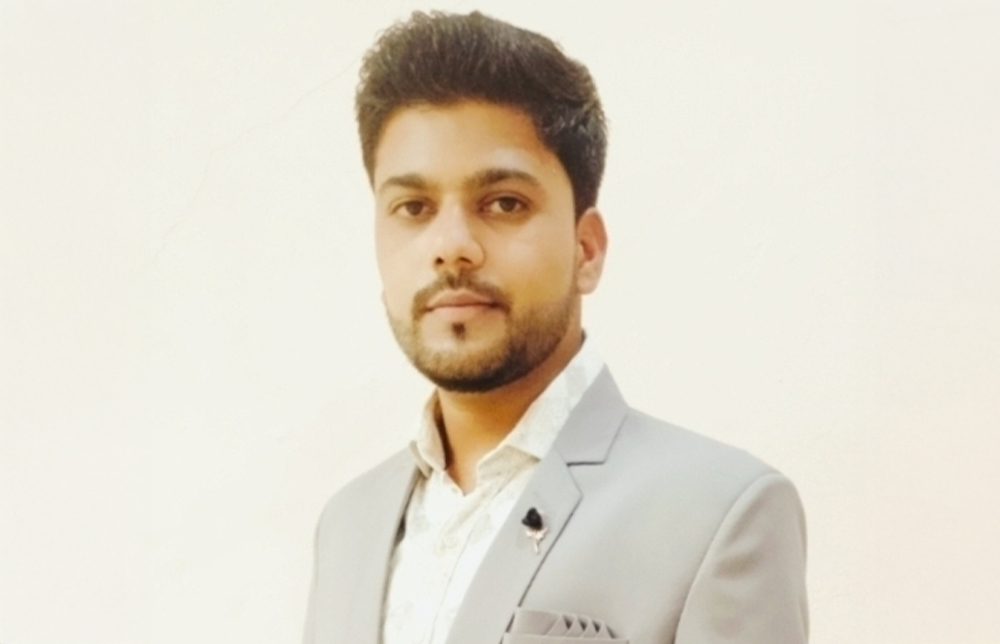
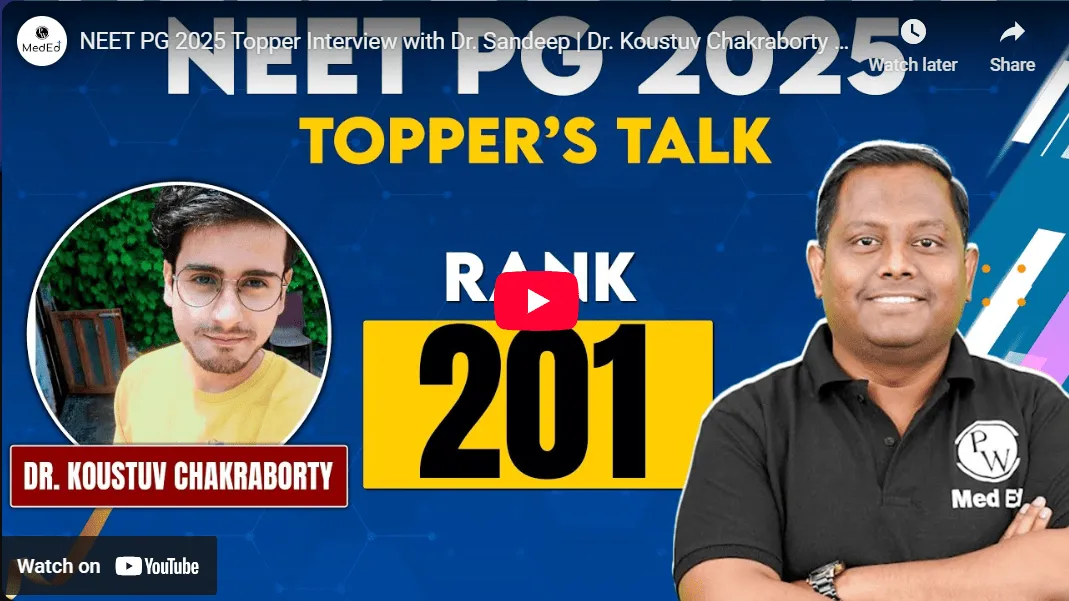
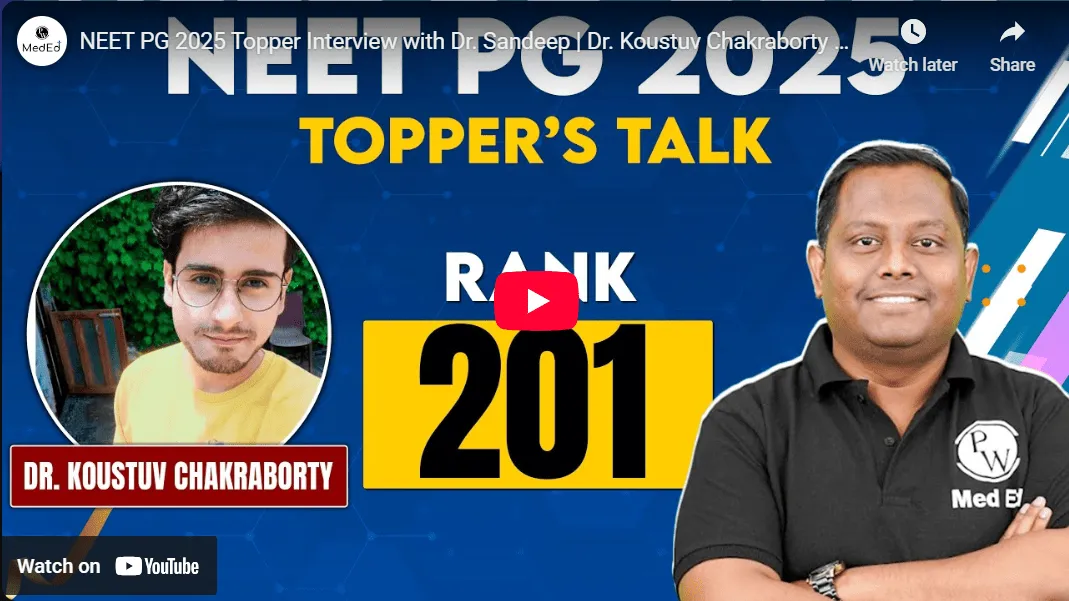
Securing a three-digit rank in NEET PG on the first attempt is a dream for many medical students. Dr Koustuv Chakraborty, a graduate of Calcutta National Medical College, Kolkata, shared how taking tests from Physics Wallah played a key role in shaping his preparation and mindset, helping him secure AIR 201.
His journey is not about shortcuts or studying for endless hours. It is about clarity, consistency, using the right resources, and trusting your own process, lessons every NEET PG aspirant can learn from.
A Simple but Consistent Preparation Strategy Supported by PW Resources
Dr Koustuv’s preparation was simple and realistic, especially while managing hospital duties.
“I used to study around two to three hours a day.”
What mattered more than long hours was discipline.
“But I was very consistent, means that won't stop. Whatever happens, in any case, if I fall sick, if I meet with an accident, then also I will study for 2 hours, 1 hour in the morning, 1 hour in the evening. That was a norm.”
Once his basics were clear, his focus shifted to solving questions, using his small pockets of time effectively.
“So I focused primarily on MCQs”
“Sometimes I used to do some custom modules here and there while no patients were there on the casualty.”
He relied on integration, not rote learning, a core principle behind PW’s teaching style.
“I'm a big believer in integration. I've always integrated and studied.”
“I am not a person who just crams notes or crams points to be honest.”
By integration, Dr Koustuv meant understanding how topics connect, instead of memorising isolated facts. This helped him apply concepts easily in MCQs and avoid last-minute cramming, making his preparation more practical and exam-oriented.
How Tests and GTs on PW Helped Him Identify Real Weaknesses?
Dr Koustuv realised the importance of exams through his INI CET experience.
“Wohi maine kia tha to ab INI CET se maine dekha ki mera MCQ solving skills thoda weak hai, concepts achhe hain, basics achhe hai but mcq solving and the topic that I repeated in those examinations.”
He understood that entrance exams need exam-specific preparation, something PW focuses on through GTs and entrance-oriented MCQs.
“Like absolute entrance related topics. I had a weakness in them.”
For him, exams were a reality check.
“These examinations are a mirror that where you lie.”
Skipping tests means missing self-awareness.
“If you don't give the examinations you won't understand.”
“And if you don't know then you cannot swim your way through and reach the coastline.”
He explained that tests show your real level of preparation. Without attempting exams, it is impossible to know your weaknesses, and without that awareness, improving your performance becomes very difficult.
Turning the Last 45 Days into a Rank-Boosting Strategy with PW GTs
With just 45 days left before NEET PG, Dr Koustuv made a bold but structured plan using PW Grand Tests.
“So I felt the best way to approach it is in the limited amount of time, 45 days, 19 subjects, impossible.”
Instead of panicking, he challenged himself.
“But I took it as a challenge and I made to myself that in the build up to this 45 days in the initial 40 days I will give a GT a single day.”
He clearly explained the maths behind the plan.
“One GT a day that accounts for 40 GTs.
And in the last 5 days I will increase my frequency to two GTs per day.”
This disciplined testing strategy, aligned with Physics Wallah’s GT ecosystem, helped him improve accuracy, confidence, and exam temperament.
“Make Your Own Path”: A Message PW Wants Every NEET PG Student to Remember
Dr Koustuv’s advice to aspirants perfectly reflects the philosophy PW promotes.
“Don't listen to any toppers.
Don't listen to any made influencers.
Don't listen to anybody.”
He stressed the importance of self-awareness.
“It is you and only you who will determine the path to success. Nobody else's path will take you to success.”
PW provides guidance, but the journey remains personal.
“If you cannot find your own path, retrospect it, review it, do everything that is possible but make your own path.”
This is exactly how he prepared.
“Don't try to emulate anybody. Make your own path. I didn't try to emulate anybody. I did the thing which suited me the best.”
“Read Every Year for What It Has to Offer”: Building Strong MBBS Foundations
Dr Koustuv strongly believes that NEET PG success starts much earlier — during MBBS itself.
“Every year, take the crux of every year that it has to offer.”
He advised juniors not to rush into the entrance exam race too early.
“So please and another thing whether in first year, second year, third year, fourth year, don't focus on NEET PG.”
Instead, he encouraged deep conceptual learning.
“It is the best time that you can read your main subjects. You can read the textbooks. You can read your main subjects. You can make the concepts for your life.”
He also warned against early burnout.
“Don't get into this NEET PG race. It is not worth it because after 6 months you will be exhausted.”
This strong base later helped him use PW’s MCQs, GTs, and revision tools far more effectively.
Physics Wallah: Turning Limited Time into AIR 201
Dr Koustuv Chakraborty’s journey shows how the right platform, used in the right way, can make a real difference.
With concept-focused learning, MCQ-driven preparation, regular GTs, and rapid revision support, Physics Wallah helped him convert limited time and heavy hospital duties into a three-digit NEET PG rank, AIR 201 in his first attempt.
What Dr Koustuv’s NEET PG Journey Teaches Aspirants?
Towards the end of the interaction, Dr Koustuv summed up his entire journey in one clear thought.
“NEET PG is a journey. It's not a one day race.”
He believes sincere MBBS preparation reflects naturally in entrance exams.
“If you do your MBBS well, NEET PG automatically will give you the benefit of everything that you have read throughout the MBBS journey.”
He also cautioned students against chasing colleges without building competence. For him, competence matters the most.
“Become competent. Do the things as it is as it must be done.”
He ended with a reassuring note for juniors who feel overwhelmed.
“NEET PG will happen organically. You don't need to think about that.”
With the right concepts, consistent effort, and structured preparation using platforms like Physics Wallah, Dr Koustuv Chakraborty’s AIR 201 journey stands as proof that the process truly works.