







Narcissistic Personality Disorder Symptoms, Causes, Treatment
Narcissistic Personality Disorder (NPD) is a mental health problem where someone has an overly high opinion of themselves. Find the NPD causes, symptoms, and best treatment strategies here.
 Nivedita Dar29 Mar, 2024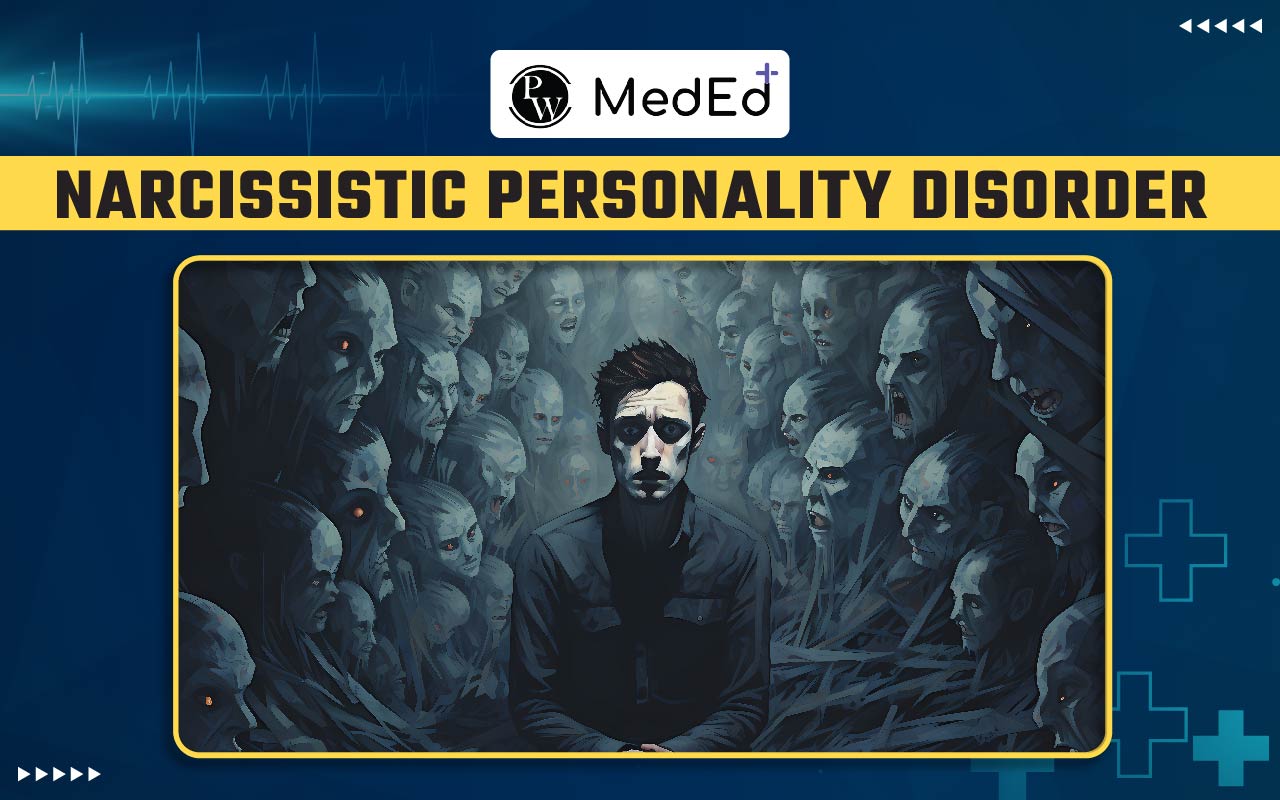
A person with narcissistic personality disorder (NPD) has an excessive obsession for their importance. They always seek attention and admiration from other people. But in an actual sense, they are unaware of their self-worth and can’t tolerate criticism. People with NPD cannot usually show empathy and concern for others’ feelings.
As a medical student, you need to understand in detail this mental health issue, so in this article, we are going to discuss narcissistic personality disorder, its symptoms, causes, diagnosis, and treatment to enhance your concepts about this topic.Narcissistic Personality Disorder Characteristics
Narcissistic personality disorder is a mental health problem that highly impacts how you see yourself and relate to people. An overwhelming need to feel important or impress others is one of the characteristics of narcissistic personality disorder. People with NPD generally demonstrate the following kinds of behavior:- A feeling of superiority complex
- Need for praise and admiration
- Lack of empathy for others
Narcissistic Personality Disorder Symptoms
The symptoms of narcissistic personality disorder are related to thoughts, emotions, and behaviors. The Diagnostic and Statistical Manual of Mental Disorders, Fifth Edition text revision published by the American Psychiatric Association, defines a list of nine criteria. The following symptoms may be observed in individuals who meet the criteria:- Overestimate their competencies and exaggerate their skills and achievements.
- Fantasize about your success, power, beauty, and achievements.
- Think of themselves as unique or exceptional and should be associated with high-status individuals.
- A tendency to seek compliments from others and an obsessive demand for recognition.
- Getting irritated when someone doesn’t give favourable remarks or attention.
- Aptitude to exploit people to satisfy self-interests and purposes.
- A deficiency in empathy and an inability to acknowledge or connect with the needs and feelings of others.
- Feeling jealous of the success of others and ignoring others’ achievements.
- Behaving arrogantly and authoritatively.
Narcissistic Personality Disorder Causes
NPD is a mental health condition, and its specific cause is unknown to professionals. They might be the result of a mix of environmental and genetic factors. The following factors may influence the chances of having NPD during childhood:- Genetics: A person with parents or other close relatives with NPD is more likely to have NPD.
- Learned behaviour: Youngsters might pick up characteristics and behaviors related to NPD by observing, copying, and learning them from others in the family.
- Experiences from childhood : Childhood experiences of rejection, neglect, and criticism can influence ego development and a lack of empathy.
- Parenting approach: A child who is overprotected or pampered excessively by parents may grow up expecting and demanding the same treatment. It could lead to difficulties managing their emotions when things don't go as planned.
- Culture: According to research, societies that place more importance on individualism and authority may risk developing NPD more than those that value cooperation and community feelings.
Narcissistic Personality Disorder Diagnosis
A psychiatrist or psychologist can diagnose NPD by interacting with you, your family, and your friends to get clarity about your life and relationships with others. It also helps rule out other illnesses that have comparable symptoms or outcomes. Narcissistic personality disorder is typically diagnosed based on the following:- Your symptoms and the effects they have on your life.
- A medical examination is needed to identify any physical issues that may be the source of your problems.
- A comprehensive psychological assessment, sometimes involving answering questions.
- Recommendations are provided in the American Psychiatric Association's Diagnostic and Statistical Manual of Mental Disorders (DSM-5).
Narcissistic Personality Disorder Treatment
Treatment for narcissistic personality disorder usually involves talk therapy, also referred to as psychotherapy. If you require therapy for other related mental health issues, such as anxiety or depression, medications might be part of it.Psychotherapy
The psychotherapy treatment for NPD can help you in the following ways:- Improve your interpersonal skills to build more fulfilling relationships.
- Recognize the reasons behind your feelings and emotions that provoke narcissistic behaviors.
- Acknowledge and preserve genuine interpersonal connections while cooperating with peers, friends, and others.
- Develop the ability to accept criticism and acknowledge your strengths, limitations, and potential.
- Improve your mental structure and maturity to control your emotions.
- Maintain self-esteem while dealing with issues and encourage cooperation.
- Instead of desiring unattainable goals, learn to set and accept goals you can achieve.
Medication
The narcissistic personality disorder cannot be treated with medication. However, medications such as antidepressants or anxiety medications may be beneficial if you exhibit signs of depression, anxiety, or other illnesses that might increase your narcissistic personality disorder. The mental health disease known as Narcissistic Personality Disorder (NPD) is characterized by an excessive sense of self-importance and a deficiency of empathy towards others. Since specific symptoms of NPD coincide with those of other personality disorders, diagnosis can be difficult. Deterioration in relationships and general life disruption can be severely harmed by the apparent arrogance and selfish behaviour shown by NPD patients. It should be treated with appropriate medical counselling. If you aspire to become a medical professional and seek more information on these topics, you can join Physics Wallah online classes to enhance your knowledge and prepare for the NEET exam for admission to medical courses. If you are preparing for NEET PG and looking for expert guidance to prepare for the syllabus better, download the PW MedEd app and access a wide range of study materials, practice tests, and expert tips tailored specifically for NEET PG candidates.Narcissistic Personality Disorder FAQs
What is the biggest challenge in the diagnosis and treatment of narcissistic personality disorder (NPD)?
The biggest challenge in the diagnosis and treatment of narcissistic personality disorder (NPD) is that individuals with NPD are more confrontational and aggressive than cooperative, and they are also less likely to seek assistance or therapy.
What are the other mental health issues associated with narcissistic personality disorder?
People with narcissistic personality disorder are more likely to suffer from anxiety and depression. They may also develop bipolar disorder.
How does parenting style induce narcissistic personality disorder in children?
Research suggests that both overprotective and neglectful parenting can induce narcissistic personality disorder in children as they grow up.
What are the signs of covert NPD?
People with covert NPD are more defensive, sensitive to criticism, and show distrustful and envious behaviour and actions.
How does cognitive behavioural therapy (CBT) help in NPD treatment?
The CBT intends to identify detrimental or egoistic attitudes in NPD patients and replace them with more adaptable and healthier thoughts and actions.



Talk to a counsellorHave doubts? Our support team will be happy to assist you!


Check out these Related Articles









Join 15 Million students on the app today!
 Live & recorded classes available at easeDashboard for progress trackingMillions of practice questions at your fingertips


Free Learning Resources
PW Books
Notes (Class 10-12)
PW Study Materials
Notes (Class 6-9)
Ncert Solutions
Govt Exams
Our Other Websites
Class 6th to 12th Online Courses
Govt Job Exams Courses
UPSC Coaching
Defence Exam Coaching
Gate Exam Coaching
Other Exams
Know about Physics Wallah
Physics Wallah is an Indian edtech platform that provides accessible & comprehensive learning experiences to students from Class 6th to postgraduate level. We also provide extensive NCERT solutions, sample paper, NEET, JEE Mains, BITSAT previous year papers & more such resources to students. Physics Wallah also caters to over 3.5 million registered students and over 78 lakh+ Youtube subscribers with 4.8 rating on its app.
We Stand Out because
We provide students with intensive courses with India’s qualified & experienced faculties & mentors. PW strives to make the learning experience comprehensive and accessible for students of all sections of society. We believe in empowering every single student who couldn't dream of a good career in engineering and medical field earlier.
Our Key Focus Areas
Physics Wallah's main focus is to make the learning experience as economical as possible for all students. With our affordable courses like Lakshya, Udaan and Arjuna and many others, we have been able to provide a platform for lakhs of aspirants. From providing Chemistry, Maths, Physics formula to giving e-books of eminent authors like RD Sharma, RS Aggarwal and Lakhmir Singh, PW focuses on every single student's need for preparation.
What Makes Us Different
Physics Wallah strives to develop a comprehensive pedagogical structure for students, where they get a state-of-the-art learning experience with study material and resources. Apart from catering students preparing for JEE Mains and NEET, PW also provides study material for each state board like Uttar Pradesh, Bihar, and others
Copyright © 2026 Physicswallah Limited All rights reserved.