







NEET PG 2026 Surgery Video-Based Questions: Practice Guide with Real Examples

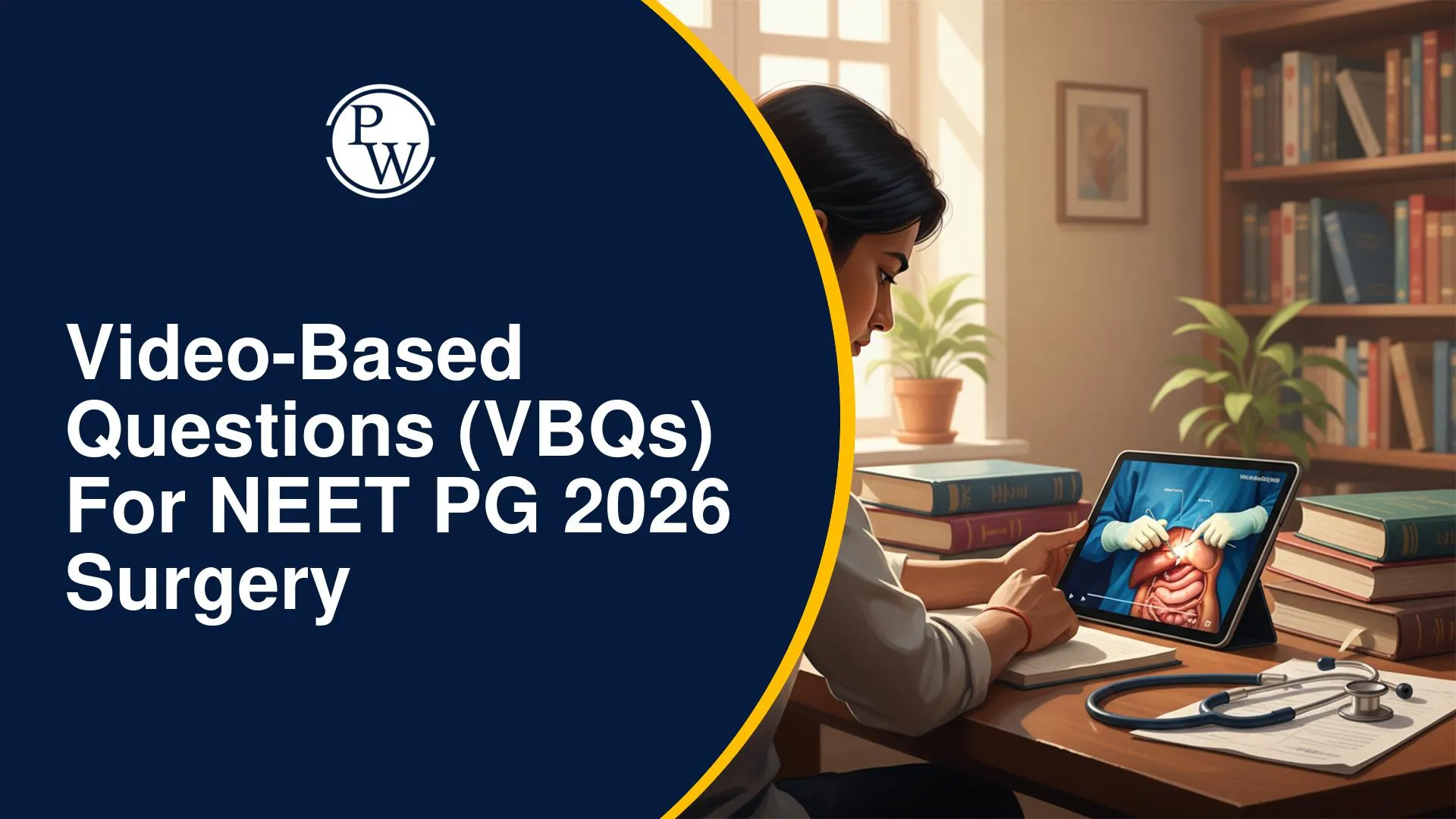
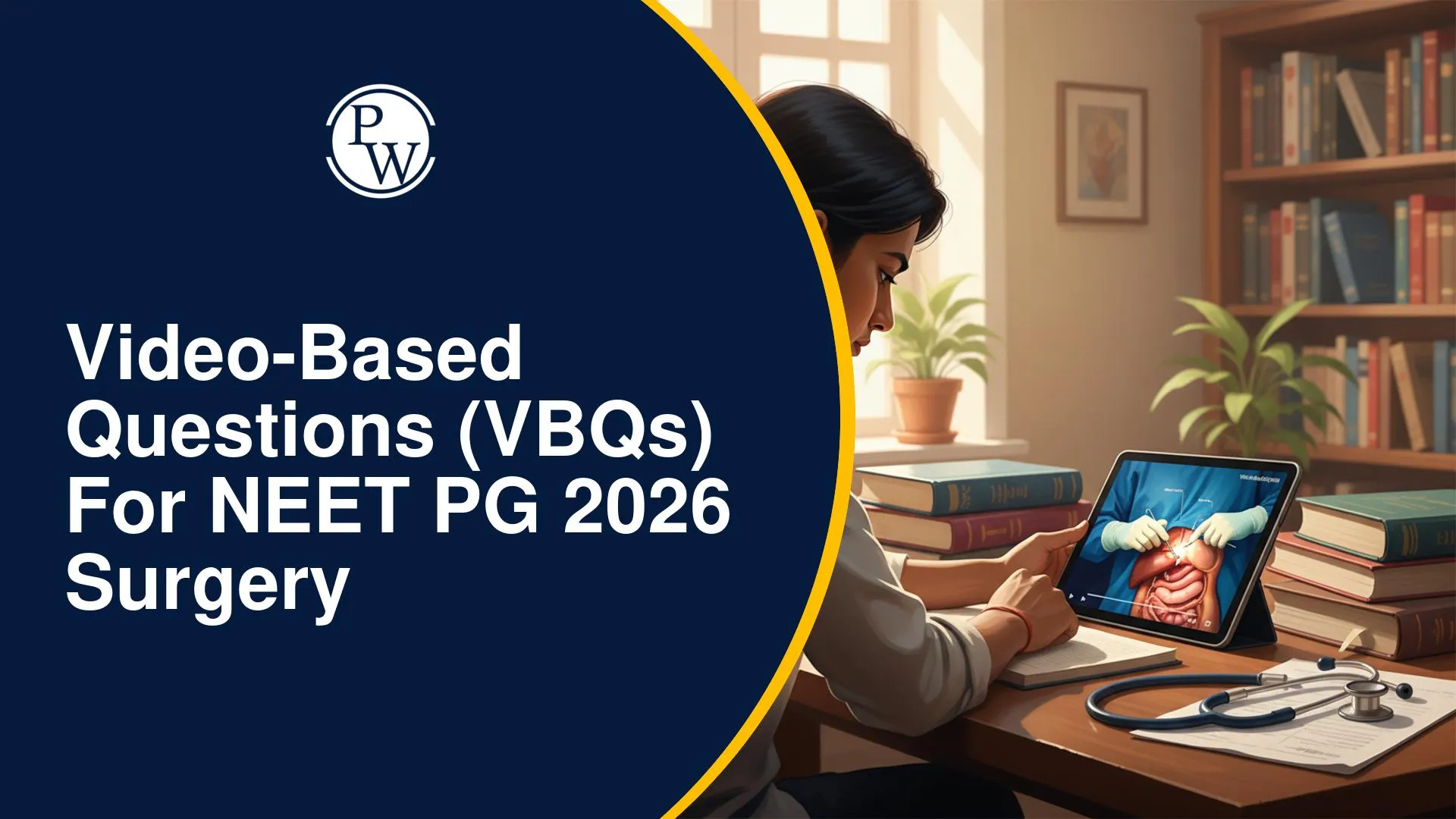
NEET PG 2026 is placing greater emphasis on clinical decision-making, and Surgery is one of the subjects where video-based questions (VBQs) are expected to play a much bigger role. Instead of relying only on written case scenarios, candidates may now be asked to identify surgical conditions, instruments, anatomical structures, or procedures by carefully observing short clinical or operative videos.
This video covers the latest trend in NEET PG 2026 Surgery Video-Based Questions, along with real practice examples, high-yield topics, and simple explanations. By practising these VBQs, you can strengthen your observation skills, improve clinical reasoning, and prepare confidently for the updated NEET PG exam pattern.
What Are Video-Based Questions in NEET PG 2026 Surgery?
A video-based question shows a short clip - a clinical sign, a surgical step, or an instrument - instead of only a written description. You then apply your surgery knowledge to pick the correct answer from the options given. These questions test both observation and concept clarity at the same time, so reading the stem carefully before watching the video helps you narrow down the choices faster.
How to Approach Surgery VBQs
Before jumping to the video, read the clinical stem and the options first. This simple habit helps you eliminate wrong answers even before you watch the clip. For example, options linked to a history of prior surgery can often be ruled out early if the stem does not mention one.
Video Based Questions for NEET PG | VBQ for NEET PG 2026 | Surgery | Dr. Sandeep Sir
Sample NEET PG 2026 Surgery VBQs with Answers
Below are practice questions exactly as used in the video-based question series, with the correct answer and a short explanation for each.
Q1. A 12-year-old boy presents with sudden, severe onset of abdominal pain, diagnosed as intestinal obstruction based on the video provided. Identify the condition.
-
A. Volvulus
-
B. Intussusception
-
C. Bands/adhesions
-
D. Internal hernia
Q2. 25-year-old female with complaint of swelling in the intra-oral region & swelling in neck: Gradually increasing size.
-
A. Thyroglossal duct cyst
-
B. Ranula
-
C. Plunging Ranula
-
D. Sublingual Dermoid cyst
Q3. Lap. Cholecystectomy: Identify the structure.
-
A. Normal anatomy
-
B. Phrygian cap deformity
-
C. Caterpillar hump
-
D. Double cystic duct
Q4. A 45-year-old female with swelling in the midline of the neck, painless & gradually increasing size: Identify the condition.
-
A. Solitary thyroid nodule
-
B. TGD cyst
-
C. Subhyoid bursitis
-
D. Enlarged pre-tracheal (lymph nodes)
Q5. A 40-year-old male with Inguinal swelling, Painless & gradually increasing size; a clinical test is performed. Diagnosis.
-
A. IIH
-
B. DIH
-
C. Femoral Hernia
-
D. Obturator
Q6. Identify the instrument used in perineal Sx & surgery performed?
-
A. Circular stapler + Stapler Hemorrhoidectomy
-
B. Linear stapler + Stapler Hemorrhoidectomy
-
C. Circular stapler + Fistulectomy
-
D. Linear
Q7. A 55-year-old female with Inguinal pain; a clinical test is performed. Identify the test.
-
A. Ring occlusion test
-
B. Zieman test
-
C. Howship-Romberg test
-
D. Roos test
Q8. Identify the Procedure.
-
A. Creating pneumoperitoneum
-
B. Placing umbilical port
-
C. Diagnostic peritoneal lavage
-
D. Optical port placement
Q9. A 5-week-old male child with gastric outlet obstruction is taken for surgery. Identify the procedure.
-
A. Swenson's
-
B. Duhamel surgery
-
C. Thiersch's surgery
-
D. Ramstedt's surgery
Q10. Identify the Device.
-
A. 24-hour pH monitor
-
B. Ambulatory pH monitor
-
C. Capsule endoscope
-
D. Endoluminal manometer
Key Surgery Topics for NEET PG 2026 VBQ Practice
-
Bowel obstruction signs like intussusception and volvulus
-
Neck and intraoral swellings: thyroglossal duct cyst, ranula, and dermoid cyst
-
Hernia clinical tests: three-finger test, ring occlusion test, and Howship-Romberg sign
-
Laparoscopic instruments and anatomical variants like caterpillar hump
-
Pediatric surgery: pyloric stenosis and Ramstedt's pyloromyotomy
-
Diagnostic devices like capsule endoscopy
NEET PG 2026 Surgery Video-Based Questions FAQ
What are video-based questions (VBQs) in NEET PG 2026?
How do you differentiate ranula from a sublingual dermoid cyst?
What clinical sign confirms an obturator hernia?







 Live & recorded classes available at easeDashboard for progress trackingMillions of practice questions at your fingertips

