







FMGE June 2026 Success Story: How Dr. Vanshika Thakur Turned a Devastating 148 Into FMGE Success with Physics Wallah
Dr. Vanshika Thakur scored 148 in her first FMGE attempt and was devastated. Instead of giving up, she rebuilt her preparation with Physics Wallah's MedIQ FMGE Predictor, Qbank, and Rapid Revision and cleared the toughest FMGE paper in recent memory in June 2026. Here's how she did it.
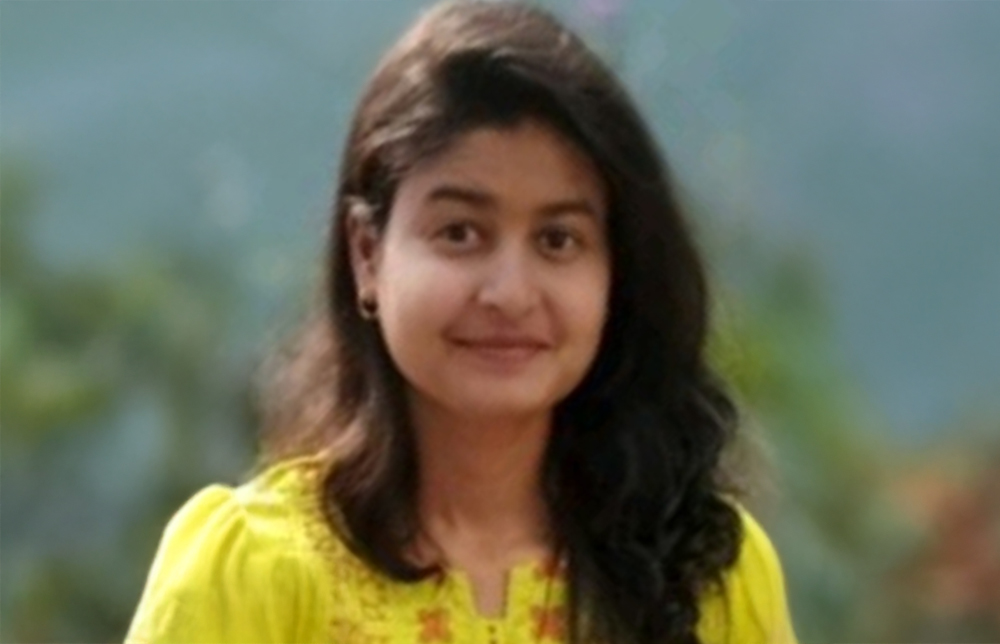
The FMGE June 2026 exam is being called one of the toughest in recent years, with a difficulty level students are describing as "top notch." In the middle of that difficulty spike stands the story of Dr. Vanshika Thakur, a student who had every reason to lose confidence after her first attempt, but instead used it as the turning point of her preparation.
Speaking with Dr. Sudha Sitaram, Faculty of Ophthalmology on the PW MedIQ platform, Vanshika walked through the exact journey that took her from a heartbreaking score to a cleared exam.
Building the Base in College: How Dr. Vanshika Thakur Started Preparing for FMGE
Vanshika didn't wait until after graduation to start her FMGE prep. She completed her MBBS from Bishkek in 2025, but her FMGE journey had already begun years earlier, right from her college years.
"Ma'am, actually, right from the college itself I studied there. There were also online classes; you also attended our college, so I joined that also, and it was like I started from third-fourth year itself."
Starting preparation during MBBS helped Vanshika build a strong foundation. However, her first attempt taught her that concepts alone aren't enough without exam temperament and revision.
The Setback: Scoring 148 in the First FMGE Attempt Became a Turning Point
In her first attempt, Vanshika scored 148, a result she describes simply as devastating. She hadn't expected it at all.
"Mam, I didn't expect ki mera nahi hoga. I was like, mera toh hona hi hai. Then, after the result, I was so devastated, and I don't know where to talk, whom to talk to."
Looking back at what went wrong on exam day itself, she points to something every student can relate to - a single bad day undoing months of preparation.
"Mam, us din thoda tensed out ho gayi, panicked, aur thodi tabiyat bhi kharab si thi. Us din se bahut hi kharab ho gaya din, matlab it was not my day actually."
It wasn't a lack of knowledge that hurt her that day - it was nerves, an off day, and a paper that didn't go her way. But rather than dwelling in that disappointment, she gave herself a short window to process it before getting back to books.
"Then I just shifted... maine exam ki taiyari shuru kar di thi waise hi, uske baad hi result aaya, phir kuch paanch-das din baad hi I just continued."
That five-to-ten-day pause - to talk to people close to her, clear her head, and reset - became the bridge between her setback and her comeback.
How PW MedIQ Helped Dr. Vanshika Improve Her Preparation
Once she was back in preparation mode, Vanshika leaned heavily into PW's MedIQ resources - not randomly, but with a structured, topic-first approach. Her method was simple: study a topic, then immediately test it.
"Mam, actually I used to do whatever topic I had just read; I just used to solve the Qbank on the same topic the same day itself... after a few days I used to make customs, like tags of a like PYQ only, and sometimes I used to add clinical also, because nowadays clinical is also maximum, question clinical hi the is baar."
Practising Questions Every Day
Her daily practice volume grew steadily over the course of her preparation - starting small and scaling up as her confidence built.
"Ma'am, it was like, sometimes I used to... from the start I started with 100, 150, then also 200, 300, and also 400 also."
Every wrong question in the Qbank was treated as a lesson, not just a mistake to move past.
"Ma'am, I just read the explanation only, ma'am. I knew that topic, but I just thought I just shifted to my notes also; whatever I just did mistake, I just shifted to that also."
Grand Tests played their own role - not just as scorecards, but as a way to manage time pressure and stay exam-ready mentally.
"Mam, for time management also, for the concept - sometimes we used to get new questions so that we won't be panicked at the time that we are giving exam. They are so much helpful."
Using FMGE Predictor Smartly
The FMGE Predictor series became her final consolidation tool. She didn't rely on the videos as much as she relied on solving the book itself, cover to cover.
"I didn't watch the videos, just I guess one video I just watched, but earlier I just have solved most of the book…there was two parts and one was fully completed by me and the second, it was like half."
Revising Weak Subjects
She had her own system for flagging what she was likely to forget - highlighting tricky questions and coming back to them right before the exam.
"Mam, some questions were easy and some questions are moderate, and some mam I used to highlight the question - whatever I just felt that I would forget that thing, then I just, during the exam, before the exam, I just shifted like - yes mam, I scroll through this."
She also credited her teachers by name for how closely the questions aligned with what was taught in class.
"I would like to thank you - top the question, basically similar to your theory."
"They were easy questions also... a few questions that are from out of the box and some are we know all, and I just - I would like to thank Prasanna sir, Siraj sir also, and also Rajeev sir also, Sachit sir."
For subjects she felt less confident in, she turned to marathon-style revision videos to consolidate everything quickly.
"Kuch subjects ka aapka dekha hai, aur ENT ka dekha tha aur ek Gynae ka dekha tha... woh toh pseudo confidence hota hai ki aapne padh liya hai, toh uske baad thoda confidence aata hai."
The Final Stretch: Dr. Vanshika Thakur's Last 10 Days Before FMGE June 2026
In her last 10 days before the exam, Vanshika combined two approaches depending on the subject - watching quick revision videos for topics she was likely to forget, and flipping through her own notes for the rest.
"Ma'am, some used to read the notes and some used to watch the video. I was like both mam - jo jo subject mujhe lagte the ki mujhe thode yaad nahi rahenge, toh main unki woh laga deti, one-shot job ke bhi dekha hai maine, aur baaki kaafi subject ke toh main unke notes ko aise flip karti thi."
Exam day itself came with its own unexpected challenge - conditions completely outside her control.
"Mam, actually exam wale din aapko bahut confidence rakhna chahiye. First of all, second of all, aapki jo conditions hongi woh aapke according nahi hongi. Us din main gayi wahan pe AC nahin tha, it was like cooler aur cooler aur pankha tha. Usmein mam hawa bhi nahi aa rahi thi, it was like sweating, sweating, but we have to study."
Instead of letting that rattle her, she went in with a mindset she now passes on to every junior preparing for FMGE - accept that no one knows everything, and don't let the unknown questions shake your confidence in the ones you do know.
"Toh maine jitna ho sake, maine aisa kiya tha ki jo bhi question aayega main uspe dhyaan doongi, jo question nahi aata kisi ko bhi nahi aata. Toh maine bas wahi mark kiya jo mujhe lag raha tha. Matlab darna nahi hai kyunki saare question kisi ko nahi aate, kisi ke 300 nahi aayenge."
Dr. Vanshika Thakur's Advice After Clearing FMGE
Vanshika is clear that today's FMGE is not an exam you can clear with last-minute cramming or one-liners. The paper has shifted toward concept-heavy, clinical-heavy questions - and her preparation reflected that shift.
"Ma'am, actually aajkal aisa nahi raha hai ki one line question de denge; it was like it's conceptual, we have to study the whole, kyunki main have watched the main videos also in my college times also. So it was like main have the concepts, but main have to just replenish my concepts. So main just watch the videos again, and we have to study again and again. Matlab mere last one month mein fourth revision ho gaya tha mam."
That single line - a fourth revision in her final month - captures the entire philosophy behind her comeback: start early, build concepts in college, revise relentlessly, and trust that repeated practice is what finally sticks.
From a heartbreaking 148 to clearing one of the toughest FMGE papers in recent memory, Dr. Vanshika Thakur's journey is proof that one bad attempt doesn't define the outcome - it's what you do in the days and months after it that does. For every FMGE aspirant currently sitting with a disappointing score, her story is a reminder: pick yourself up, get back to your books, and trust the process - because it works.

Free Learning Resources
PW Books
Notes (Class 10-12)
PW Study Materials
Notes (Class 6-9)
Ncert Solutions
Govt Exams
Our Other Websites
Class 6th to 12th Online Courses
Govt Job Exams Courses
UPSC Coaching
Defence Exam Coaching
Gate Exam Coaching
Other Exams
Know about Physics Wallah
Physics Wallah is an Indian edtech platform that provides accessible & comprehensive learning experiences to students from Class 6th to postgraduate level. We also provide extensive NCERT solutions, sample paper, NEET, JEE Mains, BITSAT previous year papers & more such resources to students. Physics Wallah also caters to over 3.5 million registered students and over 78 lakh+ Youtube subscribers with 4.8 rating on its app.
We Stand Out because
We provide students with intensive courses with India’s qualified & experienced faculties & mentors. PW strives to make the learning experience comprehensive and accessible for students of all sections of society. We believe in empowering every single student who couldn't dream of a good career in engineering and medical field earlier.
Our Key Focus Areas
Physics Wallah's main focus is to make the learning experience as economical as possible for all students. With our affordable courses like Lakshya, Udaan and Arjuna and many others, we have been able to provide a platform for lakhs of aspirants. From providing Chemistry, Maths, Physics formula to giving e-books of eminent authors like RD Sharma, RS Aggarwal and Lakhmir Singh, PW focuses on every single student's need for preparation.
What Makes Us Different
Physics Wallah strives to develop a comprehensive pedagogical structure for students, where they get a state-of-the-art learning experience with study material and resources. Apart from catering students preparing for JEE Mains and NEET, PW also provides study material for each state board like Uttar Pradesh, Bihar, and others
Copyright © 2026 Physicswallah Limited All rights reserved.