






PW MedEd 4.0: What Is the New Approach to MBBS Education?
PW MedEd 4.0 has been discussed here. MBBS education requires integrating clinical problem-solving with foundational medical concepts. Modern medical training emphasises solving complex clinical vignettes, mastering diagnostic procedures, and understanding high-yield differentiations. Structured revision tools and bedside diagnostic models help bridge the gap between classroom theory and practical medical internship.
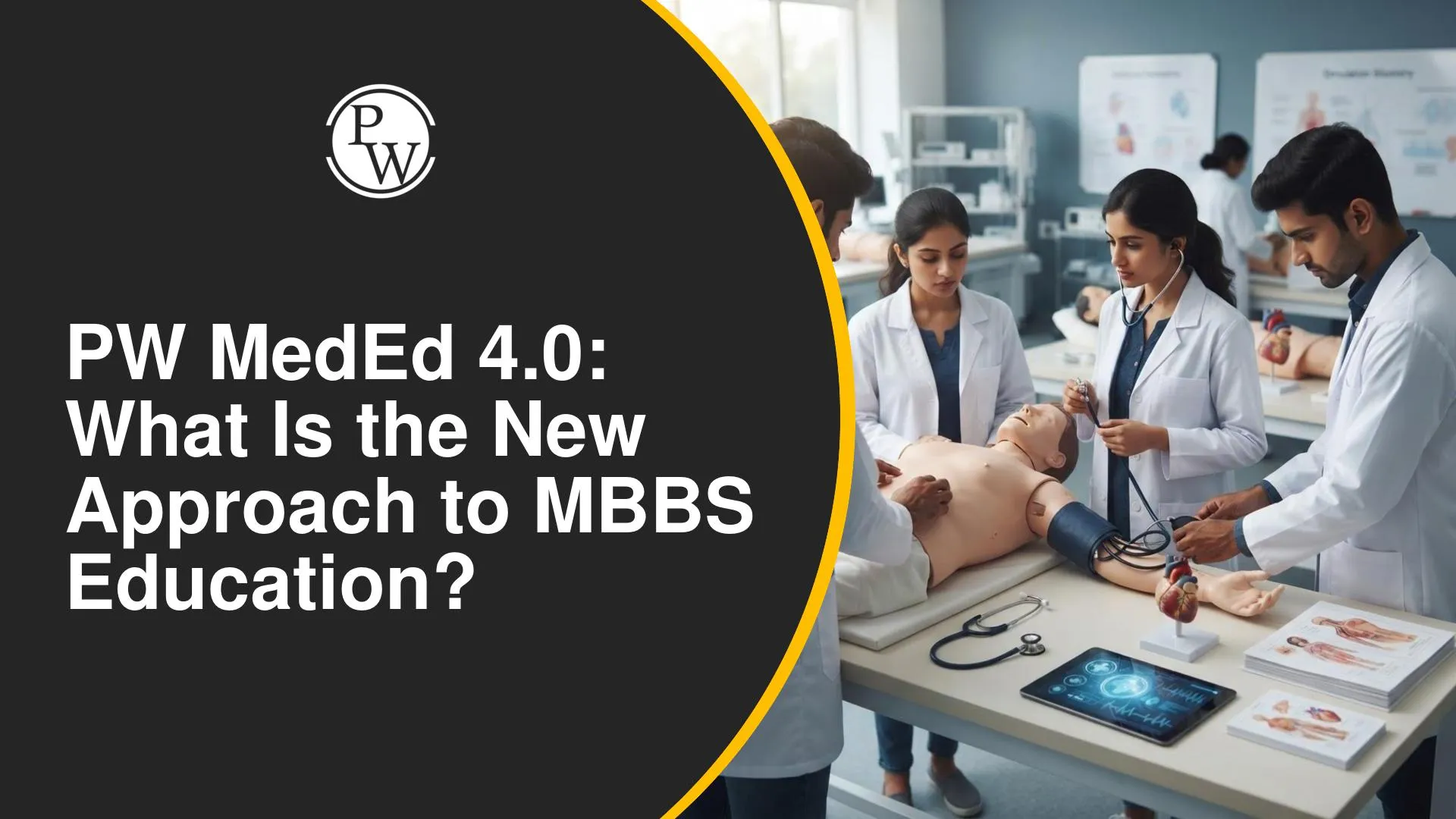
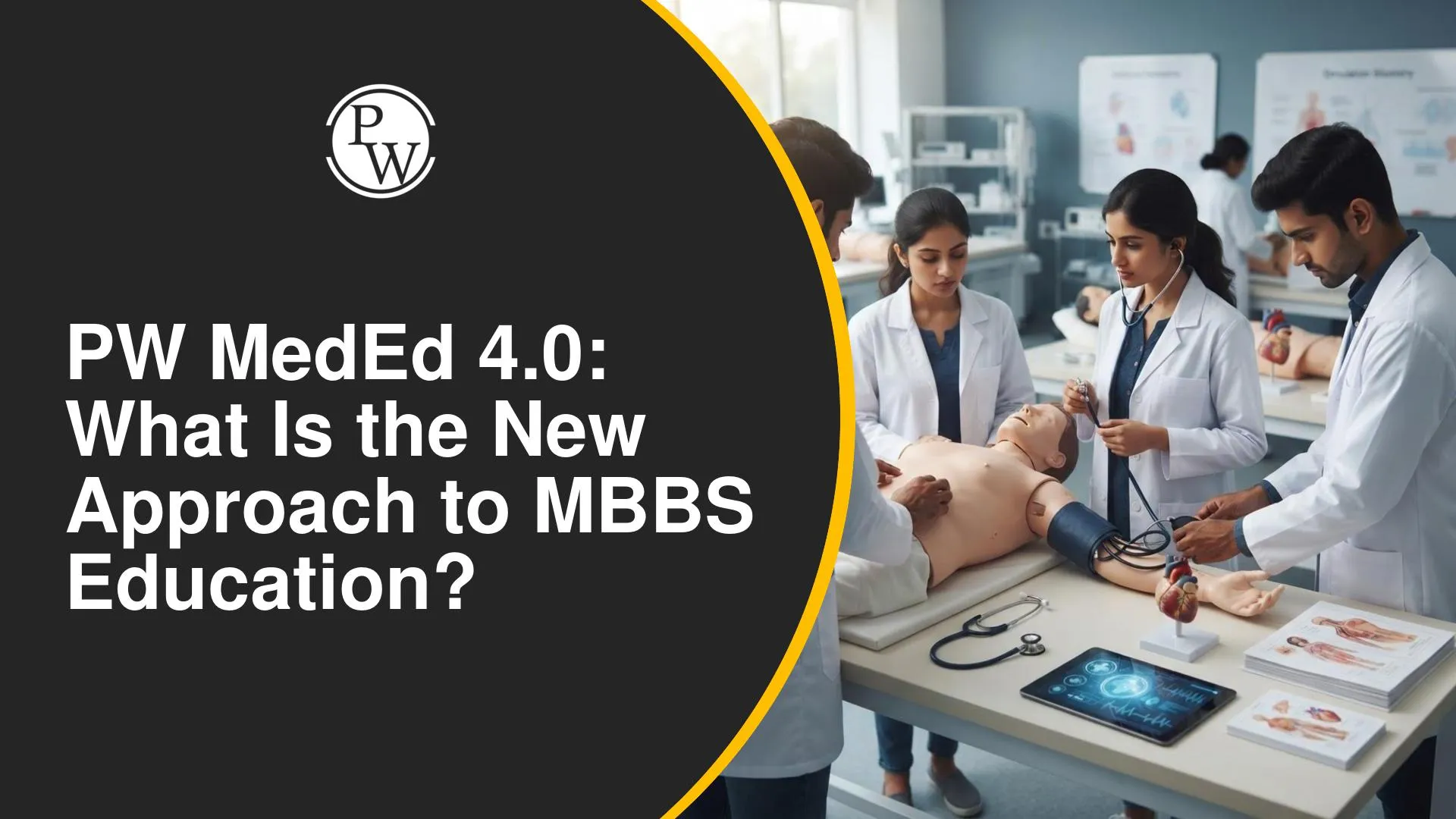
PW MedEd 4.0: Medical education is shifting rapidly toward clinical application and integrated learning. Students must master theoretical concepts while building strong bedside evaluation and diagnostic reasoning skills. Understanding high-yield clinical differentiations, procedural techniques, and structured approaches to long-stem clinical questions is essential for clearing licensing examinations like NEET-PG, INI-CET, FMGE, and succeeding during practical hospital training.
What is PW MedEd 4.0?
PW MedEd 4.0 focuses on blending core medical concepts with clinical problem-solving skills. Contemporary MBBS training prioritises tackling complex case vignettes, mastering diagnostic techniques in ophthalmology and microbiology, and grasping high-yield distinctions in forensic pathology, toxicology, and dermatology. Systematic revision aids and bedside diagnostic frameworks connect theoretical learning with real-world internship practice.
Methodology and Heuristics for Clinical MCQ Resolution
Standardised medical licensing examinations focus on multi-sentence clinical vignettes rather than isolated recall questions. Solving these items requires a structured heuristic framework.
Long-Stem Clinical Question
- Step 1: Scan for Pathognomonic Buzzwords / Anchor Signs
- Step 2: Correlate Diagnostic Laboratory & Imaging Reports
- Step 3: Map Against Broad Differential Diagnoses.
- Step 4: Exclude Distractors to Reach the Definitive Diagnosis
Strategic Approach to Complex Vignettes
-
Targeting Buzzwords: Look for specific pathognomonic terms and anchor signs embedded within the scenario to identify the underlying pathology quickly.
-
Reverse Navigation (Lead-in Reading): When facing an 8–10 line clinical vignette, read the final question prompt and scan the answer options first. This gives clear direction before reading through the entire clinical history.
-
Investigation Triangulation: Cross-match patient vitals, clinical presentations, and laboratory or imaging findings to systematically rule out distractors.
-
Integration of Media-Based Elements: Systematically evaluate Video-Based Questions (VBQs) and Image-Based Questions (IBQs). For instance, dynamic airway assessments in anesthesia rely on evaluating Mallampati scoring during active movement.
High-Yield Clinical Differentiations and Diagnostic Associations
Differentiating overlapping clinical signs across core medical subjects is necessary for both clinical decision-making and competitive examinations.
Forensic Pathology: Differential Features in Asphyxial Deaths
|
Clinical / Autopsy Feature |
Antemortem Hanging | Homicidal Ligature / Strangulation | Autoerotic Hanging |
|---|---|---|---|
| Salivary Findings | Dribbling of saliva from the angle of mouth (vital sign) | Absence of directional salivary dribbling | Variable depending on position |
| Associated Trauma | Typically absent (except suspension trauma) | Presence of struggle marks, defence wounds, or homicidal trauma | Absence of struggle marks |
| Scene / Surroundings | Standard ligature suspension point | Signs of disturbance/altercation | Presence of protective padding under ligature, private/isolated setting |
Diagnostic Signs in Toxicology
Recognising physical exam indicators helps identify specific toxidromes (Memory Tip: Remember that Burtonian Line (Bluish-purple line on gingival margins) is diagnostic of Chronic Lead Poisoning (Plumbism), while Aldrich-Mees Lines (Transverse white bands across nails) are classic indicators of Arsenic Poisoning and thallium toxicity).
Dermatology and Psychiatry Formulations
-
Dermatology: Modern clinical diagnosis moves beyond simple spot diagnosis to systematic diagnostic trees. For example, clinicians differentiate plaque psoriasis from other erythematosquamous disorders by evaluating scale characteristics, the Auspitz sign, and anatomical distribution patterns.
-
Psychiatry: Diagnostic workflows rely on dynamic case evaluations. Differentiating affective, psychotic, and personality disorders requires tracking the longitudinal progression of symptoms rather than relying on isolated cross-sectional observations.
Pre-Clinical and Para-Clinical Subject Integrations
Clinical understanding depends on solid pre-clinical and para-clinical foundations, linking laboratory sciences directly to clinical practice.
Anatomy: Spatial Orientation and Dissection Mapping
-
Dissection Revisitability: Video-based walkthroughs trace neurovascular bundles, muscular origins, and insertions, reinforcing structural relationships learned during first-year cadaveric dissections.
-
3D vs. 2D Structural Conceptualization: Static two-dimensional textbook diagrams can obscure deep tissue layers. Interactive 3D modeling allows multi-axis rotation and magnification to map complex surgical planes clearly.
Microbiology: Standardized Practical Laboratory Protocols
-
Direct Microscopic Visualization: High-magnification views of stained and unstained specimens clarify key morphological features of pathogens.
-
Standardized Laboratory Techniques: Step-by-step demonstrations show specimen culture evaluations, standard staining protocols, and practical setups for viva voce identification trays.
Ophthalmology: Diagnostic Procedures and Instrument Identification
-
Core OPD Diagnostic Procedures:
-
Slit-Lamp Biomicroscopy: Systematic examination of the anterior segment.
-
Fundus Evaluation: Retinal assessment using the 90D condensing lens, direct ophthalmoscopy, and indirect ophthalmoscopy.
-
Angle Assessment: Diagnostic evaluation using gonioscopy.
-
Surgical Instrument Differentiation: Comparative identification of specialized ophthalmic instruments, such as cataract extraction kits, chalazion clamps and curettes, and fine forceps.
Begin NEET PG Prep Today with NEET PG Online Courses
Structured High-Yield Revision and Bedside Skill Acquisition
Consolidating medical knowledge requires organized study material alongside practical bedside exposure.
Integrated Study Material Architecture
-
Examiner Star-Marking: Identifies high-probability university examination topics and core evaluator criteria.
-
Integrated PYQs/PYTs: Embeds Previous Year Questions and Previous Year Topics directly into relevant theoretical sections.
-
Annotation Margins: Provides dedicated margins for recording clinical observations, cross-disciplinary points, and lecture updates.
Post-MBBS Transition: The "Pocket Clinic" Model
The "Pocket Clinic" structure prepares students for practical internship demands through dedicated bedside skill training:
-
Translating patient symptoms directly into a focused list of differential diagnoses.
-
Conducting targeted physical examinations, including precise auscultation of cardiac and pulmonary zones.
-
Interpreting diagnostic laboratory panels and acute emergency imaging scans quickly in urgent care settings.
Evolution of Modern Medical Education and Multimodal Learning
Medical science continuously changes as new diagnostic tools and treatment protocols emerge. Multimodal learning structures help medical students retain knowledge effectively:
-
Interactive 3D Anatomical Modelling: Replaces flat diagrams with depth-adjustable spatial visualisation.
-
Point-of-View Clinical and Operative Videos: Shows students real-time surgical fields and outpatient procedures.
-
Standardised Examination Q-Banks: Unifies high-yield topics across NEET-PG, INI-CET, FMGE formats.



