Top Videos on Ear (ENT) for NEET-PG by PW
Physics Wallah ENT videos simplify the Ear (ENT) chapter by covering 3D middle ear anatomy, hearing physiology, ASOM/CSOM, key ear diseases, and audiology tests like Rinne and Weber. These visual, structured sessions improve concept clarity, recall, and revision speed, boosting accuracy and confidence for NEET-PG exams.

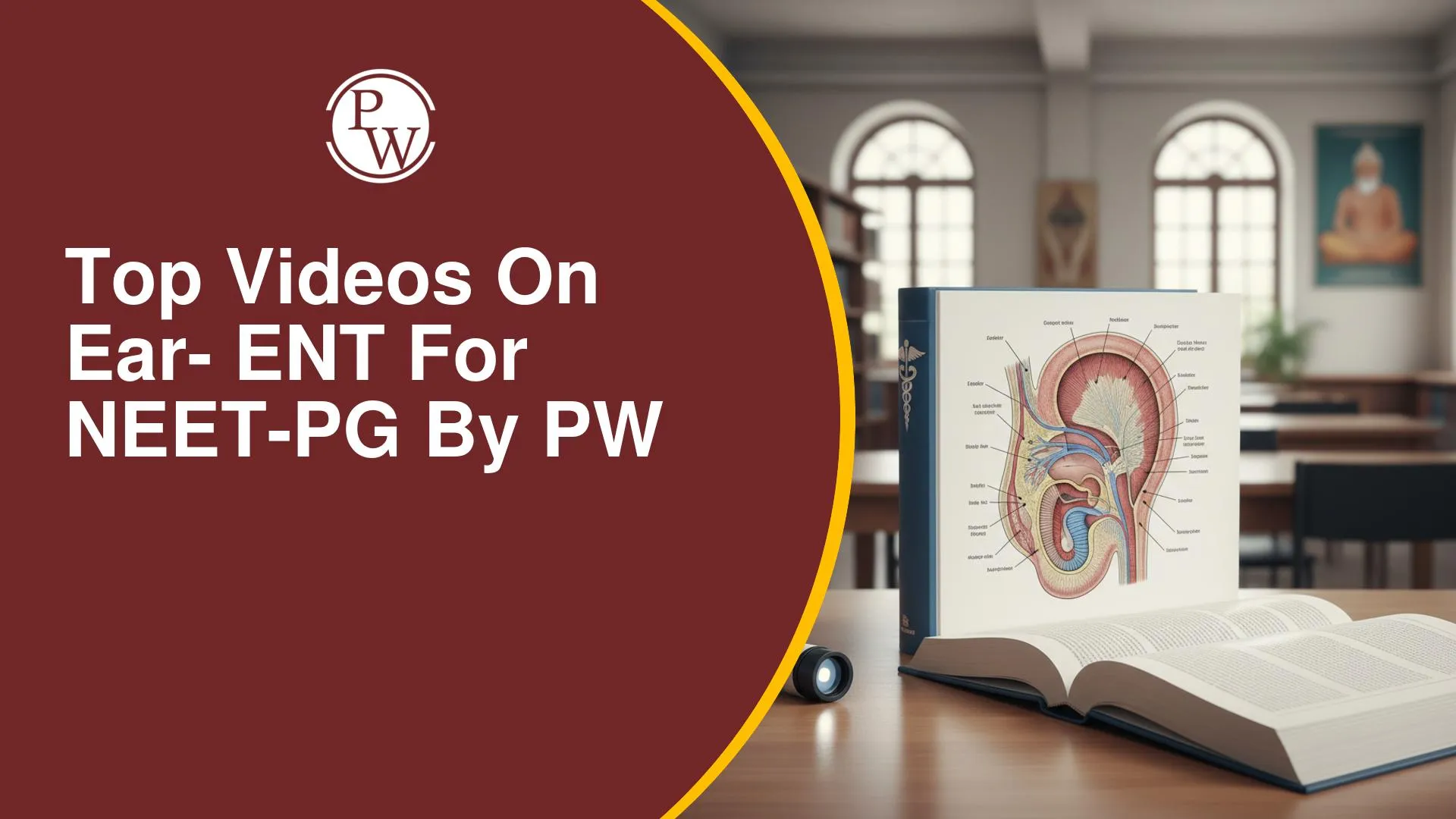
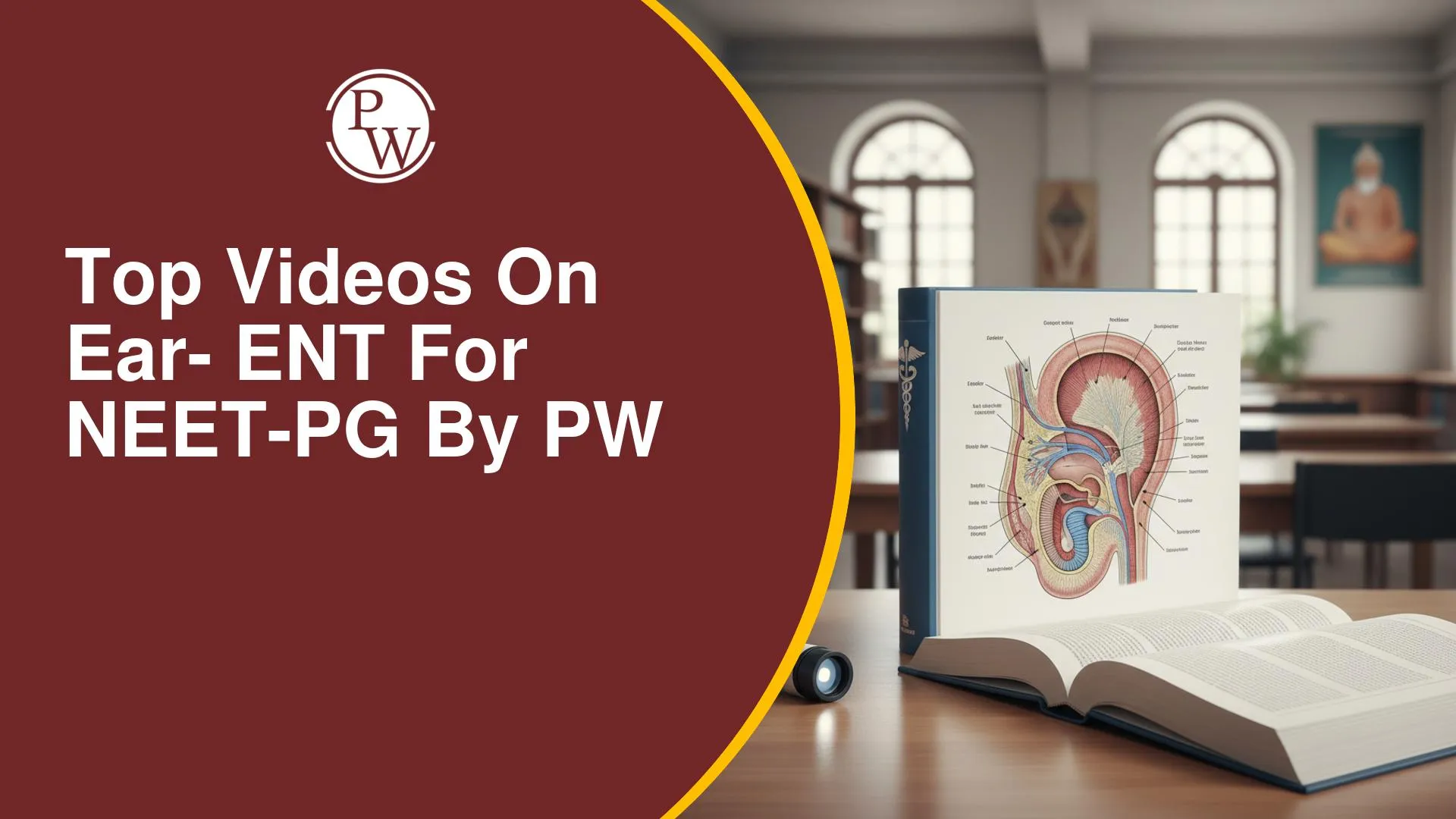
Finding good study material for the Ear (ENT) chapter can be difficult because most videos either explain only theory, skip clinical concepts, or do not provide everything in one place. When you study from scattered sources, revision becomes lengthy, important topics get missed, and it becomes harder for you to connect anatomy, hearing physiology, diseases, and audiology tests together for NEET-PG preparation.
Physics Wallah solves this problem by bringing exam-focused ENT content into one learning flow. These videos help you understand the Ear (ENT) chapter through 3D anatomy visualization, rapid revision sessions, disease-based discussions, and simplified hearing test interpretation so you can revise faster, improve concept clarity, and solve NEET-PG questions with better accuracy and confidence.
Video 1: 3D Visual Mastery of Middle Ear Anatomy for Strong Concept Building
This video helps you understand the middle ear in a simple and visual way so you can clearly remember its structure without confusion. You will learn step-by-step anatomy of the tympanic membrane, ossicles (malleus, incus, stapes), and Eustachian tube using clear 3D visualization. The video also explains how sound is transmitted through these structures in a logical sequence, making the physiology easier to understand.
By connecting anatomy with clinical relevance, this session helps you identify how different parts of the middle ear are involved in common ENT conditions. It improves your ability to recall diagrams quickly, strengthens core concepts, and makes anatomy-based NEET-PG questions much easier to solve with confidence.
Video 2: Rapid Revision of Ear Anatomy, Physiology & Clinical Tests in One Go
This video helps you quickly revise high-yield Ear (ENT) topics in a simple and time-efficient way, making it ideal for last-minute preparation. You will revise key areas like external and middle ear anatomy, tympanic membrane structure, nerve supply, and the physiology of hearing in a clear, easy-to-follow format.
It also covers important diagnostic tests such as BERA, impedance audiometry, and otoacoustic emissions, along with common clinical conditions like hematoma auris and otomycosis.
By linking core theory with clinical relevance, this session helps you strengthen recall, revise faster, and avoid confusion in commonly asked exam areas. It is especially useful for NEET-PG and university exams where quick revision and accurate concept recall are essential for scoring well.
Video 3: High-Yield Ear Pathologies Simplified for Quick NEET-PG Revision
This video helps you revise the most important ear diseases in a simple and exam-focused way, especially those frequently asked in NEET-PG. You will learn Acute Suppurative Otitis Media (ASOM) in a structured format, including its stages, diagnosis, and management. It also covers Chronic Suppurative Otitis Media (CSOM) with a clear explanation of types, tympanic membrane perforation, and complications like mastoiditis.
Along with this, key conditions such as cholesteatoma, otosclerosis, and Ménière’s disease are explained in an easy and memorable manner. By simplifying pathology-heavy topics and linking them with clinical presentation, this video helps you improve concept clarity, strengthen retention, and quickly identify exam-based clinical cases with greater accuracy.
Video 4: Audiology & Hearing Tests Made Easy for Accurate Clinical Interpretation
This video helps you understand audiology and hearing tests in a clear and structured way, especially because this topic is often confusing in ENT. You will learn a step-by-step method to assess hearing loss, starting with Weber’s test for basic differentiation, followed by Rinne’s test for accurate identification of conductive and sensorineural loss.
It also explains important investigations like bone conduction tests, impedance audiometry, and otoacoustic emissions in a simple and exam-oriented manner. By focusing on interpretation rather than memorization, this video helps you understand clinical scenarios better, avoid common mistakes in exam questions, and develop a systematic approach to audiology that improves your accuracy in NEET-PG.
These PW ENT videos make the Ear chapter easier for you by combining 3D visualization, rapid revision, pathology-focused learning, and clinical test interpretation in a structured and simple flow. Instead of memorizing isolated facts, you learn how anatomy, physiology, diseases, and diagnostic tests are connected with each other in a real clinical context.