

Tubes, Catheters And Drains: Surgery Notes for NEET PG Aspirants

Tubes, Catheters And Drains form one of the most important and practical topics in surgery, especially for NEET PG aspirants. These devices are widely used in hospitals for draining fluids, administering medications, and managing post-operative patients.
From simple tools like Ryle’s tube to advanced devices like central venous catheters, this topic is frequently asked in exams and is part of 100 Surgery One-Liners Every NEET PG Aspirant Must Know. A strong understanding not only helps in exams but also in real clinical practice during internships and postings.
Types of Surgical Drains
Surgical drains are primarily used to remove pus, blood, or other fluids from a wound site after surgery. Proper drainage reduces the chances of infection, promotes healing, and prevents fluid accumulation.
Romovac Suction Drain
Romovac is a closed suction drainage system designed to create negative pressure for continuous fluid removal. It has corrugations that must be compressed before attaching the tubing, which helps generate suction.
It is commonly used in surgeries where fluid accumulation is expected, such as thyroidectomy, mastectomy flaps, and reconstructive surgeries. Its closed system minimizes infection risk and ensures efficient drainage.
Jackson-Pratt Drain
The Jackson-Pratt drain is another closed suction system, widely used in post-operative care. It consists of a grenade-shaped bulb, tubing, stopper, and drainage end. The bulb is compressed manually to create suction, which helps collect body fluids like blood or serous fluid after surgery. This drain is particularly useful for monitoring fluid output and preventing complications during recovery.
Nasogastric and Feeding Tubes
These tubes are essential for gastric decompression, feeding, and emergency management in patients.
Ryle’s Nasogastric Tube
Ryle’s tube is one of the most commonly used tubes in clinical practice and is often considered life-saving. It is used in conditions like poisoning, intestinal obstruction, and perforation.
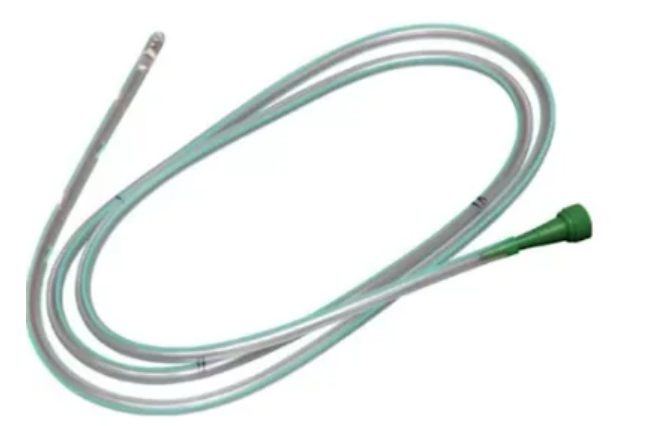
Insertion technique is very important:
-
Conscious patient: Sitting position with neck flexed
-
Comatose patient: Supine position with neck flexed
The length is measured from the nose to the ear to the xiphisternum. Markings on the tube help identify its position:
-
40 cm: Gastroesophageal junction
-
50 cm: Body of stomach
-
60 cm: Pylorus
-
65 cm: Duodenum
Infant Feeding Tube
This tube is shorter and does not have markings. It is specifically designed for infants and children and is used for feeding or gastric decompression in pediatric patients. Its indications are similar to Ryle’s tube but adapted for smaller anatomy.
Special Surgical Tubes
These tubes are used in specific clinical conditions and are highly important from an exam perspective.
Kehr’s T-Tube
Kehr’s T-tube is used in bile duct surgeries, especially after choledochotomy. It acts as a stent and allows bile drainage externally.
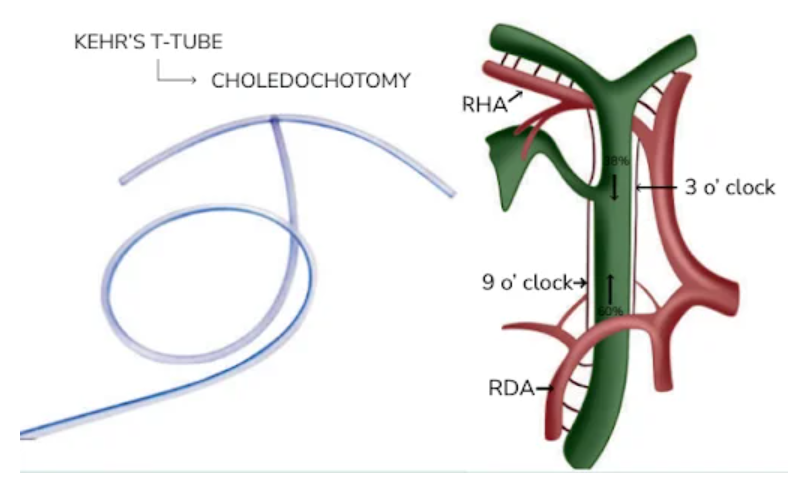
It is usually retained for 4–6 weeks, and a T-tube cholangiogram is performed between the 7th and 10th day to check bile duct patency.
Sengstaken Blakemore Tube
This is a double-balloon, triple-lumen tube used in variceal bleeding when medications fail. It works by applying pressure (tamponade effect) to stop bleeding.
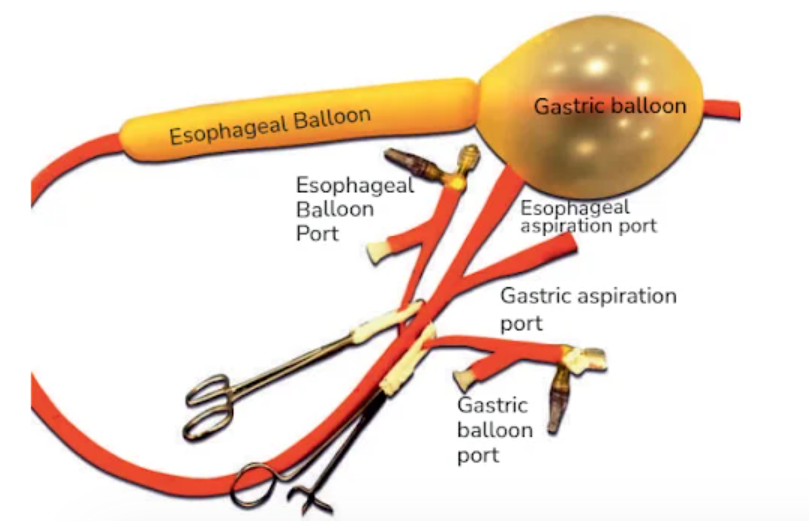
Important facts:
-
Gastric balloon inflated with 300 ml air
-
Oesophageal balloon pressure: 35–40 mmHg
-
Balloon must be deflated every 12 hours
The most common complication during insertion is aspiration, so airway protection is necessary.
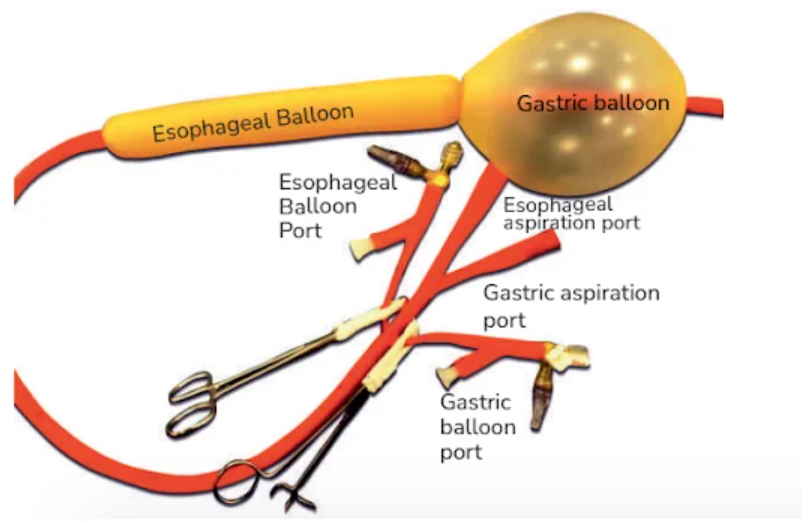
Minnesota Tube
The Minnesota tube is similar but superior to the Sengstaken tube. It has 2 balloons and 4 lumens, allowing aspiration above and below the balloon.
This feature makes it more effective in controlling bleeding and preventing complications, which is why it is often preferred in clinical settings.
Linton Nachlas Tube
This tube has a single gastric balloon and 3 lumens. It is specifically used for treating gastric variceal bleeding. The balloon is inflated with 400–700 ml of air, making it different from other tamponade tubes.
Foley’s Catheter (Most Important Topic)
Foley’s catheter is one of the most frequently asked topics in exams and is a must-know from 100 Surgery One-Liners Every NEET PG Aspirant Must Know.
Structure & Types
Foley’s catheter is a self-retaining catheter with a balloon at its tip.
-
2-way catheter: Used for urine drainage and balloon inflation
-
3-way catheter: Used for irrigation (especially after TURP)
Balloon Function
-
10 ml saline → self-retaining
-
30–50 ml saline → hemostatic compression
This dual function makes Foley’s catheter extremely versatile in surgical practice.
Colors of Foley’s Catheter
Understanding the Colors of Foley’s Catheter is crucial for quick identification and is a favorite exam question.
-
14 Fr → Green
-
16 Fr → Orange
Mnemonic: Grey White GORY Valentine Babe
This helps recall different catheter sizes easily during exams.
Uses of Foley’s Catheter
Foley’s catheter has multiple clinical uses:
-
Relief of urinary retention
-
Measurement of urine output
-
Administration of intravesical chemotherapy
-
Irrigation after TURP (3-way catheter)
-
Suprapubic cystostomy
Because of its wide usage, it is one of the most important devices in surgery.
Other Important Catheters
Nelaton’s Catheter
This is a simple, non-self-retaining catheter used for one-time bladder emptying. It is commonly used during or after surgery to assess urine volume.
Fogarty Embolectomy Catheter
This catheter has a balloon at its tip and is used to remove emboli from blood vessels. It is inserted beyond the clot, inflated, and then withdrawn to remove the blockage.
Malecot’s Catheter
Malecot’s catheter is self-retaining and has a flower-shaped tip. It is used for:
-
Urinary drainage
-
Kidney drainage (percutaneous nephrostomy)
-
Intraperitoneal drainage
Red Rubber Catheter
This is a non-self-retaining catheter with a blunt tip. It is used for temporary drainage of urine and for estimating residual urine volume.
Central Venous Catheter (CVC)
Central venous catheter is used in critically ill patients for administering fluids, drugs, and nutrition. The tip is placed in the superior vena cava for effective circulation.
Preferred Sites
-
Operation Theatre: Internal jugular vein
-
Outside OT: Subclavian vein
-
Emergency: Femoral vein
Complications
-
Most common: Catheter-related sepsis
-
Most dangerous: Pneumothorax
Understanding these complications is very important for clinical as well as exam purposes.
Cannula (Color Coding for Exams)
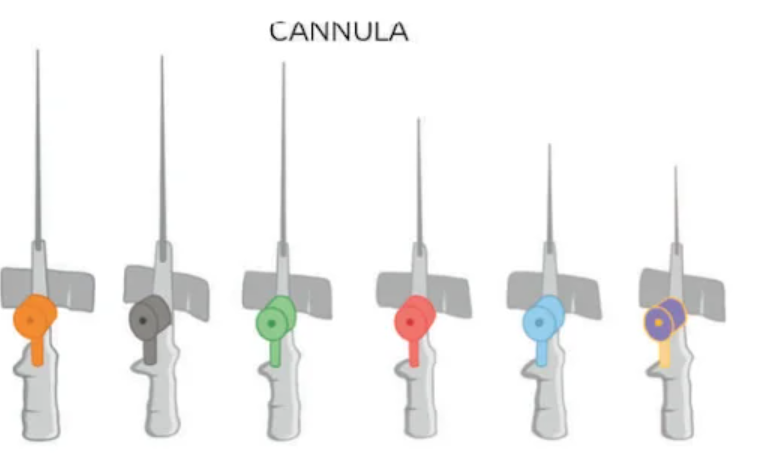
Cannulas are used for intravenous access, and their color coding helps identify their size and flow rate.
-
Orange (14G): Trauma cases
-
Grey (16G): Surgical procedures
-
Green (18G): Blood transfusion
-
Pink (20G): IV fluids
-
Blue (22G): Pediatric patients
-
Yellow (24G): Neonates
Mnemonic: ORG GREEN PINK BY VIOLET
This is another high-yield area under 100 Surgery One-Liners Every NEET PG Aspirant Must Know.
Chemoport
Chemoport is an implantable venous access device used for long-term chemotherapy.
It is placed under the skin and connected to a central vein (internal jugular or subclavian vein). It can remain in place for 1–2 years.
Complications
-
Catheter embolism
-
Port occlusion
-
Vascular thrombosis
It is especially useful in cancer patients requiring repeated drug administration.
Tubes, Catheters And Drains FAQs
What are Tubes, Catheters And Drains used for?
What is the most commonly used Foleys catheter size?
Why are Colors of Foleys Catheter important?
What is the most dangerous complication of central venous catheter?
Which topic is considered high-yield for surgery exams?


Have questions about your prep?
Our experts can answer all your questions