







Alternating Current Mind Maps for NEET, Download PDF

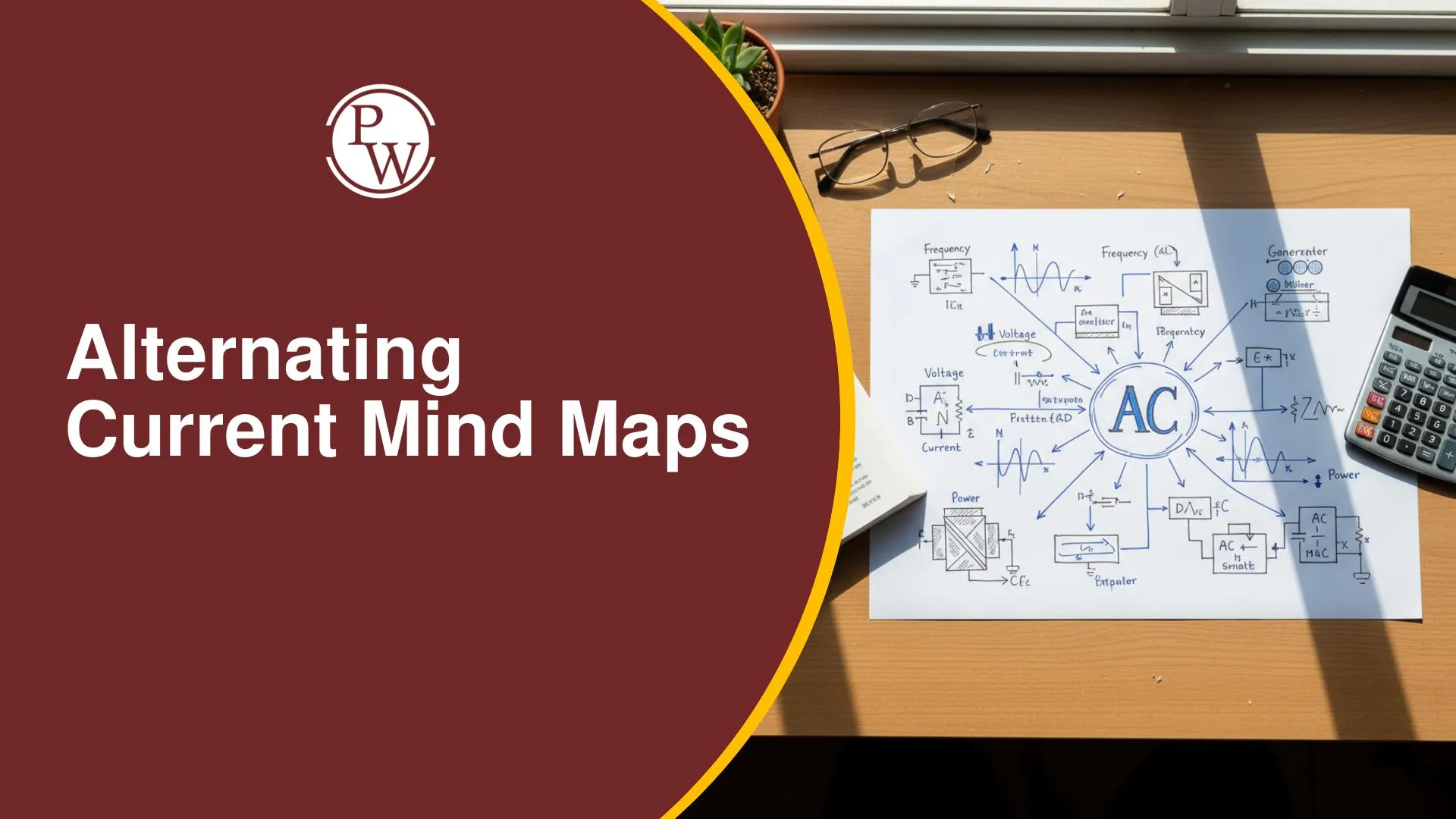
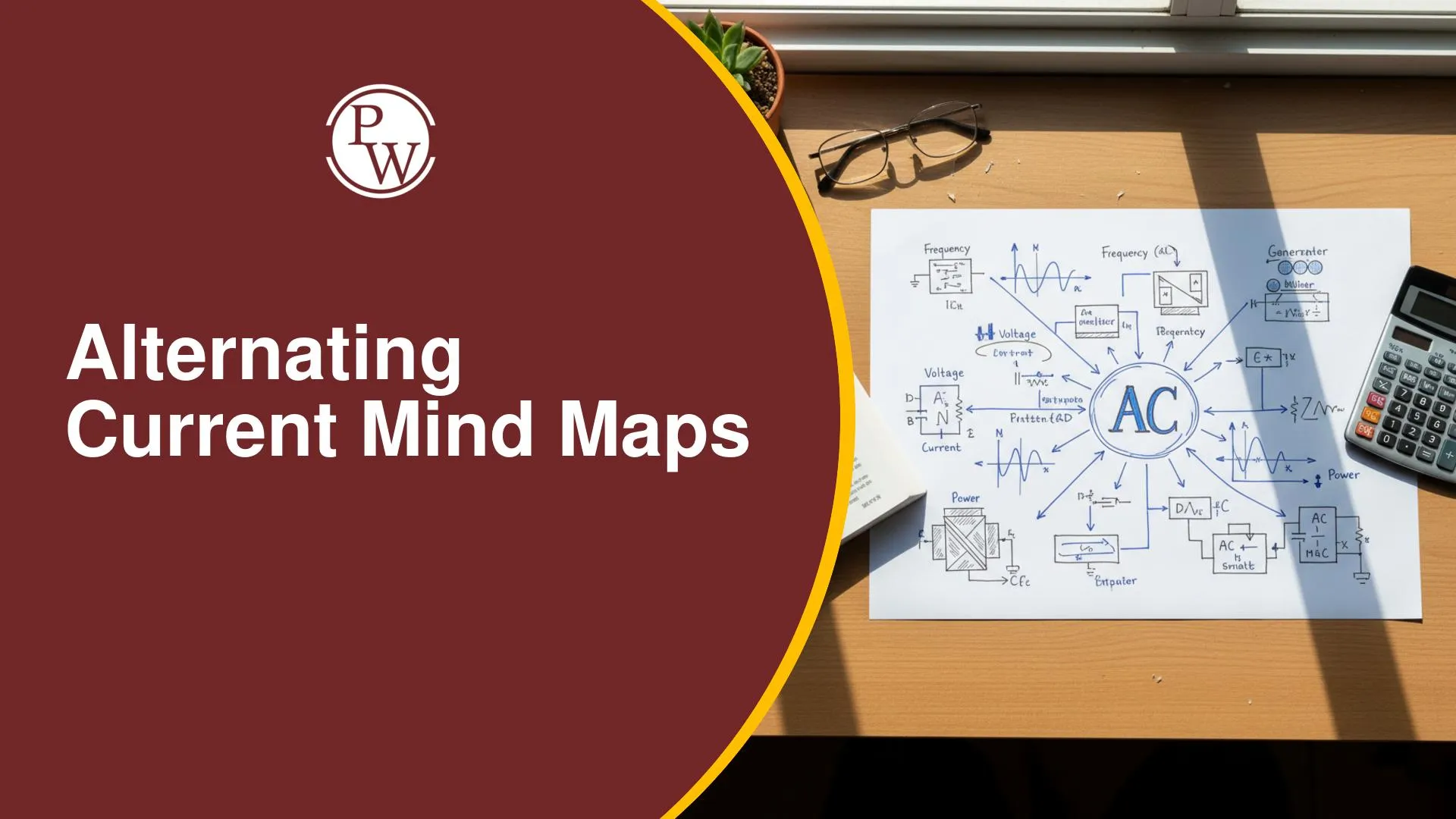
Physics Wallah Alternating Current NEET Mind Maps are designed to help students revise one of the most concept-intensive chapters in NEET Physics through clear visual summaries. These chapter-wise mind maps cover important topics such as RMS value, impedance, reactance, phase difference, power factor, resonance, and AC circuits in an organised format.
By connecting formulas, circuit concepts, and key relationships in a single view, they make revision faster, improve concept retention, and help students solve NEET-level questions with greater accuracy.
PW Alternating Current NEET Mind Maps PDF
Download the Physics Wallah Alternating Current NEET Mind Maps PDF to access a concise visual summary of the complete chapter. The PDF covers RMS value, impedance, reactance, AC circuits, phase difference, power factor, resonance, and other important concepts, making it an ideal resource for regular revision and last-minute exam preparation.
Alternating Current Mind Maps
Download PDF
Benefits of Using Physics Wallah Alternating Current NEET Mind Maps
For NEET preparation, Alternating Current becomes much easier when complex circuit ideas are converted into clear visual connections. Instead of repeatedly revising long theory, mind maps help you quickly understand how AC concepts like phase difference, impedance, and resonance are linked. With Physics Wallah resources, revision becomes faster, and exam-focused.
Revise Key AC Concepts Quickly
Mind maps summarise important topics such as RMS value, peak value, reactance, impedance, power factor, and resonance in a structured visual format for faster revision.
Simplifies AC Circuit Analysis
Visual diagrams help students understand phase relationships, RLC circuits, and the behaviour of alternating current more effectively than lengthy notes.
Better Memory Retention
Visual learning improves recall of formulas and relationships such as impedance, power factor, and resonance conditions during exams.
Reduces Dependence on Lengthy Notes
Instead of reading full chapters again, mind maps allow complete revision of Alternating Current in a concise way.
Effective Last-Minute Revision
Mind maps help revise the entire chapter in a short time before NEET, improving confidence and accuracy under exam pressure.
Additional Practice & Study Resources:
-
NEET Previous Year Questions (PYQs)
-
Chapter-wise MCQs
-
Formula Sheets
-
Important Circuit Diagrams
-
Sample Papers
-
Revision Notes
Alternating Current Mind Maps FAQs
Why should I use mind maps for Alternating Current?
Are Alternating Current Mind Maps useful for last-minute revision?
Which topics are covered in Alternating Current Mind Maps?
Are Alternating Current Mind Maps based on the latest NEET syllabus?











Get Free Counselling Today
and Clear up all your Doubts
 Live & recorded classes available at easeDashboard for progress trackingLakhs of practice questions

