








Best 5 Videos on Human Reproductive System Zoology by Physics Wallah For NEET
 Mishika Gupta19 Oct, 2026
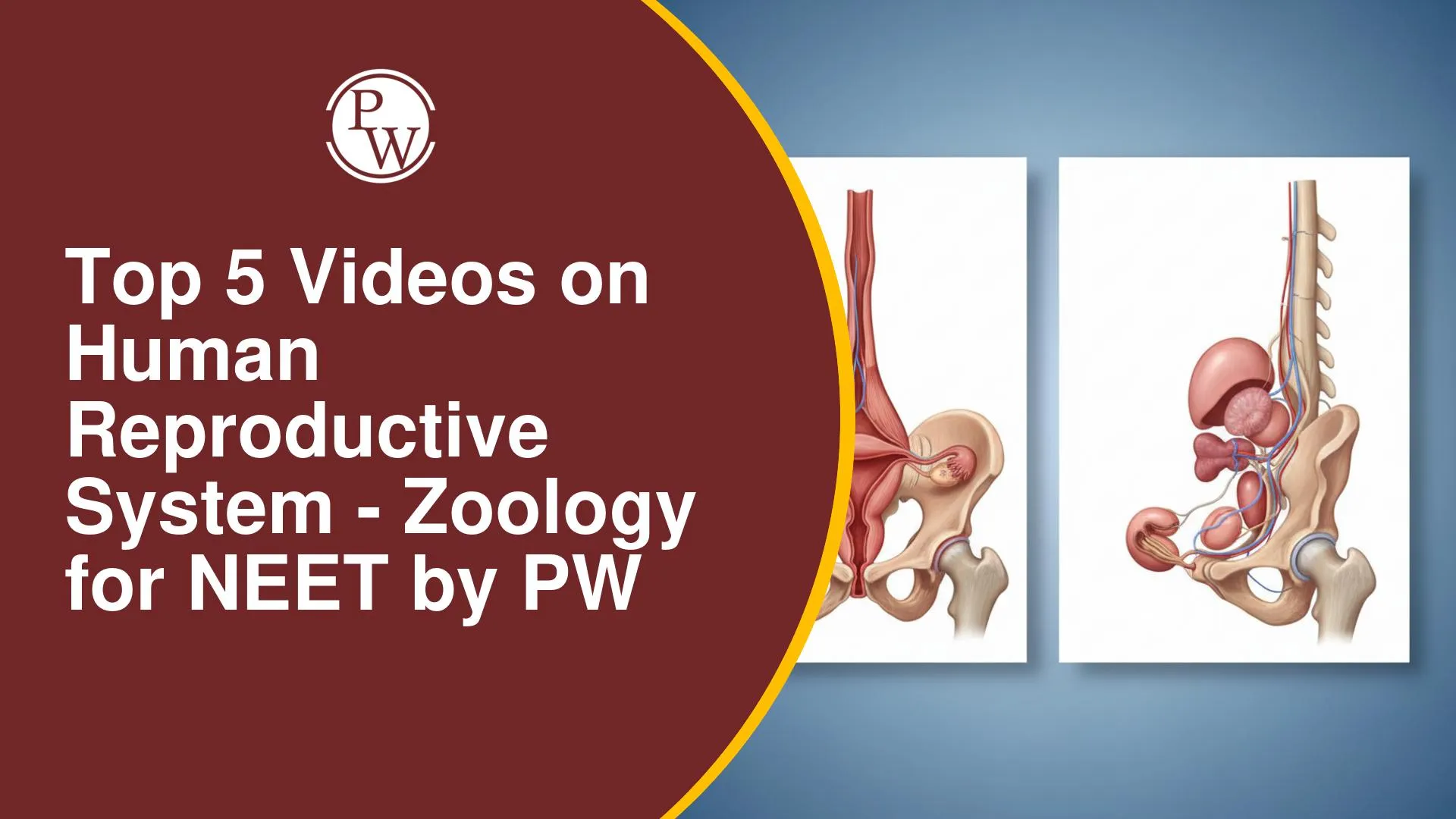
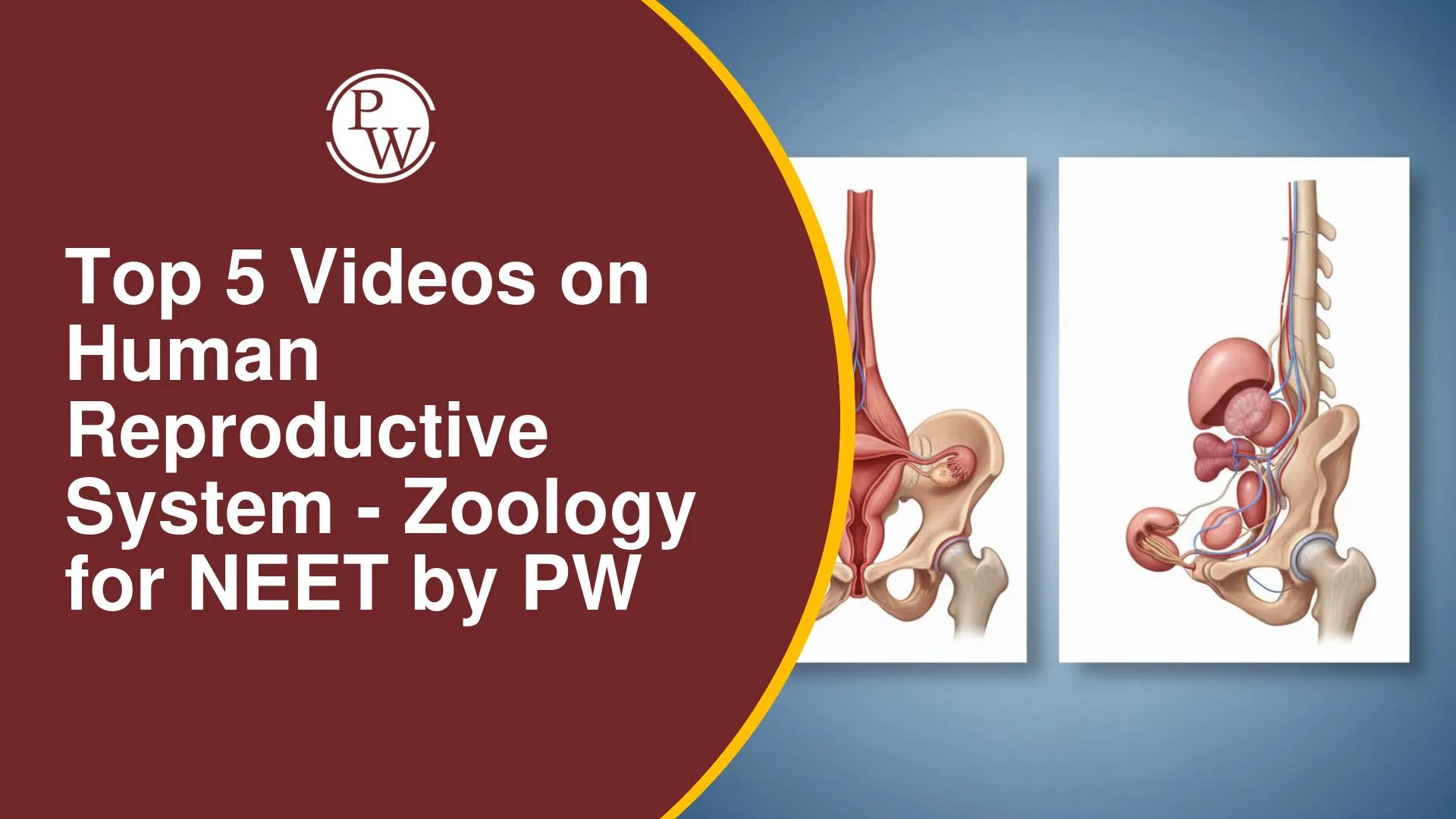
Keeping track of the events involved in human reproduction can be challenging when each stage depends on specific organs, hormones, and biological changes. You need to distinguish spermatogenesis from oogenesis, understand hormonal fluctuations during the menstrual cycle, and follow the stages from fertilisation to implantation and pregnancy. Remembering these processes alongside detailed NCERT facts can make revision demanding, especially when preparing for NEET questions that test precise concepts.
Physics Wallah provides video lessons that cover the chapter through full-length explanations, separate sessions on male and female anatomy, and NCERT-based teaching. You can also use lectures with previous-year questions to review key concepts, practise applying your knowledge, and identify topics that need more attention before NEET.
Video 1. Revise the Complete Human Reproduction Chapter With Concepts and PYQs in One Shot
This one-shot lecture connects the major topics of Human Reproduction, beginning with sexual reproduction and gametogenesis. It covers the male and female reproductive systems, sperm structure, ovarian follicles, hormonal regulation, and the menstrual cycle. The lesson then follows the sequence from fertilisation and post-fertilisation changes to placental development, gestation, parturition, and lactation. Comparison points, immunity booster notes, and homework provide additional opportunities to revisit concepts.
Choose this session when you want to see how the chapter's different topics connect rather than revise each one in isolation.
Video 2. Connect Gametogenesis, Fertilisation, and Embryonic Development Through Theory and PYQs
This crash-course lecture presents Human Reproduction through theory supported by previous-year questions. It begins with the testis and its internal structure, then covers female reproductive organs, external genitalia, spermatogenesis, and oogenesis. The discussion continues through the menstrual cycle, fertilisation, cleavage, implantation, embryonic development, placental formation, gestation, parturition, and lactation.
The lesson is useful when you need to revise the sequence of reproductive events within a limited study session. While watching, make a short timeline of the major stages from gamete formation to childbirth.
Video 3. Understand the Male Reproductive System With NCERT and Practice Questions
This focused lecture examines the testes, scrotum, reproductive ducts, accessory glands, and external genitalia. It explains the seminiferous tubules, male germ cells, Sertoli cells, vasa efferentia, vas deferens, ejaculatory duct, urethra, and penis. The session also covers the transverse sections of the testis and penis, along with semen and the functions of accessory glands. Practice questions reinforce the anatomical details.
Use this video to revise the pathway followed by sperm and the functions of the male reproductive organs.
Video 4. Map Female Reproductive Anatomy Through NCERT Concepts
This lecture focuses on the ovaries, oviducts or fallopian tubes, uterus, cervix, vagina, and external genitalia. It examines ovarian structure and function, the different parts of the fallopian tube, the shape and position of the uterus, its supporting ligaments, and the layers of the uterine wall. The connection between the cervix and vagina is also covered, alongside NCERT reading and practice questions.
Choose this lesson when you need to revise female reproductive anatomy separately from the other chapter topics. As you watch, connect each organ with its function and location. This will also help you relate female reproductive anatomy to broader topics covered in the NEET Biology syllabus, including reproductive processes and hormonal regulation.
Video 5. Revisit the Human Reproduction Chapter Directly Through NCERT
This line-by-line lecture follows the NCERT chapter from the male and female reproductive systems to gametogenesis and its related processes. It includes oogenesis, the menstrual cycle, fertilisation, implantation, pregnancy, embryonic development, parturition, and lactation. Following the textbook's sequence helps you revisit important terminology and understand how individual concepts fit into the broader chapter.
This video is a suitable choice when your preparation depends on accurate NCERT recall. Keep the textbook nearby and mark statements you find difficult to remember. You can later use these points to practise assertion-based, statement-based, and other NCERT-linked questions.
A useful way to revise Human Reproduction is to study the anatomy separately from the sequence of reproductive events, then connect the two through question practice. PW videos give you options for whole-chapter revision, targeted anatomy lessons, and NCERT-focused learning. After each session, try explaining a process such as gametogenesis or implantation without looking at your notes. Revisit any step or structure you cannot recall clearly before attempting another set of NEET questions.


Have questions about your prep?
Our experts can answer all your questions




 Live & recorded classes available at easeDashboard for progress trackingLakhs of practice questions


