








Biology Ecosystem Diagrams for NEET by Physics Wallah
 Avisha Das14 Jul, 2026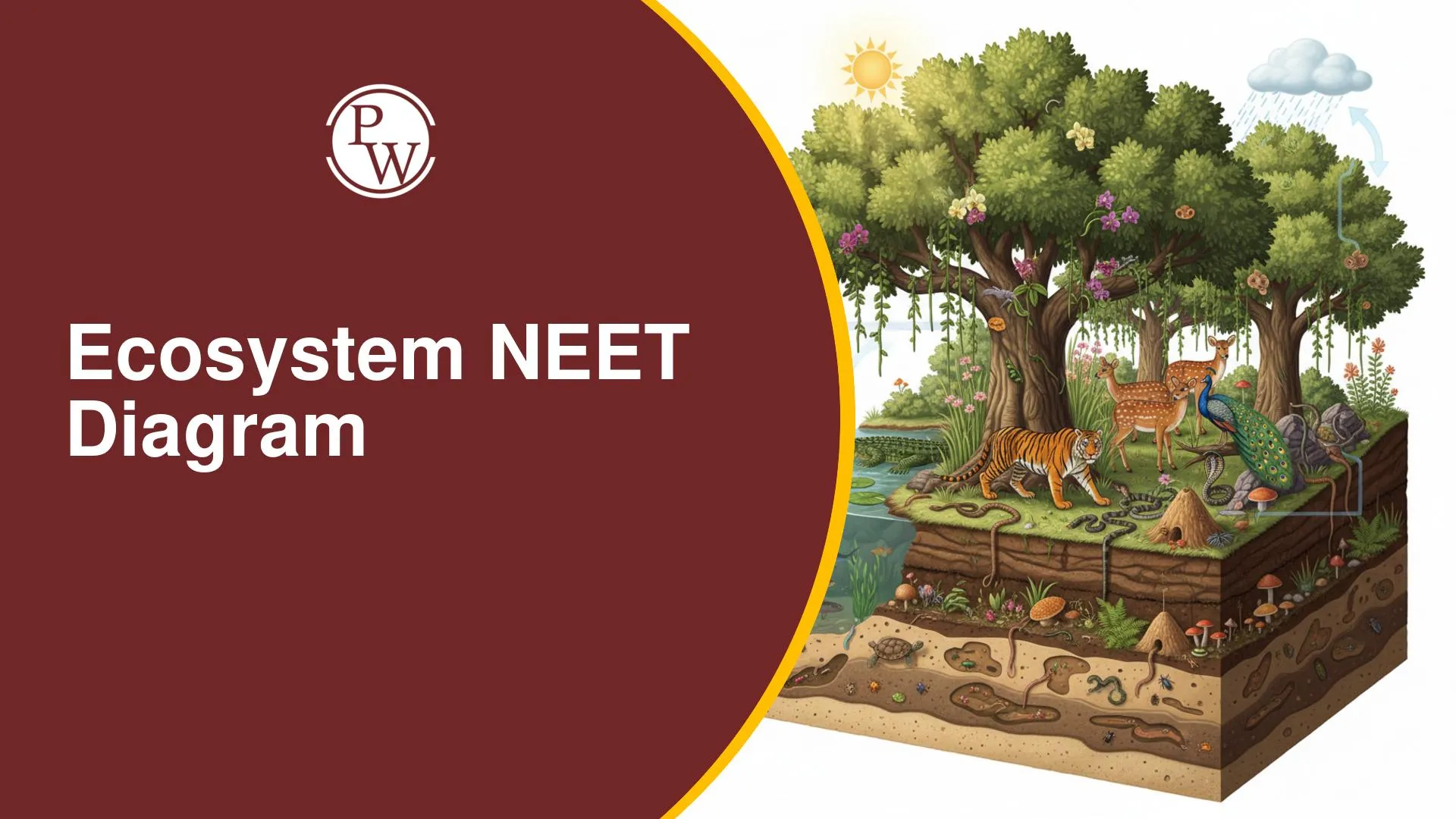
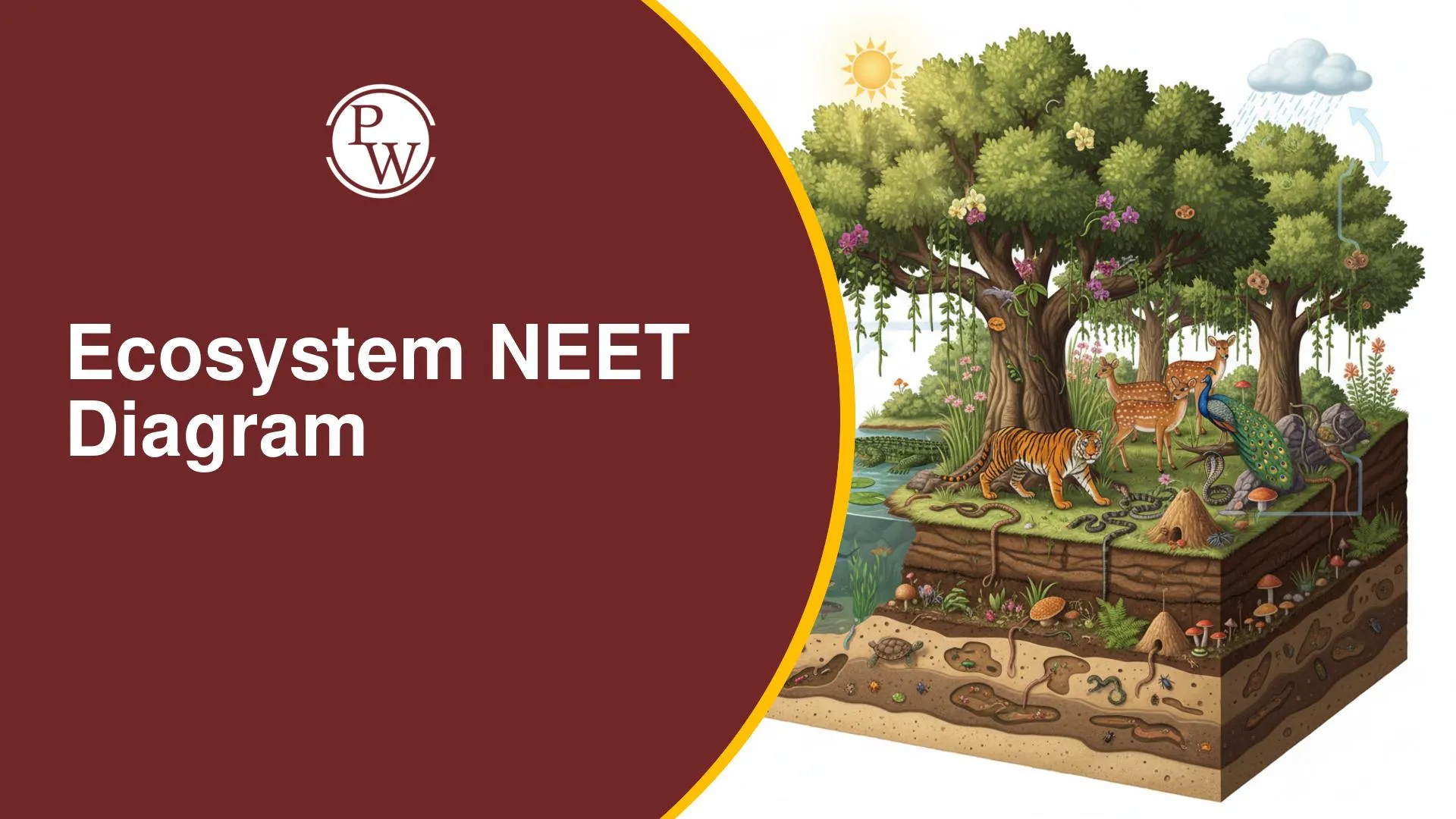
An ecosystem is a network where every organism, from microscopic bacteria to towering trees, plays a role in maintaining ecological balance. Understanding these interactions is easier when you can visualise how energy moves, nutrients recycle, and organisms depend on one another.
Many NEET questions from this chapter are based on flow diagrams, ecological models, and interconnected processes rather than isolated facts. Physics Wallah provides Ecosystem NEET Diagrams that present these concepts through concise illustrations, making revision simpler and improving long-term retention.
Ecosystem NEET Diagrams PDF
The Ecosystem NEET Diagrams PDF compiles the most important ecological processes into well-labelled diagrams and flowcharts. Instead of revising lengthy explanations, you can quickly understand the relationships between different ecosystem components through visual learning.
Ecosystem NEET Diagrams PDF
Why Use PW Ecosystem NEET Diagrams?
Visual learning helps you connect ecological concepts that are often studied together in the chapter.
1. Simplifies Energy Flow Models
Diagrams clearly illustrate the movement of energy through trophic levels, making food chains, food webs, and ecological efficiency easier to understand.
2. Makes Biogeochemical Cycles Easy to Revise
Flowcharts explain the carbon, nitrogen, phosphorus, and water cycles in a logical sequence, helping you remember each step effectively.
3. Improves Understanding of Ecological Pyramids
Labelled diagrams help you compare pyramids of number, biomass, and energy while identifying their key differences.
4. Simplifies Ecosystem Components
Illustrations organise producers, consumers, decomposers, and abiotic factors into a single visual framework, strengthening conceptual understanding.
5. Supports Fast Revision Before NEET
Important ecological processes can be reviewed quickly through concise diagrams, reducing the need to revisit detailed notes repeatedly.
Also check:
Ecosystem Diagrams FAQs
How do diagrams improve Ecosystem preparation?
Are ecological cycles important for NEET Biology?
Does Physics Wallah provide other resources for this chapter?


Have questions about your prep?
Our experts can answer all your questions





 Live & recorded classes available at easeDashboard for progress trackingLakhs of practice questions

