








Physics Electromagnetic Induction and Alternating Currents Syllabus for NEET 2026

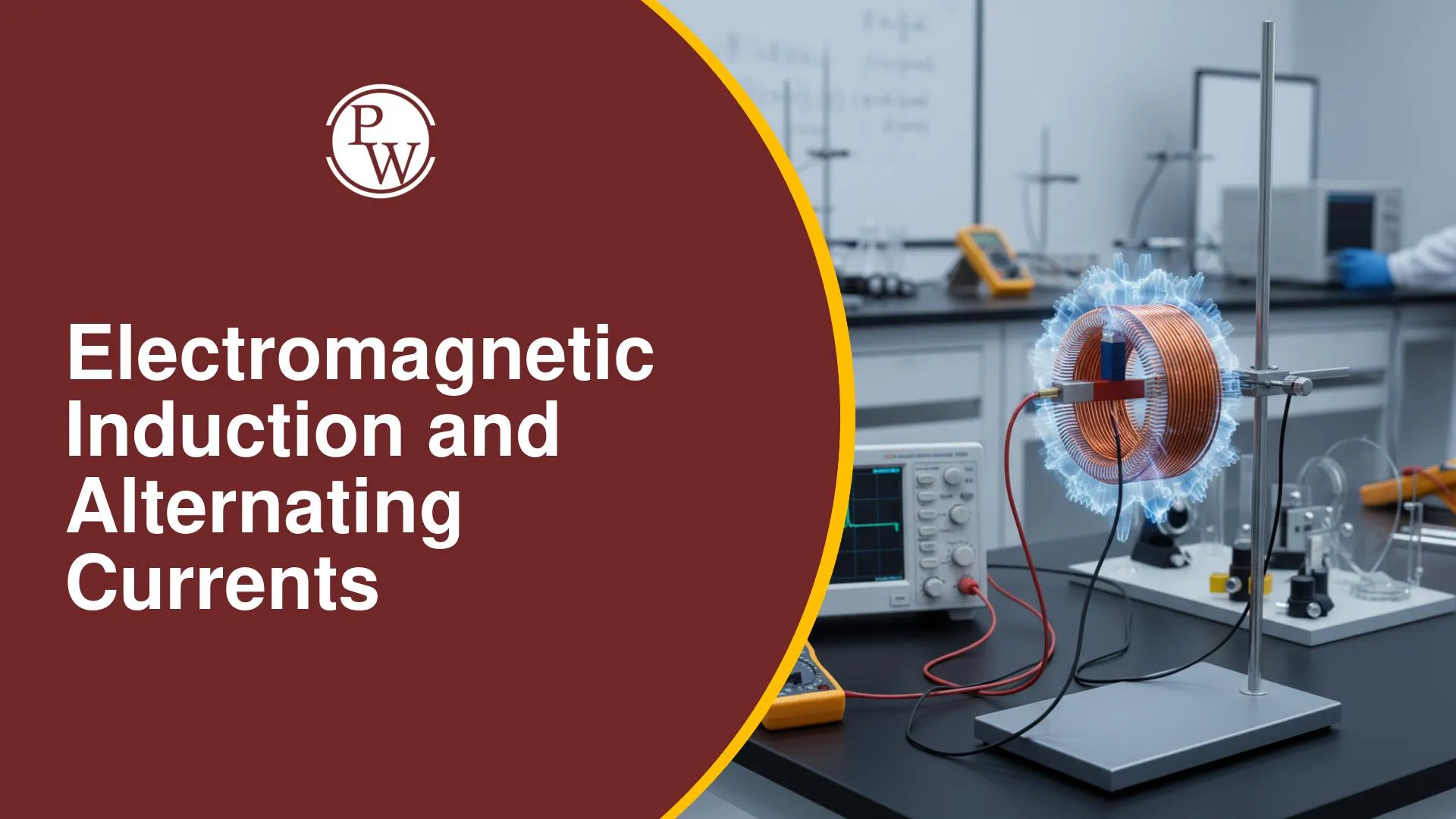
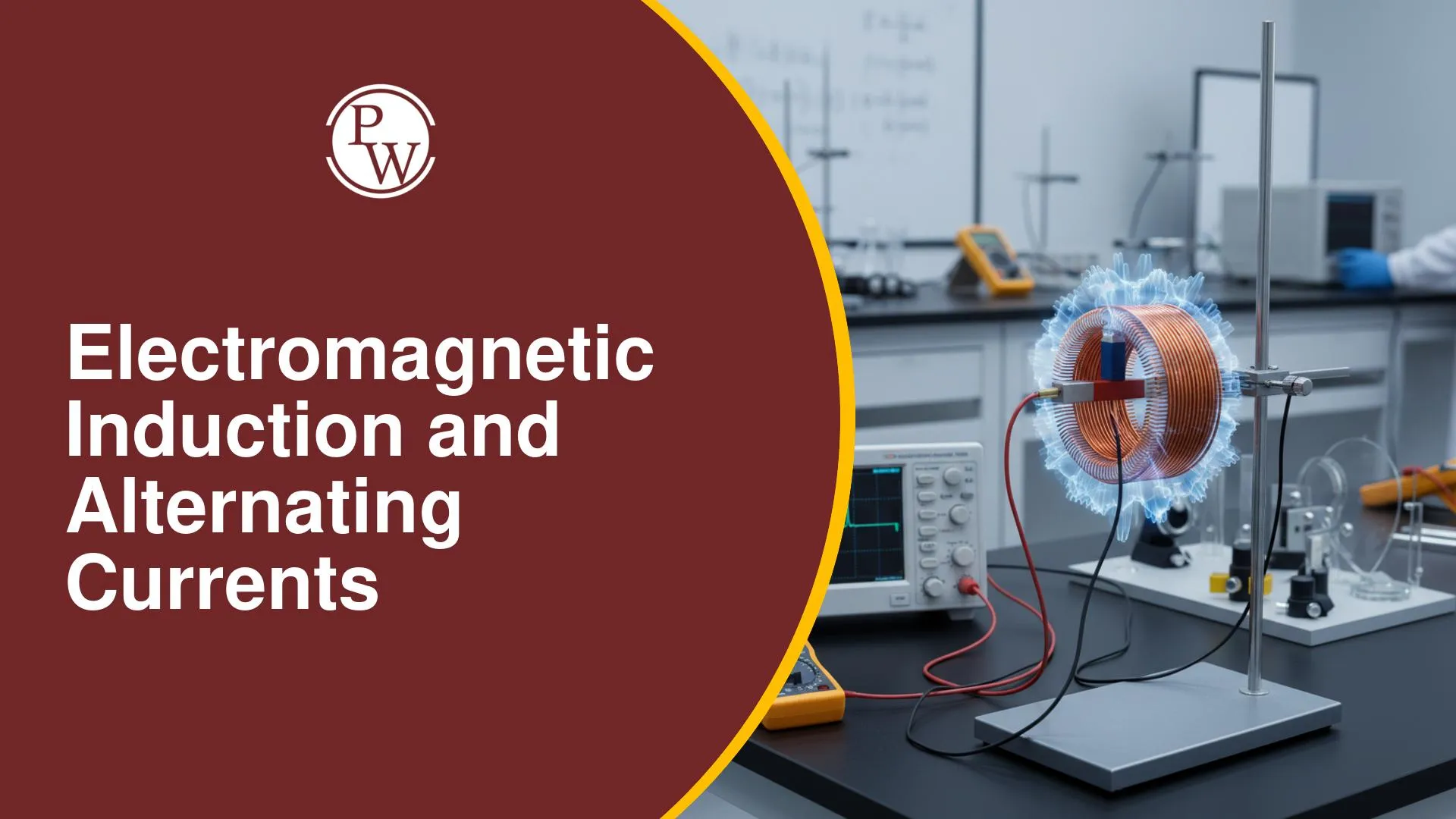
Changing magnetic fields can generate electric current, making electromagnetic induction one of the most important principles in modern electrical technology. This unit explains how electrical energy is produced, transferred, and controlled using magnetic interactions and alternating current systems.
The topics included here form the working basis of generators, Transformers, Household Power Supply, and AC Circuits. This unit combines conceptual understanding with circuit analysis, graphical interpretation, and formula-based applications related to Alternating Currents and Induced EMF.
Faraday’s Law and Electromagnetic Induction
Electromagnetic induction occurs when a changing magnetic flux produces an induced EMF in a conductor or circuit. Faraday’s law explains the relationship between changing magnetic flux and induced EMF.
Lenz’s law determines the direction of induced current and states that the induced current always opposes the change causing it. This opposition is a consequence of conservation of energy.
It also explains eddy currents, which are circulating currents produced inside conductors placed in changing magnetic fields.
Self Inductance and Mutual Inductance
Inductance represents the tendency of a circuit to oppose changes in current flow through magnetic effects.
Self-inductance occurs when changing the current in a coil induces an EMF within the same coil. Mutual inductance occurs when a change in current in one coil induces an EMF in a nearby coil.
These concepts are important for understanding transformers, inductors, and electromagnetic energy transfer between circuits.
Alternating Current and AC Circuits
Alternating current continuously changes its magnitude and direction with time. Unlike direct current, AC is widely used for electrical power transmission because it can be transmitted efficiently over long distances.
It explains:
-
Peak value and RMS value
-
Reactance and impedance
-
Phase relationships in AC circuits
LCR series circuits combine resistance, inductance, and capacitance in a single circuit and show different electrical behaviour depending on frequency.
Resonance, Power in AC Circuits, and Transformers
Resonance occurs in an LCR circuit when inductive reactance becomes equal to capacitive reactance. Under resonance conditions, current becomes maximum in the circuit.
It also explains power consumption in AC circuits and the concept of wattless current, where energy transfer does not occur despite current flow.
Transformers work on the principle of mutual inductance and are used to increase or decrease AC voltage levels in electrical transmission systems.
AC generators convert mechanical energy into electrical energy through electromagnetic induction.
Electromagnetic Induction and Alternating Currents Complete Study Resources
Consistent formula revision and circuit practice are important for improving conceptual clarity and numerical solving speed in this unit.
|
Resource |
Access |
|
Electromagnetic Induction and AC PYQs |
View details |
|
Electromagnetic Induction and AC MCQs |
View details |
|
Electromagnetic Induction and AC Formula Sheet |
View details |
|
Electromagnetic Induction and AC Mind Maps |
View details |
Electromagnetic Induction and Alternating Currents FAQs
What is Alternating Current?
What is electromagnetic induction?
What is resonance in an LCR circuit?
What does Faradays law state?


Have questions about your prep?
Our experts can answer all your questions





 Live & recorded classes available at easeDashboard for progress trackingLakhs of practice questions

