








Physics Electrostatics Diagrams for NEET by Physics Wallah
 Avisha Das10 Jul, 2026
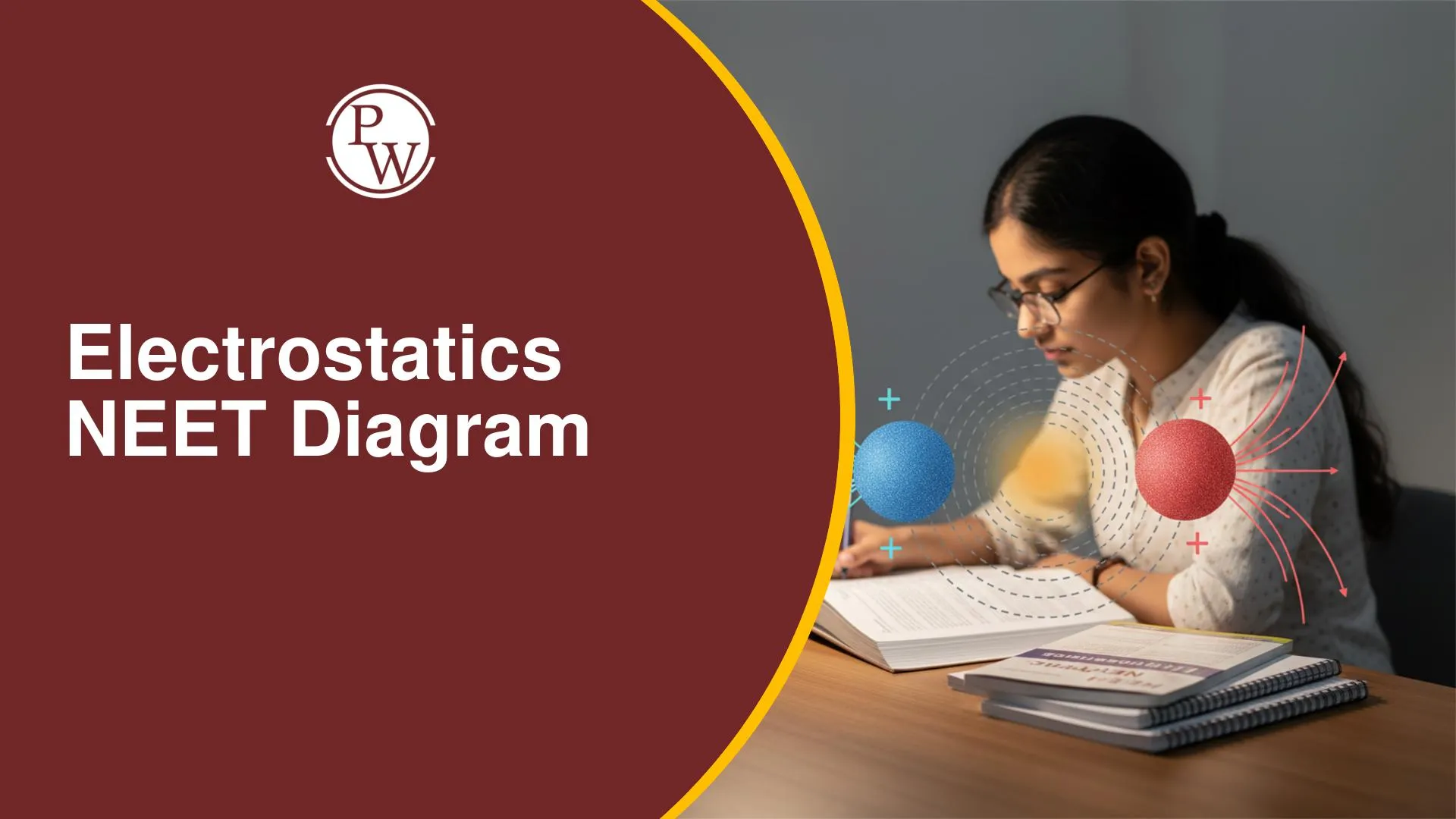
Electric charges cannot be seen directly, but their effects are visible everywhere, from a balloon sticking to a wall to lightning during a thunderstorm. Electrostatics explains these interactions by describing how charges create electric fields, store energy, and exert forces on one another. Many concepts in this chapter become much easier to understand when viewed visually rather than through equations alone.
Instead of learning each formula separately, diagrams allow you to see how electric fields, field lines, potential, and capacitance are connected. This visual approach simplifies abstract ideas, making revision faster and helping you solve conceptual NEET questions with greater confidence. Electrostatics Diagrams by PW provide organised visual resources designed to strengthen your understanding and support effective exam preparation.
Electrostatics NEET Diagram PDF
The Electrostatics Diagram PDF presents important concepts through clear visual illustrations that support conceptual learning and quick revision. It serves as a practical study resource for understanding relationships between key ideas while making your preparation more organised and efficient.
The PDF can be used after completing the chapter, while revising important concepts, or during the final stages of NEET preparation.
| Resource | Download |
|---|---|
| Electrostatics NEET Diagram PDF | Download PDF |
Why Use PW Electrostatics Diagrams?
Electrostatics contains several abstract concepts that become much easier to understand through visual learning. Well-designed diagrams help you connect theoretical ideas with their physical interpretation.
1. Visualises Electric Field Lines Clearly
Diagrams make it easier to understand the direction, distribution, and behaviour of electric field lines around different charge configurations.
2. Simplifies Electric Potential and Potential Difference
Visual representations help you relate electric potential to electric fields, making these interconnected concepts easier to revise and apply.
3. Makes Capacitor Concepts Easier to Remember
Concept diagrams help you understand capacitor arrangements, capacitance, energy storage, and the relationships between important quantities.
4. Helps You Differentiate Conductors and Insulators
Visual diagrams simplify concepts such as charge distribution, electrostatic shielding, and the behaviour of conductors and insulators in electric fields, making these frequently tested topics easier to understand.
5. Improves Accuracy in NEET Physics
Regular revision through visual resources strengthens conceptual recall, reduces confusion between similar concepts, and supports better performance in objective questions.
Also check:
Electrostatics Diagrams FAQs
Why should you use Electrostatics diagrams for NEET?
How can diagrams help you revise Electrostatics more effectively?
Does Physics Wallah provide other resources for this chapter?


Have questions about your prep?
Our experts can answer all your questions





 Live & recorded classes available at easeDashboard for progress trackingLakhs of practice questions

