








Physics Experimental Skills Syllabus for NEET 2026
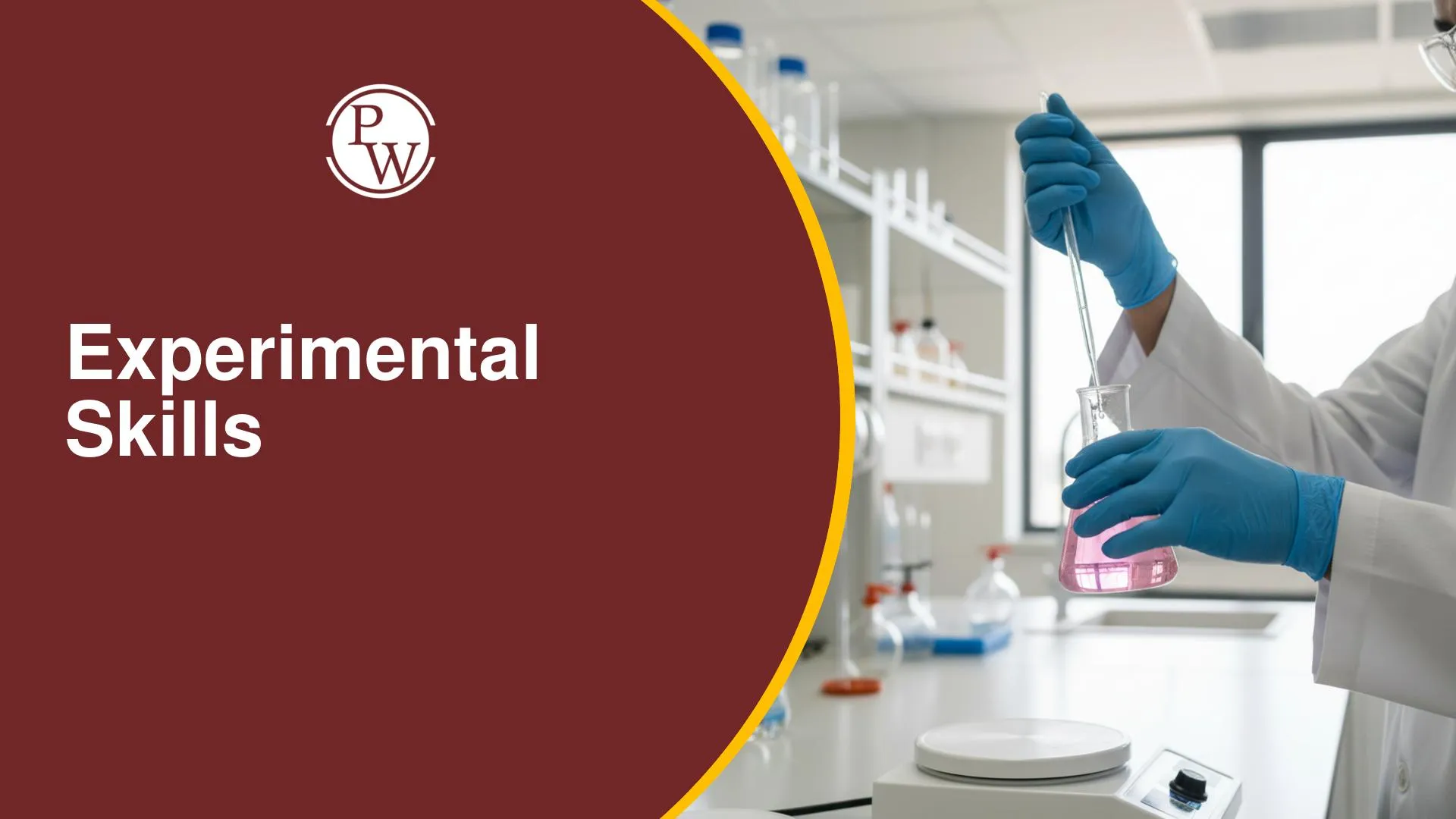
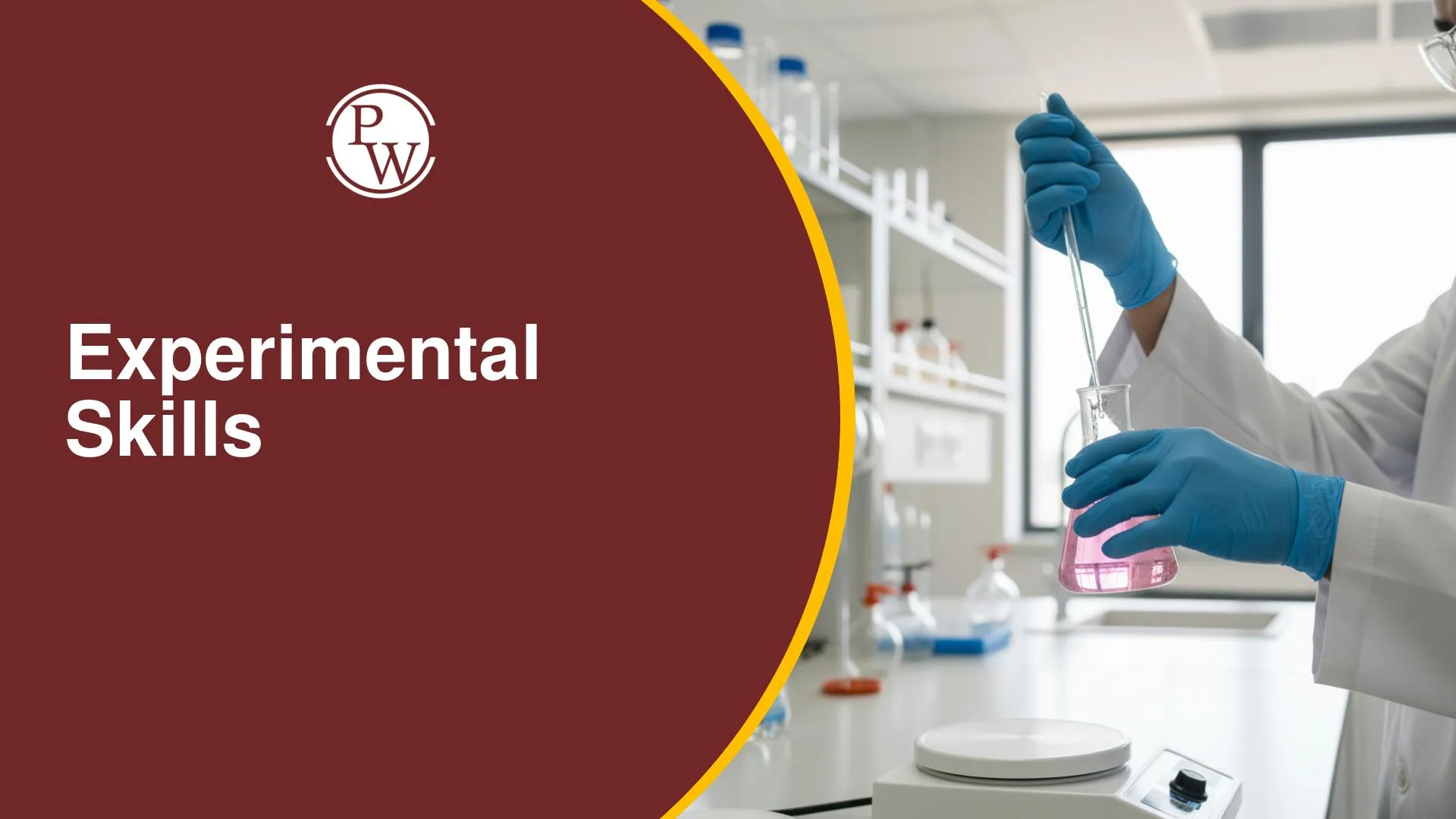
Practical Physics helps you understand how theoretical concepts are applied through experiments, measurements, and observations. Instead of only studying formulas, this section focuses on using laboratory instruments, plotting graphs, observing physical phenomena, and interpreting experimental results accurately.
The NEET syllabus includes experiments from mechanics, heat, optics, electricity, and semiconductor devices. Questions are usually based on apparatus functions, graph interpretation, experimental setup, sources of error, and practical applications of Physics concepts.
Measuring Instruments and Mechanical Experiments
Several experiments in the syllabus are based on accurate measurement of length, diameter, thickness, and time intervals.
Important practicals include:
-
Vernier calipers for internal and external diameter measurement
-
Screw gauge for measuring the thickness of thin sheets and wires
-
Simple pendulum for studying dissipation of energy
-
Young’s modulus experiment using a metallic wire
-
Principle of moments using the metre scale
You should know the least count, zero error correction, graph plotting, and calculation methods associated with these experiments.
Thermal Properties and Fluid Experiments
This section includes experiments related to heat transfer, fluid behaviour, and sound.
Important experiments include:
-
Surface tension of water using capillary rise
-
Effect of detergents on surface tension
-
Coefficient of viscosity using terminal velocity
-
Speed of sound using a resonance tube
-
Specific heat capacity by the method of mixtures
These practicals require an understanding of observation tables, graphical trends, and formula application.
Electrical Circuits and Resistance Experiments
Electrical practicals in NEET mainly focus on current flow, resistance measurement, and circuit analysis.
Important experiments include:
-
Verification of Ohm’s law
-
Determination of resistance using a metre bridge
-
Measurement of the resistivity of a wire
-
Resistance and figure of merit of a galvanometer
You should understand circuit diagrams, balancing conditions, the Wheatstone bridge principle, and V-I characteristic graphs.
Optics and Refraction Experiments
Optics practicals help you study image formation, refraction, and the behaviour of light through lenses and prisms. The syllabus includes:
-
Determination of the focal length of mirrors and lenses
-
Prism deviation experiment
-
Refractive index of glass slab using a travelling microscope
Ray diagrams, image positions, and angle measurements are important parts of these experiments.
Semiconductor Devices and Electronic Components
This topic focuses on semiconductor devices and their electrical behaviour under different biasing conditions.
Important practicals include:
-
Characteristics of a p-n junction diode
-
Forward and reverse bias observations
-
Zener diode breakdown voltage
-
Identification of diode, LED, resistor, and capacitor
You should understand characteristic curves, circuit symbols, and practical uses of these electronic components.
Experimental Skills: Study Resources By PW
To strengthen conceptual understanding and practical observation skills, Physics Wallah provides study resources for revision and practice.
|
Resource |
Link |
|
Experimental Skills PYQs |
View |
|
Experimental Skills MCQs |
View |
|
Experimental Skills Formula Sheet |
View |
|
Experimental Skills Mind Maps |
View |
FAQs
What is the use of vernier calipers?
What is measured using a screw gauge?
What is the purpose of a metre bridge experiment?


Have questions about your prep?
Our experts can answer all your questions




 Live & recorded classes available at easeDashboard for progress trackingLakhs of practice questions

