








Biology Genetics and Evolution Syllabus for NEET 2026
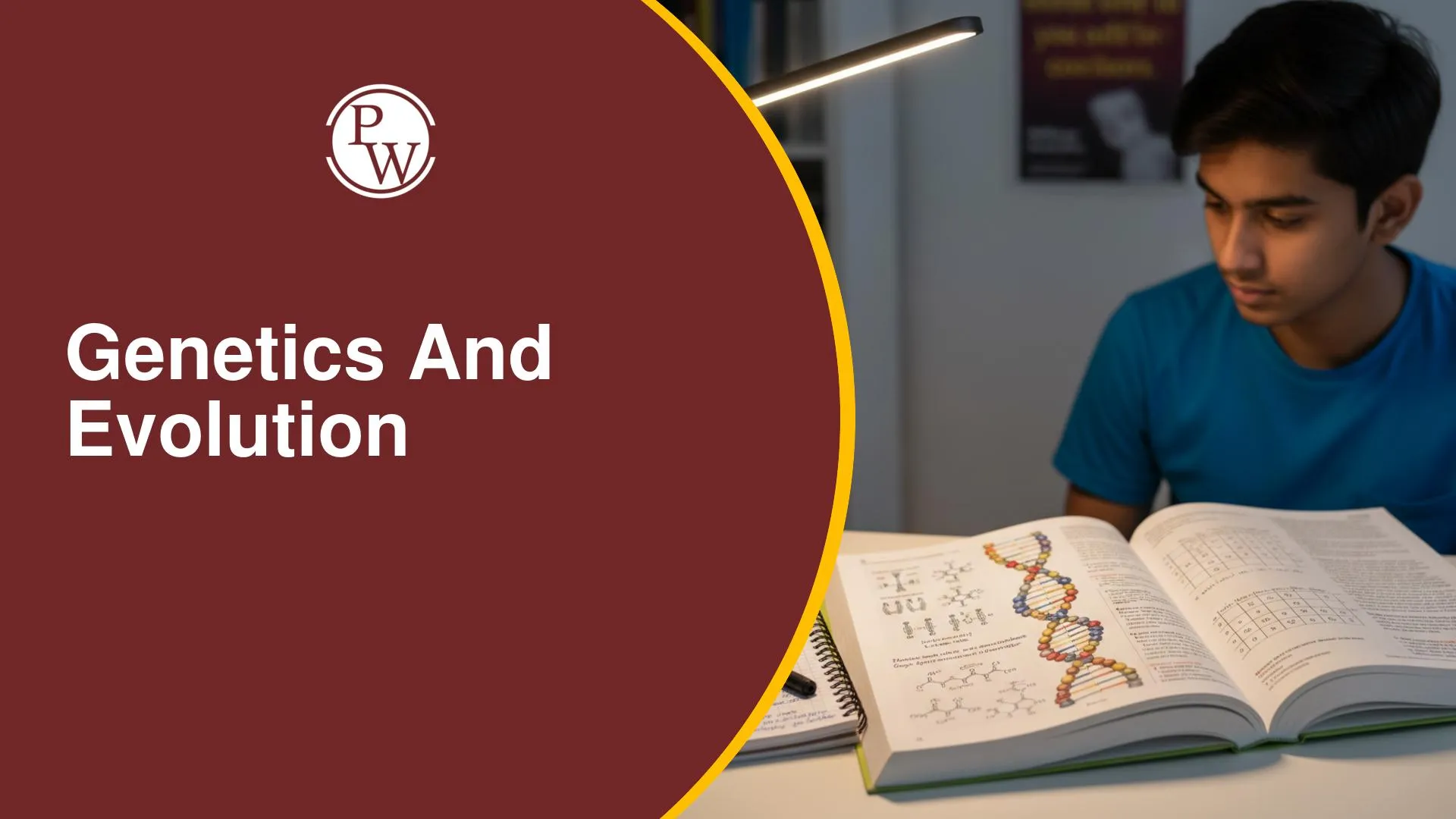
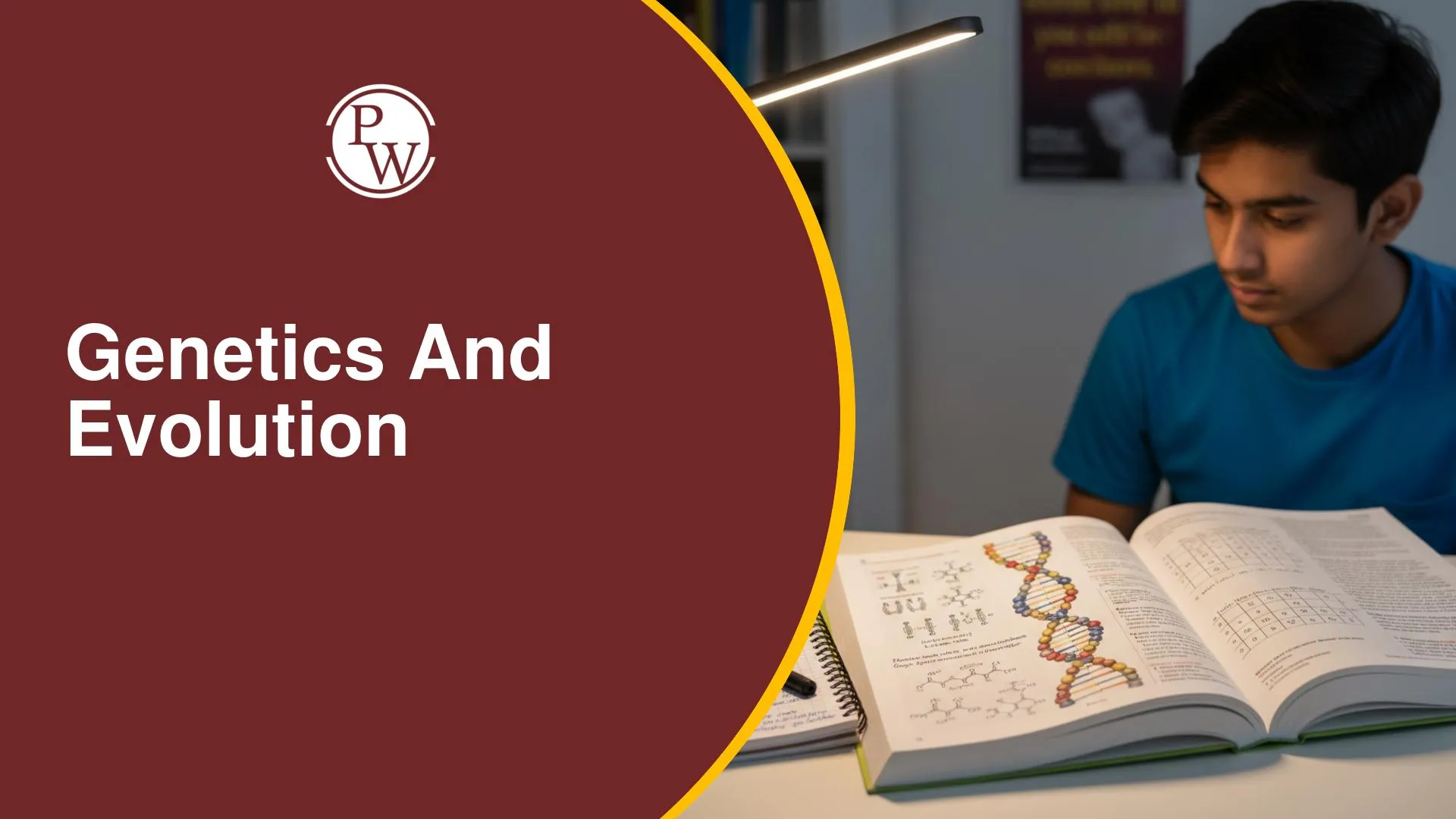
Genetics and Evolution explains how traits are inherited from parents to offspring and how genetic variation leads to evolution over time. It connects classical inheritance patterns with molecular mechanisms of DNA and gene expression.
This unit also explains how populations change across generations through natural selection, mutation, recombination, and genetic drift. It focuses on inheritance patterns, molecular genetics, evolutionary concepts, and the mechanisms responsible for variation and evolution in living organisms.
Genetics: Heredity and Variation
Genetics begins with Mendel’s laws of inheritance based on pea plant experiments. Traits are passed through genes located on chromosomes.
Variations from Mendelism include incomplete dominance, co-dominance, multiple alleles (such as blood groups), and pleiotropy. Some traits show polygenic inheritance, where multiple genes control a single trait.
Sex determination differs in humans, birds, and honey bees. Linked genes are inherited together, while crossing over produces variation. Sex-linked traits include haemophilia and colour blindness.
Genetic disorders like thalassemia and chromosomal abnormalities such as Down’s, Turner’s, and Klinefelter’s syndromes are important for study.
Molecular Basis of Inheritance
DNA is the genetic material responsible for inheritance. Its structure is a double helix made of nucleotides, while RNA plays a role in protein synthesis.
DNA replicates before cell division, and genetic information flows through transcription and translation (central dogma). The genetic code determines amino acid sequences in proteins.
Gene expression can be regulated, as seen in the Lac Operon model. Human Genome Project and DNA fingerprinting help in genetic analysis and identification.
Evolution: Origin of Life and Mechanism of Evolution
Evolution explains the origin and diversity of life over time. Evidence comes from fossils, comparative anatomy, embryology, and molecular studies.
Darwin’s theory of natural selection explains survival of the fittest. Modern synthesis combines mutation, recombination, and selection.
Evolutionary mechanisms include gene flow, genetic drift, and natural selection (stabilising, directional, and disruptive). The Hardy-Weinberg principle explains genetic equilibrium in populations.
Adaptive radiation shows diversification of species from a common ancestor, while human evolution traces the development of modern humans.
How to Prepare Genetics and Evolution for NEET 2026?
This unit includes inheritance patterns, DNA and gene expression, and evolution mechanisms. A clear understanding of NCERT concepts, diagrams, and stepwise processes is important for building strong conceptual clarity in both theory and application-based questions.
-
Read NCERT thoroughly
Focus on Mendelian laws, molecular processes, and evolution concepts as given in NCERT without skipping steps.
-
Practice Genetics NEET PYQs regularly
PYQs help in mastering pedigree analysis, inheritance problems, and molecular biology questions.
-
Solve MCQs daily
Regular practice with PW MCQs strengthens concepts of DNA replication, gene expression, and evolution mechanisms.
-
Use mind maps for revision
PW Mind maps help connect inheritance patterns, molecular biology, and evolution in a structured format.
-
Practice genetic problems and pedigrees
Focus on blood group inheritance, sex-linked traits, and chromosomal disorders.
Physics Wallah offers the best NEET Online Coaching and study materials for NEET candidates at an affordable price. Students planning to take the NEET Exam should enroll in the PW Online Courses for effective preparation. Enroll Now!
| NEET Exam Important Links | |
|---|---|
| NEET Biology Syllabus | NEET Biology Diagrams |
| NEET Biology MCQ | NEET Biology Chapter wise Weightage |
| NEET Biology Notes | NEET Previous Year Question papers |
Unit 7 Genetics and Evolution Syllabus for NEET 2026 FAQs
What is Mendelian inheritance?
What is DNA?
What is the central dogma?
What is natural selection?
What are chromosomal disorders?


Have questions about your prep?
Our experts can answer all your questions




 Live & recorded classes available at easeDashboard for progress trackingLakhs of practice questions

