








Physics Kinetic Theory Diagrams for NEET by Physics Wallah
 Avisha Das10 Jul, 2026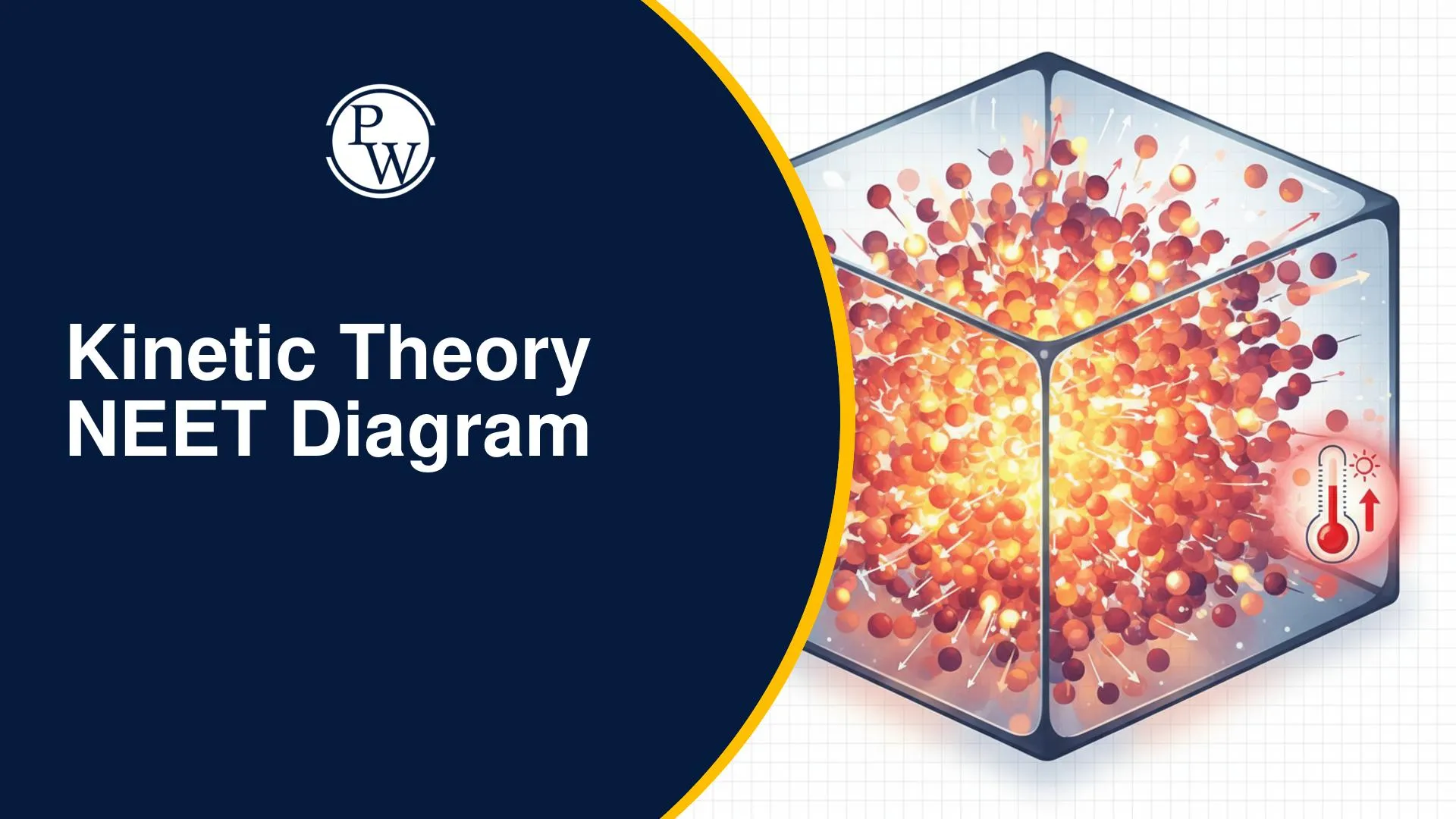
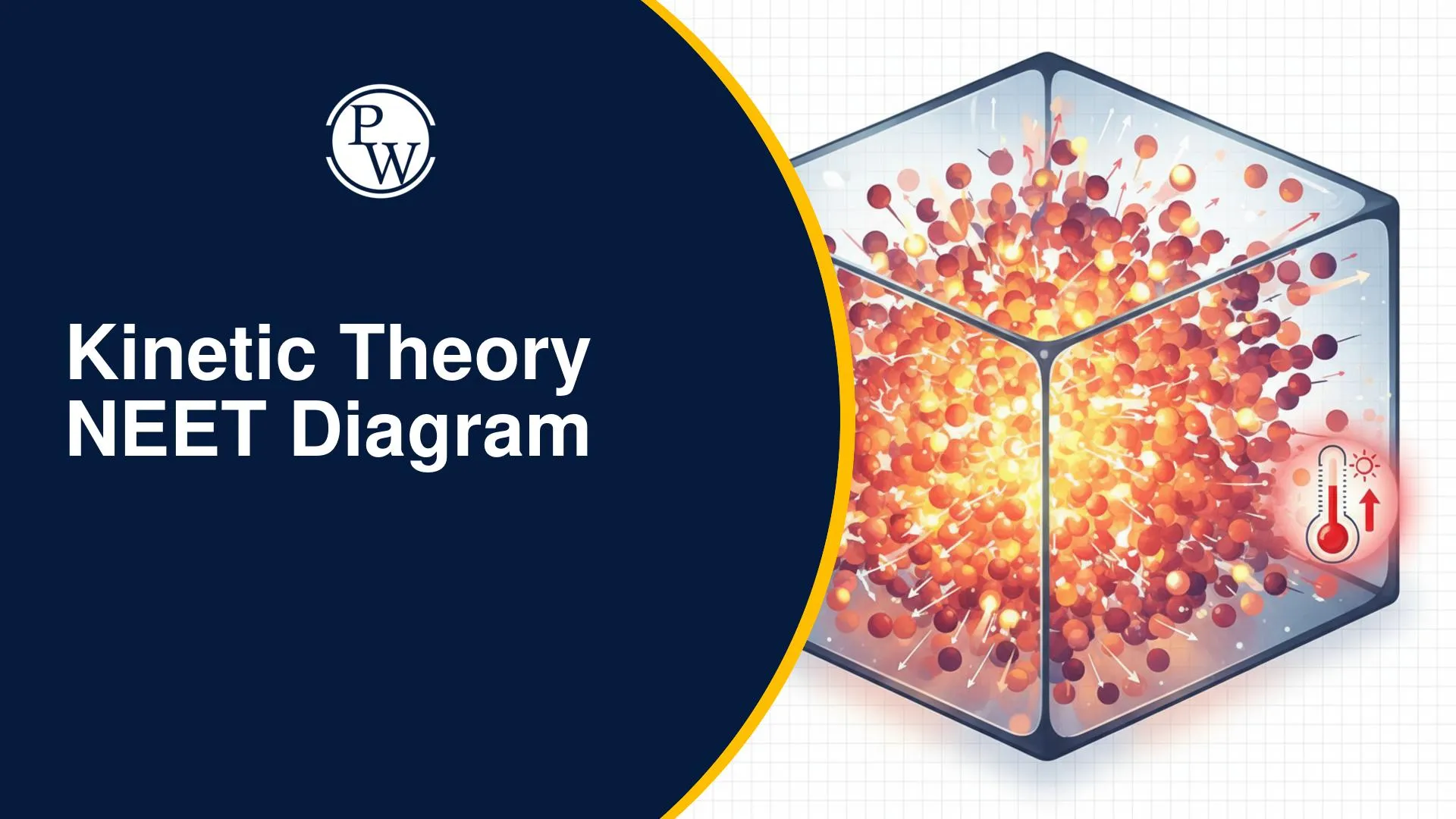
Every breath you take involves trillions of gas molecules moving randomly at incredibly high speeds, yet this constant motion remains invisible to the naked eye. The Kinetic Theory chapter uncovers this hidden world by explaining how the behaviour of individual molecules gives rise to measurable properties such as pressure, temperature, and volume.
Rather than viewing gases as abstract concepts, diagrams allow you to picture molecular collisions, energy distribution, and the assumptions of the kinetic theory simply and engagingly. PW offers Kinetic Theory Diagrams for NEET that transform invisible microscopic processes into easy-to-understand visuals, making both learning and revision far more effective.
Kinetic Theory NEET Diagram PDF
The Kinetic Theory Diagram PDF presents the chapter through organised visual illustrations that make abstract concepts easier to grasp. It serves as a quick learning companion, helping you connect important ideas, strengthen conceptual understanding, and revise efficiently whenever needed.
Whether you are revisiting the chapter after class or preparing before NEET, the PDF offers a convenient way to refresh key concepts in less time.
| Resource | Download |
|---|---|
| Kinetic Theory NEET Diagram PDF | Download PDF |
Why Use PW Kinetic Theory Diagrams?
Many ideas in Kinetic Theory involve microscopic processes that are difficult to imagine through text alone. Visual diagrams bridge this gap by making particle behaviour and gas properties easier to understand.
1. Visualises Molecular Motion
Diagrams illustrate the continuous random movement of gas molecules, helping you understand the basic assumptions of the kinetic theory more clearly.
2. Explains Molecular Collisions and Gas Pressure
Visual representations show how frequent molecular collisions create pressure, making the relationship between particle motion and macroscopic properties easier to interpret.
3. Clarifies the Kinetic Interpretation of Temperature
Illustrations explain how temperature is related to the average kinetic energy of molecules, strengthening one of the chapter's most important concepts.
4. Strengthens Conceptual Accuracy for NEET
Understanding concepts visually helps you eliminate common misconceptions and approach assertion-reasoning as well as conceptual questions with greater confidence.
5. Supports Faster Problem Solving During Exams
By organising related concepts into clear visual summaries, diagrams help you identify the correct principles more quickly while solving objective NEET questions.
Also check:
Kinetic Theory Diagrams FAQs
Why should you use Kinetic Theory diagrams for NEET?
How do diagrams help in understanding the behaviour of gases?
Does Physics Wallah provide other resources for this chapter?


Have questions about your prep?
Our experts can answer all your questions





 Live & recorded classes available at easeDashboard for progress trackingLakhs of practice questions

