







Kinetic Theory of Gases NEET Mind Maps by Physics Wallah

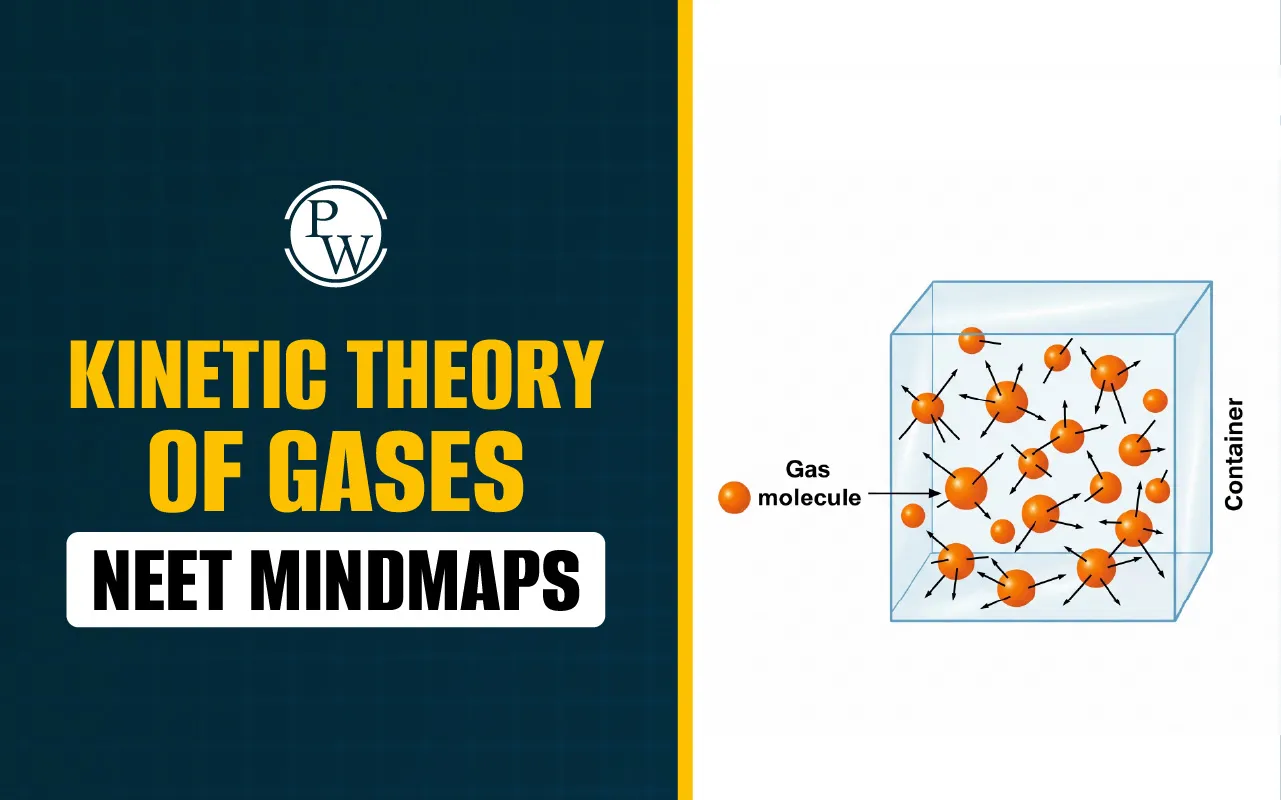
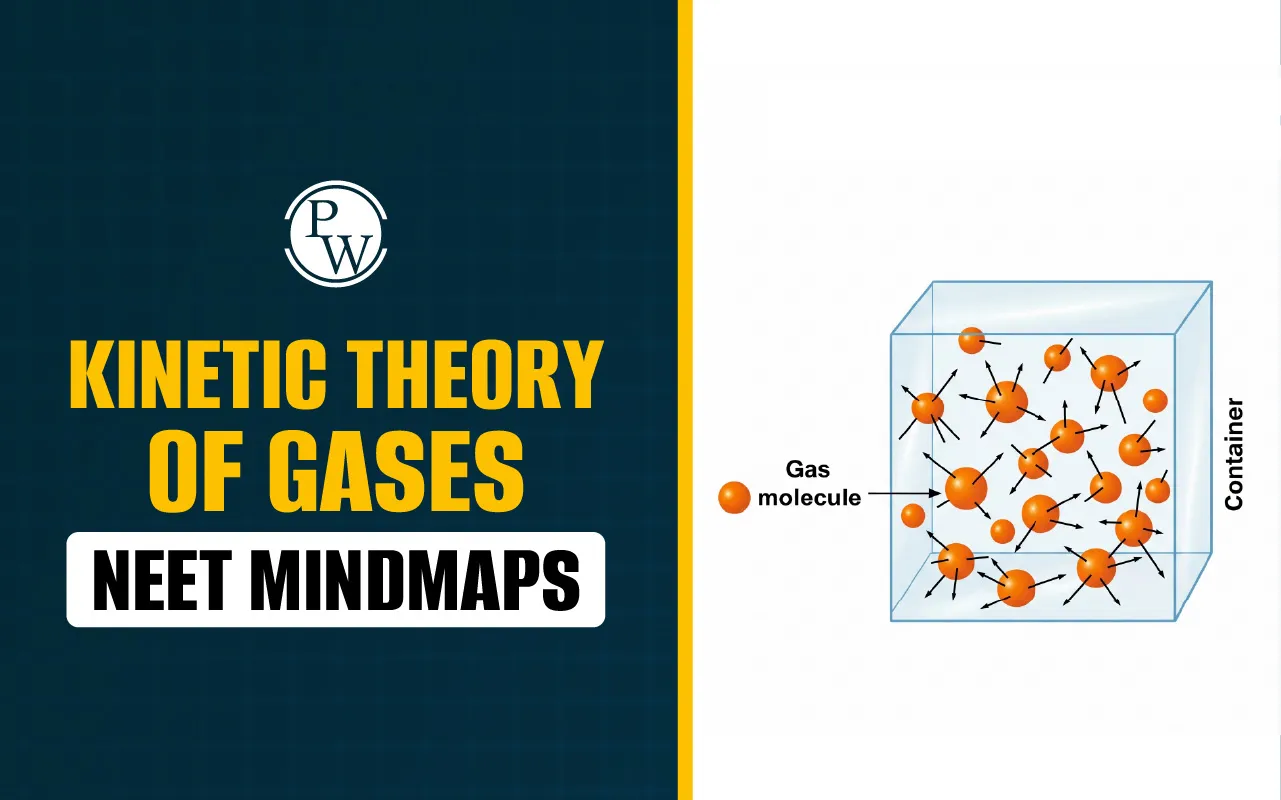
Kinetic Theory of Gases is an important chapter in NEET Physics that explains the behavior of gases in terms of the motion of their molecules. While students usually understand the basic concepts during their first reading, revision can become challenging because the chapter contains several assumptions, derivations, formulas, and relationships that are closely connected.
Many students lose marks because they forget formulas related to RMS speed, average kinetic energy, pressure-energy relations, or mean free path. Others struggle to connect concepts such as molecular motion, temperature, pressure, and kinetic energy while solving NEET numericals. Physics Wallah mind maps and revision resources help students organize these concepts in a visual format, making revision faster and improving problem-solving accuracy during exams.
PW Kinetic Theory of Gases NEET Mind Maps PDF
Physics Wallah provides a Kinetic Theory of Gases mind map in PDF format, designed to simplify revision and strengthen conceptual understanding before NEET examinations.
Kinetic Theory of Gases NEET Mindmaps
Download Now
Why Use Physics Wallah Mind Maps for NEET Preparation?
NEET preparation becomes more effective when important concepts and formulas are organized in a way that allows quick revision and easier recall. Mind maps simplify lengthy chapters into connected visual summaries, helping students revise efficiently without repeatedly reading detailed notes.
Physics Wallah mind maps are designed to make the Kinetic Theory of Gases revision more creative, helping students improve concept clarity, formula retention, and exam confidence.
-
Quick Revision of Kinetic Theory of Gases Concepts: Mind maps bring together important topics such as assumptions of kinetic theory, pressure due to molecular collisions, RMS speed, mean free path, degrees of freedom, and kinetic energy relations in one place, making revision faster and more organized.
-
Understand Relationships Between Key Topics: They help students visualize how pressure, temperature, molecular velocity, and kinetic energy are related, making it easier to understand the physical meaning behind the formulas.
-
Easier Formula Recall During Numericals: The chapter contains several important equations frequently used in NEET questions. Mind maps present these formulas in a visual format, making them easier to remember and apply.
-
Reduce Confusion Between Similar Concepts: Students often confuse RMS speed, average speed, and most probable speed or struggle to remember the relationship between temperature and kinetic energy. Mind maps clearly separate these concepts and highlight their key differences.
-
Helpful for Exam-Day Revision: Before mock tests or the NEET exam, a mind map allows students to quickly revise important laws, assumptions, formulas, and derivations without spending time reviewing detailed theory.
Benefits of Kinetic Theory of Gases NEET Mind Maps
Using mind maps regularly can help students revise the chapter more effectively and improve retention.
-
Quick revision of the complete chapter through a one-page summary.
-
Organized collection of important formulas and equations.
-
Better understanding of molecular motion and gas behavior.
-
Improved recall of RMS speed, kinetic energy, and pressure formulas.
-
Easier revision of assumptions and key derivations.
-
Faster last-minute revision before tests and examinations.
-
Better conceptual linkage between temperature, pressure, and molecular motion.
-
Useful alongside chapter notes and NEET question practice.
Additional Practice & Study Resources
Kinetic Theory of Gases NEET Mindmaps FAQs
Why are the Kinetic Theory of Gases mind maps useful for NEET?
Does Kinetic Theory of Gases require formula practice?
Can mind maps improve scores in Kinetic Theory of Gases?
When should I revise the Kinetic Theory of Gases mind maps?
How does Physics Wallah help in preparing Kinetic Theory of Gases?











Get Free Counselling Today
and Clear up all your Doubts
 Live & recorded classes available at easeDashboard for progress trackingLakhs of practice questions

