Moving Charges and Magnetism: Important Concepts, Laws, Formulas
Moving Charges and Magnetism explains how moving charges generate magnetic fields and how these fields influence other charges. Key concepts include Lorentz force, Biot–Savart and Ampere’s laws, force between conductors, torque on loops, galvanometer, cyclotron working, and magnetic dipole moment.

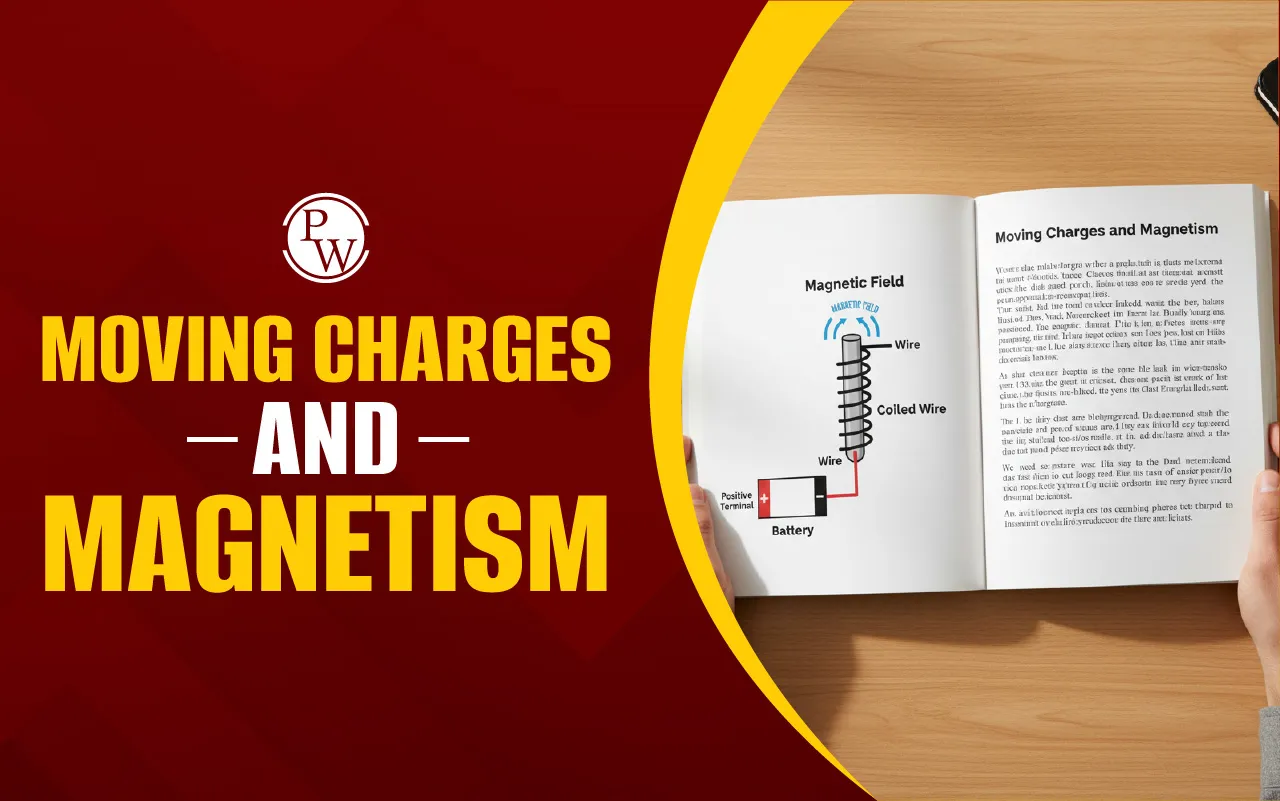
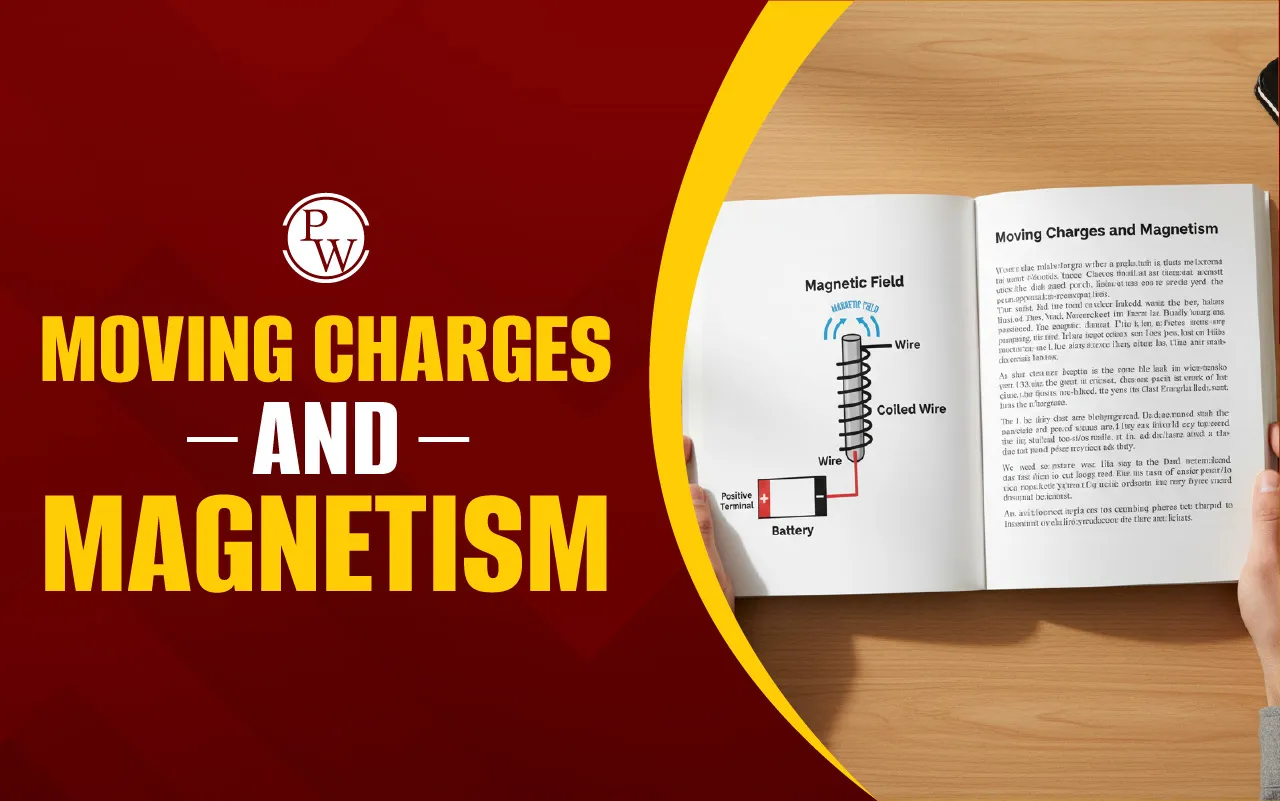
Moving Charges and Magnetism describes how the motion of electric charges gives rise to magnetic fields and how these fields influence the motion of other charges.
When a charge moves with velocity in space, it produces a magnetic field. Similarly, when another moving charge enters this field, it experiences a magnetic force. This interaction explains the operation of almost all electromagnetic devices.
Thus, the study of Moving Charges and Magnetism connects two key areas such as electrostatics (behaviour of stationary charges) and magnetism (effects due to moving charges). Together, they form the basis of electromagnetism. It is one of the four fundamental forces in nature.
What are Moving Charges and Magnetism?
Moving Charges and Magnetism is one of the core concepts of electromagnetism that explains how electric charges in motion produce magnetic effects and how magnetic fields act on moving charges.
When an electric charge remains stationary, it generates only an electric field around it. However, when that charge starts moving, it creates an additional magnetic field. This interaction between moving charges and magnetic fields forms the foundation of many electromagnetic devices and phenomena.
The relationship between electric currents (streams of moving charges) and magnetism was first observed experimentally by Hans Christian Oersted. Later, Biot, Savart, and Ampere formulated mathematical laws to describe this relationship. Together, these discoveries showed that electricity and magnetism are interconnected aspects of the same physical principle.
Magnetic Force on Moving Charge
A charged particle moving through a magnetic field experiences a force called the magnetic Lorentz force.
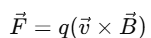
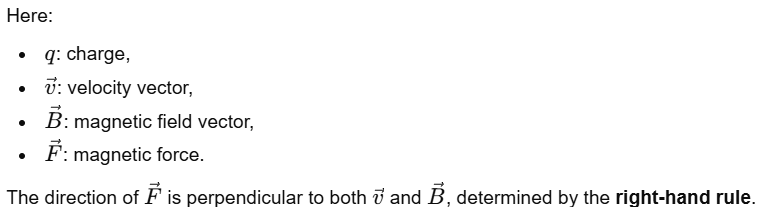
Key Points related to Magnetic Force on Moving Charge:

Example: In cathode-ray tubes or mass spectrometers, charged particles bend in circular paths under magnetic fields due to this force.
Motion of a Charged Particle In a Magnetic Field
When a charged particle enters a uniform magnetic field perpendicular to its velocity, it experiences a centripetal magnetic force.

where r is the radius of the circular path.
Characteristics of Motion of a Charged Particle in a Magnetic Field:
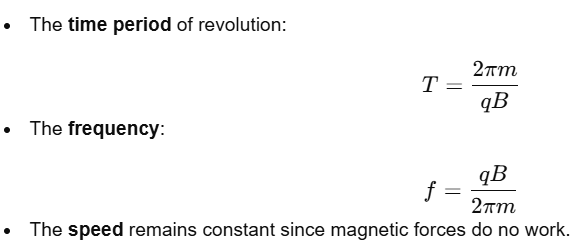
If the velocity has a component along the field, the particle follows a helical path. This concept is used in cyclotrons and velocity selectors.
Magnetic Field Due to Current
A steady current generates a magnetic field around its conductor. This shows that electric current is a source of magnetism.
The direction of the magnetic field due to current can be predicted by the Right-Hand Thumb Rule:
If the thumb points along the direction of current, the curled fingers show the direction of magnetic field lines.
The field strength depends on current magnitude and distance from the wire. Close to the conductor, field lines are concentric circles; farther away, they spread out.
Moving Charges and Magnetism PDF Download
Biot–Savart Law and Its Derivation
The Biot–Savart law provides a quantitative relationship between the magnetic field and the current that produces it.
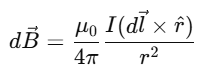
Where:
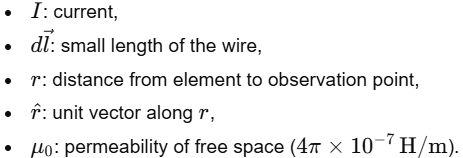
Applications:
-
Field at the center of a circular current loop:
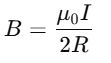
2. Field on the axis of a circular coil:
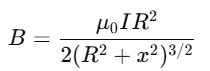
This law forms the mathematical base for magnetic field calculations and is widely applied in designing electromagnets.
Ampere’s Circuital Law and Its Applications
Ampere’s circuital law states that the line integral of the magnetic field around a closed path equals the permeability of free space times the total current enclosed.
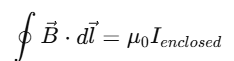
This law is useful for calculating magnetic fields in symmetrical situations.
Ampere’s Circuital Law’s Applications
-
Long Straight Conductor
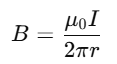
The magnetic field decreases inversely with distance r.
-
Solenoid
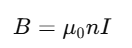
where n is the number of turns per unit length. Inside a long solenoid, the field is uniform and parallel to its axis.
-
Toroid
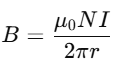
Magnetic field lines are circular, confined inside the toroid, and zero outside.
Force Between Parallel Conductors
Two long, straight conductors carrying currents exert forces on each other. If the currents flow in the same direction, the conductors attract; if they flow in opposite directions, they repel.
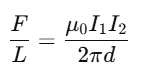
Definition of Ampere
One ampere is that steady current which, when maintained in two parallel conductors one meter apart in a vacuum, produces a force between them. This principle underlies current standards in electromagnetism.
Torque on Current Loop in a Magnetic Field
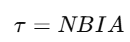
A current loop placed in a uniform magnetic field experiences a torque because forces on opposite sides of the loop are equal and opposite but not collinear. Torque on Current Loop in a Magnetic Field is represented as:

where
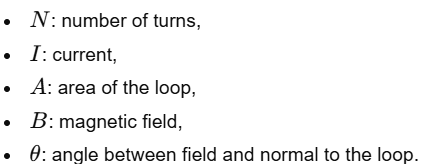
Explanation

Application
This effect is the working principle behind electric motors and moving-coil galvanometers.
Moving-Coil Galvanometer: Principle and Working
A moving-coil galvanometer is an instrument that detects and measures small electric currents.
Moving Coil Galvanometer Principle
It works on the fact that a current-carrying coil in a magnetic field experiences a torque proportional to the current.
Construction and Working
-
The coil is wound on a light aluminum frame and suspended between the poles of a strong magnet.
-
When current passes, the coil deflects due to torque.
-
A restoring spring provides a counter-torque.
-
The pointer attached to the coil moves over a calibrated scale.
At equilibrium:


Sensitivity Improvement
-
Use a strong radial magnetic field.
-
Increase the number of turns or coil area.
-
Use a fine suspension fiber to reduce restoring torque.
Galvanometers are essential in converting small currents into measurable deflections.
Cyclotron Principle and Working
A cyclotron is a type of particle accelerator that uses magnetic and electric fields to increase the energy of charged particles.
Cyclotron Principle
A charged particle moving in a perpendicular magnetic field follows a circular path. An alternating electric field between two hollow D-shaped metal chambers (Dees) accelerates it every time it crosses the gap.
Cyclotron Working Steps
-
The magnetic field keeps the particle in circular motion inside the Dees.
-
Each time the particle crosses the gap, it accelerates due to the electric field.
-
The radius of the path increases with speed.
-
Finally, the particle exits at high energy for experimental use.
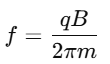
Frequency of Revolution
Applications
-
Producing high-energy protons and alpha particles.
-
Cancer therapy and nuclear research.
-
Generation of radioactive isotopes.
Magnetic Dipole Moment
A current loop behaves like a magnetic dipole with a magnetic dipole moment (M) given by:
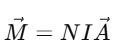
Its direction is perpendicular to the plane of the loop, given by the right-hand rule.
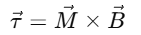
When placed in a magnetic field, the loop experiences a torque:
Analogy
Just as an electric dipole experiences torque in an electric field, a magnetic dipole experiences torque in a magnetic field.
Uses
-
Explains the behaviour of bar magnets and compass needles.
-
Basis of magnetization and torque in electric motors.
-
Helps understand molecular magnetism.
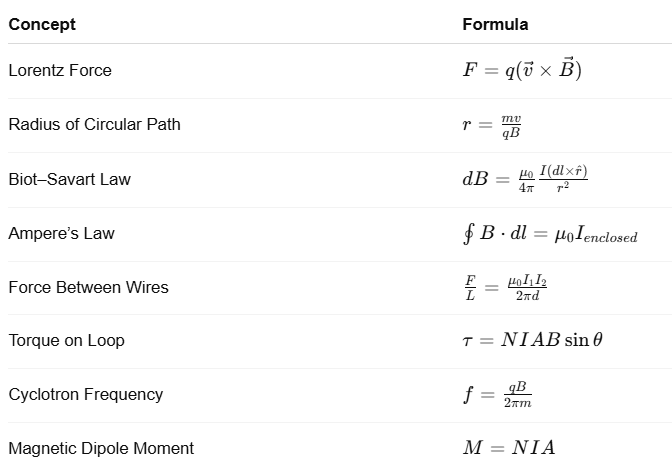
Key Formulas included in Moving Charges and Magnetism:
It is important for every NEET aspirant to go through the key formulas included in the Moving Charges and Magnetism:
Moving Charges and Magnetism FAQs
What is the magnetic force on a moving charge?
How does a cyclotron accelerate particles?
What is the principle of a moving-coil galvanometer?
What is a magnetic dipole moment?
How are Ampere and Biot Savart laws related?


Have questions about your prep?
Our experts can answer all your questions