







NEET 2026 Biology Paper Analysis (21 June Re-Exam): Difficulty Level, Question Paper & Answer Key
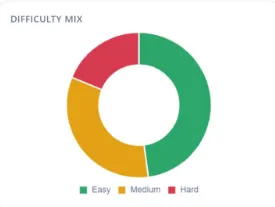
NEET 2026 Biology Paper Analysis 21 June Re-exam compiled the information regarding the Biology difficulty level, question paper, topics asked, and answer key. The overall difficulty level overview was easy to moderate. Students found the Biology section covered mostly doable questions in the NEET UG exam organised on 21 June 2026.



NTA is the conducting authority of the NEET 2026 exam on 21 June 2026 is over. NEET 2026 Biology Paper Analysis (21 June Re-Exam) includes information regarding the difficulty level, question paper, and answer key. All the Students can know what type of questions are asked in the Biology section in the NEET exam. The paper was easy to moderate.
Also Check
- NEET UG Re-Exam Live Update
- NEET 2026 Exam Answer Key
- NEET 2026 Question Paper
- NEET 2026 Paper Analysis
NEET 2026 Biology Paper Analysis (21 June Re-Exam)
The complete Biology paper analysis will be updated after the examination. The section will include overall paper review, difficulty level, NCERT coverage, scoring potential, and student feedback.
|
Parameter |
Analysis |
|
Overall Difficulty Level |
Easy to Moderate |
|
NCERT Weightage |
NCERT concepts asked in the exam. |
|
Botany Difficulty |
Easy to Moderate |
|
Zoology Difficulty |
Easy to Moderate |
|
Student Reactions |
Easy to Moderate |
NEET 2026 Biology Paper Difficulty Level
NEET Biology paper level was easy to moderate, considering the responses of the students recorded after the exam shift was over. Biology section carried the NCERT-based concepts in the question format in the NEET examination.
NEET 2026 Biology Question Paper Overview
NEET 2026 Biology Question Paper includes 90 questions asked in the exam. IT covers the Botany questions, around 45 questions and the Zoology section questions, around 45 questions.
|
Aspect |
Details |
|
Total Questions |
90 |
|
Botany Questions |
45 |
|
Zoology Questions |
45 |
|
Marks |
360 |
|
Question Type |
MCQ |
|
Exam Mode |
Offline |
NEET 2026 Re-Exam Biology vs 3 May Exam
A detailed comparison between the 21 June re-exam and the cancelled 3 May examination will be provided after the exam. Changes in difficulty level, question pattern, NCERT coverage, and student reactions were discussed after the exam.
|
Parameter |
3 May Exam |
21 June Re-Exam |
|
Difficulty Level |
Easy To Moderate |
Easy To Moderate |
|
NCERT Weightage |
NCERT concepts |
NCERT Concepts |
|
Botany Level |
Easy To Moderate |
Easy To Moderate |
|
Zoology Level |
Easy To Moderate |
Easy To Moderate |
Chapter-wise NEET 2026 Biology Paper Analysis
Chapter-wise NEET 2026 Biology Paper Analysis can help students know the priority topics to cover for the NEET exam.
| S.no | Chapter Name | Questions Asked (Q) |
| 1 | Cell: The Unit of Life | 8 |
| 2 | Photosynthesis in Higher Plants | 5 |
| 3 | Biological Classification | 4 |
| 4 | Sexual Reproduction in Flowering Plants | 4 |
| 5 | Organisms and Populations | 4 |
| 6 | Morphology of Flowering Plants | 3 |
| 7 | Plant Growth and Development | 3 |
| 8 | The Living World | 3 |
| 9 | Principles of Inheritance and Variation | 3 |
| 10 | Plant Kingdom | 2 |
| 11 | Cell Cycle and Cell Division | 2 |
| 12 | Ecosystem | 2 |
| 13 | Molecular Basis of Inheritance | 2 |
| 14 | Respiration in Plants | 1 |
| 15 | Microbes in Human Welfare | 1 |
| 16 | Biodiversity and Conservation | 1 |
NEET 2026 Biology Exam Analysis
Student Reactions: How Was the NEET 2026 Biology Paper?
Student feedback will be updated after the examination. The section will cover easy and difficult chapters, time management, and scoring opportunities.
Teacher Review of NEET 2026 Biology Paper
The teachers found that the paper level was easy to moderate, considering the students' response after the exam.
NEET 2026 Biology Question Paper PDF
NEET 2026 Biology Question Paper PDF will include the questions asked in the paper. The question paper PDF will be provided to the students soon.
NEET 2026 Biology Answer Key & Solutions
NEET 2026 Biology Answer Key & Solutions will be provided to the students soon.
Reference Analysis of Cancelled NEET UG 2026 Biology Paper (3 May Exam)
Note: The NEET UG 2026 examination, conducted on 3 May 2026 was later cancelled. The analysis below is preserved as a reference and should not be considered representative of the 21 June re-exam.
Biology Question Paper Overview (3 May Exam)
The Biology section had 90 questions divided equally between Botany and Zoology. The section mainly followed the NCERT syllabus.
Biology Difficulty Level (3 May Exam)
The overall Biology section was considered easy to moderate. Many questions were direct and based on NCERT concepts.
Class-wise Biology Analysis (3 May Exam)
Questions were asked from both Class 11 and Class 12 topics. Class 12 chapters had slightly higher weightage.
Chapter-wise Biology Analysis (3 May Exam)
Important chapters included Human Physiology, Genetics, Ecology, Plant Physiology, and Reproduction.
Topic-wise Biology Analysis (3 May Exam)
Many questions were based on important concepts and statement-based patterns.
Botany Analysis (3 May Exam)
Botany questions were mostly direct and based on NCERT textbooks.
Zoology Analysis (3 May Exam)
Zoology had conceptual and statement-based questions from important chapters.
Important Questions & Teacher Review (3 May Exam)
Experts said the Biology section was scoring for students with strong NCERT preparation.
NEET 2026 Biology Paper Analysis FAQs
What was the difficulty level of the NEET 2026 Biology paper?
Was the 21 June NEET 2026 Biology paper easier than the cancelled 3 May exam?
Which chapters had the highest weightage in the NEET 2026 Biology paper?
Where can I download the NEET 2026 Biology question paper and answer key?










Get Free Counselling Today
and Clear up all your Doubts
 Live & recorded classes available at easeDashboard for progress trackingLakhs of practice questions

