







Physics Optics Syllabus for NEET 2026

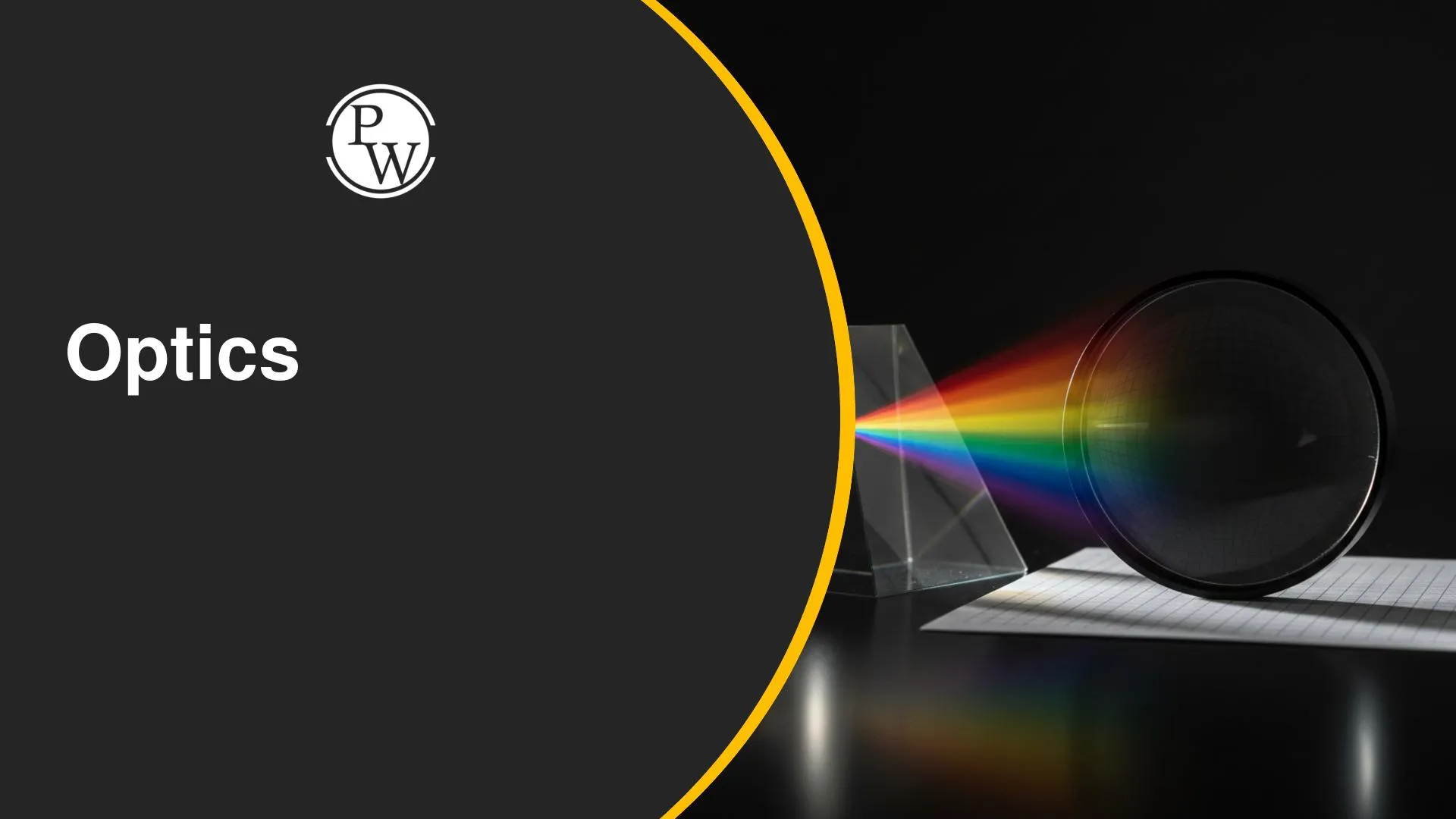
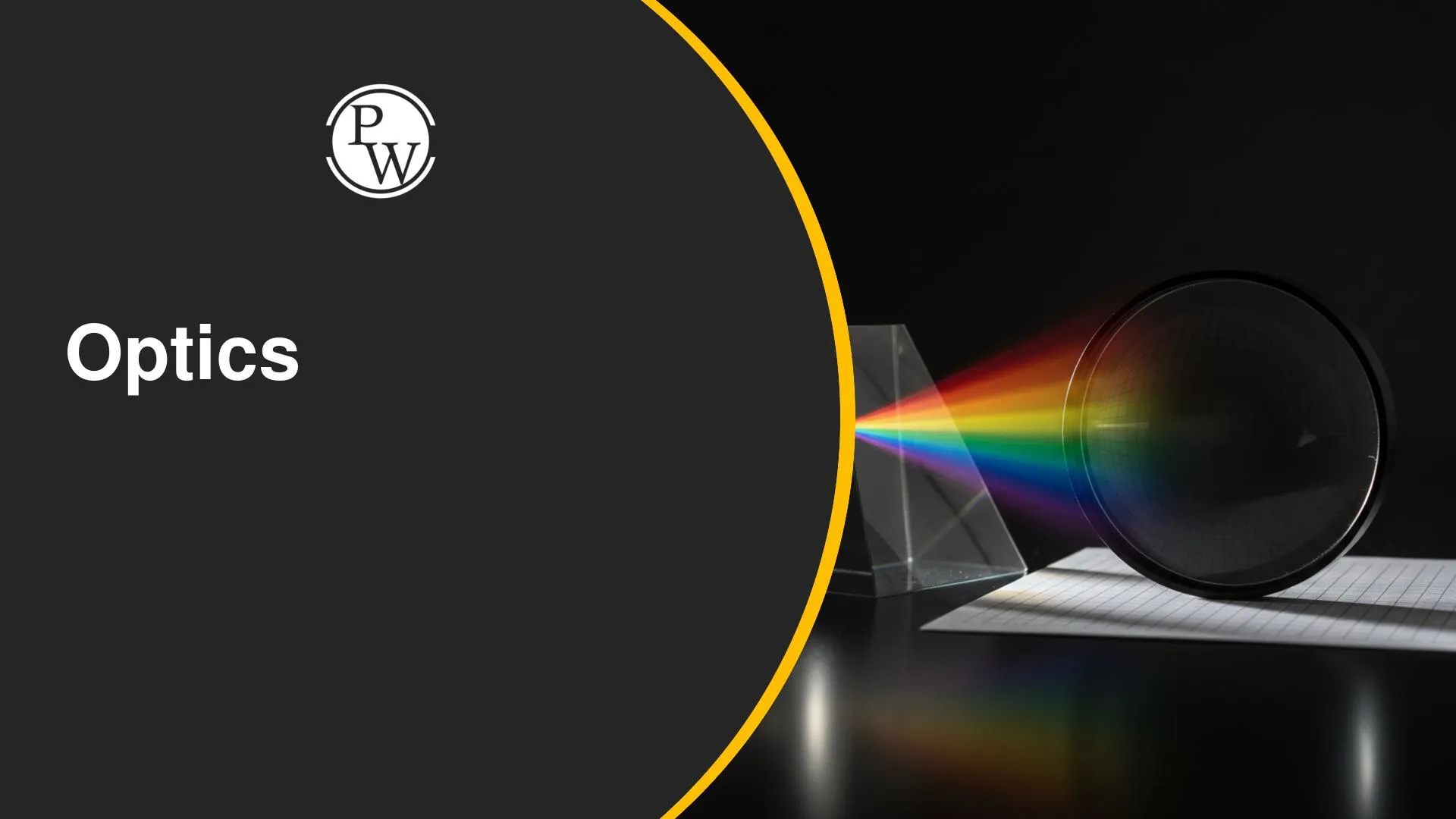
Optics studies the behaviour of light and explains how light interacts with mirrors, lenses, prisms, and different media. Many natural phenomena, such as image formation, rainbow formation, magnification, and interference, are understood through optical principles.
This unit combines geometrical optics and wave optics to explain both the particle-like propagation and wave nature of light. It also introduces optical instruments such as microscopes and telescopes, along with important wave phenomena including interference, diffraction, and polarization.
Reflection and Refraction of Light
Reflection occurs when light bounces back from a surface, while refraction occurs when light changes direction after entering another medium.
It explains image formation by spherical mirrors and lenses using ray diagrams and mirror-lens formulas. The unit also includes:
-
Refraction at plane and spherical surfaces
-
Lens maker’s formula
-
Magnification and power of lenses
-
Combination of thin lenses
Total Internal Reflection and Optical Instruments
Total Internal Reflection takes place when light travelling from a denser medium to a rarer medium strikes the boundary at an angle greater than the critical angle. This phenomenon is used in:
-
Optical fibers
-
Prism-based devices
-
Medical endoscopy systems
It also explains microscopes and astronomical telescopes, including both reflecting and refracting types. These instruments increase angular magnification and help observe extremely small or distant objects.
Wave Optics and Huygens’ Principle
Wave Optics explains the behavior of light through its wave nature. Huygens’ principle describes wave propagation using secondary wavelets generated from every point on a wavefront.
Using this principle, the Laws of Reflection and Refraction can be explained mathematically.
It also introduces interference of light through Young’s double-slit experiment. It explains coherent sources, fringe formation, and fringe width in interference patterns. These concepts establish experimental evidence for the wave nature of light.
Diffraction and Polarization
Diffraction occurs when light bends around obstacles or spreads after passing through narrow openings. In single-slit diffraction, a broad central maximum is formed due to the superposition of wavelets.
Polarization demonstrates that light waves are transverse in nature. Plane-polarized light vibrates in only one direction perpendicular to propagation. It also includes:
-
Brewster’s law
-
Polaroids
-
Uses of polarized light in glare reduction and optical devices
These topics connect wave behaviour with practical optical applications.
Optics: Complete Study Resources By PW
Optics requires regular practice of ray diagrams, wave concepts, and formula-based numerical questions. Below are the PW study resources you can use to prepare Optics:
|
Resource |
Access |
|
Optics PYQs |
View details |
|
Optics MCQs |
View details |
|
Optics Formula Sheet |
View details |
|
Optics Mind Maps |
View details |
| NEET Exam Important Links | |
|---|---|
| NEET Syllabus | NEET Biology Notes |
| NEET Eligibility Criteria | NEET Exam Pattern |
| NEET Previous Year Question Papers | NEET Biology Syllabus |
Optics FAQs
What is total internal reflection?
What is the lens formula?
What is diffraction of light?
What is Polarization?









Get Free Counselling Today
and Clear up all your Doubts
 Live & recorded classes available at easeDashboard for progress trackingLakhs of practice questions

