








Principles of Inheritance and Variation Notes By PW

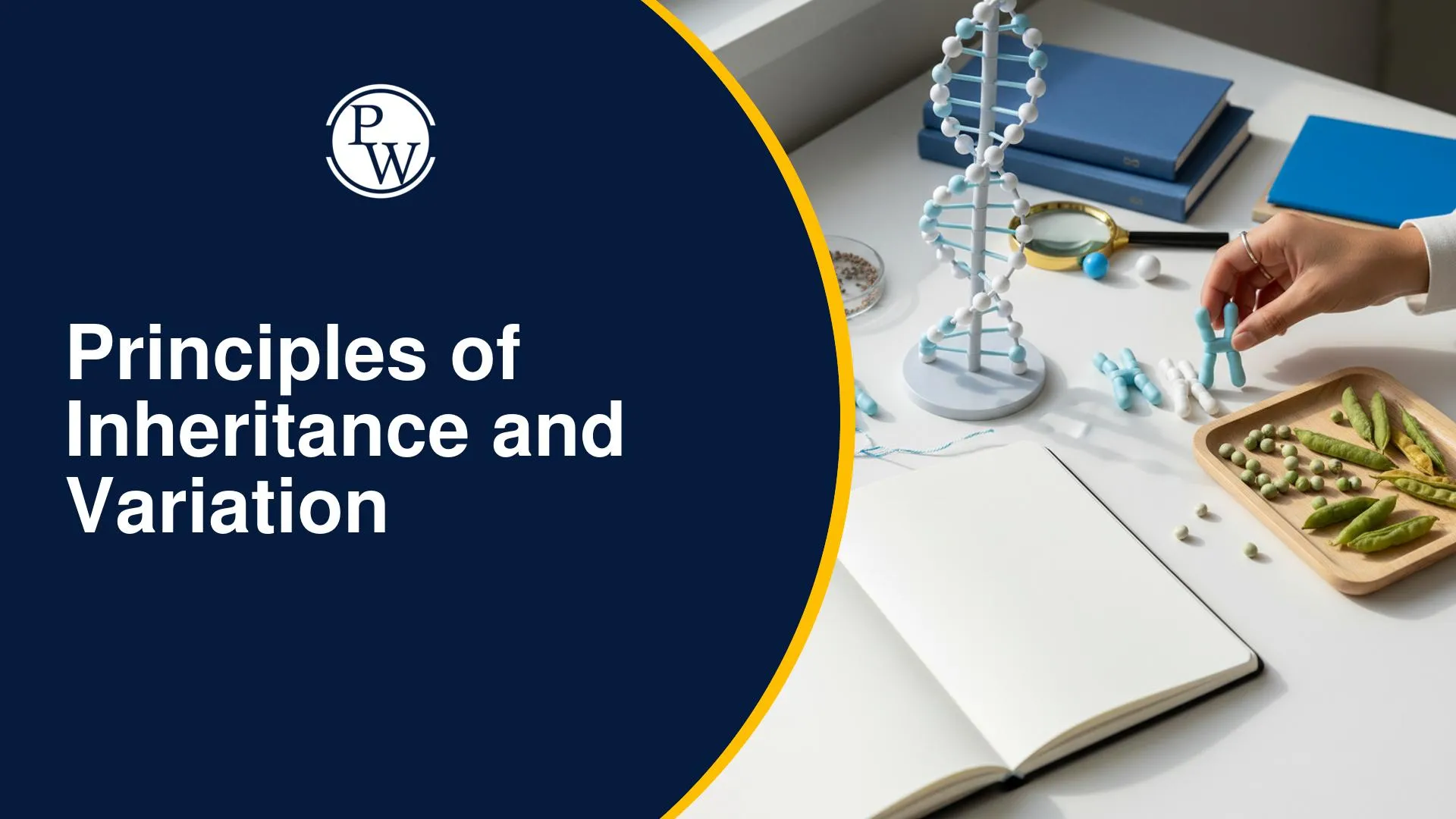
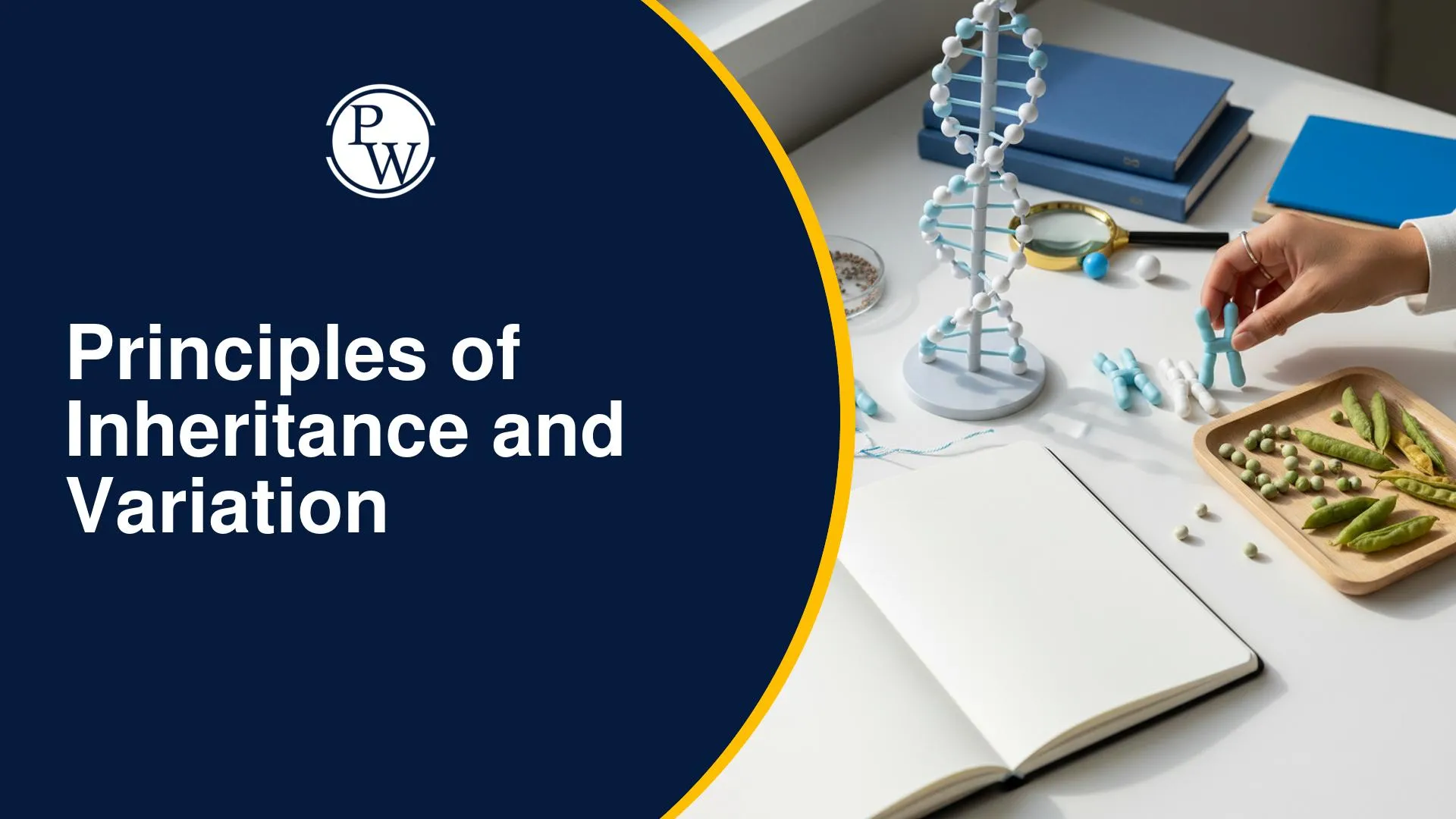
Genetics questions in NEET can be challenging because they require you to apply inheritance laws, solve genetic crosses and distinguish between concepts such as incomplete dominance, codominance and linkage. A clear understanding of genes, alleles, chromosomes, genotype and phenotype is essential for solving questions on Mendelian ratios, pedigree analysis, sex determination and genetic disorders.
PW supports NEET preparation through courses for Class 11, Class 12 and droppers, along with live and recorded classes, daily practice problems (DPPs), mock tests and previous-year questions. Revising Mendel’s laws, practising genetic crosses and understanding the inheritance patterns of genetic disorders can help you strengthen your conceptual understanding of this chapter.
Basic Concepts of Genetics
Genetics begins with understanding how DNA carries hereditary information and how genes influence the characteristics of an organism. Concepts such as alleles, homologous chromosomes, genotype and phenotype form the foundation for solving inheritance-based NEET questions.
Inheritance, Heredity and Variation
Inheritance is the transfer of genetic information from parents to offspring. DNA carries genetic information that influences protein formation and the expression of characters.
Variation refers to the differences observed among individuals. Although offspring inherit genetic information from their parents, they are not always identical to them.
-
Inheritance: Transfer of genetic information from parents to offspring.
-
Heredity: Transmission of inherited characters across generations.
-
Variation: Differences among individuals or between parents and offspring.
Homologous Chromosomes
Human somatic cells generally contain 23 pairs of chromosomes. One chromosome of each pair is inherited from the mother and the other from the father.
Homologous chromosomes have similar shapes, sizes and structures. They carry genes for corresponding characters at the same loci, although the alleles of a gene may differ.
For example, homologous chromosomes may carry different alleles of a gene associated with a particular character.
Character, Trait, Gene and Allele
A character is a general feature of an organism, whereas a trait is a specific form of that character.
|
Character |
Examples of traits |
|
Eye colour |
Brown or blue |
|
Height |
Tall or dwarf in pea plants |
|
Seed shape |
Round or wrinkled |
A gene is a segment of DNA that performs a functional role, such as coding for a protein or producing a functional RNA molecule.
Alleles are alternative forms of the same gene. For example, in a simplified pea-plant model, T represents the allele for tallness and t represents the allele for dwarfness.
Genotype and Phenotype
Genotype refers to the genetic composition of an organism, while phenotype refers to its observable characteristics.
For example, a pea plant showing the tall phenotype may have either the TT or Tt genotype when tallness is dominant over dwarfness.
|
Term |
Meaning |
Example |
|
Genotype |
Genetic composition |
TT, Tt or tt |
|
Phenotype |
Observable characteristic |
Tall or dwarf |
|
Homozygous |
Two identical alleles |
TT or tt |
|
Heterozygous |
Two different alleles |
Tt |
|
Dominant allele |
Expresses in a heterozygous condition |
T in Tt |
|
Recessive allele |
Expresses when the dominant allele is absent |
t in tt |
During gamete formation, the alleles of a gene separate so that each gamete receives one allele. Fertilisation restores the diploid chromosome number in the zygote.
Mendel and the Laws of Inheritance
Gregor Mendel’s experiments established the basic principles used to explain how characters pass from parents to offspring. Understanding his laws and practising genetic crosses are essential for solving questions involving inheritance patterns, genotypic ratios and phenotypic ratios.
Gregor Johann Mendel
Gregor Johann Mendel is known as the father of genetics. He conducted experiments on pea plants from 1856 to 1863 and used mathematical analysis to study the inheritance of contrasting characters.
His findings were rediscovered in 1900 by Hugo de Vries, Carl Correns and Erich von Tschermak. Mendel studied seven pairs of contrasting characters in pea plants.
|
Character |
Dominant form |
Recessive form |
|
Flower colour |
Violet |
White |
|
Seed shape |
Round |
Wrinkled |
|
Seed colour |
Yellow |
Green |
|
Pod colour |
Green |
Yellow |
|
Pod shape |
Inflated |
Constricted |
|
Plant height |
Tall |
Dwarf |
|
Flower position |
Axial |
Terminal |
Dominance does not indicate that one trait is superior to another. It describes how alleles are expressed in a particular genetic combination.
Monohybrid Cross
A monohybrid cross examines the inheritance of one character.
Consider a cross between a pure tall pea plant (TT) and a pure dwarf pea plant (tt).
Parental generation: TT × tt
F1 generation: All offspring have the genotype Tt and show the tall phenotype.
When the F1 plants are self-crossed:
F1 cross: Tt × Tt
|
T |
t |
|
|
T |
TT |
Tt |
|
t |
Tt |
tt |
The F2 generation produces the following ratios:
-
Genotypic ratio: 1 TT : 2 Tt : 1 tt
-
Phenotypic ratio: 3 tall : 1 dwarf
The dwarf allele remains present in heterozygous F1 plants even though it is not expressed. It reappears in the F2 generation when an offspring inherits two recessive alleles.
Mendel’s Three Laws of Inheritance
1. Law of Dominance
When two contrasting alleles occur together in a heterozygous individual, one allele may express itself as dominant while the other remains unexpressed.
2. Law of Segregation
The two alleles of a gene separate during gamete formation. Each gamete receives only one allele. This law is also called the Law of Purity of Gametes.
3. Law of Independent Assortment
Alleles of different gene pairs assort independently during gamete formation when the genes are unlinked or sufficiently unlinked for independent assortment to apply.
Test Cross and Back Cross
A back cross involves crossing an offspring with either of its parents.
A test cross involves crossing an individual showing a dominant phenotype with a homozygous recessive individual. It helps determine the unknown genotype of the dominant individual.
For example:
-
Tt × tt: Produces a 1 tall : 1 dwarf phenotypic ratio.
-
TT × tt: Produces all tall offspring.
If dwarf offspring appear in a test cross, the unknown tall parent must be heterozygous (Tt).
Dihybrid Cross
A dihybrid cross studies the inheritance of two characters simultaneously, such as seed shape and seed colour in pea plants.
Consider the cross between pure round yellow seeds (RRYY) and pure wrinkled green seeds (rryy).
Parental cross: RRYY × rryy
F1 generation: All offspring have the genotype RrYy and show round yellow seeds.
The F1 plants produce four types of gametes: RY, Ry, rY and ry. When these plants are self-crossed, the F2 generation shows the following ratios, assuming independent assortment and complete dominance:
-
Phenotypic ratio: 9 : 3 : 3 : 1
-
Genotypic ratio: 1 : 2 : 1 : 2 : 4 : 2 : 1 : 2 : 1
The phenotypic ratio represents nine round yellow, three round green, three wrinkled yellow and one wrinkled green offspring.
Memory tip: The 9 : 3 : 3 : 1 ratio results from combining two monohybrid crosses, each of which produces a 3 : 1 phenotypic ratio.
Non-Mendelian Inheritance
Some inheritance patterns do not follow the typical dominant-recessive pattern described in Mendel’s simple crosses.
Incomplete Dominance
In incomplete dominance, neither allele completely dominates the other. The heterozygous phenotype is intermediate between the two homozygous phenotypes.
For example, in Mirabilis jalapa (four-o’clock plant), crossing red-flowered and white-flowered plants produces pink-flowered heterozygous offspring.
The F2 generation shows:
-
Phenotypic ratio: 1 red : 2 pink : 1 white
-
Genotypic ratio: 1 : 2 : 1
Unlike complete dominance, the phenotypic ratio in this example is the same as the genotypic ratio.
Codominance and Multiple Allelism
In codominance, both alleles express fully in the heterozygous condition. The ABO blood-group system in humans demonstrates codominance and multiple allelism.
The ABO blood group is controlled by three alleles: Iᴬ, Iᴮ and i.
|
Genotype |
Blood group |
|
IᴬIᴬ or Iᴬi |
A |
|
IᴮIᴮ or Iᴮi |
B |
|
IᴬIᴮ |
AB |
|
ii |
O |
In the AB blood group, both Iᴬ and Iᴮ are expressed. Although three alleles exist in the population, a diploid individual carries only two alleles of this gene.
Polygenic Inheritance
Polygenic inheritance occurs when a character is influenced by multiple genes. Human skin colour and height are commonly cited examples.
In additive models of polygenic inheritance, the combined effects of alleles contribute to variation in a character. Environmental factors may also influence the resulting phenotype.
Memory tip: Polygenic inheritance involves multiple genes contributing to one character.
Pleiotropy
Pleiotropy occurs when a single gene influences multiple characters.
Phenylketonuria is an example associated with deficiency of the enzyme phenylalanine hydroxylase. This affects the metabolism of phenylalanine and can lead to effects on brain development and pigmentation if untreated.
Memory tip: One gene influencing multiple traits is called pleiotropy.
Linkage, Recombination and Genetic Maps
Linkage refers to the tendency of genes located on the same chromosome to be inherited together. Genes located close to each other generally show lower recombination frequencies than genes farther apart.
Recombination produces new combinations of alleles. The frequency of recombination can help estimate the relative distance between genes.
-
Strong linkage: Closely located genes tend to be inherited together, with fewer recombinant combinations.
-
Weaker linkage: Genes farther apart tend to show higher recombination frequencies.
Thomas Hunt Morgan studied inheritance in Drosophila melanogaster, which has a short life cycle and produces many offspring. Alfred Sturtevant used recombination frequencies to construct genetic maps.
Memory tip: Lower recombination frequency generally indicates that linked genes are closer together.
Sex Determination
Different organisms use different mechanisms to determine sex.
|
System |
Female |
Male |
Example |
|
X0 system |
XX |
X0 |
Grasshoppers |
|
XY system |
XX |
XY |
Humans and Drosophila |
|
ZW system |
ZW |
ZZ |
Birds |
|
Haplodiploid system |
Diploid |
Haploid |
Honey bees |
In humans, females typically have XX sex chromosomes and males typically have XY sex chromosomes.
In birds, the ZW system operates differently: females are ZW and males are ZZ.
In honey bees, fertilised eggs generally develop into diploid females, while unfertilised eggs develop into haploid males through parthenogenesis. A male honey bee, or drone, develops from an unfertilised egg and does not have a biological father.
Honey bee females generally have 32 chromosomes, while males have 16.
Mutation and Genetic Disorders
A mutation is a change in genetic material. Depending on its type and location, a mutation may affect gene function, protein production or observable characteristics. Mutations in reproductive cells may be inherited by offspring.
Types of Mutations
Point mutation: A change involving a single nucleotide. Sickle-cell anaemia is caused by a point mutation in the beta-globin gene that changes glutamic acid to valine in the beta-globin chain.
Frameshift mutation: An insertion or deletion of nucleotides that changes the reading frame. Insertions or deletions that are not multiples of three can cause a frameshift in a protein-coding sequence.
Chromosomal aberration: A change in chromosome structure or chromosome number that may affect multiple genes.
Common Genetic Disorders
|
Disorder |
Inheritance or genetic cause |
|
Colour blindness |
Commonly X-linked recessive |
|
Haemophilia |
Commonly X-linked recessive |
|
Sickle-cell anaemia |
Autosomal recessive; point mutation |
|
Phenylketonuria |
Autosomal recessive; can show pleiotropic effects |
|
Thalassaemia |
Usually autosomal recessive |
|
Myotonic dystrophy |
Autosomal dominant |
Thalassaemia affects the production of globin chains and therefore the quantity of functional haemoglobin. Sickle-cell anaemia involves a structural change in haemoglobin.
Alpha-thalassaemia is associated with genes on chromosome 16, while beta-thalassaemia is associated with the beta-globin gene on chromosome 11.
Chromosomal Disorders
Chromosomal disorders may result from changes in chromosome number or structure.
|
Term or disorder |
Description |
|
Polyploidy |
Gain of one or more complete chromosome sets |
|
Nullisomy |
Absence of both chromosomes of a homologous pair |
|
Monosomy |
Absence of one chromosome from a pair |
|
Trisomy |
Presence of one extra chromosome |
|
Tetrasomy |
Presence of two extra copies of a particular chromosome |
|
Down syndrome |
Trisomy 21; usually 47 chromosomes |
|
Klinefelter syndrome |
Typically 47, XXY |
|
Turner syndrome |
Typically 45, X |
Down syndrome, Klinefelter syndrome and Turner syndrome are associated with changes in chromosome number.
Pedigree Analysis
Pedigree analysis uses family histories to study the inheritance of traits and genetic disorders across generations. It helps identify patterns consistent with dominant, recessive or sex-linked inheritance.
Common pedigree symbols include:
-
Square: Male
-
Circle: Female
-
Shaded symbol: Affected individual
-
Horizontal line connecting two individuals: Mating
-
Double horizontal line: Consanguineous mating
-
Diamond: Sex unspecified
Pedigree analysis helps trace inherited conditions through families. Chromosomal disorders, meanwhile, may be investigated through karyotyping, which examines chromosome number and structure.
Principles of Inheritance and Variation connects fundamental genetic concepts with Mendelian crosses, inheritance patterns, linkage, sex determination and genetic disorders. A clear understanding of these topics, supported by regular question practice, can help you approach different genetics questions with greater confidence. PW supports NEET aspirants through courses, live and recorded classes, DPPs, mock tests and previous-year questions for revision and practice.
NEET Resources You Might Like:
|
Resource |
Link |
|
NEET Syllabus |
|
|
NEET PYQs |
|
|
NEET Mind Maps |
|
|
NEET Sample Papers |
|
|
NEET Formula |
|
|
NEET MCQs |
|
|
NEET Diagrams |
Elevate your NEET preparation with Physics Wallah’s NEET Online Courses. Get access to comprehensive live classes, expert guidance, quality study materials, practice tests, and more—all designed to help you prepare effectively for the NEET exam. Explore Now!
FAQs
1. What are the main topics in Principles of Inheritance and Variation?
2. What is the phenotypic ratio of a monohybrid cross?
3. What is the phenotypic ratio of a dihybrid cross?
4. What is the difference between incomplete dominance and codominance?








Have questions about your prep?
Our experts can answer all your questions
 Live & recorded classes available at easeDashboard for progress trackingLakhs of practice questions

