








Biology Respiration in Plants Diagrams for NEET by Physics Wallah
 Avisha Das14 Jul, 2026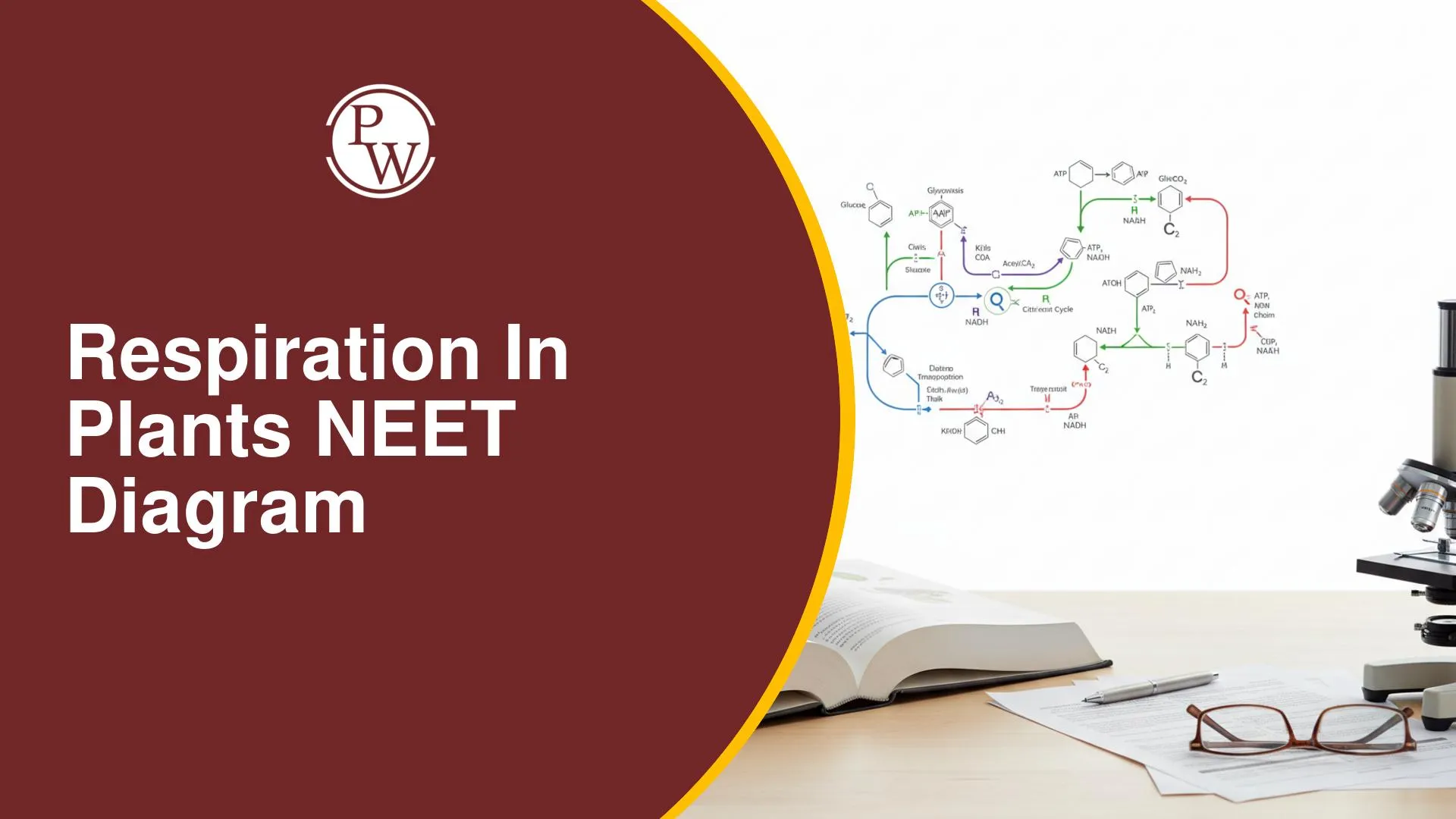
Plants may appear motionless, but every living cell within them is continuously producing energy to support growth, repair, transport, and reproduction. The Respiration in Plants chapter reveals this hidden world by tracing how glucose is converted into usable energy through a series of interconnected biochemical pathways.
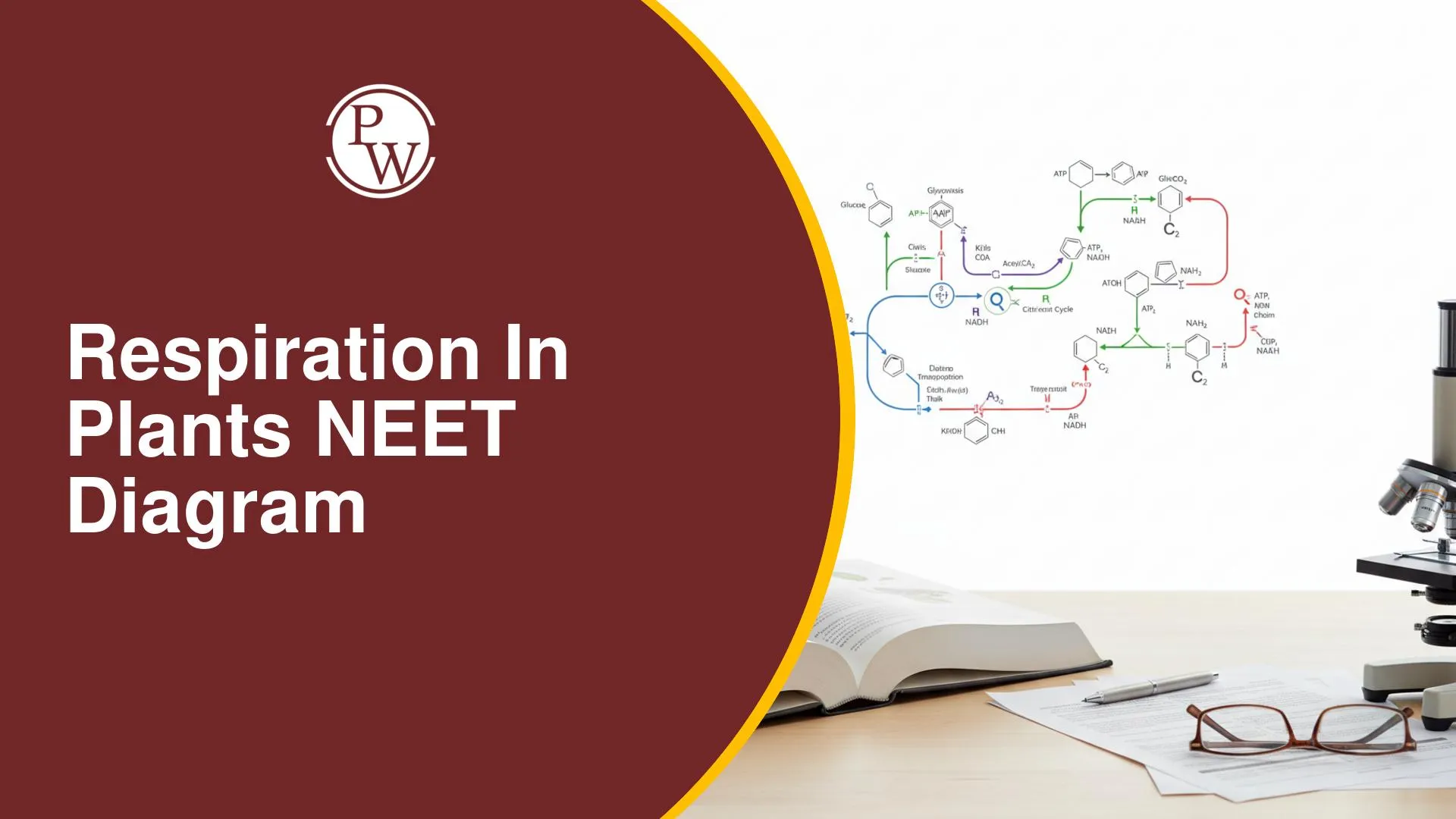
These pathways involve several stages, organelles, and intermediate molecules that are much easier to understand through diagrams than by memorising reactions individually. Physics Wallah provides Respiration in Plants NEET diagrams to help you visualise each step, connect the processes logically, and revise the chapter more efficiently for NEET.
Respiration in Plants NEET Diagrams PDF
The Respiration in Plants NEET diagrams PDF presents the chapter through pathway diagrams, labelled cellular illustrations, and process flowcharts. It allows you to follow the complete sequence of respiration while identifying the role of each stage without repeatedly referring to lengthy explanations.
Respiration in Plants NEET Diagrams PDF
Why Use PW Respiration in Plants NEET Diagrams?
Understanding respiration becomes much easier when each stage is represented visually instead of as isolated reactions.
1. Visualise the Complete Respiration Pathway
Stepwise diagrams connect glycolysis, pyruvate oxidation, the Krebs cycle, and the electron transport system into one continuous sequence.
2. Compare Aerobic and Anaerobic Respiration
Comparison diagrams highlight differences in oxygen requirement, ATP yield, end products, and cellular location, making revision more intuitive.
3. Understand Cellular Locations with Ease
Labelled illustrations show where each stage of respiration occurs, helping you remember the functions of the cytoplasm and mitochondria.
4. Simplify ATP Production and Energy Flow
Flow diagrams explain how energy is released and utilised during respiration, making ATP generation easier to understand and retain.
5. Connect Processes Instead of Memorising Steps
Integrated concept diagrams help you see how different respiratory stages are linked, improving conceptual clarity and reducing rote learning.
Also check:
Biology Respiration in Plants Diagrams FAQs
Which diagrams are most important in Respiration in Plants for NEET?
Why should I revise respiration through diagrams?
Does Physics Wallah provide other resources for this chapter?


Have questions about your prep?
Our experts can answer all your questions





 Live & recorded classes available at easeDashboard for progress trackingLakhs of practice questions

