








Sexual Reproduction, Morphology, And Anatomy of Flowering Plants Notes By PW

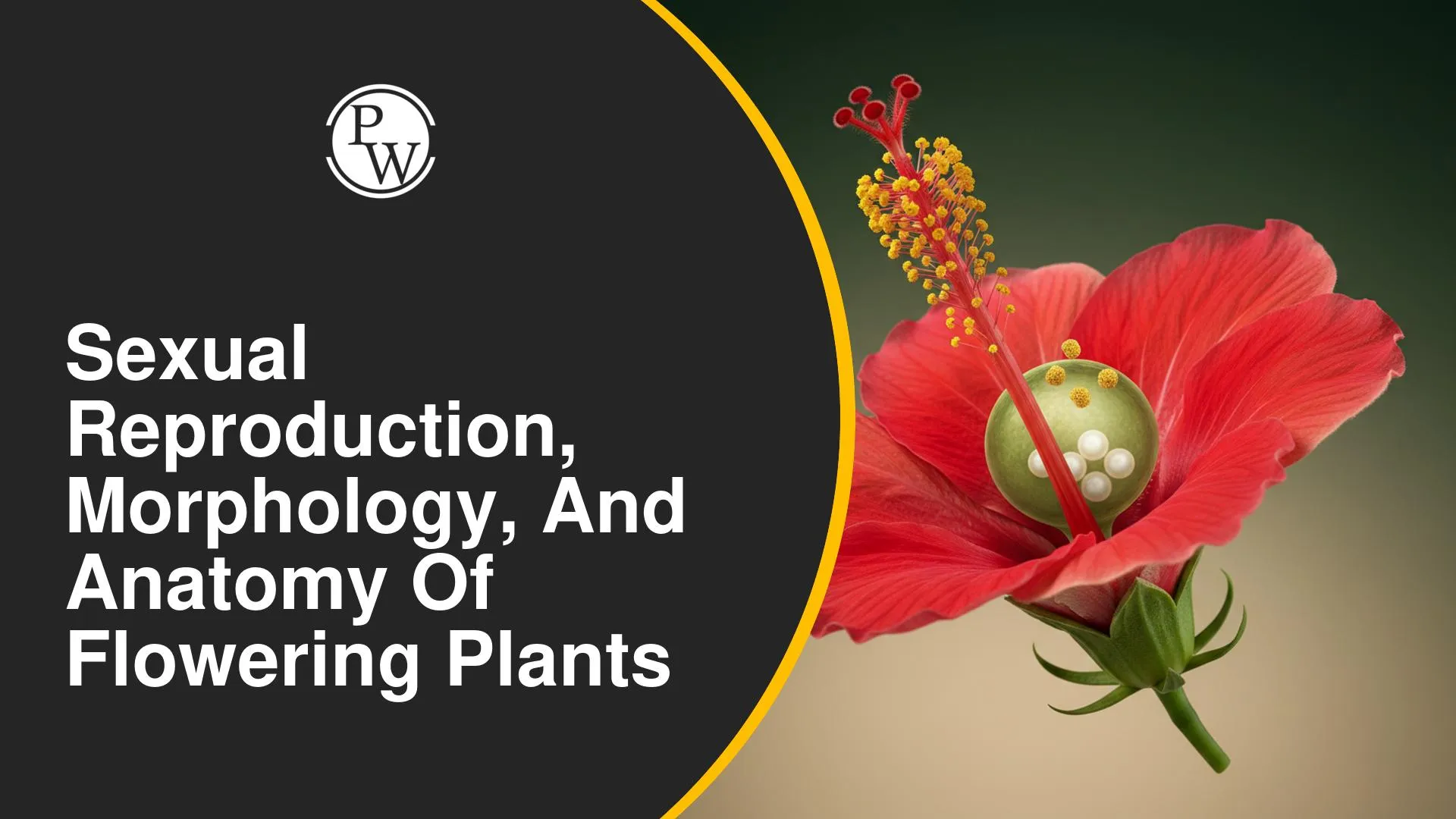
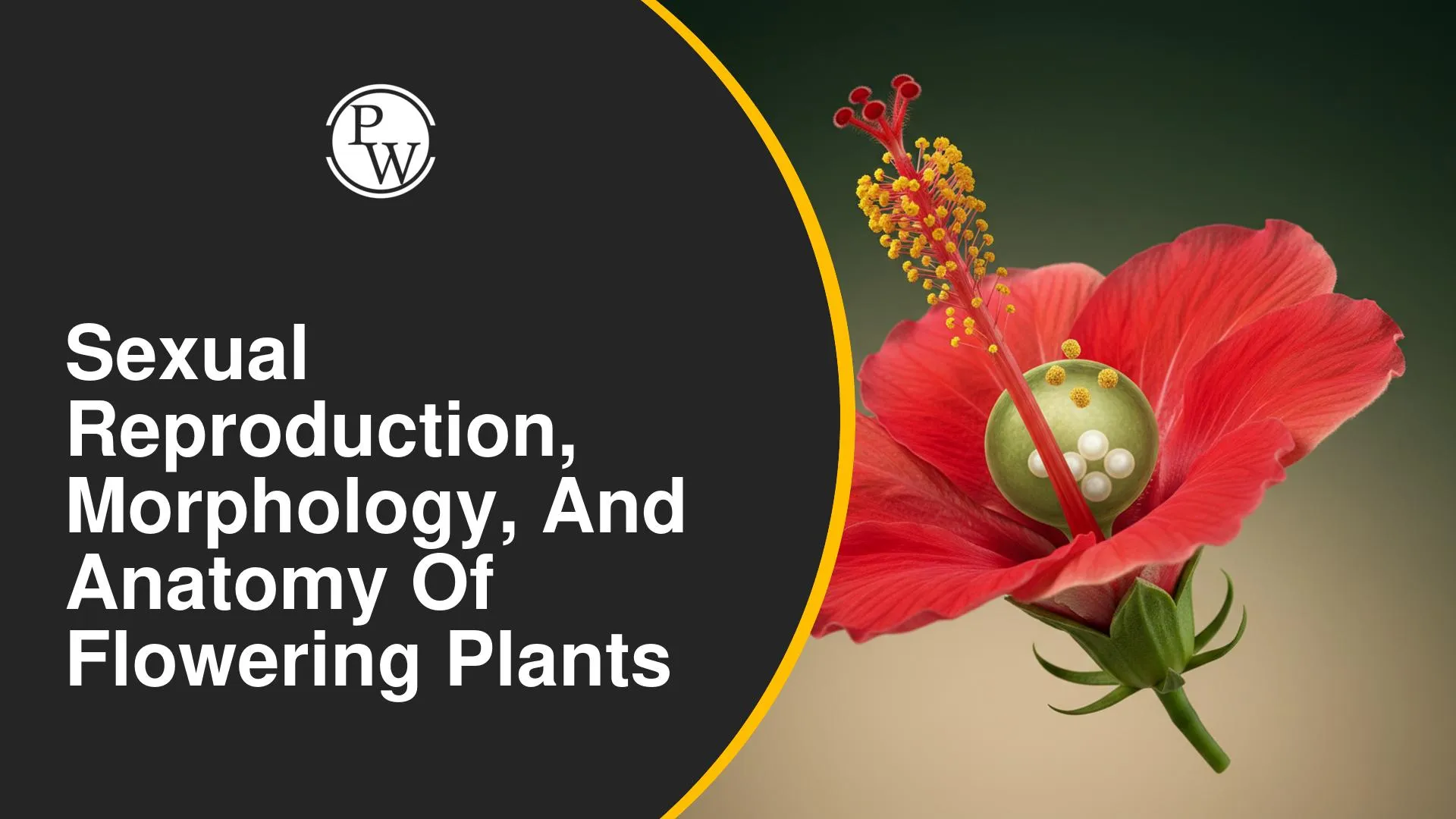
Flowering plant Biology involves several connected processes, from the formation of pollen and embryo sacs to fertilisation, seed development and fruit formation. For NEET, the challenge is to understand how these processes occur while remembering the examples, floral characteristics and anatomical features that distinguish one plant group from another.
PW offers NEET preparation courses for Class 11, Class 12 and droppers, with live and recorded classes, DPPs, mock tests and previous-year questions. Alongside these resources, revising labelled diagrams, comparing plant structures and solving concept-based questions can help you prepare for topics such as double fertilisation, placentation, floral families and monocot and dicot anatomy.
Ploidy and Generational Relationships
Understanding ploidy helps you distinguish between haploid reproductive structures and diploid plant tissues. These concepts are particularly important for questions involving the embryo sac, pollen grains, ovules and fertilisation.
The embryo sac is haploid, so its constituent cells, including synergids and antipodal cells, are haploid. The pollen grain is also haploid and represents the male gametophyte, while the embryo sac represents the female gametophyte.
The ovule and megasporangium are diploid structures. The haploid gametophytic generation develops within the diploid sporophytic plant body.
Gynoecium and Important Reproductive Terms
The gynoecium is the female reproductive whorl of a flower and consists of one or more carpels. The arrangement of carpels is an important morphological feature that helps distinguish different flowers.
|
Condition |
Arrangement of carpels |
|
Syncarpous |
Carpels are fused |
|
Apocarpous |
Carpels are free |
Memory tip: In syncarpous flowers, carpels stay united; in apocarpous flowers, they remain separate.
Parthenocarpy, Polyembryony, and Apomixis
These three terms describe different reproductive phenomena in flowering plants. Understanding their definitions and examples helps avoid confusion in NEET questions.
-
Parthenocarpy: Fruit formation without fertilisation. Such fruits are usually seedless. Banana is a common example.
-
Polyembryony: Formation of more than one embryo in a seed. Orange is a common example.
-
Apomixis: Seed formation without fertilisation, bypassing normal sexual reproduction.
-
Emasculation: Removal of anthers from a bisexual flower during artificial hybridisation to prevent self-pollination before desired pollen is applied.
Pollination in Flowering Plants
Pollination is the transfer of pollen grains from the anther to the stigma. It can occur through abiotic agents, such as wind and water, or biotic agents, such as insects and other animals.
Water Pollination
Water pollination is called hydrophily. It occurs in some aquatic flowering plants, but not all plants growing in water depend on water for pollination.
|
Type |
Description |
Example |
|
Epihydrophily |
Pollination occurs at the water surface |
Vallisneria |
|
Hypohydrophily |
Pollination occurs below the water surface |
Zostera |
Hydrilla is also associated with water pollination. In some hydrophytes, pollen grains have adaptations that help them move through water.
Water hyacinth and water lily have flowers that rise above the water surface. They are generally pollinated by insects or wind rather than by water.
Biotic and Abiotic Pollination
Pollination agents influence floral characteristics and the way pollen reaches the stigma. The following differences help distinguish the major modes of pollination.
|
Feature |
Biotic pollination |
Abiotic pollination |
|
Agents |
Insects and other animals |
Wind or water |
|
Flower characteristics |
Often brightly coloured or scented |
Often less conspicuous in wind-pollinated plants |
|
Nectar |
Common in many animal-pollinated flowers |
Generally absent in wind-pollinated flowers |
|
Examples |
Rose |
Grasses; Vallisneria for water pollination |
Water pollination is relatively uncommon among flowering plants, whereas wind pollination occurs in many grasses and other plants.
Autogamy, Geitonogamy, and Xenogamy
The classification of pollination depends on where the pollen originates and where it is transferred. These distinctions are important for understanding self-pollination and cross-pollination.
-
Autogamy: Pollen transfer from the anther to the stigma of the same flower.
-
Geitonogamy: Pollen transfer between different flowers of the same plant. It is functionally cross-pollination because a pollen-transfer agent may be required, but it is genetically similar to self-pollination.
-
Xenogamy: Pollen transfer between flowers on different plants of the same species. It introduces pollen from a genetically different plant.
A dioecious plant bears male and female flowers on separate plants, preventing both autogamy and geitonogamy. Xenogamy can occur between male and female plants.
Dichogamy, in which pollen release and stigma receptivity occur at different times, can prevent autogamy. However, it does not necessarily prevent geitonogamy.
Cleistogamous Flowers
Cleistogamous flowers remain closed and undergo self-pollination. Because their flowers do not open, pollen is transferred to the stigma within the same flower.
This condition promotes assured seed formation but limits opportunities for cross-pollination and genetic variation.
Pollen Formation and Pollen–Pistil Interaction
Pollen formation involves the development of microspores inside the anther, while pollen–pistil interaction determines whether pollen is compatible with the receiving flower. Both processes are important for understanding fertilisation in angiosperms.
Stages of Pollen Formation
Pollen grains develop through the following sequence:
-
Sporogenous tissue develops inside the microsporangium.
-
Sporogenous cells differentiate into pollen mother cells.
-
Each pollen mother cell undergoes meiosis I, producing a dyad.
-
Meiosis II produces a tetrad of four haploid microspores.
-
The microspores separate and develop into pollen grains.
-
Anther dehiscence releases the pollen grains.
One pollen mother cell produces four haploid microspores through one complete meiotic division, consisting of meiosis I and meiosis II.
A pollen grain is the male gametophyte, not the male gamete. Similarly, the embryo sac is the female gametophyte, not the female gamete.
Pollen–Pistil Interaction
The pistil recognises compatible and incompatible pollen through biochemical interactions. Compatible pollen can germinate and develop a pollen tube, while incompatible pollen may be rejected.
The pollen tube grows towards the embryo sac. The filiform apparatus, present in the synergids, plays an important role in guiding the pollen tube towards the egg apparatus.
Pollen viability varies among plant species. In some members of Poaceae, including rice and wheat, pollen may remain viable for approximately half an hour. In some members of Leguminosae, Solanaceae and Rosaceae, pollen may remain viable for much longer, sometimes months.
Monosporic Embryo Sac Development
The female gametophyte develops inside the ovule. In the common monosporic pattern, only one of the four megaspores produced by meiosis contributes to embryo sac formation.
The developmental sequence is as follows:
-
A megaspore mother cell develops inside the ovule.
-
It undergoes meiosis I, producing a dyad.
-
Meiosis II produces a tetrad of four haploid megaspores.
-
Three megaspores degenerate, leaving one functional megaspore.
-
Three rounds of mitotic division produce eight nuclei.
-
Cellular organisation produces the mature embryo sac.
The typical mature embryo sac contains an egg apparatus consisting of one egg cell and two synergids, three antipodal cells and a central cell containing two polar nuclei in the common developmental pattern.
The central cell is the largest cell of the embryo sac, and the filiform apparatus is present in the synergids.
Memory tip: The microspore mother cell produces microspores that develop into pollen grains, while the megaspore mother cell gives rise to megaspores involved in embryo sac development.
Double Fertilisation, Triple Fusion, and Endosperm
Double fertilisation is a characteristic feature of angiosperms. It involves two fusion events within the embryo sac and leads to the formation of the zygote and the primary endosperm nucleus.
-
Syngamy: One male gamete fuses with the egg cell to form the diploid zygote.
-
Triple fusion: The second male gamete fuses with the two polar nuclei, forming the triploid primary endosperm nucleus in the typical embryo sac.
Together, syngamy and triple fusion constitute double fertilisation. The embryo develops from the zygote, while the endosperm develops from the primary endosperm cell and nourishes the developing embryo.
Free-Nuclear Endosperm
In free-nuclear endosperm, repeated nuclear divisions occur without immediate formation of cell walls. The result is a structure containing numerous free nuclei in a shared cytoplasm.
Tender coconut water represents free-nuclear endosperm, while the white coconut kernel represents cellular endosperm.
|
Seed or plant |
Endosperm condition |
|
Maize |
Endosperm retained |
|
Wheat |
Endosperm retained |
|
Coconut |
Liquid and cellular endosperm |
|
Orchid |
Generally non-endospermic mature seed |
|
Castor |
Endosperm retained in the mature seed |
A non-albuminous seed does not retain endosperm at maturity because it is largely used during embryo development. Perisperm is the persistent remnant of the nucellus and is generally diploid.
Post-Fertilisation Changes and Fruit Types
After fertilisation, the ovule, ovary and other reproductive structures undergo changes that lead to seed and fruit development. Understanding these transformations helps answer questions on seed formation and fruit classification.
|
Structure before or after fertilisation |
Develops into |
|
Ovary |
Fruit |
|
Ovule |
Seed |
|
Zygote |
Embryo |
|
Primary endosperm cell |
Endosperm |
|
Integuments |
Seed coat |
|
Ovary wall |
Pericarp |
True and False Fruits
A true fruit develops from the ovary. A false fruit develops from the ovary along with contributions from other floral parts.
Apple is a common example of a false fruit because its edible portion develops mainly from the thalamus.
In mango and coconut, the fruit develops from a superior ovary. The edible fleshy portion of mango is the mesocarp.
Important NEET Questions on Sexual Reproduction, Morphology, and Anatomy of Flowering Plants
Q1. Given below are two statements: one is labelled as Assertion (A) and the other is labelled as Reason (R):
Assertion (A): Coconut has multinucleated liquid endosperm.
Reason (R): In liquid endosperm of coconut, the nuclear division is not followed by cell division.
In the light of the above statements, choose the correct answer from the options given below:
A. Both (A) and (R) are true and the (R) is a correct explanation of the (A).
B. Both (A) and (R) are true but (R) is not a correct explanation of the (A).
C. (A) is true but (R) is false.
D. (A) is false but (R) is true.
Answer: A
Explanation: Coconut water is free-nuclear endosperm: repeated nuclear divisions occur without cytokinesis, which is exactly why it is multinucleate.
Q2. A plant produces 200 ovules and each ovule has one mature embryo sac. Calculate the total number of meiotic and mitotic divisions required for the entire process.
A. 200 meiotic, 600 mitotic
B. 400 meiotic, 800 mitotic
C. 200 meiotic, 800 mitotic
D. 300 meiotic, 600 mitotic
Answer: A (200 meiotic, 600 mitotic)
Explanation: Each ovule needs 1 meiotic division of the megaspore mother cell (200 total). The functional megaspore then undergoes 3 mitotic divisions to form the 8-nucleate embryo sac (3 × 200 = 600).
Q3. Given below are two statements:
Statement I: The pistil has the ability to recognise the male gametophyte whether it is compatible or incompatible.
Statement II: Pistil can accept the incompatible male gametophyte and promotes post fertilisation events that leads to pollination.
In the light of the above statements, choose the most appropriate answer from the options given below:
A. Both Statement I and Statement II are correct.
B. Both Statement I and Statement II are incorrect.
C. Statement I is correct and Statement II is incorrect.
D. Statement I is incorrect and Statement II is correct.
Answer: C
Explanation: The pistil can recognise compatible versus incompatible pollen, so Statement I is correct. It accepts only compatible pollen and rejects incompatible pollen, and pollination comes before fertilisation, so Statement II is incorrect.
Q4. In which of the following sets of families, the pollen grains are viable for months?
A. Solanaceae, Poaceae and Liliaceae
B. Brassicaceae, Liliaceae and Poaceae
C. Rosaceae, Liliaceae and Poaceaed.
D. Leguminosae, Solanaceae and Rosaceae
Answer: D
Explanation: Pollen of Rosaceae, Leguminosae and Solanaceae can stay viable for months, whereas Poaceae pollen loses viability within 30 minutes. This makes D the only set without Poaceae.
Q5. Identify the set of correct statements:
A. The flowers of Vallisneria are colourful and produce nectar.
B. The flowers of waterlily are not pollinated by water.
C. In most of water-pollinated species, the pollen grains are protected from wetting.
D. Pollen grains of some hydrophytes are long and ribbon like.
E. In some hydrophytes, the pollen grains are carried passively inside water.
Choose the correct answer from the options given below:
A. A, C, D and E only
B. B, C, D and E only
C. C, D and E only
D. A, B, C and D only
Answer: B (B, C, D and E only)
Explanation: Vallisneria flowers are small and not colourful or nectar-producing, so A is false. Waterlily is pollinated by insects/air, not water, so B is true. The others (C, D, E) are true.
Sexual Reproduction, Morphology, and Anatomy of Flowering Plants covers reproductive development, pollination, double fertilisation, fruit and seed formation, floral families and the internal structure of plant organs. Focus on developmental sequences, ploidy, family-specific features and the differences between monocot and dicot anatomy. PW supports NEET preparation through courses, classes, practice questions, mock tests and previous-year questions for continued revision.
NEET Resources You Might Like:
|
Resource |
Link |
|
NEET Syllabus |
|
|
NEET PYQs |
|
|
NEET Mind Maps |
|
|
NEET Sample Papers |
|
|
NEET Formula |
|
|
NEET MCQs |
|
|
NEET Diagrams |
Elevate your NEET preparation with Physics Wallah’s NEET Online Courses. Get access to comprehensive live classes, expert guidance, quality study materials, practice tests, and more—all designed to help you prepare effectively for the NEET exam. Explore Now!
FAQs
1. What is triple fusion in flowering plants?
2. What is the difference between apomixis and parthenocarpy?
3. Why is apple considered a false fruit?
4. What is the difference between endarch and exarch xylem?








Have questions about your prep?
Our experts can answer all your questions
 Live & recorded classes available at easeDashboard for progress trackingLakhs of practice questions

