








Biology Structural Organisation in Animals NEET Diagrams by Physics Wallah
 Avisha Das17 Jul, 2026
Animals perform countless life processes because specialised cells come together to form tissues, organs, and organ systems. This chapter explains how these levels of organisation create complex body structures while also introducing the detailed morphology and anatomy of selected animals.
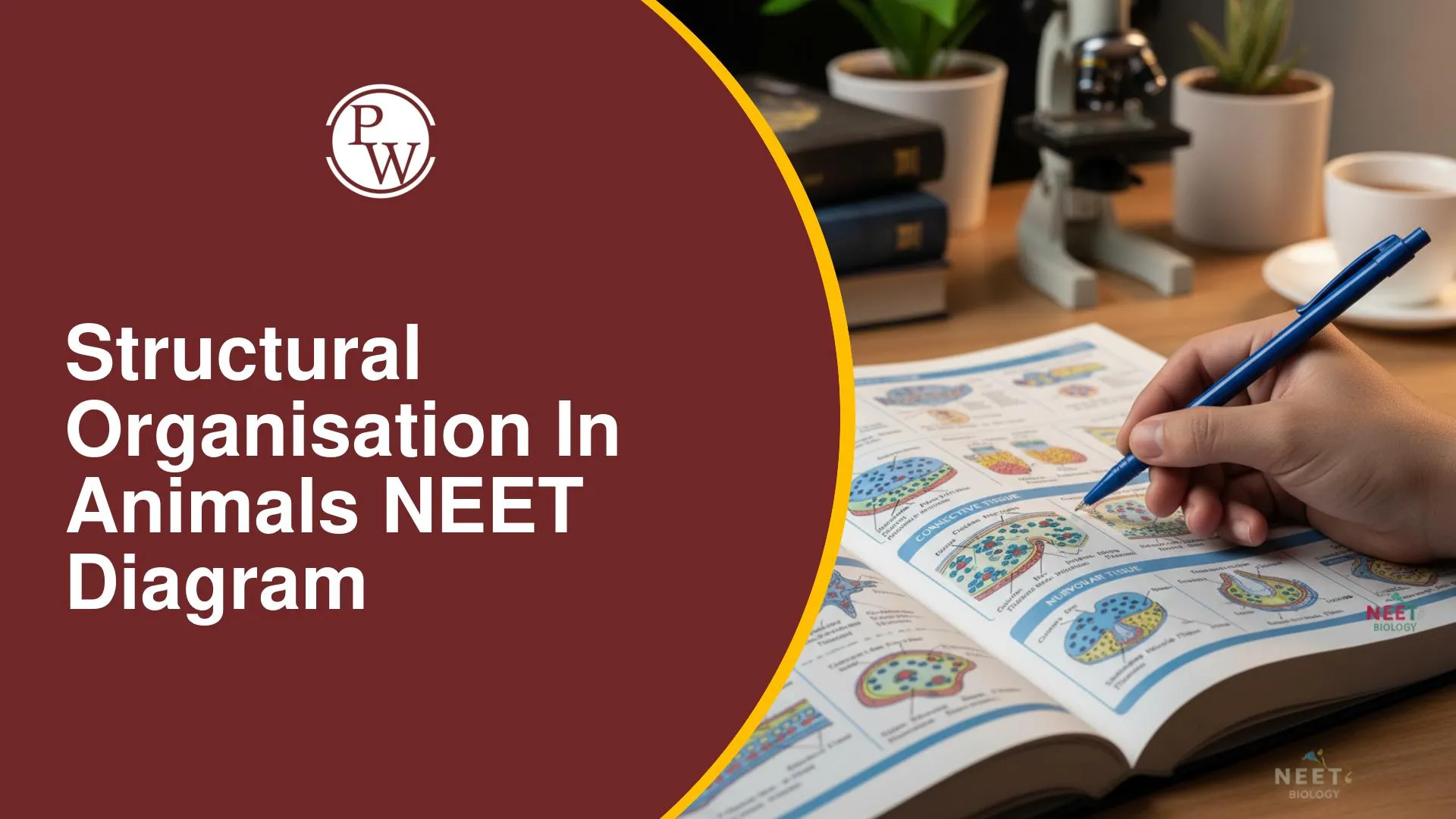
Many NEET questions from this chapter are based on labelled anatomical figures and structural comparisons. Studying these concepts through diagrams helps you identify important features quickly and improves your ability to recall them during the examination. Physics Wallah provides Structural Organisation in Animals NEET diagrams to make visual learning more effective and chapter revision more organised.
Structural Organisation in Animals NEET Diagram PDF
The Structural Organisation in Animals NEET diagram PDF presents important anatomical figures, tissue illustrations, and labelled structures in a concise visual format. Instead of revising long descriptions, you can understand the arrangement of organs and body systems through easy-to-follow diagrams.
Structural Organisation in Animals NEET Diagram PDF
Why Use PW Structural Organisation in Animals NEET Diagrams?
Visual resources help you understand anatomical structures more efficiently than text-based revision alone.
1. Simplifies Animal Anatomy
Labelled diagrams explain the internal and external morphology of cockroach, frog, and earthworm, making structural features easier to identify.
2. Improves Tissue-Level Understanding
Illustrations help you distinguish epithelial, connective, muscular, and neural tissues by highlighting their structure and functions.
3. Makes Organ Systems Easier to Recall
Visual representations organise digestive, circulatory, respiratory, reproductive, and nervous systems into clear anatomical layouts.
4. Supports Comparative Learning
Comparison diagrams allow you to identify similarities and differences between different animal structures without confusion.
5. Strengthens Visual Memory for NEET
Repeated revision through labelled figures helps you retain important anatomical features and recognise them more quickly in examination-based questions.
Also check:
Structural Organisation in Animals NEET Diagrams FAQs
Which diagrams are most important in Structural Organisation in Animals for NEET?
Why should I revise this chapter through diagrams?
Does Physics Wallah provide other resources for this chapter?


Have questions about your prep?
Our experts can answer all your questions





 Live & recorded classes available at easeDashboard for progress trackingLakhs of practice questions

