








Top 5 Videos On Chemical Coordination & Integration: Zoology For NEET By PW

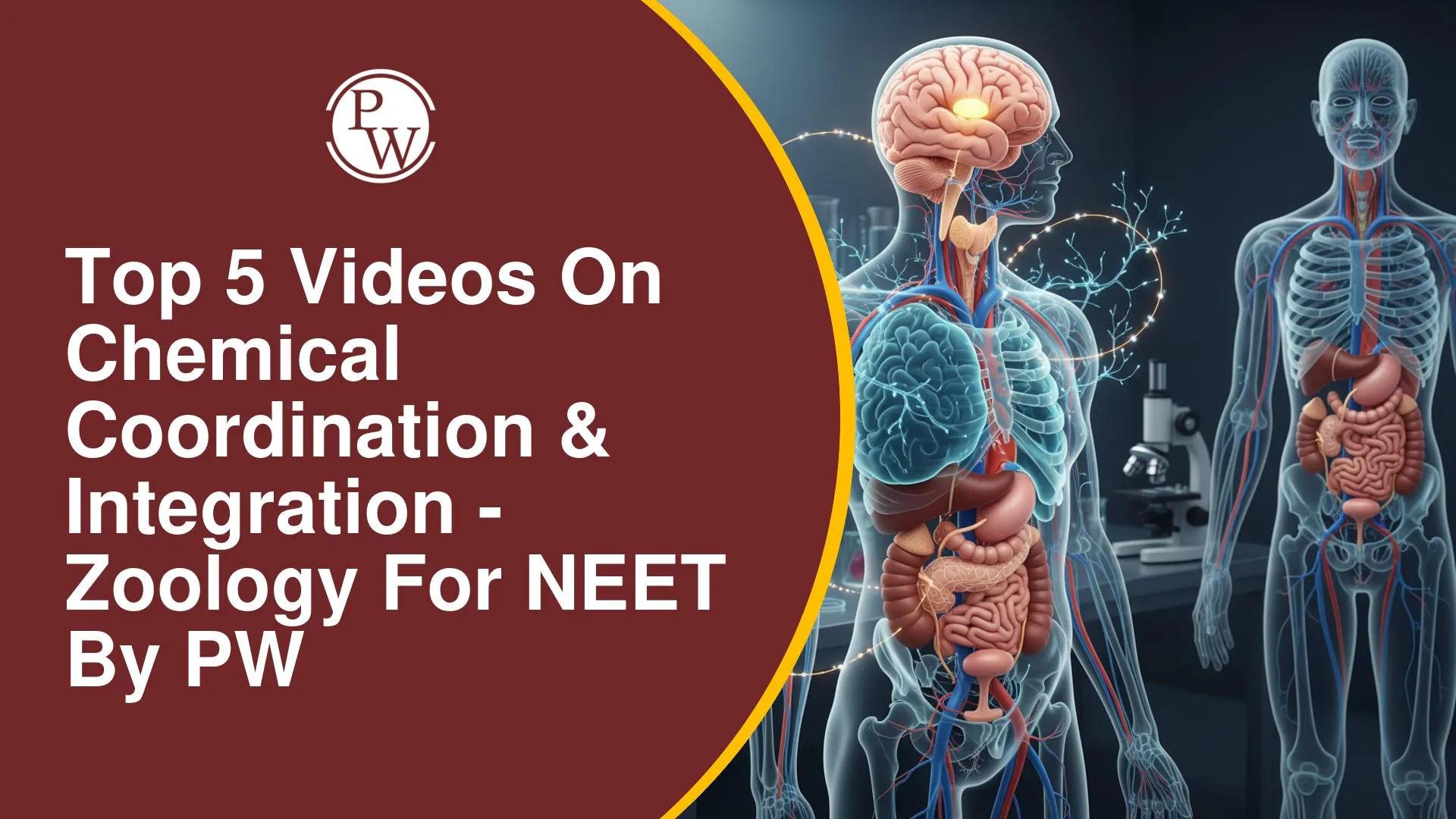
Chemical Coordination & Integration includes many glands, hormones, their functions, and related disorders. Students may find it difficult to remember which gland releases a hormone, understand its role, and recall important NCERT details. These topics need regular revision and practice to avoid confusion while solving NEET questions.
Physics Wallah provides different video lessons on this chapter, from NCERT-based explanations and complete chapter classes to quick revision sessions, memory tricks, and previous-year questions (PYQs). Students preparing for the NEET exam can select videos according to their needs, strengthen their understanding, revisit key topics, and practise questions for better preparation.
Video 1: Build NCERT-Based Chemical Coordination & Integration Clarity With Full Chapter Coverage
In this video, you will study Chemical Coordination & Integration through NCERT line-by-line explanations. Learn about the human endocrine system, including the hypothalamus, pituitary, pineal, thyroid, parathyroid, thymus, and adrenal glands, as well as the pancreas, testes, and ovaries. The lesson also covers hormones released by the heart, kidneys, and gastrointestinal tract, along with the mechanism of hormone action. This will help you understand how different glands and hormones work in the body.
Use this lesson when you need a detailed first reading or a reliable NCERT-based recap. Its ordered presentation supports gland-hormone recall and reduces missed textbook points during final NEET revision.
Video 2: Revise Chemical Coordination & Integration Quickly With Concepts And PYQs
The lesson begins with hormones, endocrine glands, oxytocin, and vasopressin before moving through the pituitary, growth hormone disorders, thyroid hyposecretion, parathyroid, thymus, pancreas, testis, and ovary. Concepts are paired with PYQs, so you can connect gland functions with common NEET question patterns while revising the full Chemical Coordination & Integration chapter in one sitting with focused recall practice throughout.
Choose it for rapid chapter revision after studying the NCERT text. The PYQ focus lets you test recall, spot weak areas, and practise selecting correct options under time pressure before a NEET mock test.
Video 3: Strengthen Chemical Coordination & Integration Recall With A Broad One-Shot Review
This lesson helps you connect the main concepts of Chemical Coordination & Integration instead of studying each topic separately. You will understand how the nervous and endocrine systems work together, how hormones act on target cells, and how different hormone types perform their functions. The lesson also includes previous-year questions (PYQs), allowing you to apply these concepts to NEET-style questions, understand common question patterns, and identify topics that need more practice.
Use this video for a detailed revision of Chemical Coordination & Integration. You can review different hormone types, compare their functions, and practise questions to check your understanding. It also helps you identify topics that need more revision before attempting a full-length NEET paper.
Video 4: Use Concepts, Tricks, And PYQs For Faster Chemical Coordination Revision
This lesson starts with coordination, hormones, and endocrine glands, then explains the hypothalamus, pituitary, pancreas, adrenal glands, thyroid, parathyroid, thymus, pineal gland, testes, ovaries, and accessory glands. It includes the mechanism of hormone action, memory tricks, and previous-year questions, giving NEET learners a structured route from basic terms to chapter-level revision and quick exam recall during final NEET preparation.
Students who have already read the chapter can use this video for memory-based revision. Its tricks and PYQs support faster recall, while the wide gland list helps you check whether any NCERT section needs another reading.
Video 5: Start Chemical Coordination & Integration With NCERT Basics And Diagrams
This Class 11 NCERT lesson introduces you to Chemical Coordination & Integration. You will learn how nervous control differs from hormonal control in terms of speed and duration. It also explains exocrine, endocrine, and mixed glands, the location of endocrine glands in the human body, and how hormones act as chemical messengers. The lesson covers steroid and amino acid-derived hormones, along with NCERT diagrams and memory tricks to help you understand and remember important concepts for NEET Zoology.
If you are starting this chapter, use this video to understand the basic concepts before studying each gland in detail. The comparison between nervous and hormonal control, along with the types of glands, will help you build a strong foundation. You can also use the NCERT diagrams and memory tricks to remember important details and answer NEET questions more confidently.
These five PW videos cover Chemical Coordination & Integration through NCERT explanations, full-chapter lessons, quick revision, tricks, and previous-year questions. Each video offers a different way to understand and revise the chapter.
Choose a video based on your preparation level. Start with NCERT explanations if you are new to the topic, or use one-shot lessons and PYQs for revision and practice before NEET.


Have questions about your prep?
Our experts can answer all your questions




 Live & recorded classes available at easeDashboard for progress trackingLakhs of practice questions


