







Total MBBS Seats in India (2026-27): Govt and Private Colleges Explained
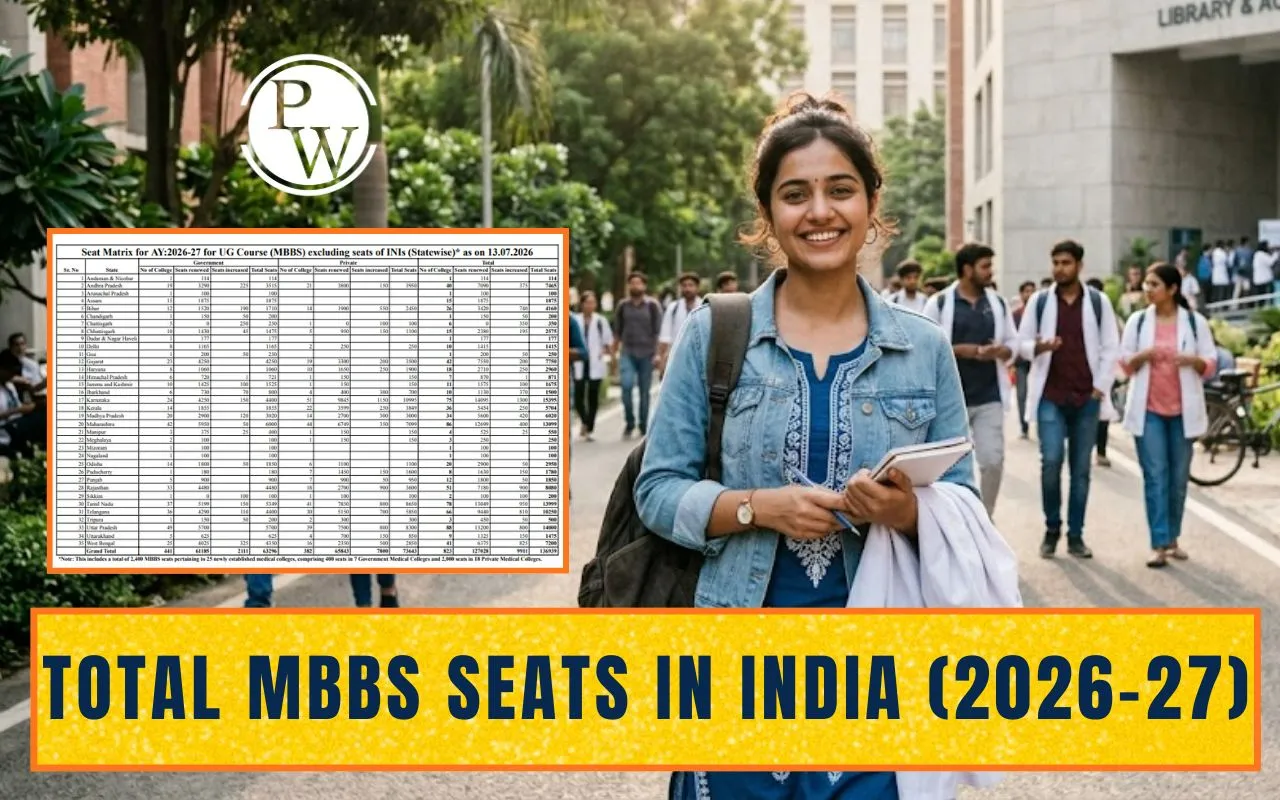
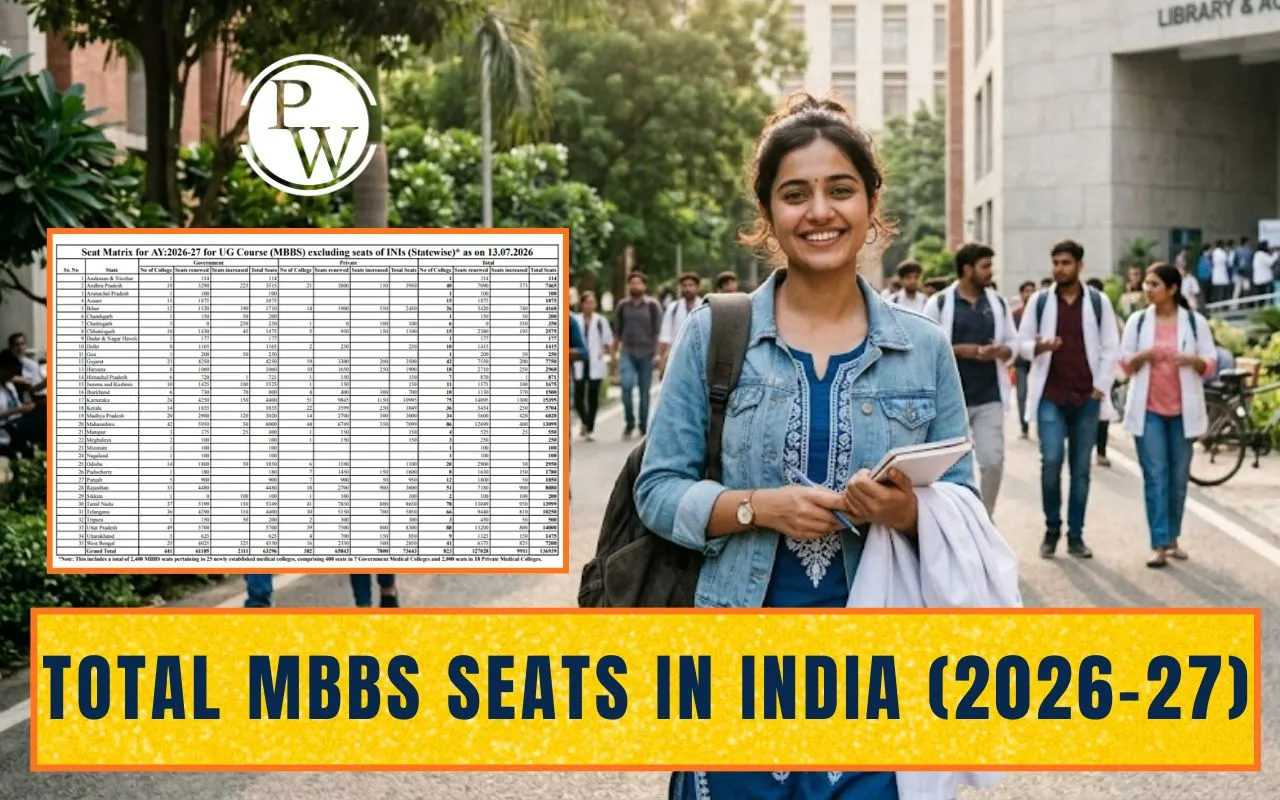
Total MBBS Seats in India (2026-27): The Medical Counselling Committee (MCC) has released the updated MBBS seat matrix for the academic session 2026-27, bringing positive news for NEET aspirants across the country. According to the latest data available as of 13 July 2026, India now has a total of 1,36,939 MBBS seats, excluding seats under Institutes of National Importance (INI) such as AIIMS, JIPMER, PGIMER, and other INI institutions.
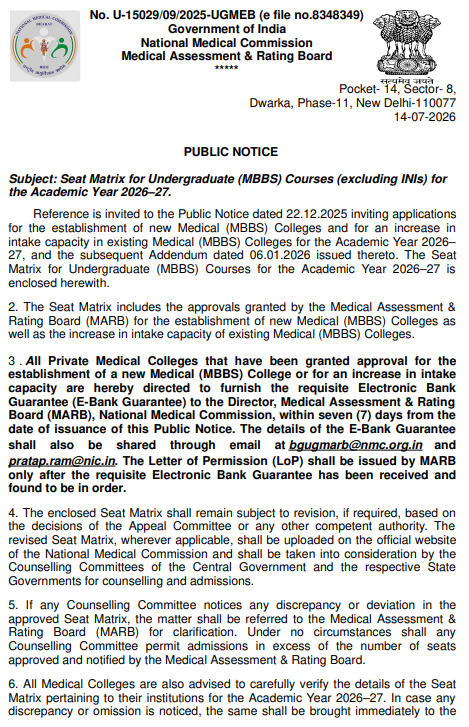
The latest figures indicate a continuous expansion in India's medical education infrastructure. Over the last few years, both the Central and State Governments have focused on increasing medical colleges and seat intake to address the shortage of doctors and improve healthcare accessibility across the country.
For students preparing for NEET UG 2026, the increase in MBBS seats could improve admission opportunities during counselling, although competition for government colleges is expected to remain intense.
Total MBBS Seats in India 2026-27
India's MBBS seat capacity has reached a new milestone in the academic session 2026-27. The updated seat matrix released by MCC provides a detailed breakdown of government and private medical colleges and their respective seat availability.
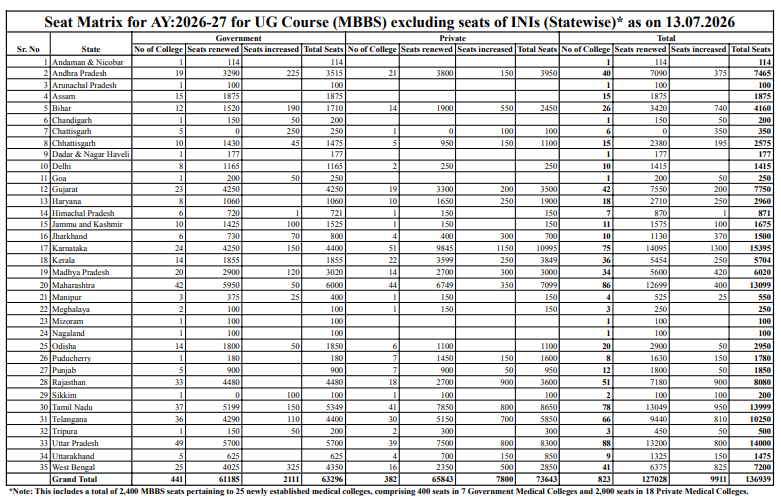
MBBS Seat Matrix 2026-27
| Particulars | Numbers |
| Total Medical Colleges | 823 |
| Total MBBS Seats | 1,36,939 |
| Government Medical Colleges | 441 |
| Private Medical Colleges | 382 |
| Government MBBS Seats | 63,296 |
| Private MBBS Seats | 73,643 |
The latest data shows that private medical colleges continue to account for a slightly larger share of MBBS seats in India. However, government medical colleges remain the first preference among NEET aspirants due to their affordable fee structure and strong clinical training.
Total MBBS Seats in India (2026-27): College-wise PDF
The Medical Counselling Committee has also published the college-wise MBBS seat matrix PDF, containing detailed information about seat availability in individual medical colleges across India.
The PDF includes information regarding:
-
Government medical colleges and their seat intake
-
Private and deemed universities
-
State-wise distribution of MBBS seats
-
Newly added colleges and revised seat capacities
-
Category and quota-wise counselling participation details
This document is extremely useful during the NEET counselling process as candidates can analyze college-wise seat distribution and make informed choices during the choice-filling process.
Click Here:Total MBBS Seats in India (2026-27) PDF
Candidates are advised to keep checking the official MCC website for the latest seat matrix and any subsequent revisions.
Government MBBS Seats in India 2026-27
Government medical colleges continue to be the most sought-after institutions among medical aspirants.
Government MBBS Seat Details
-
Total Government Medical Colleges: 441
-
Total Government MBBS Seats: 63,296
Government colleges account for approximately 46% of the total MBBS seats available in India.
Admission to these institutions remains highly competitive because of:
-
Lower tuition fees
-
Better return on investment
-
High patient inflow and clinical exposure
-
Strong academic reputation
-
Preference during postgraduate admissions and internships
Despite the increase in seats, securing admission to a government medical college still requires a highly competitive NEET score.
Private MBBS Seats in India 2026-27
Private medical colleges also contribute significantly to India's medical education capacity.
Private MBBS Seat Details
-
Total Private Medical Colleges: 382
-
Total Private MBBS Seats: 73,643
Private institutions now account for nearly 54% of the total MBBS seats in the country.
While private colleges offer greater seat availability, their fee structures are generally much higher than government institutions. Nevertheless, these colleges play a crucial role in accommodating the growing number of NEET-qualified candidates every year.
Government vs Private MBBS Seats in India
| Category | Government Colleges | Private Colleges |
| Number of Colleges | 441 | 382 |
| MBBS Seats | 63,296 | 73,643 |
| Seat Share | Around 46% | Around 54% |
| Fee Structure | Lower | Higher |
| Competition Level | Very High | Moderate to High |
Why Has Number of MBBS Seats Increased?
Over the past few years, India has witnessed rapid growth in medical education infrastructure. The expansion of MBBS seats is part of broader healthcare reforms aimed at improving doctor availability and strengthening medical services nationwide.
The increase in seats can be attributed to:
-
Expansion of existing institutions
-
Increase in approved intake capacities
-
Greater investment in healthcare education infrastructure
-
Policy initiatives aimed at improving doctor-patient ratios
-
Upgradation of district hospitals into medical colleges
The continuous increase in seats is expected to create more opportunities for medical aspirants in the coming years.
What Does This Mean for NEET 2026 Aspirants?
The increase in MBBS seats is likely to provide some relief to candidates appearing for NEET UG 2026.
Some potential benefits include:
-
Increased chances of securing an MBBS seat
-
Better opportunities during later counselling rounds
-
More options for state quota admissions
-
Increased availability of seats in newly established colleges
However, aspirants should remember that competition for government medical colleges is still expected to remain high due to the large number of NEET applicants every year.
Therefore, achieving a strong NEET score remains crucial for securing admission to top government institutions.
Meanwhile, India's medical education sector has witnessed another major expansion with the total number of MBBS seats reaching 1,36,939 for the academic session 2026-27. Out of these, 63,296 seats are available in 441 government medical colleges, while 73,643 seats are offered by 382 private institutions.
The increase in seat availability reflects India's continued efforts to strengthen healthcare education and improve doctor availability across the country. While the expanded seat matrix may improve admission opportunities for NEET aspirants, competition for government medical colleges is expected to remain intense, making high NEET scores and strategic counselling choices more important than ever.
Total MBBS Seats in India 2026-27 FAQs
How many total MBBS seats are available in India in 2026-27?
How many government MBBS seats are there in India in 2026-27?
How many private MBBS seats are available in India?
How many medical colleges are there in India in 2026-27?
Where can students download the MBBS Seat Matrix 2026-27 PDF?











Get Free Counselling Today
and Clear up all your Doubts
 Live & recorded classes available at easeDashboard for progress trackingLakhs of practice questions

