What Is Unfair Means in NEET Exam? Definition & Examples

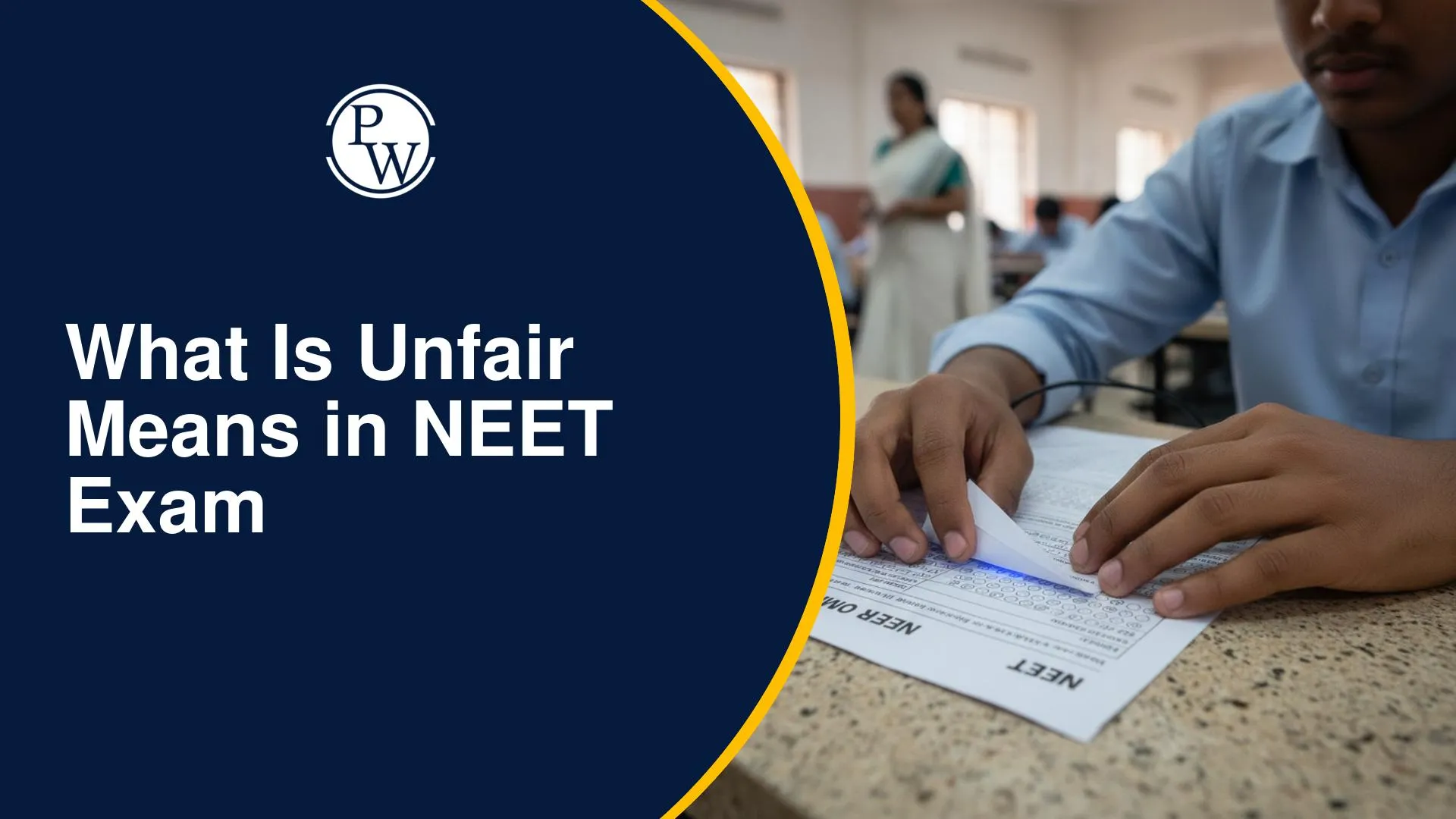
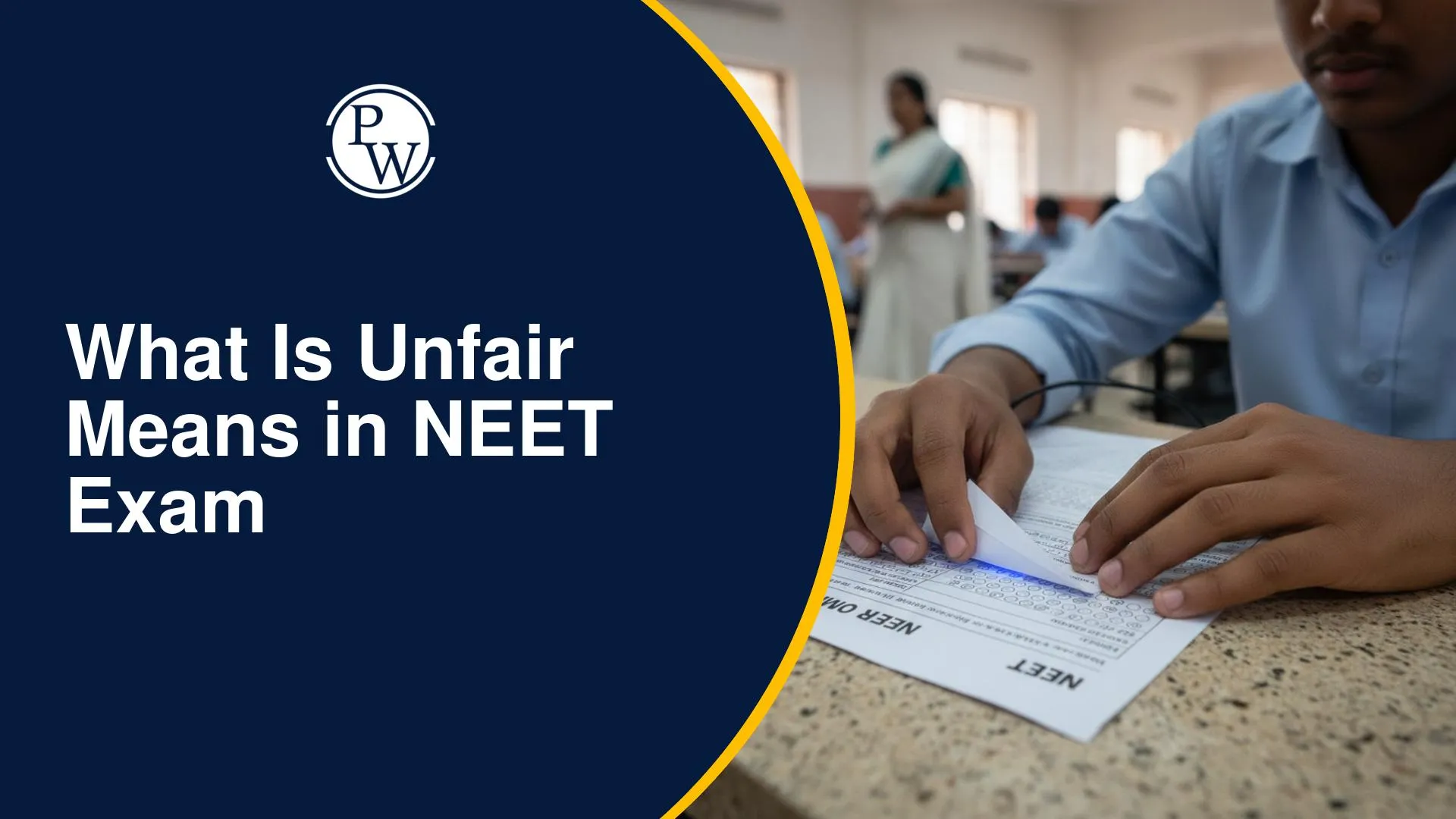
Unfair means in NEET are defined by the official 2026 Information Bulletin as any activity intended to provide a candidate with an unauthorized advantage over others. This broad category covers various prohibited actions, ranging from the possession of barred items like electronic gadgets to serious offenses like impersonation. Understanding these NTA guidelines is crucial for aspirants to ensure their hard work isn't invalidated by a simple procedural mistake or a violation of exam integrity.
Detailed Examples of Unfair Means in NEET 2026
The NTA has explicitly listed several actions that fall under UFM. Candidates found engaging in these will face strict disciplinary action:
-
Prohibited Possessions: Carrying any stationery item (printed or written bits of paper, geometry boxes, calculators, pens), communication devices (mobile phones, Bluetooth, health bands), or electronic gadgets like watches and cameras.
-
Impersonation: Arranging for someone else to write the exam on your behalf or using another person's photograph or signature on the application form.
-
Communication & Assistance: Talking to other candidates, copying their answers, or assisting others during the examination hours.
-
Document Tampering: Tampering with the Admit Card, Result, or Scorecard issued by the NTA.
-
Breaking Protocol: Entering the examination center after the 01:30 PM deadline or failing to follow the instructions of the invigilator.
Consequences of Using Unfair Means In NEET 2026
The penalties for UFM are severe and can end a medical career before it begins. The NTA reserves the right to take the following actions:
-
Result Cancellation: The result of the candidate for NEET (UG) 2026 will be canceled, and no rank will be provided.
-
Debarment: Candidates may be debarred from appearing in future examinations conducted by the NTA for a specific period, which can extend up to three years.
-
Legal Action: In serious cases, such as impersonation or organized cheating, criminal proceedings may be initiated against the candidate and those involved.
How to Avoid Unfair Means Mistakes?
Most UFM cases can be avoided by following these simple steps:
-
Verify Documents: Ensure your photograph, signature, and thumb impressions on the application form are yours and match your actual identity.
-
Adhere to Dress Code: Follow the NTA-specified dress code to avoid extensive frisking issues at the metal detector checkpoints.
-
Check Your Surroundings: Before the exam starts, ensure there are no bits of paper or prohibited items near your seat.
-
Cooperate with Videography: The NTA conducts videography during the exam; ensure you face the camera as requested to establish your identity clearly.
Unfair Means in NEET Exam FAQs
Q1. Can I carry a simple wristwatch to the NEET exam?
Q2. What happens if I accidentally carry a piece of paper in my pocket?
Q3. Is there a re-test if my exam is canceled due to UFM?
Q4. Can I change my examination center after the admit card is issued?