Answer Key Challenge Fee 2026: NTA Clarifies Why ₹200 Is Charged Per Question

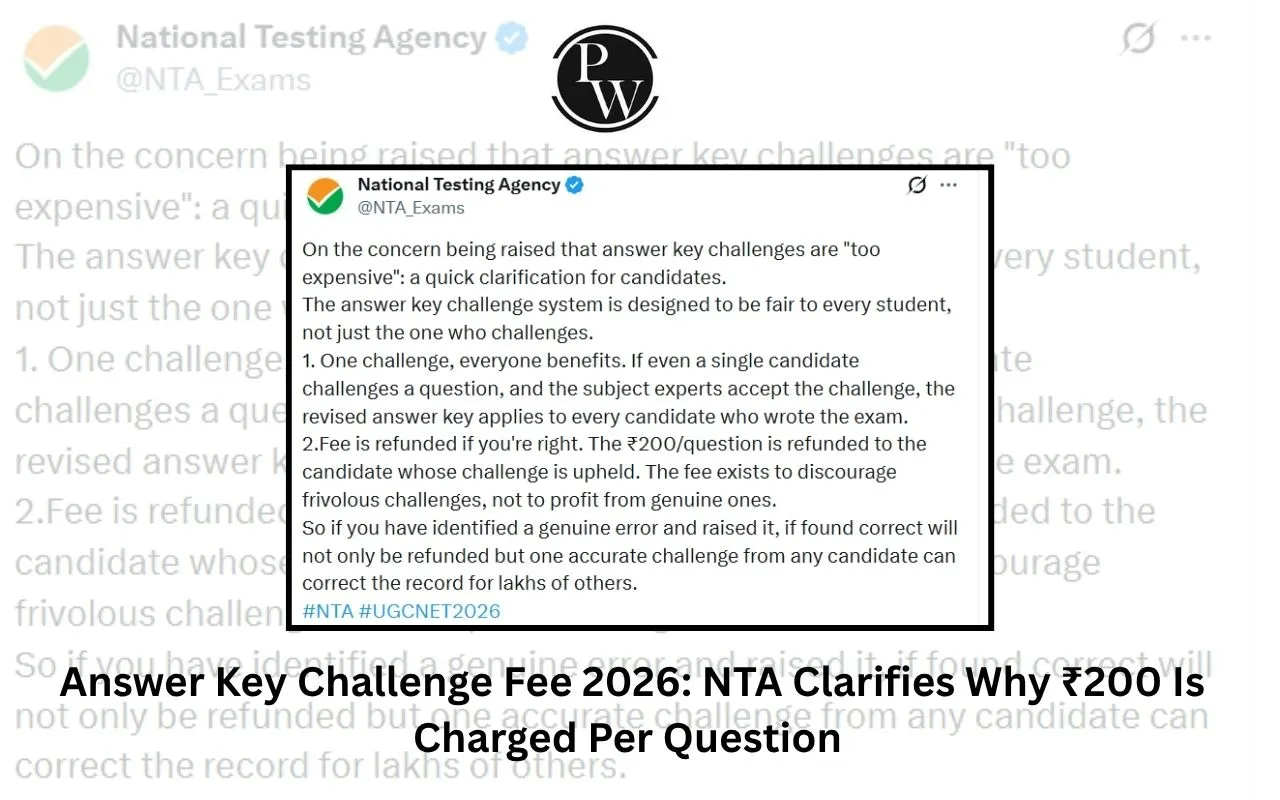
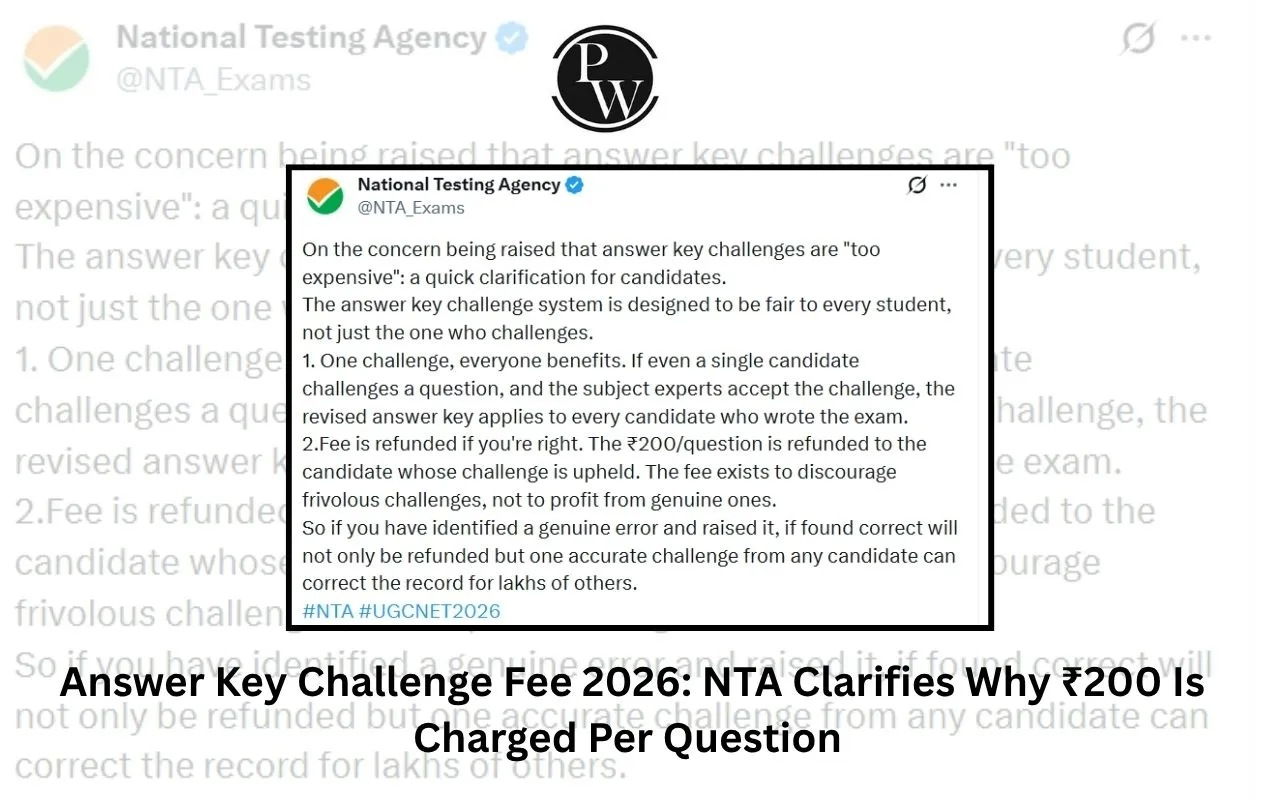
UGC NET 2026 Answer Key Challenge: The National Testing Agency (NTA) has clarified concerns raised by candidates over the ₹200 fee charged for challenging the provisional answer key of UGC NET June 2026. In a recent post on X, NTA explained that the answer key challenge system is intended to ensure fairness for all candidates and is not designed to benefit only the student who raises an objection.
The clarification comes as candidates review the provisional answer key for the UGC NET June 2026 examination. NTA had published the official notice regarding challenges to the provisional answer keys on August 16, 2026.
UGC NET 2026 Answer Key Challenge Fee Explained
According to NTA, candidates are required to pay ₹200 for each question they challenge. The agency said that this fee is meant to discourage frivolous or unsupported objections rather than generate revenue from genuine challenges.
NTA further clarified that the fee is refunded when a candidate's challenge is accepted after review by subject experts.
This means candidates who believe that an answer in the provisional key is incorrect can raise a challenge by providing appropriate supporting evidence. If the challenge is found valid, the answer key is revised and the applicable fee is refunded.
One Valid Challenge Can Benefit All Candidates
One of the key points highlighted by NTA is that a successful answer key challenge is not limited to the candidate who submitted it.
If even one candidate challenges a particular question and the subject experts accept the objection, the revised answer is applied to all candidates who appeared for that examination.
Therefore, a valid challenge can potentially affect the scores of a large number of UGC NET candidates.
For example, if the provisional answer key marks Option A as correct but a candidate provides valid evidence showing that Option B is the correct answer, the objection is examined by subject experts. If the experts accept the challenge, the revised answer is considered for all candidates.
What Happens After a Candidate Challenges an Answer?
The answer key challenge process generally follows a review mechanism in which objections submitted by candidates are examined by subject experts.
The process can be understood in the following steps:
-
Candidates check the provisional answer key and their recorded responses.
-
If they identify an incorrect answer, they can raise a challenge against the relevant question.
-
The prescribed fee is paid for each challenged question.
-
The candidate submits supporting evidence for the objection.
-
The challenge is reviewed by subject experts.
-
If the challenge is accepted, the answer key is revised accordingly.
-
The applicable challenge fee is refunded to the candidate whose objection was upheld.
-
The revised answer is considered for all candidates who appeared for the examination.
The official UGC NET website currently lists the June 2026 provisional answer key challenge notice among its latest updates.
UGC NET June 2026 Answer Key Challenge: What Candidates Should Remember
Candidates should avoid submitting objections simply because an answer does not match their personal calculation or expectation. Before challenging a question, they should carefully check the question, the marked answer and the relevant reference material.
A challenge should preferably be supported by an authoritative source, such as the prescribed textbook, standard reference book, government publication or other reliable academic material, wherever applicable.
Candidates should also remember that the final decision on an objection rests with the subject experts. Submitting a challenge does not automatically mean that the answer key will be changed.
NTA Says Genuine Challenges Can Help Lakhs of Candidates
The latest clarification from NTA also highlights an important aspect of the answer key challenge process. A candidate who identifies a genuine error is not only seeking a correction for their own score.
If the objection is accepted, the corrected answer can be used while preparing results for all candidates who attempted that question.
Therefore, according to NTA, one accurate challenge can help ensure that the final evaluation is based on the correct answer for everyone who appeared in the examination.
UGC NET 2026 Answer Key Challenge FAQs
Is the UGC NET answer key challenge fee Rs 200?
Is the Rs 200 UGC NET answer key challenge fee refundable?
Does one accepted challenge benefit other UGC NET candidates?


Have questions about your prep?
Our experts can answer all your questions