
CBSE Digital Evaluation Explained: No More Totalling Mistakes in Board Results
Central Board of Secondary Education is introducing digital evaluation for board exams, removing totalling and posting errors. Answer sheets are checked on screen, monitored in real time, and auto-calculated — making results faster, more accurate, and reducing rechecking disputes for students.

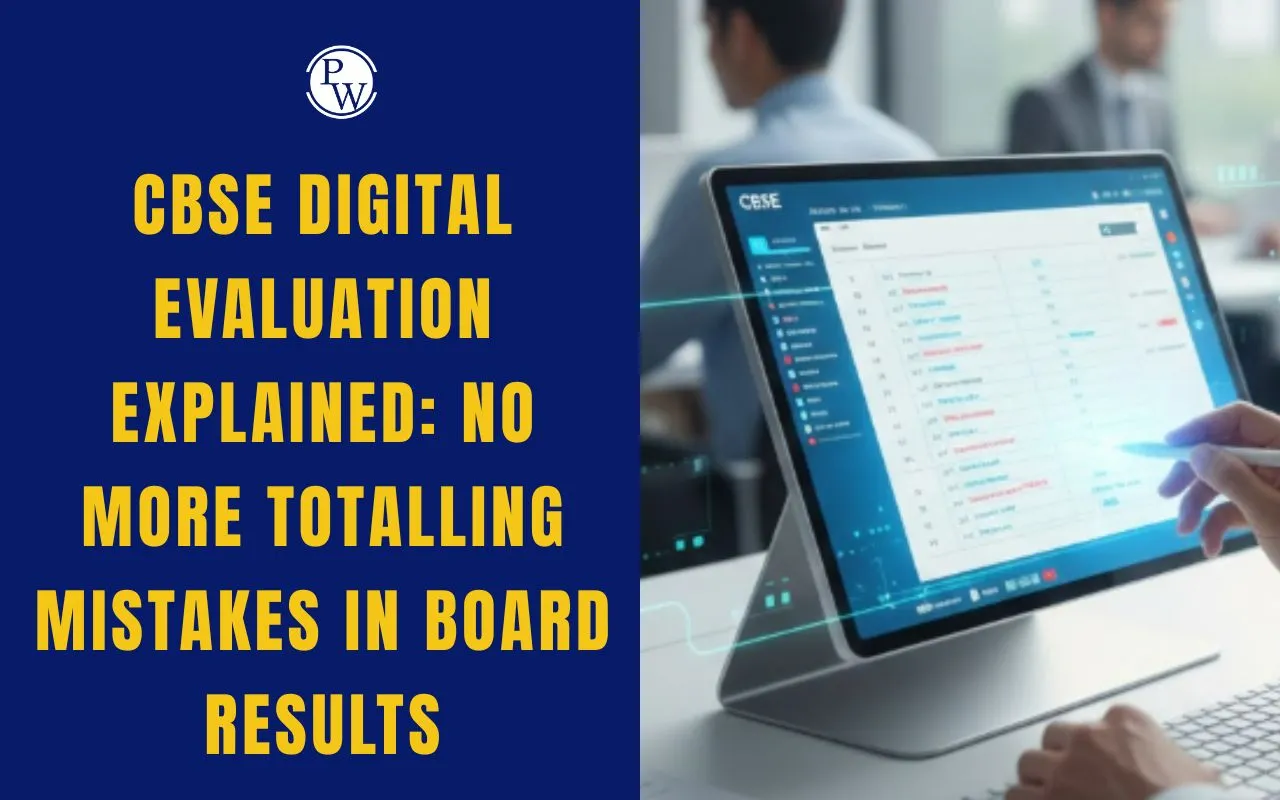
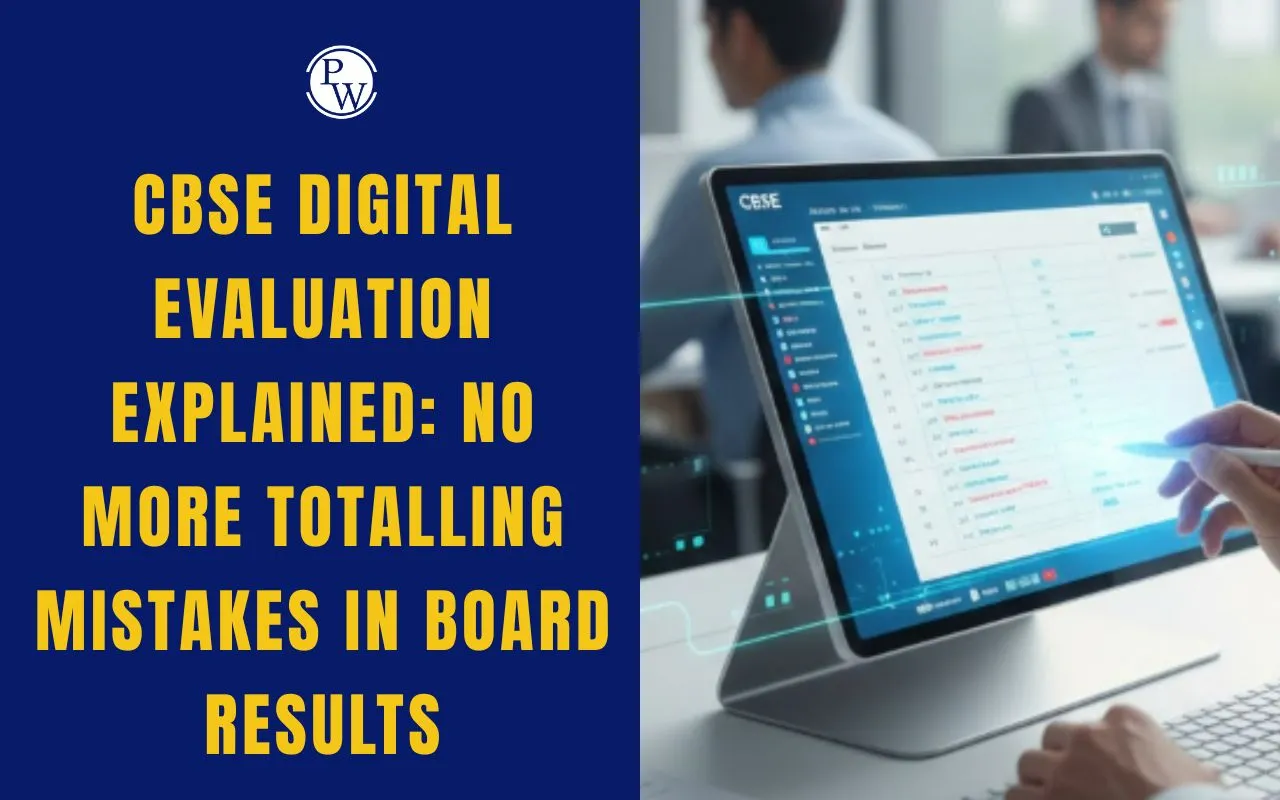
The board examination checking process in India is undergoing one of its biggest structural upgrades. CBSE has now moved towards technology-driven answer sheet evaluation, replacing decades-old manual checking practices.
This reform is not only about speed — it introduces traceability, accountability, environmental sustainability, and measurable examiner performance.
Below is a complete breakdown of how the new Class 12 digital evaluation actually works and why it matters.
Massive Scale of Class 12 Evaluation (Why Digital Was Necessary)
The board handles an enormous number of answer scripts every year.
| Massive Scale of Class 12 Evaluation (Why Digital Was Necessary) | |
| Category | Figures |
| Number of Students | 18,59,479 |
| Number of Answer Books | 1,00,44,295 |
| Number of Subjects | 120 |
Such a scale requires precision coordination. Even minor human errors in manual checking could affect thousands of results, which is why automation becomes critical.
What Digital Evaluation Solves Immediately
Accuracy & Error Reduction
-
No totalling errors
-
No posting mistakes
-
No uploading errors
-
Automatic mark calculation
-
Reduced manual intervention
Teachers only evaluate answers — the system handles calculation and data processing.
Speed & Participation
-
Evaluation days reduced from 12 days → 9 days
-
Teachers can evaluate from their own schools
-
Wider participation of examiners
-
Faster declaration of results
Accessibility & Efficiency
-
Teachers from remote regions and even abroad can participate
-
No transportation of answer book bundles
-
Saves logistics time and cost
-
Reduces administrative workload
After Result Declaration
-
No mark verification workload
-
Teachers can immediately return to teaching
-
Fewer rechecking disputes
Professional Opportunities
-
More schools participate
-
Teacher skills improve
-
Performance-based evaluation experience
Clean & Environment-Friendly Checking
Sustainable Evaluation
-
No movement of paper bundles
-
Lower carbon footprint
-
Reduced storage handling
Hygienic & Safe Process
-
No touch, no dust evaluation
-
Fully screen-based checking
-
Cleaner work environment
Complete Checking Guarantee
The system ensures:
-
No unevaluated answer parts
-
No missed questions
-
No manual totaling
-
No cross-checking by teachers
-
No comparison work at the board offices
Every response must be marked before submission — the system does not allow incomplete evaluations.
Live Monitoring: Evaluation Becomes Auditable
For the first time, the board can track the entire evaluation team in real-time.
The System Monitors
-
Active checking time
-
Copies checked per hour
-
Login & logout time
-
Idle time
-
Evaluation speed
-
Marking pattern consistency
This eliminates guesswork and creates accountability.
Time Given Per Answer Book
Each answer book now has a recommended evaluation time.
-
Too fast → flagged
-
Too slow → flagged
-
Balanced checking enforced
This ensures uniform marking quality across the country.
Mistake Detection & Correction
The system automatically identifies:
-
Unchecked questions
-
Incorrect marking range
-
Step marking mismatch
-
Scheme deviation
-
Suspicious marking pattern
Errors are caught during checking, not after results.
Mandatory Rechecking by Senior Evaluators (HE/AHE)
A predefined percentage of copies is automatically sent for higher verification:
-
Random copies
-
Flagged copies
-
Borderline marks cases
-
High-scoring scripts
Evaluator Performance Analytics
Now the board will know:
-
Number of mistakes per evaluator
-
Accuracy score
-
Correction frequency
-
Reliability rating
Future examiner selection can be data-based.
Teacher Participation Tracking
The system records:
-
Number of teachers from each school
-
Productivity per teacher
-
School-wise evaluation efficiency
Automated Attendance
No manual registers anymore.
The system captures:
-
Login time
-
Logout time
-
Active working duration
-
Break duration
Big Shift: 2025 vs 2026 Evaluation
| Big Shift: 2025 vs 2026 Evaluation | |
| Old System | New Digital System |
| Answer book on the desk | Answer book on screen |
| Pen in hand | Mouse in hand |
| Manual totaling | Automatic calculation |
| Manual verification | System verification |
| Random supervision | Live monitoring |
| Post-result corrections | Pre-result corrections |
| Physical bundles | Cloud access |


Have questions about your prep?
Our experts can answer all your questions