








AIIMS NORCET 10 Topper AIR 28 Holder Shyama Priya Goswami Success Story
Shyamapriya Goswami, NORCET 10 AIR 28, shares her journey, emphasizing intense dedication and strategic preparation. She overcame self-doubt by focusing on capability over category. Her strategy included rigorous test practice, identifying weak areas, and repeated revision, supported by Physics Wallah's in-depth teaching. She advises aspirants to build personalized strategies and practice PYQs weekly.
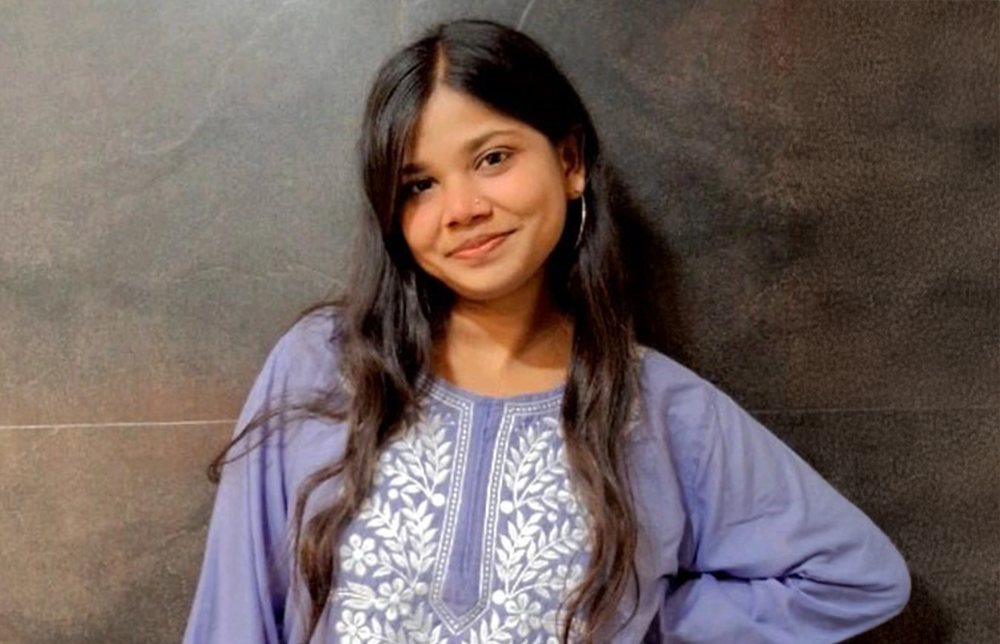


The NORCET Mains 2026 result has been declared, and many candidates are now looking for practical preparation strategies from successful aspirants. One such candidate is Shyamapriya Goswami from Vrindavan, Mathura, who secured AIR 28 in her first attempt after graduation.
In an interaction after the result announcement, she shared detailed insights about her preparation journey, study routine, revision method, mock test practice, and handling exam stress. Here are the key takeaways for students preparing for upcoming NORCET and nursing entrance exams.
The Value of Dedicated Effort
Achieving a successful NORCET 10 result after hard work, sacrifices, and late nights brings immense joy, making the struggles of preparation fade. This emphasizes the critical importance of intense dedication for success in competitive exams like NORCET.
Student's NORCET Preparation Journey
Shyamapriya began her NORCET 10 journey shortly after graduation and registration. She prepared under the Unreserved (UR) category, initially perceiving it as a challenge due to high competition. She first joined PW's free Founder Batch and later enrolled in PW's regular batch in September for dedicated preparation.
Her study started in October, but faced a significant 1.5-month break in January due to family issues, a critical period for NORCET. She resumed intensive study from March onwards. Parental support was crucial, allowing her to focus solely on academics.
Also Check: AIIMS NORCET 10 Topper List 2026
Strategy and Mindset During Preparation & Exams
Shyamapriya experienced initial anxiety as a first-time aspirant. Her father encouraged focusing on capability over category, urging her to succeed in the Unreserved segment. The final month involved intensive focus on Classes, Revision, and solving a large volume of MCQs. She identified and focused on her weak areas and important topics.
For Extensive Test Practice, she sourced free, high-quality tests. For Prelims, she gave tests continuously for 20-25 days, starting with one per day, then two tests daily. The same strategy was applied for Mains. A strict rule was to avoid reading any new material in the days leading up to the exam to prevent confusion.
In the exam hall, she applied faculty advice to "think about answers in every possible way." She adopted a "doing her best" mindset while being prepared for a "next attempt," embodying the "never give up" spirit. Questions she was completely unsure about were skipped immediately, focusing only on those where she felt a chance after some thought.
Key Takeaways from Shyamapriya's Journey
The interview highlighted several crucial points:
-
Effort Over External Factors: Success or failure should not be attributed to external factors like category. Focus solely on your hard work and capability, as consistent effort yields results.
-
Advantage of Fresh Graduates: First-time aspirants, especially recent BSc Nursing graduates, often have the highest chances. This is due to fresh theoretical knowledge and typically less pressure, allowing dedicated study.
-
Necessity of Intense Dedication: Success demands immense hard work, dedicating day and night to studies, especially in the final months.
-
Focused Study Approach: Avoid studying the same theory topic from 50 different sources. Focus on understanding the exam pattern and rigorous testing, particularly in the final month.
Exam Performance Metrics & Difficulty Assessment
Shyamapriya attempted approximately 151 questions in Mains, with an approximate score of 131+, indicating around 10-20 negative marks and an 81% percentile. She considered both Prelims and Mains exams moderate, despite some calling them "easy." The difficulty arose from tricky questions and many direct static (value-based) questions requiring prior knowledge. After Prelims, she estimated 86 attempts, with 12 wrong and 74 correct answers.
Efficacy of PW's Theoretical Content
Shyamapriya explored PW's free batches and another coaching platform, finding the latter's notes unsatisfactory. She returned to PW, finding it "perfect" and confirming that "all her concepts were cleared" through their teaching. She advises students to choose a platform that best suits their individual learning style.
PW's Teaching Methodology and Faculty Contribution
PW's teaching was in-depth and exam-oriented, contrasting with her college studies.
-
Chandan Sir's classes were highly motivating and unmissable. She watched them at normal speed for full comprehension.
-
Mohit Sir was praised for teaching from the basics, which was beneficial for reinforcing foundational knowledge from BSc Nursing.
Faculty helped her develop a deep understanding, enabling her to tackle questions effectively.
Study Schedule and Strategy
Shyamapriya focused on completing topics and their corresponding MCQs rather than fixed study hours, aiming to understand concepts and solve related questions. Initially, 6-7 hours of combined study and coaching were sufficient, extending to 12-14 hours daily during the final exam period.
She practiced making notes during classes and a 5-minute quick revision immediately after each class for retention. She started with subject-wise and topic-wise MCQs to identify weaknesses, then moved to Previous Year Questions (PYQs) and memory-based questions later.
Shyamapriya's Key Advice for NORCET 11 Aspirants
Shyamapriya offers vital advice:
-
Repetitive Study: "Read what you are studying repeatedly" for better retention.
-
Personalized Strategy: Develop a strategy tailored to your individual needs, not blindly following others.
-
Weekly PYQ Practice: Engage in weekly practice of NORCET Previous Year Questions (PYQs) across all subjects for continuous revision.
-
Immediate MCQ Practice: Solve MCQs for a topic on the very same day you study it to solidify understanding.
-
Extensive Mock Tests: In the last 15-20 days, mock tests are extremely important. She strongly recommends them with a timer, noting that 3-4 direct questions from her mocks appeared in the actual Mains exam.
The interviewer reinforced a three-stage revision strategy: the first revision on the same day the topic is studied, the next before the exam, and the final revision involving solving as many papers and mock tests as possible (Memory Tip: Remember this phased approach for effective knowledge retention and reduced exam anxiety).
Explore the Online classes for NORCET Exam to access essential resources for Nursing exam preparation, including detailed insights and strategies. Dive into the Nursing for structured courses and focused study plans designed to help aspirants excel in their exams.
AIIMS NORCET 10 Topper AIR 28 FAQs
What was Shyamapriya's key strategy for managing anxiety and self-doubt during her first NORCET attempt?
How did Shyamapriya structure her test practice in the final month before the NORCET exam?
What role did Physics Wallah (PW) play in Shyamapriya's NORCET preparation?
What was Shyamapriya's advice regarding reading new material close to the exam?


Have questions about your prep?
Our experts can answer all your questions



 Live & recorded classes available at easeDashboard for progress trackingLakhs of practice questions

