How To Perform CPR: A Step-by-Step Guide
 Neha Tanna23 Mar, 2026
Cardiopulmonary Resuscitation (CPR) is a life-saving emergency technique used when a person’s heart stops beating or they stop breathing. In such critical moments, performing CPR correctly can significantly increase the chances of survival until medical help arrives.
It focuses on practical knowledge that can help individuals perform CPR confidently in real-life situations. Special attention is given to proper technique, including maintaining straight arms during compressions, pressing the chest to the correct depth, and allowing complete chest recoil after each compression to ensure effective blood circulation.
What Is CPR?
CPR (Cardiopulmonary Resuscitation) is a life-saving process used in emergencies when a person’s heart stops beating or they stop breathing. It involves pressing on the chest and sometimes giving rescue breaths to help keep blood and oxygen moving through the body.
This helps protect the brain and other important organs until medical help arrives. CPR is often performed during situations like heart attacks, drowning, or electric shock, and learning it can help people save lives in critical moments.
Pre-CPR Assessment: The Critical Three Points
CPR is indicated for patients experiencing cardiac arrest or respiratory arrest. Before initiating CPR, it is crucial to confirm three key points to ensure the patient truly requires resuscitation and is not conscious.
-
The Patient Is Unconscious: To check consciousness, verbally ask, "Hello, Mr./Ms., are you okay?" while gently stimulating them (e.g., shaking their shoulder). Observe for any movement or response.
-
Pulse Is Absent: In cases of low blood pressure (e.g., due to hypovolemia), the radial pulse may not be palpable. Therefore, check for the carotid pulse on the side of the neck. The duration to check the pulse is critical: 5 seconds or less than 10 seconds. Do not delay by checking for too long. When checking the carotid pulse, count aloud as "1001, 1002, 1003, …, 1009, 1010" to accurately gauge a 10-second interval, (Memory Tip: each "100X" takes approximately one second to vocalize).
-
Respiration Is Absent: Observe the patient's chest for rise and fall, which indicates breathing.
Administering CPR to a conscious patient is inappropriate. Patients with conditions like very low blood pressure or very low blood sugar, who are still conscious and showing symptoms, do not require CPR. CPR is exclusively for patients who are fully unconscious and in cardiac or respiratory arrest.
Scene Safety: A Top Priority
Scene safety is paramount and always takes priority before approaching a patient or initiating CPR. For example, if a patient has received an electric shock, there might still be live current, posing a risk to the rescuer.
Similarly, if a patient is on the road after an accident, the area might be unsafe due to ongoing traffic. First, call for help. Then, if necessary and possible, move the patient to a safer location before beginning any assessment or intervention.
Hand Placement For Chest Compressions
Correct hand placement is essential for effective compressions. To locate the site, feel for the sternum (breastbone). Move downwards along the sternum to locate the xiphoid process, which is the lowest point of the sternum. Primary hand placement should be on the sternum, just above the xiphoid process. For adults, compressions are performed on the sternum, directly between the nipples, often referred to as below the nipple line once clothing is removed.
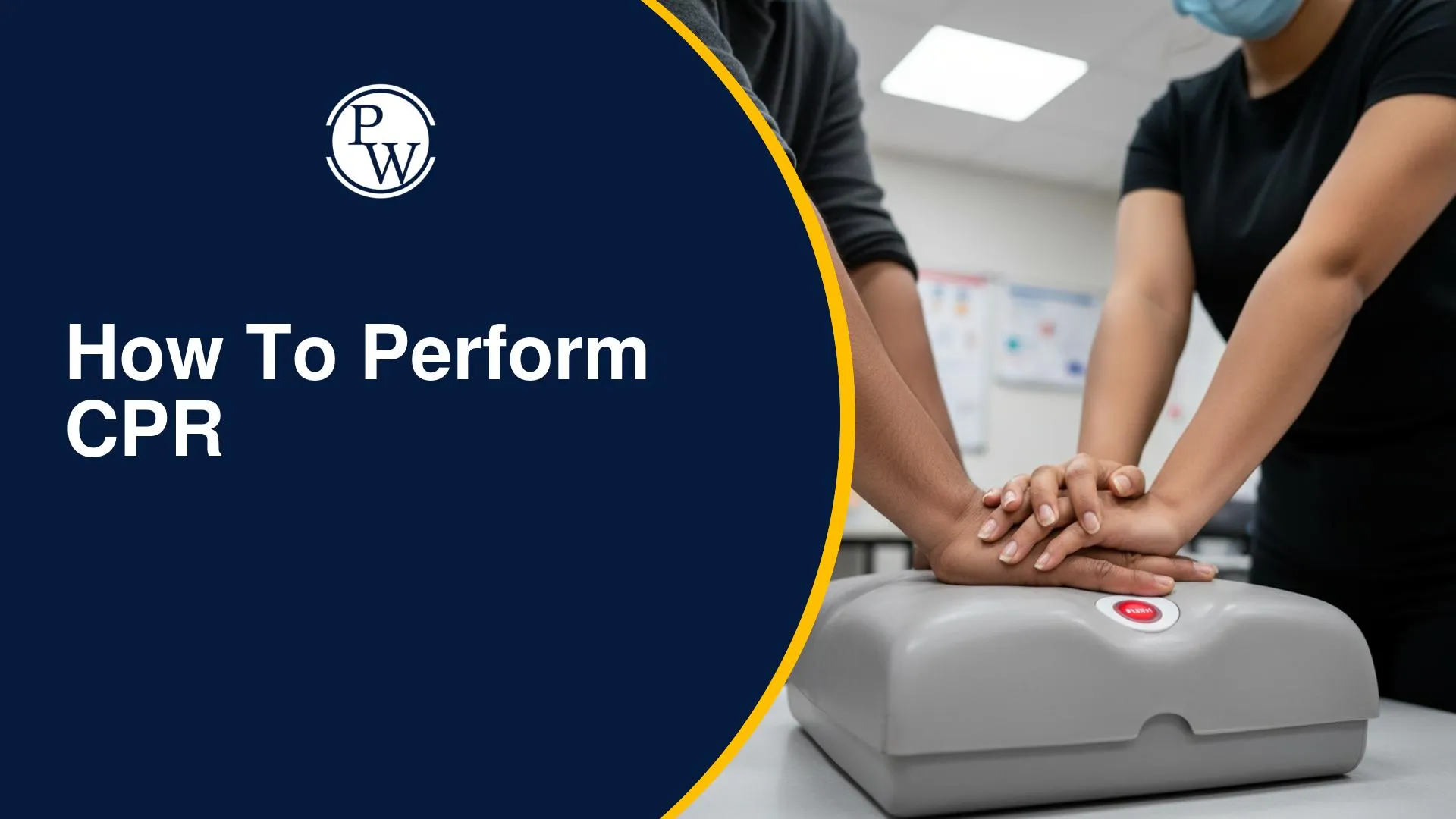
For the hand technique, place the heel of one hand on the chosen compression site. Interlock the fingers of the other hand over the first hand, ensuring fingers are off the chest wall. Ensure arms are straight and perpendicular to the patient's chest to apply direct force.
Effective Compression Technique & Parameters
-
Compression Depth (Adult): Chest compressions in adults must be 2 to 2.5 inches (5 to 6 cm) deep.
-
Body Posture: Maintain straight arms with locked elbows. The force should come from the rescuer's upper body, not just the arms.
-
Full Chest Recoil: After each compression, allow the chest to fully recoil back to its original position. This is critical for effective heart pumping as it allows the heart to refill with blood. Do not lean on the chest between compressions.
-
Compression-Relaxation Cycle: An effective CPR involves a complete compression and relaxation cycle.
-
Compression Rate (Adult): Deliver 100 to 120 compressions per minute.
Rescue Breaths & CPR Ratios
The standard ratio for adult CPR is 30 compressions to 2 rescue breaths (30:2). If an Ambu bag is unavailable (common in roadside emergencies), mouth-to-mouth resuscitation can be performed. If the patient's medical history is unknown (e.g., potential TB, COVID-19), and there's a risk to the rescuer, continuous chest compressions without breaths can be performed to prioritize the rescuer's health. When performing mouth-to-mouth, use a gauze piece or cloth over the patient's mouth for barrier protection, if available.
Post-CPR Assessment
After a round of CPR, recheck the patient's pulse. If the pulse has returned, provide oxygen (if available) and transfer the patient to a medical facility for further care.
Common Mistakes In CPR Technique
Ineffective CPR often results from common technique errors that compromise chest compressions:
-
Incorrect Hand Placement: If hands are not placed correctly on the sternum, the pressure will not be effectively transmitted to the heart, reducing efficiency.
-
Bending Elbows Or Moving Hands: If the rescuer's arms bend or their hands shift during compressions, the applied pressure will be inconsistent and insufficient. Hands must remain straight and firm to deliver consistent force.
-
Incomplete Chest Recoil: Failing to allow the chest to fully recoil after each compression prevents the heart from adequately refilling with blood, significantly reducing the effectiveness of the pump.
All these mistakes significantly reduce the patient's chance of revival.
CPR Ratios By Age Group (Comparative)
The ratio of compressions to breaths varies depending on the patient's age and the number of rescuers:
|
Patient Age Group |
Compression : Breath Ratio |
|---|---|
|
Adult |
30 compressions : 2 breaths |
|
Newborn Baby |
3 compressions : 1 breath |
|
Child (two rescuers) |
15 compressions : 2 breaths |
Cardiopulmonary Resuscitation (CPR) FAQs
What are the three critical points to check before starting CPR?
Why is "scene safety" so important before performing CPR?
What is the correct depth and rate for adult chest compressions?