






Data Analyst Roadmap 2026: How to Build a Tech Career Without a Coding Background

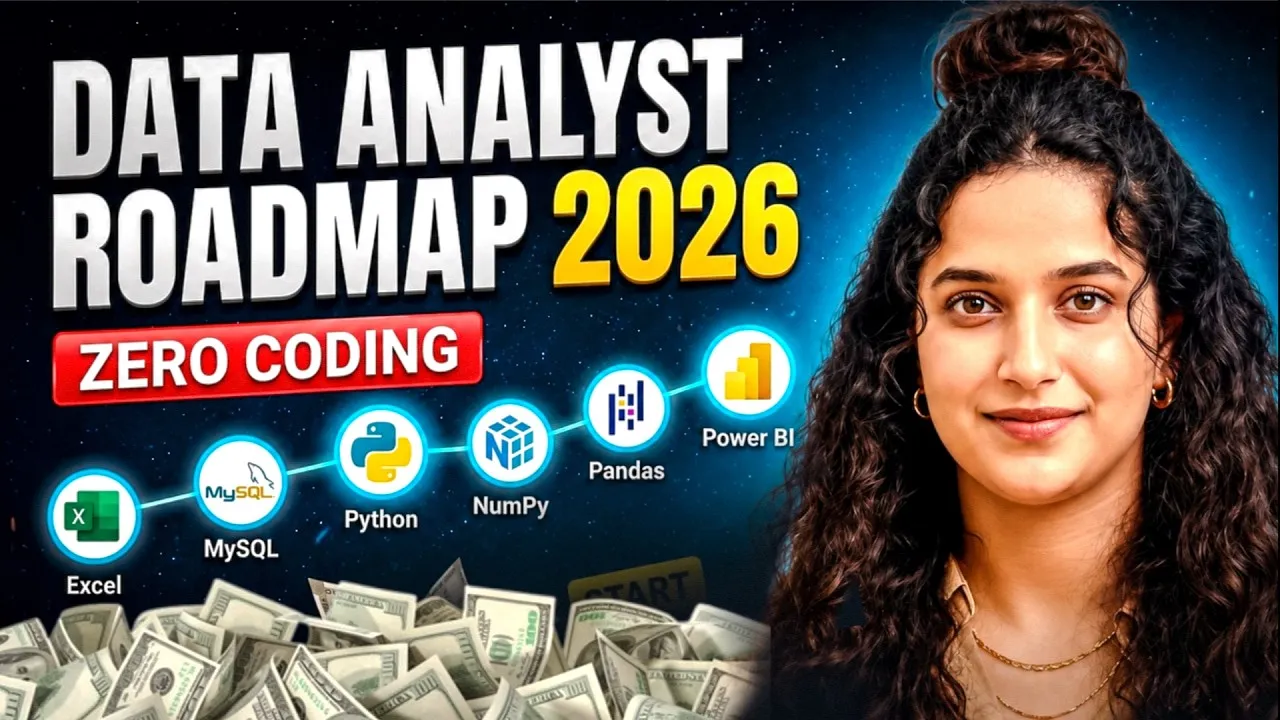
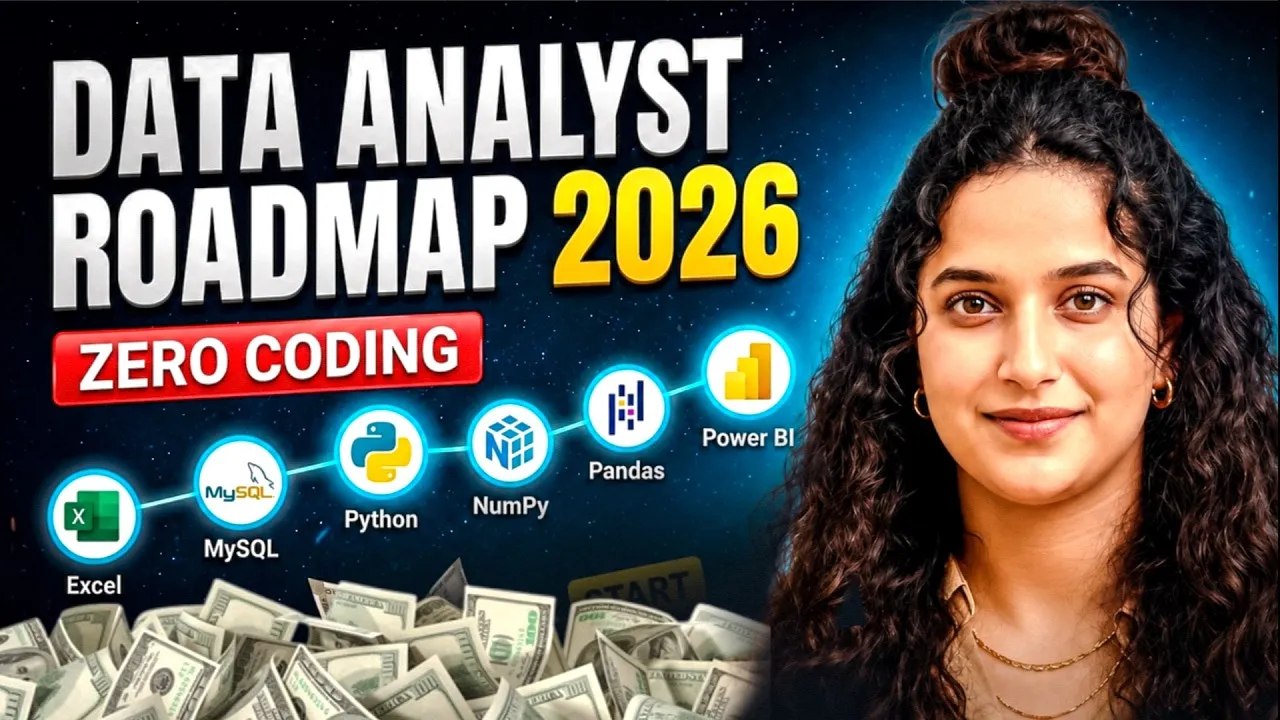
Data Analyst Roadmap 2026 highlights the challenge of entering the data analytics field without prior coding knowledge and confusion around the right skills and learning path.
The solution is a clear step-by-step roadmap covering essential skills like SQL, Excel, Power BI/Tableau, and Python, along with a structured 6-month plan. It also focuses on hands-on projects, portfolio building, and resume preparation to help beginners become job-ready for data analyst roles in 2026.
What Does a Data Analyst Actually Do?
Imagine working at an e-commerce company like Meesho or Myntra. There are millions of customers, but raw data on its own says nothing. This is where a data analyst steps in:
-
Extracting data from databases using SQL
-
Cleaning data — fixing incorrect entries, missing values, and duplicates
-
Building automated dashboards using Power BI or Tableau
-
Creating reports and presentations that non-technical teams can understand
-
Working with stakeholders to answer business questions using data
Data Scientists build machine learning models, Data Engineers build data pipelines, and Data Analysts use data to answer business questions. In 2026, this remains the most accessible entry point into tech, and it's where most of the hiring is happening.
Do You Need a Specific Degree?
No. There's no mandatory degree requirement. A background in Computer Science, Statistics, or Mathematics gives a slight edge, but candidates from BCA, BBA, BA, MA, B.Tech, or any other field can successfully enter this role.
Core Skills You Need to Become a Data Analyst
Recruiters typically look for these skills in your profile:
-
SQL — The most non-negotiable skill. Learn it through free courses, certifications, or self-study.
-
A BI Tool (Power BI or Tableau) — Knowing either one is enough.
-
Excel — Basic to intermediate proficiency is essential.
-
Projects — Not random datasets, but projects built on real-world data with meaningful analysis.
Skills That Directly Boost Your Salary
Beyond the basics, certain skills have a measurable impact on your pay in 2026:
-
Python: Learning Pandas and NumPy for data manipulation can mean earning 1-1.5 lakh more than candidates who only know SQL.
-
Power BI: Heavily used by Indian MNCs, this can lead to roughly a 22% salary boost.
-
Basic Machine Learning: Knowing ML fundamentals can push your salary bracket toward 10 LPA or higher.
-
Cloud Skills (AWS, Azure, GCP): Increasingly mandatory at product companies, with a potential salary impact of around 31%.
-
Communication Skills: Being able to explain what your data means in a clear story is an underrated but critical skill.
6-Month Step-by-Step Roadmap
This 6-month step-by-step roadmap is designed to build strong foundations in data analytics, starting from Excel and statistics to SQL, Power BI/Tableau, and Python. Each month focuses on practical skills and real tools used in the industry to help you become job-ready with hands-on project experience:
Month 1 — Excel + Statistics
Learn VLOOKUP, INDEX-MATCH, pivot tables, conditional formatting, data validation, and basic charts. Alongside this, build a foundation in mean, median, mode, standard deviation, probability, and correlation vs. causation.
Month 2 — SQL
Master SELECT, WHERE, GROUP BY, ORDER BY, HAVING, joins (Inner/Left/Right), subqueries, CTEs, and window functions. Practice on platforms like W3Schools or HackerRank's SQL section.
Month 3 — Power BI or Tableau
Power BI is widely used by IT companies and MNCs in India, while Tableau is more popular in finance and consulting. Learn data import, table relationships, visualizations, basic DAX, and clean dashboard design.
Month 4 — Python Basics
Focus on Pandas for data manipulation, NumPy for calculations, Matplotlib/Seaborn for visualization, and data cleaning — handling missing values and fixing data types.
Months 5-6 — Projects and Portfolio
This is the most important phase. Certifications are just a baseline — projects are what set you apart from the crowd. Use free platforms like Kaggle, data.gov.in, or the UCI Machine Learning Repository for real datasets.
Best Project Ideas for Your Resume
This section includes practical project ideas like dashboards and real-world dataset analysis to strengthen your resume and showcase hands-on data skills using industry-relevant tools.
-
Sales Performance Dashboard
-
Customer Segmentation Analysis
-
Flipkart/Amazon Product Review Analysis
-
COVID-19 or IPL Dataset Analysis
-
Personal Finance Tracker Dashboard
Push every project to GitHub, and write a clear README covering the problem statement, data source, approach, and key insights.
How to Build an ATS-Friendly Resume
Here is how to create an ATS-friendly resume that highlights relevant skills, impactful projects, and certifications to increase your chances of getting shortlisted by recruiters:
-
Keep your resume to a single page — no need for 2-3 pages.
-
Clearly list your technical skills (SQL, Excel, Power BI, etc.) — these act as your ATS keywords. Make sure they match the job description, or your resume may never reach a human recruiter.
-
When describing projects, focus on measurable impact. For example: "Built a sales performance dashboard in Power BI tracking 8 KPIs across 3 regions, reducing weekly reporting time by 40%."
-
Mention 2-3 credible certifications — quality matters more than quantity.
-
Add your GitHub link at the top of your resume and double-check that it's clickable.
Data Analyst Roadmap 2026 FAQs
Can I become a data analyst without a coding background?
Is a degree required for data analyst jobs?
What are the most important skills for data analysts in 2026?
How long does it take to become job-ready?
Why are projects important for a data analyst resume?




 Live & recorded classes available at easeDashboard for progress trackingLakhs of practice questions


