







New Products Forecasting, Meaning, Types, Examples
 Mridula Sharma21 Feb, 2025
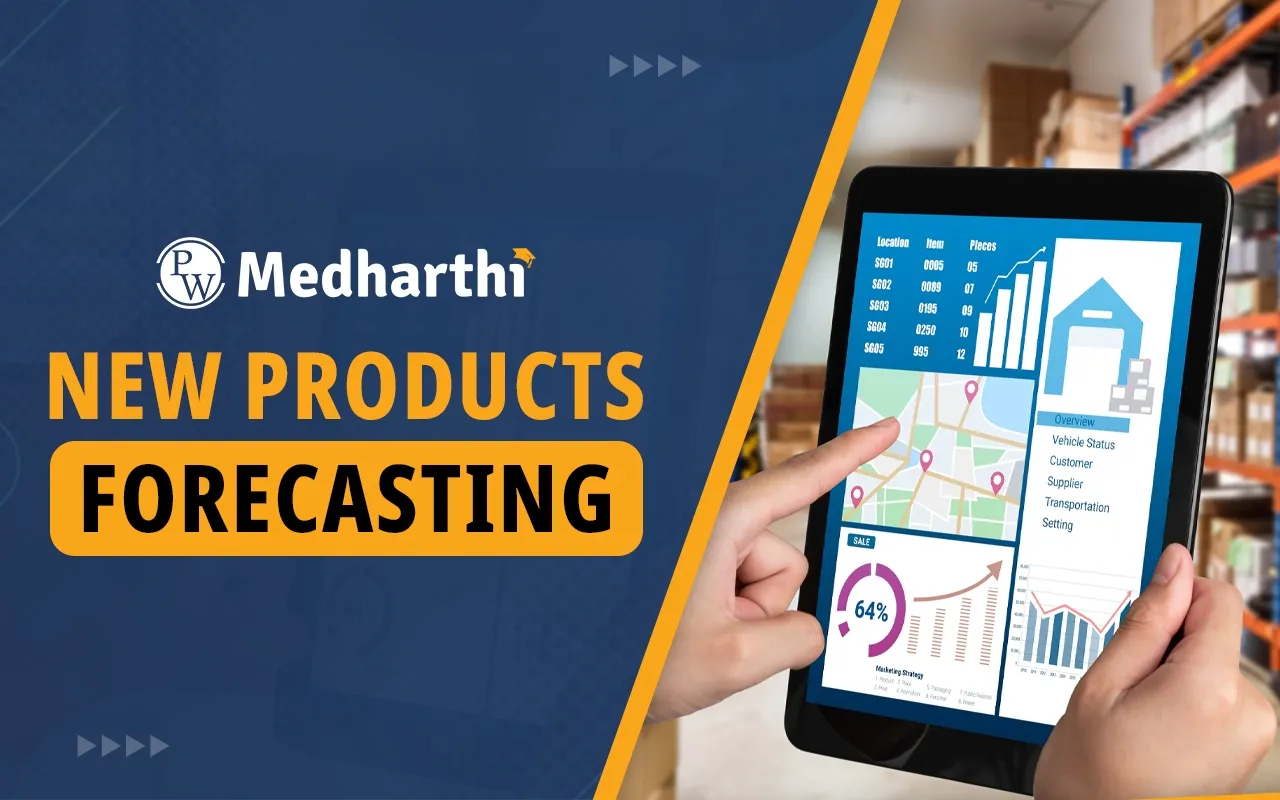
New products forecasting is a critical process that involves predicting the future demand for products that have not yet been introduced to the market. This practice helps businesses make informed decisions regarding production, marketing strategies, and resource allocation. By understanding the various types of forecasting methods, such as qualitative, quantitative, and hybrid approaches—companies can better anticipate consumer needs and market trends.
Understanding New Products Forecasting
New products forecasting is the process of predicting the future demand for new products in the market. It plays a crucial role in guiding businesses through product development, marketing strategies, and resource allocation. By analyzing market trends, consumer behavior, and competitive dynamics, companies can make informed decisions about product launches and inventory management. Effective forecasting helps mitigate risks associated with new product introductions, ensuring that businesses can meet consumer needs while optimizing their operational efficiency.
Also Check: Top 5 Inventory Management Techniques
Types of New Products Forecasting
New products forecasting can be categorized into three main types: qualitative methods, which rely on expert opinions and consumer insights; quantitative methods, which use statistical analysis of historical data; and hybrid approaches, which combine both qualitative and quantitative techniques to provide a more comprehensive and accurate demand prediction.
A. Qualitative Forecasting Methods
Qualitative forecasting methods rely on subjective judgment and insights rather than numerical data. Techniques such as expert judgment, focus groups, and market research surveys are commonly used.
For example, a tech company might conduct focus groups with potential users to gather feedback on a new smartphone design, helping them understand consumer preferences and potential market reception. These methods are particularly useful in the early stages of product development when historical data may be limited, allowing businesses to gauge market interest and identify potential challenges.
B. Quantitative Forecasting Methods
Quantitative forecasting methods utilize statistical techniques and historical data to predict future demand. Common approaches include time series analysis, which examines past sales trends, and regression analysis, which identifies relationships between variables.
For instance, a beverage company might use time series analysis to forecast sales of a new energy drink based on historical sales data of similar products.
Machine learning models are also gaining popularity, leveraging large datasets to uncover patterns and make predictions. These methods provide a data-driven foundation for forecasting, enabling businesses to make informed decisions based on empirical evidence.
C. Hybrid Approaches
Hybrid approaches combine both qualitative and quantitative forecasting methods to enhance accuracy and reliability. For example, a fashion retailer might use qualitative insights from focus groups about upcoming trends while also applying regression analysis on past sales data to predict demand for a new clothing line.
This method allows for the incorporation of subjective factors, such as consumer sentiment, alongside objective data trends. Utilizing a hybrid approach can lead to more robust forecasts, helping companies navigate uncertainties in product development and market entry.
Check Here: Time Series Forecasting
Factors Influencing New Products Forecasting
Several factors influence new products forecasting, impacting the accuracy and reliability of predictions. Understanding these elements helps businesses adapt their strategies and improve their forecasting processes, ultimately leading to better product launches and market performance.
1. Market Trends
Market trends play a vital role in new products forecasting. They reflect the changing preferences and behaviors of consumers. For example, if there is a growing interest in sustainable products, companies may need to adjust their forecasts accordingly. Tracking these trends helps businesses identify opportunities and threats. By staying informed about market shifts, companies can better anticipate demand for their new products and align their strategies to meet consumer expectations.
2. Consumer Behavior
Consumer behavior is a key factor in forecasting new products. It involves understanding how and why people make purchasing decisions. Factors such as age, income, and lifestyle can influence these choices. For instance, younger consumers may prefer tech-savvy products, while older consumers might prioritize ease of use. By analyzing consumer behavior, businesses can tailor their products and marketing strategies to better meet the needs and desires of their target audience.
3. Competitive Landscape
The competitive landscape significantly impacts new products forecasting. Companies must consider the actions and offerings of their competitors. If a rival launches a similar product, it can affect demand for a new item. Businesses need to analyze competitors' strengths and weaknesses. This analysis helps them identify gaps in the market and differentiate their products. Understanding the competitive environment allows companies to make informed decisions and adjust their forecasts accordingly.
4. Economic Indicators
Economic indicators are essential for accurate new products forecasting. These indicators include factors like inflation, unemployment rates, and consumer confidence. When the economy is strong, consumers are more likely to spend money on new products. Conversely, during economic downturns, spending may decrease. By monitoring these indicators, businesses can better predict how economic conditions will affect demand for their new products and adjust their strategies to align with market realities.
5. Technological Advancements
Technological advancements can greatly influence new products forecasting. Innovations can create new markets or change existing ones. For example, the rise of smartphones led to a surge in demand for mobile apps and accessories. Companies must stay updated on technological trends to anticipate changes in consumer needs. By understanding how technology impacts their industry, businesses can forecast demand more accurately and develop products that meet evolving consumer expectations.
Examples of New Products Forecasting
Here are some trending examples of new products forecasting:
1. Tech Industry: Smartphone Launch
A leading smartphone manufacturer often conducts extensive forecasting before launching a new model. They analyze historical sales data from previous launches, consumer feedback from focus groups, and market trends indicating a shift toward 5G technology. By combining quantitative methods, like time series analysis, with qualitative insights, the company can predict demand for the new smartphone. This approach helps them determine production levels, marketing strategies, and distribution channels, ultimately leading to a successful launch.
2. Consumer Goods: Food Products
A food company planning to introduce a new snack product uses forecasting to gauge potential market success. They conduct surveys to gather consumer preferences and analyze sales data from similar products. By employing regression analysis, they identify factors that influence purchasing decisions, such as flavor and packaging. This data-driven approach allows the company to estimate demand accurately, ensuring they produce enough inventory to meet consumer interest while minimizing waste.
3. Fashion Industry: Seasonal Collections
A fashion retailer prepares for its seasonal collection by utilizing forecasting techniques. They analyze past sales data to identify trends in styles, colors, and sizes that were popular in previous seasons. Additionally, they conduct focus groups to gather insights on current fashion preferences. By combining these qualitative and quantitative methods, the retailer can predict which items will be in high demand. This helps them optimize inventory levels and tailor marketing campaigns to attract customers effectively.
4. Automotive Industry: Electric Vehicles
An automotive manufacturer planning to launch a new electric vehicle (EV) conducts thorough forecasting to understand market demand. They analyze trends in environmental awareness and government incentives for EVs. By using machine learning models to process large datasets, they can predict consumer adoption rates and potential sales. This information guides their production planning, marketing strategies, and investment in charging infrastructure, ensuring they meet the growing demand for sustainable transportation options.
5. Beauty Industry: Skincare Products
A skincare brand looking to introduce a new line of products employs forecasting to assess market potential. They gather data on consumer preferences through surveys and social media analysis, identifying trends in natural ingredients and clean beauty. By applying time series analysis to historical sales data of similar products, they can estimate demand for the new line. This comprehensive approach allows the brand to align its product development and marketing efforts with consumer expectations, increasing the likelihood of a successful launch.
Challenges in New Products Forecasting
New products forecasting faces several challenges that can hinder accuracy and effectiveness. Addressing these challenges is crucial for successful product launches and market performance.
1. Data Limitations
Data limitations pose a significant challenge in new products forecasting. Companies often lack sufficient historical data for entirely new products. This absence makes it difficult to identify trends and patterns. Without reliable data, businesses may struggle to make accurate predictions, leading to potential overproduction or stockouts.
2. Rapid Market Changes
Rapid market changes create uncertainty in forecasting. Consumer preferences can shift quickly due to trends, technology, or economic factors. Companies must stay agile to adapt to these changes. If they fail to recognize new trends in time, their forecasts may become outdated, resulting in poor product performance.
3. Consumer Uncertainty
Consumer uncertainty complicates new products forecasting. People may not know their preferences until they experience a product. This unpredictability makes it hard to gauge demand accurately. Companies must rely on assumptions, which can lead to miscalculations. Understanding consumer behavior is essential but often challenging.
4. Over-reliance on Historical Data
Over-reliance on historical data can mislead forecasting efforts. While past performance provides valuable insights, it may not apply to new products. Market conditions and consumer preferences can change significantly. Businesses must balance historical data with current market research to create more accurate forecasts.
5. Competition and Market Saturation
Competition and market saturation present challenges in forecasting new products. A crowded market can make it difficult to predict how consumers will respond to a new offering. Companies must analyze competitors' actions and market dynamics. Failing to account for competition can lead to unrealistic demand estimates and poor product launches.
New Products Forecasting FAQs
What is new product forecasting?
How to forecast for new items?
What is demand forecasting of new products?
What is a common method for new product forecasting?
What are the five steps of forecasting?













 Live & recorded classes available at easeDashboard for progress trackingMillions of practice questions at your fingertips

