







India's Robotics Growth: Skills Gap and Automation Degree Needs
 Aditi Tiwari329 Jul, 2026
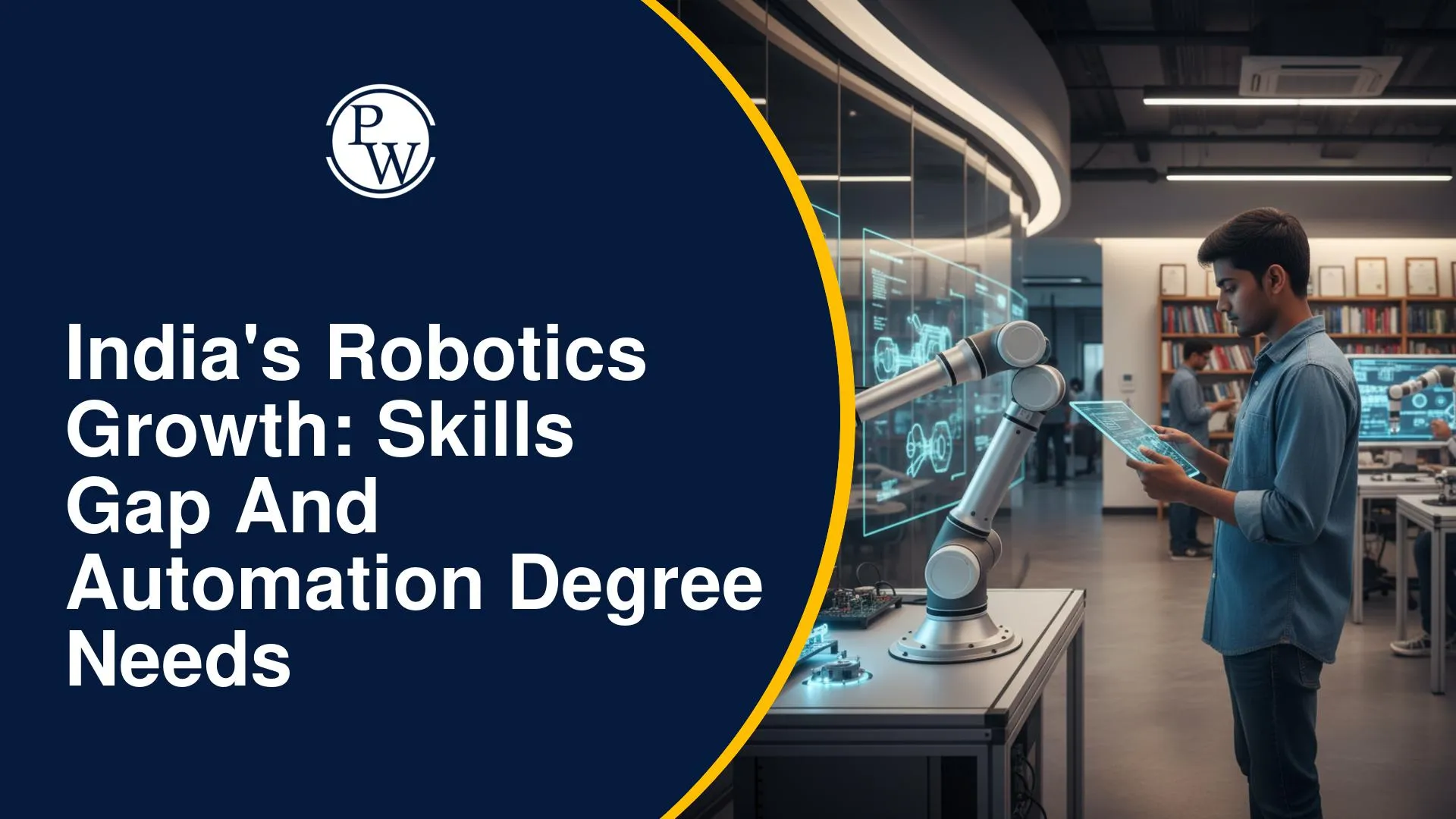
India's robotics sector shows significant growth. The country ranks among the top global installers. Data from World Robotics 2025 highlights this expansion. Yet, a substantial skills gap exists. This gap can hinder future progress. Specialized Robotics & Automation degrees are essential. They prepare the workforce for advanced automation.
India's Robotics Landscape: Insights from World Robotics 2025
This section details India's position in the global robotics market. World Robotics 2025 confirms India as the 6th largest market. Annual industrial robot installations reached 9,120 units in 2024. However, a critical metric is robot density. Robot density analysis reveals India's average is low. It stands at 5-7 robots per 10,000 manufacturing employees. This is significantly below the global average of 162. This wide gap shows India's manufacturing remains labor-intensive. It also presents a massive growth opportunity for automation. The total robotics market is projected to reach $7.38 Billion by 2034.
Addressing the Critical Skills Gap
A major challenge in India's robotics growth is the skills gap. Current education systems do not adequately prepare workers. The country needs trained operators, programmers, and integration engineers. India's engineering colleges produce many graduates. However, fewer than 5% receive hands-on exposure to industrial robots. This creates a significant mismatch. Thousands of robots are sold, but skilled personnel are scarce. This gap slows down technology adoption. It also impacts the efficient use of automation. The high cost of specialized OEM training further limits access to these critical skills.
Role of Robotics & Automation Degrees
To overcome these challenges, Robotics & Automation degrees are crucial. These programs equip students with specific skills needed by the industry. They cover robot operation, programming, and system integration. Such degrees provide practical knowledge and theoretical foundations. They help build a workforce ready for advanced manufacturing. Investing in these specialized education pathways will help fill the skills gap. It supports India's ambitious automation goals. These degrees ensure graduates meet the demands of an evolving industrial landscape.
| Key Area | Details |
| India's Robotics Landscape | India ranks as the 6th largest industrial robotics market, with 9,120 industrial robot installations in 2024. Robot density remains low at 5–7 robots per 10,000 manufacturing employees, compared with the global average of 162, highlighting significant automation potential. The robotics market is projected to reach approximately $7.38 billion by 2034. |
| Critical Skills Gap | India requires more trained robot operators, programmers, and system integration engineers. Fewer than 5% of engineering graduates receive practical exposure to industrial robots, creating a shortage of skilled professionals and slowing automation adoption. |
| Role of Robotics & Automation Degrees | Specialized Robotics & Automation degree programs develop expertise in robot programming, industrial automation, control systems, and system integration, preparing graduates to bridge India's robotics talent gap and support advanced manufacturing growth. |
FAQs on Robotics & Automation Careers
What is the current state of robotics in India?
What does "robot density" mean?
Why is there a skills gap in India's robotics sector?
How can a Robotics & Automation Degree help?
What career opportunities exist with such a degree?




 Live & recorded classes available at easeDashboard for progress trackingLakhs of practice questions


