
M Pharm Pharmaceutical Chemistry, Course Details, Colleges, Fees, Eligibility
M Pharm Pharmaceutical Chemistry is a 2-year postgraduate program focused on drug design, synthesis, and quality control. It offers great career opportunities in pharmaceutical research, R&D labs, and academia. Admission is through GPAT or NIPER JEE, and top colleges include NIPER Mohali, Jamia Hamdard, and BITS Pilani.
 Neha Tanna30 Oct, 2025
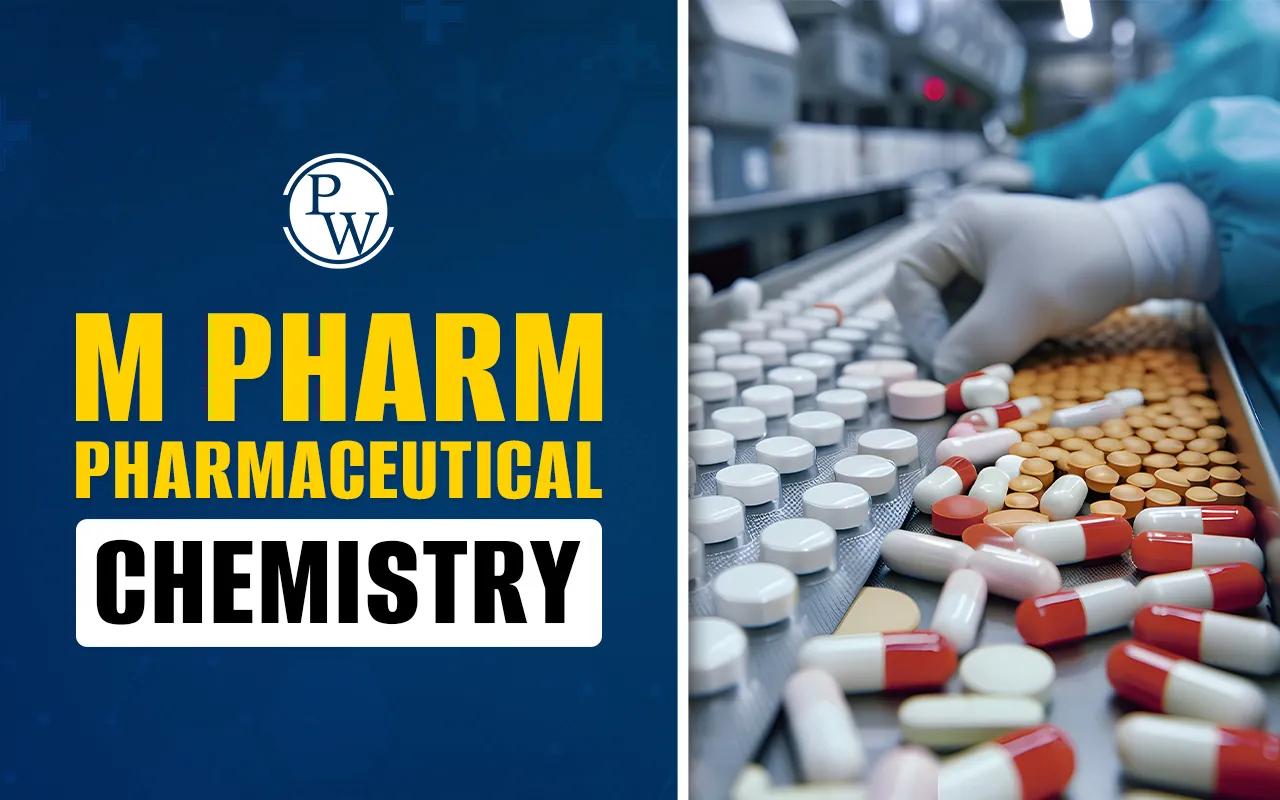
M Pharm Pharmaceutical Chemistry is a 2-year postgraduate program that focuses on the study of drug design, synthesis, analysis, and quality control. It trains students to work in research and development, helping create safer and more effective medicines. The M Pharm course covers areas like pharmaceutical analysis, organic chemistry, and quality assurance.
Graduates can pursue careers in pharmaceutical companies, research organizations, and academia as researchers, analysts, or professors. With the growing healthcare and pharma industries, M.Pharm in Pharmaceutical Chemistry offers good career opportunities for students interested in scientific innovation and drug development. Through this course, students can contribute a lot to the nation's growth.
M Pharm Pharmaceutical Chemistry Course Overview
M.Pharm in Pharmaceutical Chemistry is a 2-year postgraduate program focused on drug design, synthesis, and analysis. It prepares students for research and development roles in the pharma industry. Check below for complete details about M. Pharm eligibility, admission process, syllabus, top colleges, fees, and career opportunities in M.Pharm Pharmaceutical Chemistry:
| M.Pharm Pharmaceutical Chemistry Course Overview | |
| Particulars | Course Details |
| Course Duration | 2 Years |
| Examination Type | Semester-based (Online/Offline) |
| Eligibility | B.Pharmacy with 50% marks or equivalent CGPA |
| Admission Process | Entrance exam (GPAT/NIPER JEE) or merit-based |
| M.Pharm Pharmaceutical Chemistry Fees | ₹30,000 – ₹5,00,000 per year |
| Average Salary | ₹5 – ₹10 LPA |
| Top Recruiters | Glenmark, Cipla, Sun Pharma, Lupin, GSK, Mankind, Zydus |
| Popular Job Roles | Quality Analyst, Researcher, Medical Underwriter, Professor |
M.Pharm Pharmaceutical Chemistry Admission Process
M.Pharm Pharmaceutical Chemistry admission process usually involves qualifying exams like GPAT or NIPER JEE, followed by counselling and document verification. Candidates with a B.Pharm degree and at least 50% marks can apply.
Admission is based on entrance exam scores, merit, or university-level selection, depending on the institution’s criteria.
Check M. Pharm Pharmaceutical Eligibility
-
Make sure you have a B.Pharm degree from a recognized university with at least 50% marks or equivalent CGPA. This is mandatory to take admission to the course.
-
Some institutes may also require candidates to have valid GPAT or NIPER JEE scores.
Register for Various Entrance Exams
-
Most reputed colleges admit students through GPAT (Graduate Pharmacy Aptitude Test), conducted by the National Testing Agency (NTA).
-
Candidates aspiring for NIPERs (National Institutes of Pharmaceutical Education and Research) should apply for NIPER JEE.
-
Fill out the online registration form on the official website, pay the exam fee, and download your admit card.
Appear for the Entrance Exam
-
The exam tests your understanding of Pharmaceutical Chemistry, Pharmacology, Pharmacognosy, and Pharmaceutics.
-
The GPAT exam is conducted online with multiple-choice questions.
Check Results and Cut-off Scores
-
Once results are declared, check if your score meets the cutoff for your preferred colleges.
-
Shortlisted candidates will be called for counselling or interviews, depending on the institute.
Participate in Counselling
-
Qualified candidates must attend counselling sessions conducted by the respective universities or state authorities.
-
During counselling, you can choose your college and specialization based on rank and seat availability.
Document Verification
-
Carry your academic certificates, ID proof, GPAT/NIPER scorecard, photographs, and transfer certificate for verification.
-
Make sure all documents are valid and up to date. I.e., original documents.
Final Admission and Fee Payment
-
Once you receive your admission offer, pay the required tuition fees and confirm your seat.
-
You’ll then receive an official admission letter from the college.
Start of Classes
-
The academic session generally starts between July and September every year, depending on the institution.
Note - Check the above-mentioned pointers carefully if you want to take admission in the course M.Pharm Pharmaceutical Chemistry. Read every point carefully to not miss any important detail.
M.Pharm Pharmaceutical Chemistry Eligibility
To apply for M.Pharm in Pharmaceutical Chemistry, candidates must hold a B.Pharm degree from a recognized university with a minimum of 50% marks or equivalent CGPA. Many reputed colleges require a valid GPAT or NIPER JEE score for admission. Also, discuss with your teachers and parents everything about the course, then select any course.
Some universities may also conduct their own entrance exams or consider merit-based selection. Final-year B.Pharm students are eligible to apply, provided they can present their final results and documents during the admission or counselling process.
M.Pharm Pharmaceutical Chemistry Subjects List
The M.Pharm Pharmaceutical Chemistry subjects list includes both core and advanced topics that focus on drug design, synthesis, analysis, and quality control.
Students study theoretical as well as practical aspects through lab work and research projects. Check below for the detailed semester-wise list of subjects covered in this program.
| M.Pharm Pharmaceutical Chemistry Subjects List | |
| Semester I | Semester II |
| Modern Pharmaceutical Analytical Techniques | Advanced Spectral Analysis |
| Advanced Organic Chemistry | Advanced Organic Chemistry- II |
| Advanced Medicinal Chemistry | Computer-Aided Drug Design |
| Pharmaceutical Process Chemistry | Chemistry of Natural Products |
| Pharmaceutical Chemistry Practical | Novel Technologies and Drug Regulatory Affairs |
| Research Process | Pharmaceutical Chemistry Practical II |
| Modern Pharmaceutical Analytical Techniques Practical | Synopsis |
| Semester III | Semester IV |
| Seminar II | Dissertation |
| Research Project Audit | - |
M.Pharm Pharmaceutical Chemistry Entrance Exams
Admission to M.Pharm in Pharmaceutical Chemistry is mainly based on national-level exams like GPAT and NIPER JEE. Some universities also conduct their own entrance tests or offer merit-based admission.
These exams check candidates’ understanding of core pharmacy subjects. Check below for details on important entrance exams.
| M.Pharm Pharmaceutical Chemistry Entrance Exams | |||
| Exam Name | Application Dates | Exam Date | Mode |
| GPAT (Graduate Pharmacy Aptitude Test) | To be announced | To be announced | Online |
| NIPER JEE | To be announced | To be announced | Online |
Top colleges for M.Pharm Pharmaceutical Chemistry in India
Several good institutes in India offer M.Pharm in Pharmaceutical Chemistry, known for their research facilities and industry connections. Top colleges include NIPER Mohali, Jamia Hamdard University, BITS Pilani, Manipal College of Pharmaceutical Sciences, and JSS College of Pharmacy. Check below for the complete list of top colleges with fees and details.
Note - mentioned fees mentioned below can be changed slightly as per the latest criteria; always check the official website for more details.
| Top colleges for M.Pharm Pharmaceutical Chemistry in India | |
| College Name | Average Annual Fees |
| NIPER, Mohali | ₹90,000 |
| Jamia Hamdard University, New Delhi | ₹1.2 LPA |
| BITS Pilani | ₹3.8 LPA |
| Manipal College of Pharmaceutical Sciences | ₹2.5 LPA |
| JSS College of Pharmacy, Mysuru | ₹1.5 LPA |
| Poona College of Pharmacy | ₹1.2 LPA |
| Al-Ameen College of Pharmacy, Bengaluru | ₹1.4 LPA |
Job opportunities after M.Pharm Pharmaceutical Chemistry
After completing M.Pharm in Pharmaceutical Chemistry, graduates can explore diverse job opportunities in the pharma industry, research institutes, quality assurance, and academics. Roles include Research Scientist, Analytical Chemist, Clinical Research Associate, and Regulatory Officer.
Check below for detailed information on top job profiles, average salaries, and career growth prospects.
| Job opportunities after M.Pharm Pharmaceutical Chemistry | ||
| Job Position | Job Description | Average Annual Salary |
| Analytical Chemist | Analytical Chemist performs basic research, process and product development, design instrument and analytical techniques. | INR 4,00,00 LPA |
| Drug Inspector | Assisting and checking the quality and safety of drugs. | INR 6,00,000 LPA |
| Medical Transcriptionist | It involves dictation and recording of the medical prescription by the physicians. | INR 4,00,000 LPA |
| Researcher | Researchers in the pharmacy field usually work in the development of new drugs, pharmaceutical cares and services. | INR 8,00,000 LPA |
| Professor | Professors include providing teaching and developing course material, supervising postgraduate research work and publishing journals. | INR 15,00,000 LPA |
M.Pharm Pharmaceutical Chemistry Career Scope
The career scope after M.Pharm in Pharmaceutical Chemistry is vast, offering opportunities in research, quality control, clinical trials, and academia. Select any field of your interest.
Graduates can work with top pharmaceutical companies, research labs, and regulatory bodies in India and abroad. Check below for detailed career options and job roles available after this course.
Pharmaceutical Research Scientist
-
Work in research and development (R&D) to design, synthesize, and test new drug molecules.
-
Contribute to innovation in medicine and healthcare solutions.
Quality Control (QC) and Quality Assurance (QA) Officer
-
Make sure that medicines meet safety, purity, and efficacy standards before they reach the market. This will enhance your knowledge in terms of medicine.
-
Involves lab testing, documentation, and process validation.
Analytical Chemist
-
Analyze drug samples and raw materials using advanced instruments like HPLC, GC, and spectroscopy.
-
Help in maintaining consistency and accuracy in drug formulation.
Clinical Research Associate (CRA)
-
Coordinate and monitor clinical trials to ensure drug safety and regulatory compliance.
-
Work closely with doctors, hospitals, and research organizations. This is such a good job in foreign countries and will give you a lot of exposure.
Regulatory Affairs Specialist
-
Handle documentation and approvals required by regulatory bodies like CDSCO, FDA, or EMA.
-
Make sure products comply with national and international pharmaceutical laws.
Medical or Scientific Writer
-
Prepare research papers, clinical reports, drug dossiers, and scientific publications.
-
A great role for those who enjoy writing and science communication.
Production and Manufacturing Manager
-
Supervise large-scale manufacturing of drugs, ensuring process efficiency and product quality.
-
Focus on technology, machinery, and regulatory standards. Also, increase knowledge in many related terms.
Teaching and Academic Roles
-
Become a Lecturer or Professor in pharmacy colleges. Basically, students can select any field as per their interests.
-
Help students in pharmaceutical chemistry, formulation, and research.
M Pharm Pharmaceutical Chemistry Course FAQs
What is M.Pharm in Pharmaceutical Chemistry?
What is the eligibility for M.Pharm in Pharmaceutical Chemistry?
What is the admission process for M.Pharm Pharmaceutical Chemistry?
What are the top colleges for M.Pharm Pharmaceutical Chemistry in India?