






Top 10 Skills Every D.Pharm Student Should Know for Career Growth
Explore the key skills every D.Pharm student should develop to improve pharmacy knowledge, professional confidence, and career readiness. From understanding medicines and patient communication to digital skills and continuous learning, these abilities can help you prepare for better opportunities in the healthcare sector.
 Abhishek Kumar31 Jul, 2026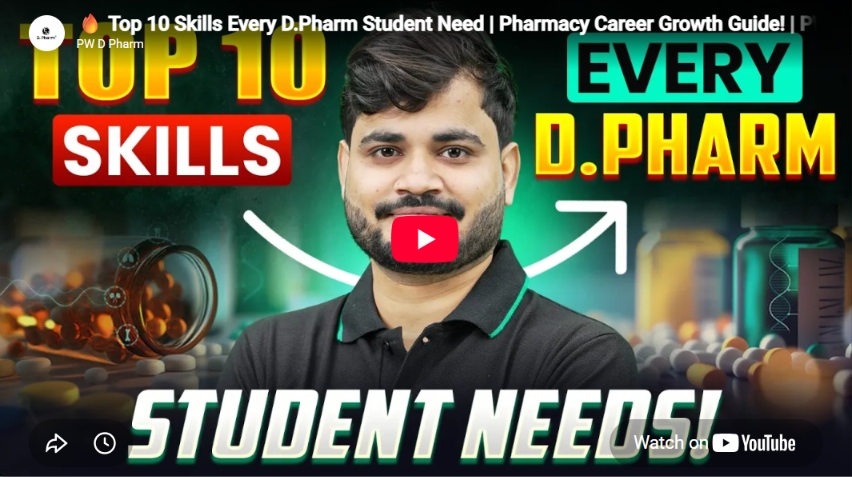
Completing a D.Pharm course provides the foundation for a pharmacy career, but many students are unsure about the skills required to succeed professionally. You may wonder what additional abilities can help you perform better in interviews, improve patient care, and grow in the pharmacy sector.
Along with academic knowledge, developing practical, technical, and professional skills during your D.Pharm journey can help you become a skilled pharmacist. This guide explores the skills that can support your career growth and improve your readiness for professional opportunities.
Why Skills Are Important for D.Pharm Students
A D.Pharm degree helps you become eligible for career opportunities, but skills help you perform effectively in the workplace.
Developing skills can help you:
-
Stand out among other candidates.
-
Improve career growth opportunities.
-
Increase confidence during interviews.
-
Enhance patient care abilities.
-
Improve professional performance.
While a D.Pharm qualification opens the door to career opportunities, the right skills help you grow and succeed as a pharmacy professional.
Key Skills to Build During Your D.Pharm Journey
D.Pharm qualification provides the foundation for a pharmacy career, but developing practical and professional skills is equally important for long-term growth. From drug knowledge and prescription reading to communication, digital skills, and clinical understanding, these abilities help you become a confident and capable pharmacy professional.
1. Drug Knowledge
Drug knowledge is one of the most important skills for every D.Pharm student. A strong understanding of medicines is essential for safe and effective pharmacy practice.
You should focus on:
-
Understanding generic drugs.
-
Learning about branded drugs.
-
Knowing different dosage forms.
-
Understanding drug interactions.
-
Learning about possible side effects.
Detailed knowledge of medicines helps you perform your role accurately as a pharmacist.
2. Communication Skills
Effective communication is important for every healthcare professional. Communication does not only mean speaking fluent English; it means explaining information clearly and understanding others properly.
You should develop the ability to:
-
Explain medicines clearly to patients.
-
Understand patient concerns.
-
Communicate with doctors and healthcare professionals.
-
Act as a link between doctors and patients.
Regular practice can help you improve your communication skills.
3. Teamwork Skills
Pharmacists work with doctors, nurses, hospital staff, and other healthcare professionals. The ability to work effectively in a team helps improve coordination and patient care.
Teamwork skills include:
-
Cooperating with healthcare teams.
-
Communicating effectively with colleagues.
-
Adjusting according to workplace requirements.
4. Computer Skills
Basic computer knowledge is required in modern pharmacy practice. You do not need advanced computer knowledge, but understanding basic digital tools is important.
You should learn:
-
MS Word.
-
MS Excel.
-
MS PowerPoint.
-
Creating PDF files.
-
Email writing.
-
Creating online documents.
-
Using pharmacy-related software.
5. Prescription Reading Skills
Prescription reading is a critical skill for pharmacists. Incorrect interpretation of prescriptions can affect patient safety.
You should develop knowledge of:
-
Medical abbreviations.
-
Dosage calculations.
-
Correct prescription interpretation.
Accuracy in prescription reading helps ensure safe medicine usage.
6. Dispensing Skills
Dispensing medicines requires accuracy and attention to detail. A pharmacist must ensure that the correct medicine reaches the patient with proper instructions.
Important dispensing skills include:
-
Selecting the correct medicine.
-
Proper labelling of medicines.
-
Maintaining storage conditions.
-
Providing medicine usage instructions.
7. Time Management Skills
Time management helps you balance your studies, exam preparation, and skill development.
You should focus on:
-
Planning your study schedule.
-
Setting daily targets.
-
Improving productivity.
-
Preparing regularly for exams.
Effective time management helps you achieve academic and career goals.
8. Interview Skills
Interview skills are important for career growth and securing job opportunities.
You should focus on:
-
Preparing a genuine resume or CV.
-
Improving technical knowledge.
-
Preparing for common HR questions.
-
Building confidence during interviews.
Your confidence during interviews comes from your knowledge and preparation.
9. Clinical and Medical Knowledge
Clinical knowledge helps you understand diseases and their treatment methods. It improves your ability to provide better healthcare support.
You should understand:
-
What diseases are.
-
How diseases develop.
-
Factors affecting diseases.
Examples include:
-
Gout: Increased uric acid levels.
-
Rheumatoid Arthritis: Autoimmune disease.
-
Hypertension: Increased blood pressure.
-
Angina: Blocked coronary artery.
10. Digital Skills and Continuous Learning
Technology is becoming an important part of the healthcare sector. Developing digital skills can support your learning and career growth.
You should learn:
-
AI tools such as ChatGPT.
-
Online profile building through platforms like LinkedIn.
-
Online certifications in areas like pharmacovigilance and regulatory affairs.
-
Digital note-making tools.
-
Educational applications.
Along with digital skills, continuous learning is important to stay updated with pharmacy developments.
A successful pharmacy career requires more than completing a degree. Developing practical knowledge, professional skills, and continuous learning habits can help you become a confident and capable pharmacist. With the right guidance and preparation support from PW, you can focus on improving your skills throughout your D.Pharm journey and build better career opportunities.
FAQs
Why are skills important for D.Pharm students?
What is the most important skill for a D.Pharm student?
Why is communication skill important for pharmacists?
Why is prescription reading important for D.Pharm students?




Get Free Counselling Today
and Clear up all your Doubts
 Live & recorded classes available at easeDashboard for progress trackingLakhs of practice questions

