







Types of Calcium Oxalate Crystals with Examples
 Aarti .22 May, 2026
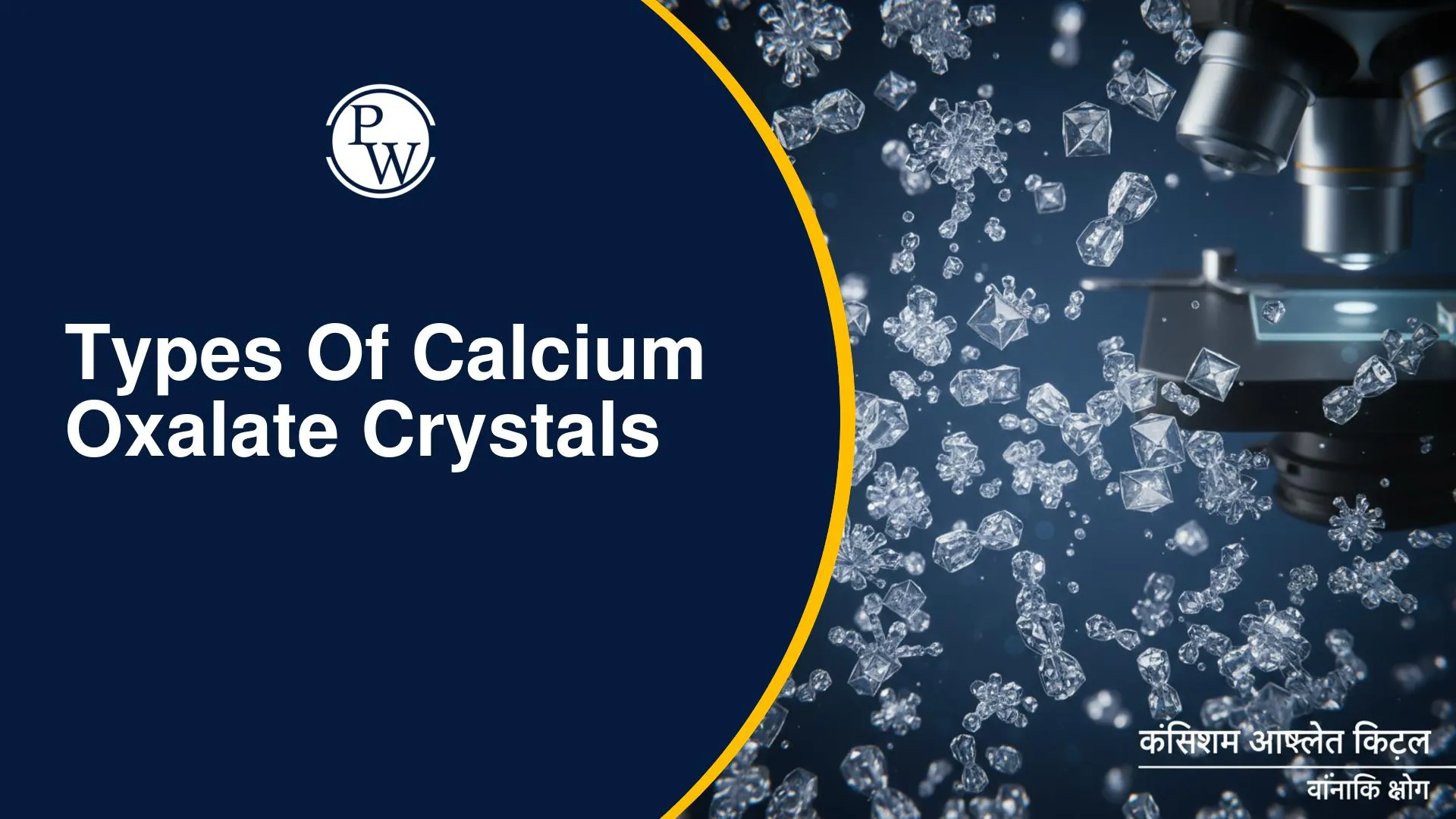
Calcium oxalate crystals are naturally occurring plant metabolites commonly found in many medicinal and herbal plants. These crystals are important in pharmacognosy because their unique shapes help in the microscopic identification and evaluation of powdered drugs. Different plants contain different types of calcium oxalate crystals such as rosette, cluster, prismatic, raphides, and acicular crystals, which makes them useful for detecting adulteration and studying herbal medicines. Understanding these crystal forms is also important for students preparing for pharmacy and competitive examinations like GPAT and NIPER.
Calcium Oxalate Crystals
Calcium oxalate crystals are metabolic byproducts found in plants, playing a vital role in plant physiology and drug evaluation. Their unique shapes are key in the microscopic analysis of powdered drugs and identifying adulteration in herbal medicines. Understanding these crystal forms is essential for pharmaceutical analysis.
Importance And Varied Shapes Of Calcium Oxalate Crystals
Calcium oxalate crystals are excretory or metabolized products found in plants. They are significant evaluation parameters for powdered drugs, particularly in microscopy, and are crucial for identifying adulteration in herbal drugs.
Different herbal drugs contain various types of calcium oxalate crystals, such as rosette type, acicular types, needle-like, microsphenoidal, and sandy crystals. Just as humans have distinct facial features, different plants possess unique calcium oxalate crystal shapes. Questions regarding these crystal types and their examples are frequently asked in competitive examinations (GPAT, NIPER, etc.).
Types Of Calcium Oxalate Crystals And Examples
Below are the major types of calcium oxalate crystals found in medicinal plants, along with their important examples.
1. Rosette Crystals
Rosette crystals are flower-like or rose-shaped calcium oxalate crystals commonly found in many medicinal plants. These crystals consist of several crystal units arranged in a circular pattern, giving them a rosette appearance under the microscope. Rosette crystals are highly important in pharmacognosy because they help in the microscopic identification and standardization of herbal drugs. Some plants may contain rosette crystals along with other crystal forms, making their identification more significant during powdered drug analysis.
Examples: Rhubarb, Rheum species, Cascara, Rhamnus purshiana, Stramonium, and Clove.
Special Note: Stramonium contains both rosette and cluster crystals, while Clove contains rosette and radiate aggregate crystals.
2. Cluster Crystals
Cluster crystals are groups of calcium oxalate crystals arranged closely together in a clustered form. These crystals appear as irregular masses under microscopic observation and are widely used as diagnostic characters in herbal drug evaluation. Cluster crystals are important for identifying medicinal plants and detecting adulteration in powdered crude drugs. Several medicinal plants belonging to different families contain cluster crystals as a characteristic feature.
Examples: Stramonium, Henbane, Belladonna, Roselle (Hibiscus sabdariffa), Podophyllum, Oak, Wild Cherry Bark, and Fennel.
Special Note: Podophyllum is well known for its anti-cancer properties and also contains cluster crystals useful for identification.
3. Prismatic Crystals
Prismatic crystals are single, elongated prism-shaped calcium oxalate crystals commonly found in medicinal plants. These crystals are important microscopic markers used in pharmacognostic studies for authentication and quality control of herbal drugs. Many medicinal plants may contain prismatic crystals together with rosette or cluster crystals, making careful microscopic examination essential.
Examples: Senna, Henbane, Stramonium, Belladonna, Melilot, Cascara, Quillaja Bark, Wild Cherry Bark, Licorice (Mulethi), Rauwolfia, and Columbo.
Special Note: Plants such as Stramonium, Henbane, Belladonna, Cascara, and Wild Cherry Bark may contain more than one type of calcium oxalate crystal.
4. Microsphenoidal Crystals (Sandy Crystals)
Microsphenoidal crystals, also called sandy crystals, are extremely small and granular calcium oxalate crystals that resemble fine sand particles under microscopic observation. These crystals are difficult to distinguish individually because of their tiny size and dense arrangement. Sandy crystals are important in the microscopic evaluation of certain medicinal plants and help in drug identification.
Examples: Belladonna, Henbane, and Stramonium.
Special Note: These plants may also contain other crystal forms along with sandy crystals.
5. Raphides / Acicular Crystals
Raphides and acicular crystals are needle-shaped calcium oxalate crystals commonly present in plant cells. These crystals usually occur in bundles and may act as a defense mechanism against herbivores. In pharmacognosy, they are useful for identifying crude drugs under microscopic examination. Acicular crystals are long and pointed, while raphides are usually present in clustered needle bundles. Some medicinal plants contain both types together.
Raphides Examples
-
Squill (Jangli Pyaaz)
-
Ipecacuanha
Acicular Crystals Examples
-
Phytolacca
-
Ipecacuanha
-
Gentian
-
Cinnamon
-
Squill
Special Note: Ipecacuanha and Squill contain both raphide and acicular crystals, making them important examples in pharmacognosy and competitive examinations.
6. Miscellaneous Types
Apart from the major crystal forms, some medicinal plants contain unique and specialized calcium oxalate crystal structures that are useful for microscopic drug analysis and identification. These uncommon crystal types serve as important diagnostic features during pharmacognostic evaluation.
Examples
-
Buchu – Contains sphaerocrystals
-
Verbascum thapsus – Contains solitary crystals
-
Digitalis – Contains solitary crystals
-
Linaria scrophularia – Contains solitary crystals
-
Picrorhiza – Contains solitary crystals
-
Cannabis sativa (Bhaang) – Contains cystolith-type crystals
Special Note: Cystolith crystals in Cannabis sativa are unique structures formed due to calcium deposits and are important in plant identification studies.
Types Of Calcium Oxalate Crystals FAQs
What are calcium oxalate crystals and what is their primary function in plants?
Why are calcium oxalate crystals important in the evaluation of herbal drugs?
Which drugs are known to contain rosette type calcium oxalate crystals?
Can a single plant drug exhibit multiple types of calcium oxalate crystals? Provide an example.






Get Free Counselling Today
and Clear up all your Doubts
 Live & recorded classes available at easeDashboard for progress trackingLakhs of practice questions

