








How PW Prodigy Uses Concept-Based Learning to Understand Difficult Science Topics

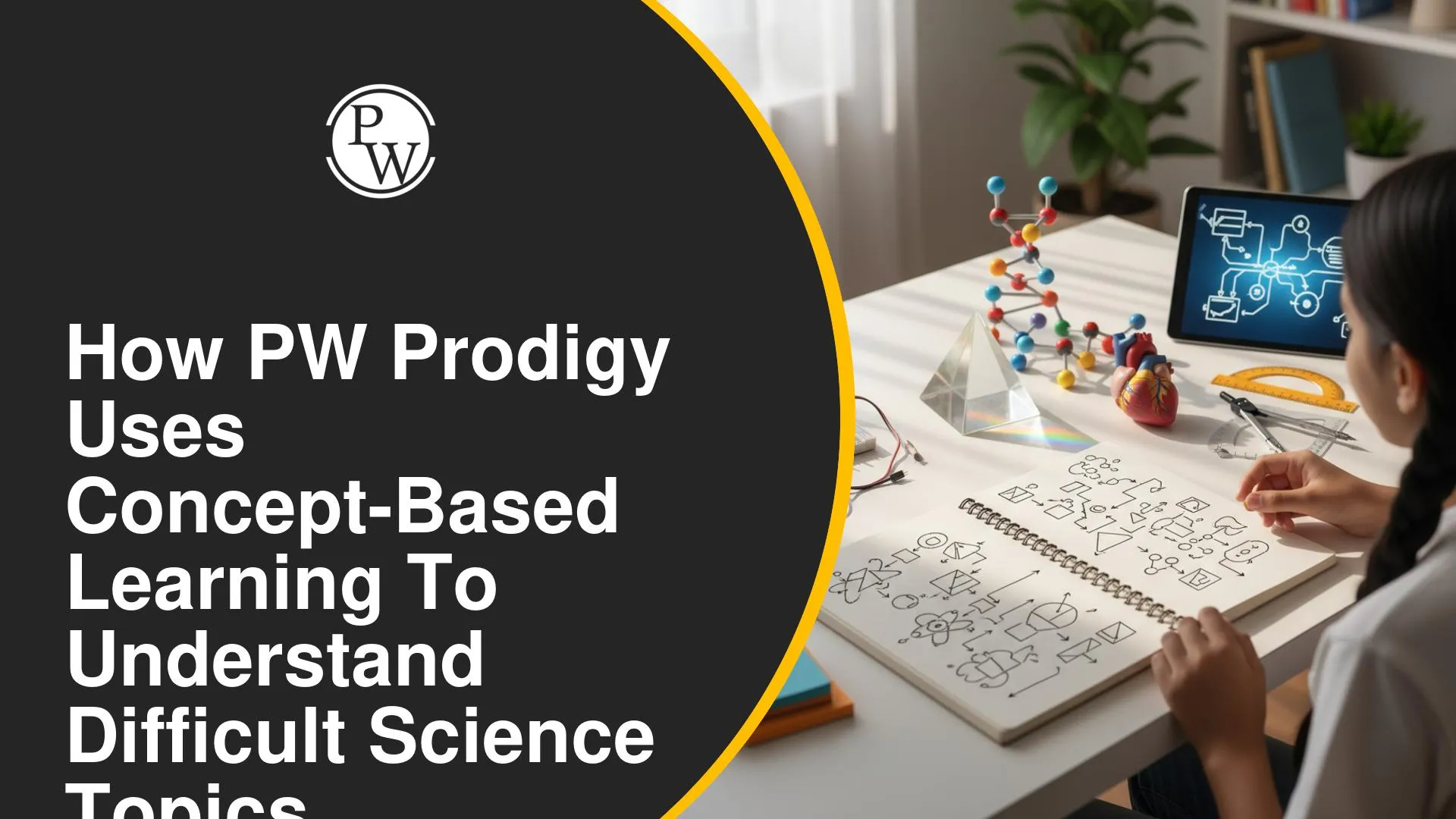
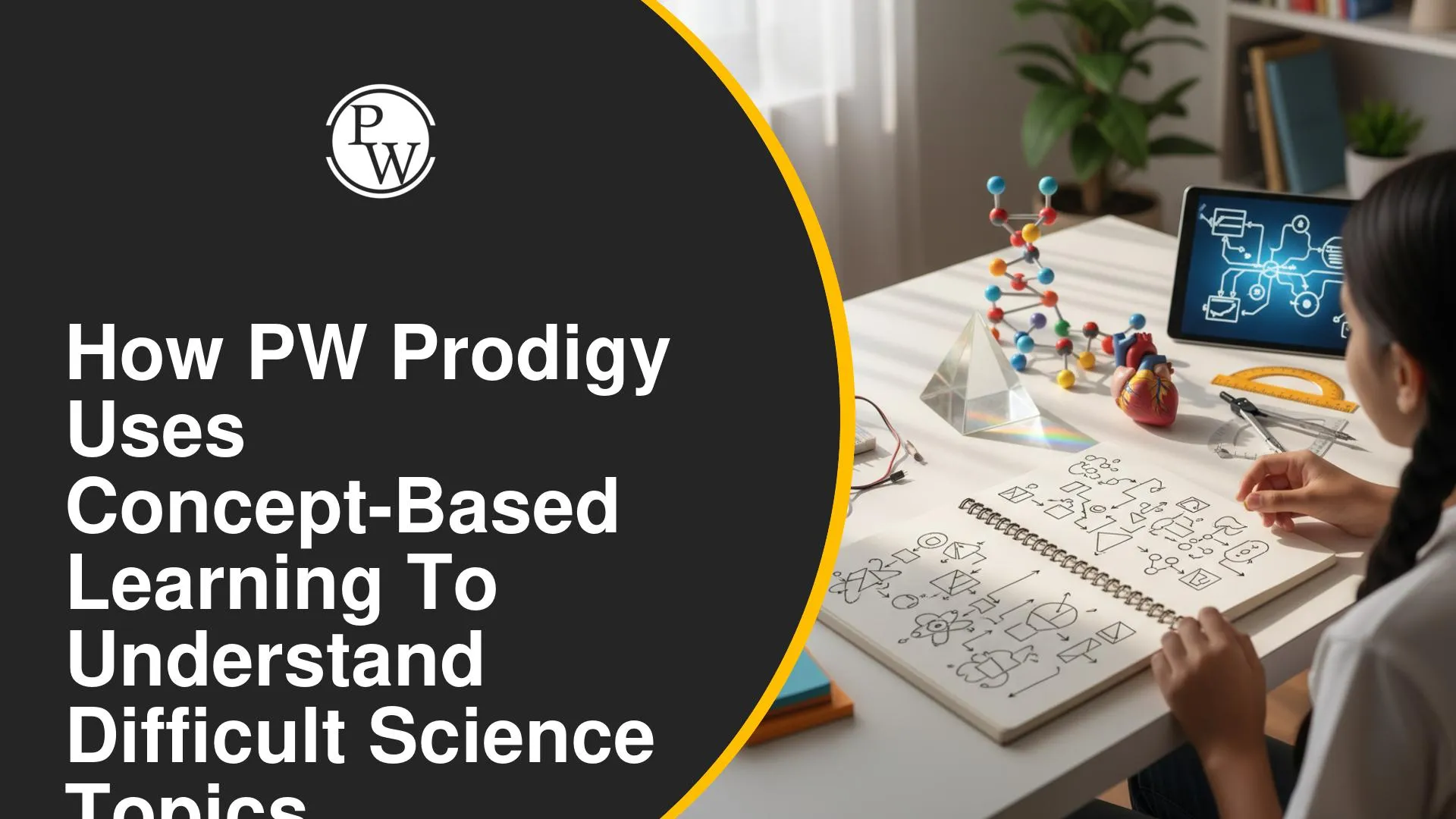
Science becomes easier to learn when students understand the concepts behind every fact and formula. Instead of memorising answers, learners need to grasp how and why things work. Concept-based learning for science helps build this understanding, enabling students to apply their knowledge to different questions and tackle challenging topics with greater confidence.
PW Prodigy follows the same approach. Through clear lessons, guided practice and personalised academic support, learners can handle difficult science topics in Physics, Chemistry and Biology with more confidence.
What is Concept-Based Learning for Science?
Concept-based learning means understanding why something happens, not only what happens. A student who knows the reason behind a rule can solve many types of questions. A student who has only memorised the rule can solve just one type.
Here is how the two methods differ:
|
Point |
Memorising Facts |
Concept-Based Learning |
|
Focus |
Words, formulas and definitions |
Ideas and reasons |
|
Memory |
Fades quickly |
Stays for a long time |
|
New questions |
Hard to solve |
Easier to solve |
|
Confidence |
Low |
High |
The table shows that conceptual understanding in science gives students a stronger base. It also saves time because they do not need to relearn the same topic again and again.
How Does Strong Fundamentals Help in Physics, Chemistry and Biology?
Every difficult topic is built on simple ideas. If the basics are weak, the harder chapters feel confusing. This is why PW Prodigy gives importance to basic concepts first.
-
Physics: Motion, force, energy and units are the starting points for most chapters.
-
Chemistry: Atoms, elements, reactions and the periodic table help students understand later topics.
-
Biology: Cells, life processes and body systems form the base for advanced chapters.
A student with clear basics finds learning science easier because new chapters link to what they already know.
How Can Difficult Science Topics Be Broken into Smaller Concepts?
Difficult science topics look big only when they are seen as one block. When the topic is cut into small parts, each part becomes simple. Students then move from one idea to the next without feeling lost.
Take electricity as an example. A student can first learn about charge, then current, then voltage and finally resistance. After that, the link between them becomes clear. PW Prodigy follows this step-by-step method in its lessons, so students build understanding slowly and with confidence. If you would like to know more about the programme itself, you can read what PW Prodigy is.
Why Do Real-Life Examples Make Science Easier to Understand?
Science is all around us, so examples from daily life make ideas feel real. When students can see a concept in action, they remember it more easily.
The examples below show how this works.
|
Concept |
Everyday Example |
|
Friction |
A bicycle slowing down when brakes are used |
|
Evaporation |
Wet clothes drying in the sun |
|
Photosynthesis |
Plants making food using sunlight |
|
Chemical reaction |
Iron slowly turning rusty |
Examples like these turn hard words into simple pictures. They also help students explain scientific principles in their own words.
How Does Practising Application-Based Questions Help?
Knowing a concept is the first step. Using it is the second. Application-based questions ask students to use an idea in a new situation, such as a puzzle, a diagram or a real-life case.
Regular practice with different question types shows students where a concept can be used. It also trains them to read each question with care. With guided practice, students learn how to choose the right idea and apply it step by step. Learning of this kind goes further than the textbook, and you can see how PW Prodigy supports students beyond classroom learning.
How Can Students Find and Fix Learning Gaps?
Every student makes mistakes. The important thing is to learn from them. A learning gap is a topic that a student has not understood fully, and it can slow down progress if it is ignored.
Students can follow these simple steps:
-
Go through each mistake after a test or practice session.
-
Find out whether the error came from a weak concept or from a careless slip.
-
Spend extra time on the topics that need improvement.
-
Try similar questions again to confirm the gap is closed.
Personalised academic support makes this easier, because the focus stays on what each student actually needs. Parents can also play a big part here, and how parents can nurture a gifted child offers useful ideas.
How Does Concept-Based Learning Improve Scientific Thinking?
Science is not only about answers. It is also about how we think. When students learn through concepts, they build skills that help them in every subject.
-
Logical reasoning: They learn to explain why something happens.
-
Analytical skills: They learn to break a problem into parts.
-
Problem-solving: They learn to try different methods when one does not work.
Curious students often show these habits early. If your child asks many “why” questions, you may find the 10 signs your child may be gifted interesting.
Why are Revision and Progress Tracking Important?
Even a well-understood concept can be forgotten without revision. Regular revision keeps ideas fresh, and practice tests show how much has been learnt.
Performance analysis then tells students which topics are strong and which need more work. The table below shows a simple way to track progress.
|
Activity |
Purpose |
|
Weekly revision |
Keeps concepts fresh |
|
Practice tests |
Checks understanding |
|
Performance analysis |
Shows strong and weak areas |
|
Extra practice |
Improves weak topics |
When students follow this cycle, their preparation becomes calmer and more organised.
How Does PW Prodigy Support Concept-Based Learning?
PW Prodigy is a learning support programme that helps students understand difficult science topics step by step. It brings together concept-based lessons, guided practice, personalised academic guidance and regular performance analysis. This gives students the clarity to learn science with understanding, not pressure.
Students can use PW Prodigy to:
-
Understand difficult science topics through clear, concept-based lessons.
-
Learn through guided practice on different types of questions.
-
Receive personalised academic support based on their needs.
-
Review performance and find topics that need improvement.
-
Build steady habits through regular revision and practice.
Concept-based learning helps students understand science beyond facts and formulas. With step-by-step lessons, guided practice and personalised academic support, PW Prodigy makes difficult science topics easier to understand. By building strong fundamentals and practising regularly, students can learn with greater confidence and improve their problem-solving skills.
FAQs
What is concept-based learning for science?
How does PW Prodigy help with difficult science topics?
Why is conceptual understanding in science better than memorising?
Does science concept learning cover Physics, Chemistry and Biology?


Have questions about your prep?
Our experts can answer all your questions


 Live & recorded classes available at easeDashboard for progress trackingLakhs of practice questions


