







What Is a Talent Test and Why Your Child Should Take One?

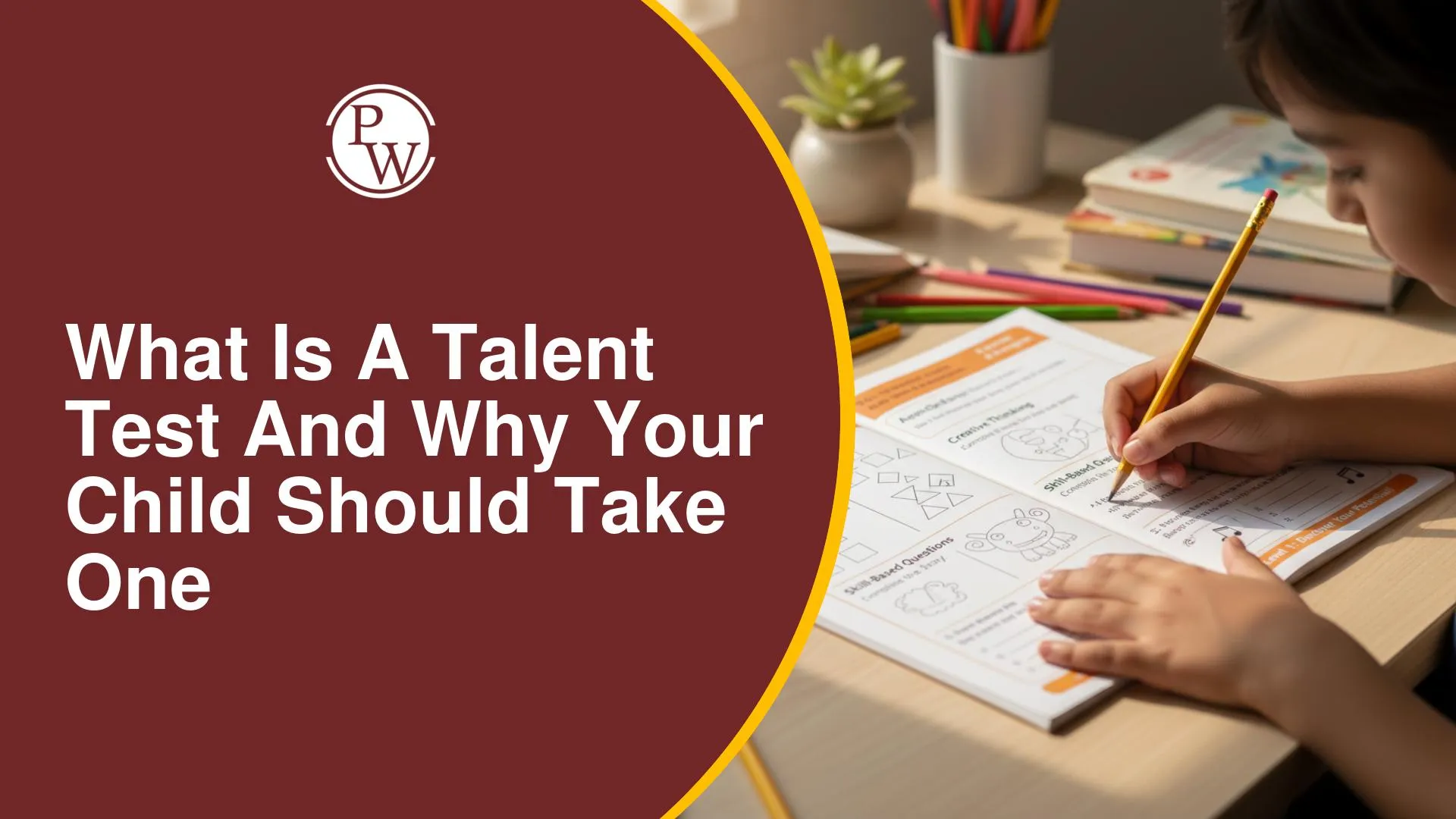
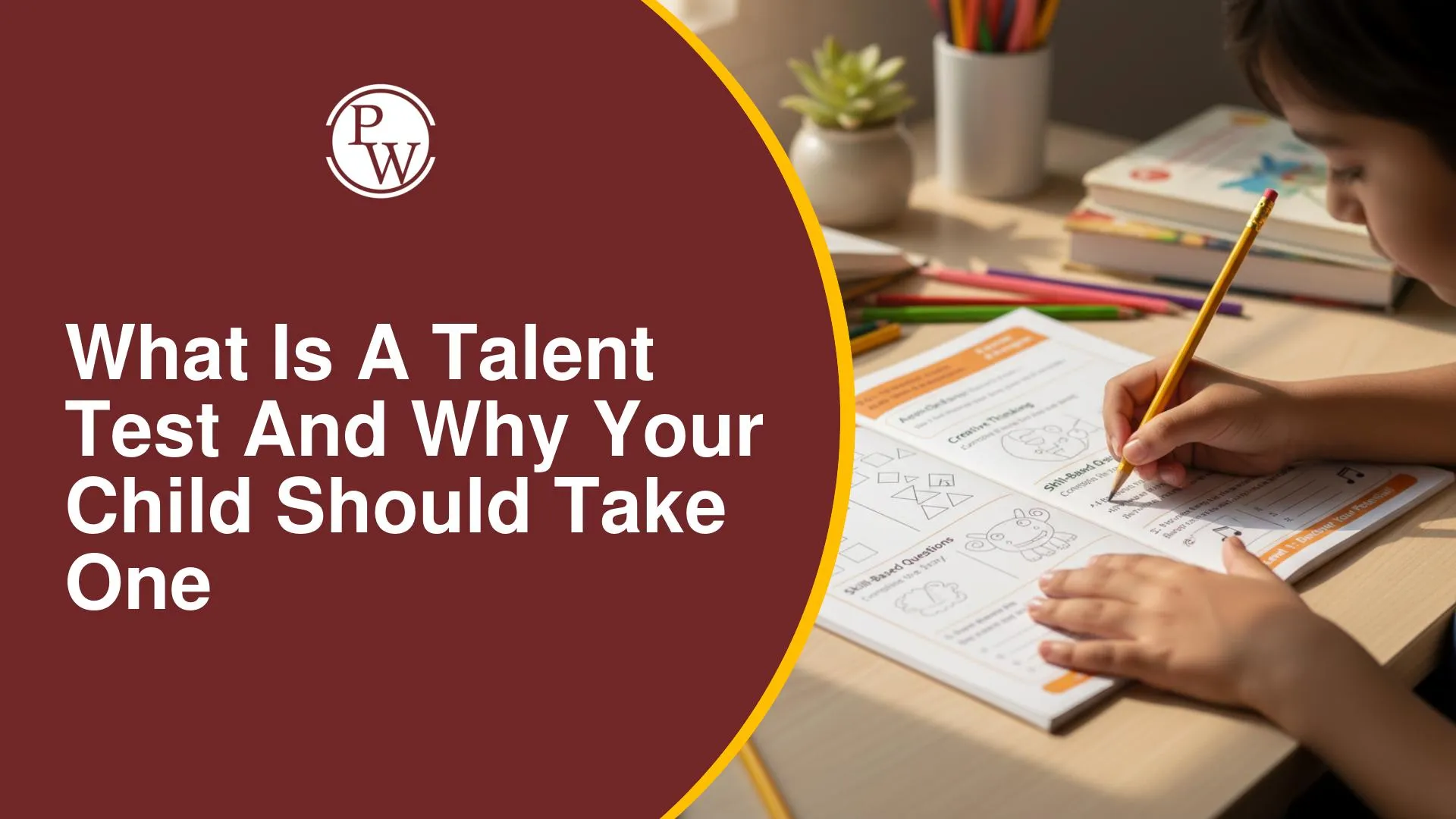
A talent test for kids can help parents understand how a child thinks, solves problems, and learns beyond what school marks may show. Unlike regular exams that mainly assess syllabus-based knowledge, talent tests focus on skills such as reasoning, aptitude, analytical thinking, and problem-solving.
For students in Classes 6–10, taking an aptitude test for students can provide useful insights into their strengths and areas that need improvement. It can also help parents make more informed decisions about a child's academic development and future learning path.
What Is a Talent Test?
A talent test is an assessment designed to identify a student's natural abilities, reasoning skills, learning potential, and areas of academic strength.
A school examination generally checks how well a student has understood and remembered the concepts taught in a particular syllabus. A child aptitude test, on the other hand, may include questions that require students to identify patterns, analyse information, solve unfamiliar problems, and apply logical thinking.
A talent assessment for children may evaluate areas such as:
-
Logical and analytical reasoning
-
Quantitative aptitude
-
Problem-solving ability
-
Verbal reasoning
-
Pattern recognition
-
Critical thinking
-
Conceptual understanding
-
Learning ability
The purpose is not simply to determine whether a child is good or bad at studies. Instead, a talent test can help identify how a child approaches different types of problems and where their strengths may lie.
What Skills Do Talent Tests Measure?
Children can demonstrate their abilities in different ways. Some may be strong in mathematics, while others may excel at logical reasoning, language, or solving unfamiliar problems.
A well-designed online talent test can assess several skills.
1. Logical Reasoning
Reasoning questions require students to identify relationships, sequences, patterns, or rules. These questions help assess how effectively a child can use logic to reach an answer.
2. Problem-Solving
Talent tests may present unfamiliar situations instead of directly asking questions from a textbook. This helps assess whether students can apply what they know to solve new problems.
3. Analytical Thinking
Analytical questions require students to break information into smaller parts, compare possibilities, and identify the most appropriate solution.
4. Quantitative Ability
Questions involving numbers, calculations, patterns, and mathematical relationships can help identify a student's numerical aptitude.
5. Verbal and Language Skills
Some assessments evaluate comprehension, vocabulary, relationships between words, and the ability to interpret information.
6. Learning Potential
Certain questions are designed to understand how quickly students can recognise patterns or apply a new concept. This can provide additional insight into their learning abilities.
Talent Test vs School Exam: What Is the Difference?
School exams and talent tests serve different purposes. Both can be useful, but they measure different aspects of a student's development.
|
Talent Test vs School Exam: What Is the Difference? |
|
|
School Exams |
Talent Tests |
|
Primarily based on the school curriculum |
May include questions beyond routine textbook exercises |
|
Assess subject knowledge and understanding |
Assess aptitude, reasoning, and problem-solving |
|
Usually linked to a specific syllabus |
Often focus on broader thinking abilities |
|
Marks reflect academic performance in subjects |
Results can highlight strengths and areas for development |
|
Help evaluate classroom learning |
Can provide additional insights for future learning |
A student who does well in school may benefit from a talent test to understand their broader aptitude. Similarly, a student whose school marks do not fully reflect their abilities may discover strengths through a different type of assessment.
Why Should Your Child Take a Talent Test?
A talent test for kids can be useful when it is treated as a tool for understanding a child's abilities rather than as another exam to compete in.
Identify Your Child's Strengths
One of the biggest advantages of a talent assessment is that it can help identify areas where a child naturally performs well.
For example, a student may demonstrate strong logical reasoning even if they do not consistently score the highest marks in school mathematics.
Understand Areas for Improvement
Assessment results can also highlight skills that require more practice. This gives students and parents a clearer starting point for improvement.
Instead of simply saying that a child needs to "study more," parents can identify specific areas such as numerical reasoning, comprehension, or problem-solving that need attention.
Build Better Learning Strategies
Not every student learns in the same way. Understanding a child's strengths can help parents and educators choose learning resources and activities that are more suitable for them.
Encourage Self-Discovery
A talent test can introduce students to different types of questions and challenges. This can encourage them to explore subjects and skills they may not have considered before.
Support Future Academic Planning
For students in Classes 6–10, there is still considerable time to explore different academic interests. An aptitude assessment can provide an additional input when families are thinking about future subjects, competitions, or academic pathways.
How Talent Tests Can Help Parents
Parents often use school marks as the primary measure of academic progress. While marks are important, they may not provide a complete picture of a child's abilities.
A talent assessment for children can give parents additional information about:
-
Areas where their child performs confidently
-
Skills that need further development
-
Reasoning and problem-solving abilities
-
Learning patterns
-
Areas that may benefit from additional challenges
-
Possible directions for future academic development
The results should be viewed as guidance rather than a fixed label. A child's interests and abilities can develop with learning, practice, exposure, and the right support.
How Talent Tests Support Future Planning
Classes 6–10 are an important period for building foundational skills. Students gradually encounter more complex concepts and begin making decisions about their academic interests.
A talent test can become one part of this process by helping families understand a student's current strengths.
For instance, a child with strong mathematical and logical reasoning may enjoy advanced problem-solving activities. Another student with strong verbal and analytical skills may benefit from activities involving reading, communication, research, or critical thinking.
The assessment does not determine a child's future career. Instead, it can provide useful information that students, parents, and educators can consider while planning the next stage of learning.
Common Misconceptions About Talent Tests
Talent tests are sometimes misunderstood as another form of academic examination. In reality, their purpose is to provide additional insights into a child's abilities, strengths, and learning potential.
"A talent test is only for exceptionally gifted children."
Not necessarily. Talent tests can be useful for students with different levels of ability. The goal is to understand strengths and areas for improvement.
"My child's school marks are enough."
School marks are valuable, but they mainly reflect performance within a particular curriculum and assessment system. A talent test can provide another perspective by assessing reasoning and aptitude.
"A low score means my child is not talented."
A single assessment cannot define a child's potential. Performance can be influenced by preparation, familiarity with the question format, concentration, and many other factors.
"Talent tests create unnecessary pressure."
They do not have to. When presented as an opportunity to discover strengths rather than as a competition, assessments can become a positive learning experience.
How PW Prodigy Uses Assessment to Understand Student Potential
Parents looking for a way to understand their child's abilities can explore PW Prodigy, which combines assessment, academic guidance, and personalised support.
The PW Prodigy approach begins with identifying a student's potential and understanding their learning needs. Its talent assessment can help provide insights beyond conventional school marks.
Based on these insights, students can receive guidance around academic development, while parents can gain a clearer understanding of their child's strengths and areas that may need attention.
The broader PW Prodigy ecosystem focuses on areas such as:
-
Talent and potential assessment
-
Foundation-level academic development
-
Olympiad and talent-hunt preparation
-
JEE and NEET foundation pathways
-
Mentorship and academic guidance
-
Parent progress tracking
-
Exposure to AI and innovation
This approach can help students build strong fundamentals while gradually developing analytical thinking, problem-solving ability, and confidence.
What Should Parents Look for in an Online Talent Test?
Before choosing an online talent test for their child, parents can consider a few factors:
Age-Appropriate Questions
The assessment should match the child's age and academic level while providing enough challenge to test reasoning and problem-solving.
Multiple Skill Areas
A useful assessment should not focus only on one subject. It should provide insights into different abilities wherever appropriate.
Clear Results
Parents should be able to understand what the assessment results mean and which areas the child can work on.
Guidance After Assessment
Assessment becomes more useful when students receive meaningful feedback or guidance instead of only a score or rank.
Positive Learning Environment
The test should encourage curiosity and learning rather than create unnecessary pressure around performance.
A talent test for kids can be a useful way to look beyond school marks and understand a child's aptitude, reasoning, problem-solving ability, and learning strengths. It should not be treated as a final judgment of a student's potential but as a tool for better understanding and guidance.
For parents, the insights from an aptitude test for students can support more informed academic decisions. For children, it can encourage self-discovery and help them recognise areas where they can continue to learn and grow.
With assessment, counselling, and personalised academic guidance, platforms such as PW Prodigy aim to help students identify their potential early and develop the skills needed for their future academic journey.
What Is a Talent Test and Why Your Child Should Take One FAQs
What is a talent test for kids?
At what age can children take a talent test?
What does an aptitude test for students measure?
How is a talent test different from a school exam?






Get Free Counselling Today
and Clear up all your Doubts
 Live & recorded classes available at easeDashboard for progress trackingLakhs of practice questions

