



AI Skills Roadmap for Beginners: What to Learn Before Moving to Advanced AI


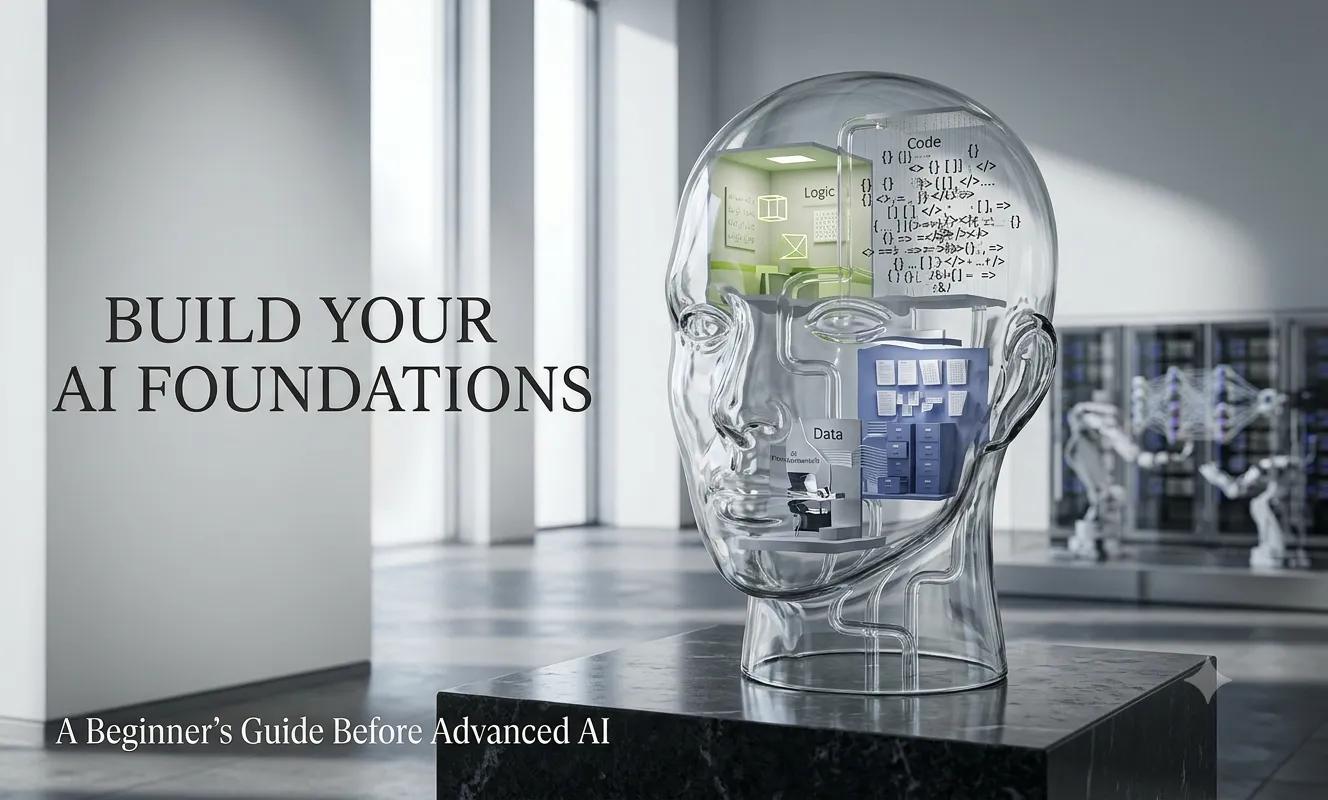
Fewer than 1 in 100 workers will need advanced AI skills, according to the OECD. That finding changes how a beginner should think about learning AI. Programming and model development count as advanced AI, and they will matter to only a small group.
For everyone else, the skills that count are more ordinary. The OECD points to digital skills and the ability to use, analyse and interpret data, along with managerial and human skills such as problem-solving, creativity and innovation, which it says remain essential.
So where should a beginner start? Before moving to anything advanced, the evidence points to three groups of skills: digital skills, data skills, and human and managerial skills.
Around 40 percent of employers in manufacturing and finance that have not yet adopted AI say a lack of skills is the main reason.
Why Start With the Basics Instead of Advanced AI?
Most jobs need people who can work with AI, not people who build it.
AI is raising the skills bar, but not only in technical directions. In manufacturing and finance, more than half of employers that have adopted AI say it has increased the need for highly educated workers. Employment has also grown fastest in the roles most exposed to AI, where AI tends to complement rather than replace employees and increases demand for high-level skills.
That is why a beginner's first goal is not to chase advanced techniques. It is to be useful in a job where AI is already part of the work.
Employment has grown fastest in the roles most exposed to AI, where AI tends to complement rather than replace employees.
Ready to turn your interest in generative AI into practical skills? Get started with PW Skills’ Gen AI Engineering Course and learn to build AI-powered solutions.
Which Skills Should Come First?
Digital skills and the ability to work with data.
The OECD says AI is increasing the importance of digital skills and the ability to use, analyse and interpret data. In a survey of SMEs, generative AI had made data analysis and interpretation skills more important. The skill groups it identifies, with the order of learning being our suggestion:
|
Skill group |
What the OECD says |
|---|---|
|
Digital skills |
Increasing in importance as AI spreads |
|
Data skills |
The ability to use, analyse and interpret data is becoming more important |
|
Managerial and human skills |
Problem-solving, creativity and innovation remain essential |
|
Advanced AI skills |
Needed by fewer than 1% of workers (programming, model development) |
AI is increasing the importance of digital skills and the ability to use, analyse and interpret data.
Tip: Practise reading and questioning data before you study how AI models work. The ability to interpret results is what most jobs ask for.
Do Human Skills Still Matter?
Problem-solving, creativity and innovation remain essential.
Managerial skills and human skills stay important alongside the technical ones. There are early signals that some social skills could be affected. In Germany, France, Italy and Spain, managers are more likely to believe that algorithmic management tools reduce their need for empathy than increase it. The OECD stresses that it is too early to draw firm conclusions and the signals should be interpreted with caution, but it says they are a reason to monitor how AI reshapes the human side of work.
In Germany, France, Italy and Spain, 20 percent of managers say algorithmic management reduces their need for empathy, while 12 percent say it increases it.
Want to make better decisions with data? Strengthen your analytical skills with PW Skills’ Data Analytics With AI Course.
Can AI Itself Help Fill Skill Gaps?
Using AI is becoming part of the skill set.
Nearly two in five SMEs report having faced a worker shortage in the past two years, and a third report a lack of skills or experience among staff. Generative AI is helping them manage it: a quarter of SMEs say it helps compensate for a worker shortage. SMEs in Japan are the most likely to say generative AI helps compensate for labour and skill shortages.
Nearly 40 percent of SMEs that experienced a skills gap say generative AI helps compensate for it.
Does Training Actually Pay Off?
Employer-funded training is the dominant response, and it works.
Many firms are investing in retraining and upskilling their existing workforce. The OECD finds that workers who receive training are more likely to report positive outcomes from AI, including better job performance and improved working conditions. It calls for lifelong training and reskilling, with shared responsibility among employers, workers and governments, and for wider access for SMEs and workers at risk of falling behind.
More than half of workers using AI report receiving employer-funded training, and trained workers are more likely to report positive outcomes.
Tip: Before paying for a course, find out whether your employer offers AI training. More than half of AI users already receive it.
Key Takeaways
-
Fewer than 1 percent of workers will need advanced AI-specific skills such as programming or model development.
-
Most workers need digital skills and the ability to use, analyse and interpret data.
-
Managerial skills and human skills such as problem-solving, creativity and innovation remain essential.
-
Around 40 percent of employers in manufacturing and finance that have not adopted AI cite skills as the main reason.
-
Nearly 40 percent of SMEs with a skills gap say generative AI helps them compensate.
-
More than half of AI-using workers receive employer-funded training, and trained workers report better outcomes.
So, What Should Beginners Learn Before Moving to Advanced AI?
Digital skills, data skills and human skills, in that order of emphasis. The evidence shows that very few workers need advanced AI skills, while most need to use AI and interpret what it produces. Training pays off, and the OECD says it should be an ongoing effort shared among employers, workers and governments.
One caution: the OECD notes that data to inform policy often lag behind the labour market, and the most recent data in the brief date from late 2024. The direction is clear, but the exact skills needed will keep changing.
For most workers, the path to AI runs through digital skills, data skills and human skills, not through model development.
Take your coding skills further by combining full-stack development with AI. Build practical expertise through PW Skills’ Full Stack Development with AI programme.