







AWS Adds GPT-6 Sol and Luna to Bedrock, Bringing New AI Capabilities to Developers

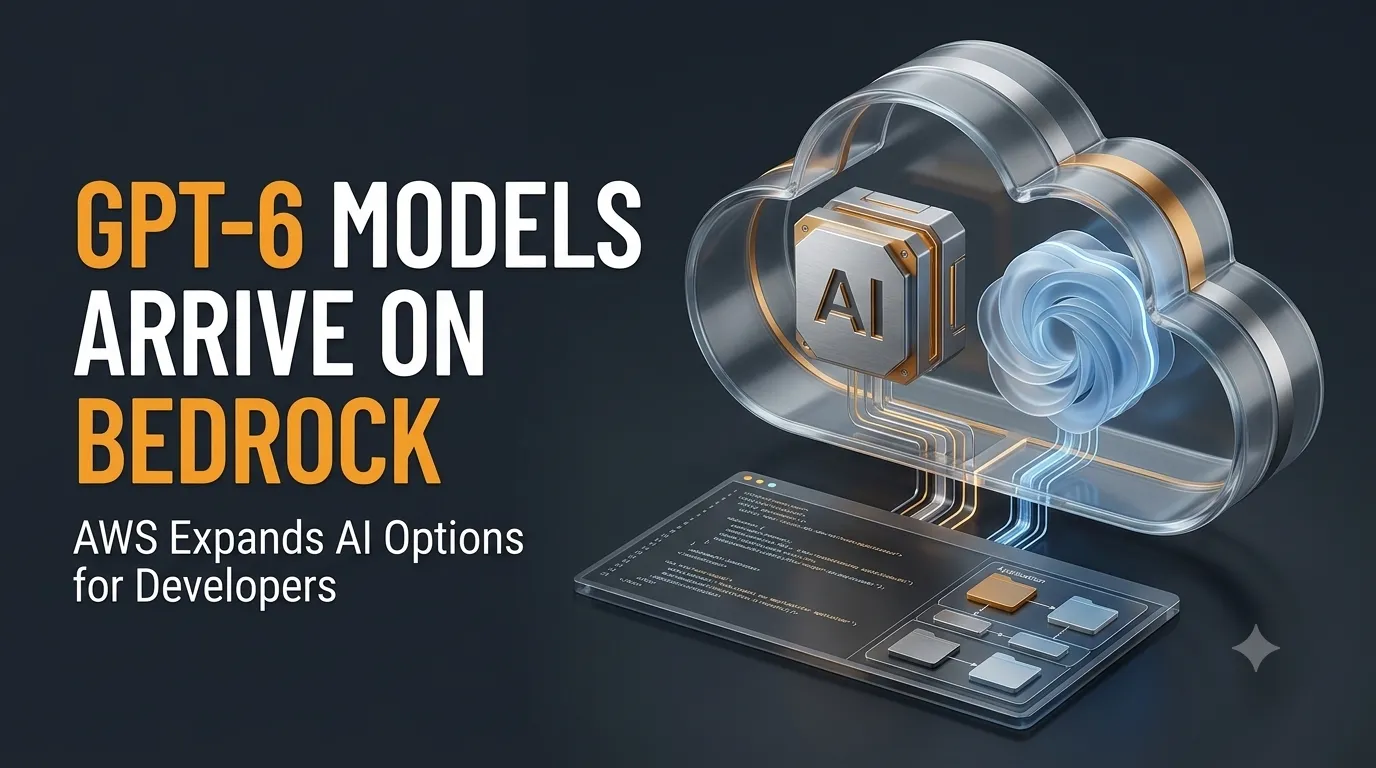
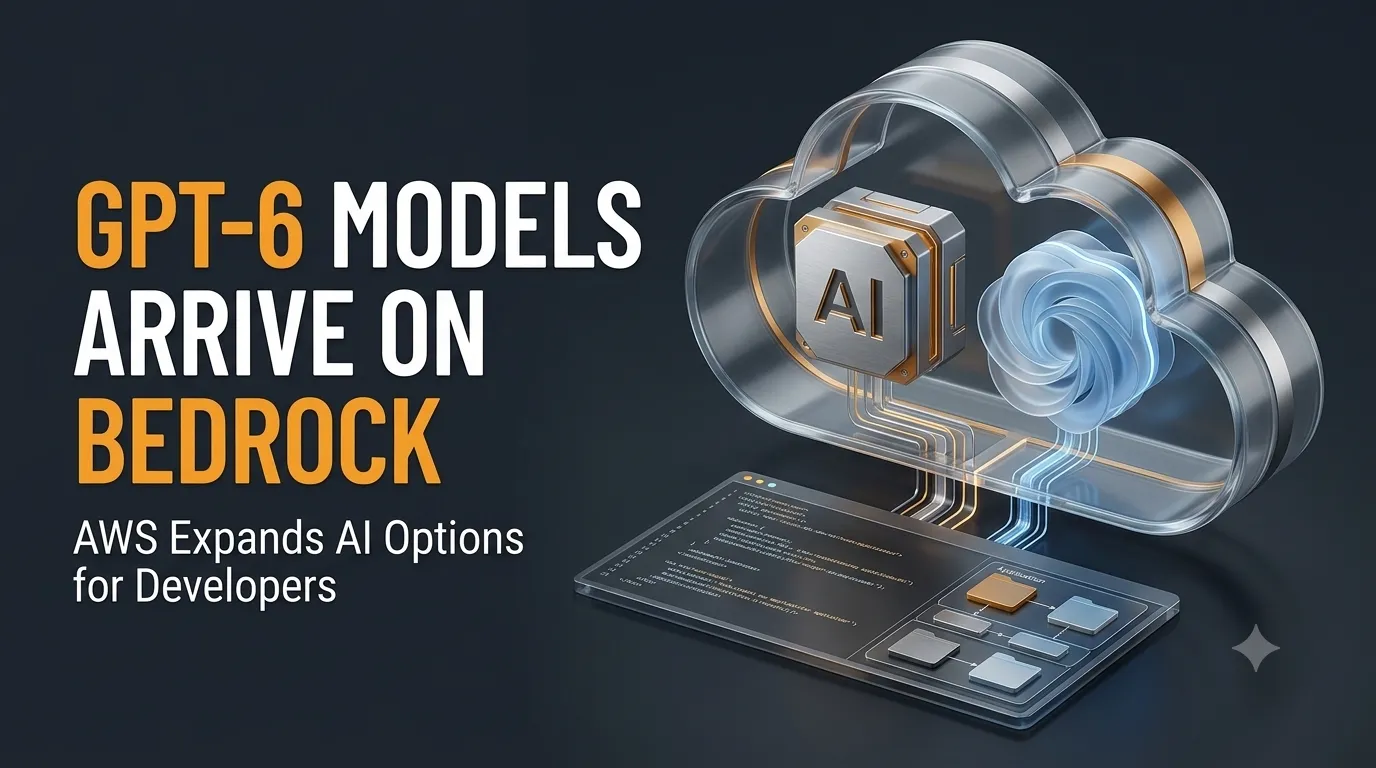
Amazon Web Services (AWS) has announced the general availability of OpenAI’s GPT-6 Sol and GPT-6 Luna on Amazon Bedrock. The two models expand the GPT-6 family on Bedrock, joining GPT-6 Astra and giving developers more options for different AI workloads.
The announcement was made on September 22, 2026. AWS says the new models are designed to help teams balance intelligence, speed and cost across different applications.
GPT-6 Sol Is Designed for Complex Tasks
GPT-6 Sol is positioned as the model for recurring, complex tasks, particularly software development and workflows that require multiple steps.
According to AWS, GPT-6 Sol can be used to:
-
Implement software features
-
Debug issues
-
Review and refactor code
-
Analyse data
-
Complete multi-step workflows across tools
AWS also highlights improvements in coding and computer use, allowing the model to handle tasks from investigation through validation.
“On an internal OpenAI factuality evaluation cited by AWS, GPT-6 Sol made roughly half as many mistakes as GPT-5.6 Sol.”
The development-focused capabilities of the model also highlight the growing relevance of skills in AI engineering, software development and LLM applications. Building a strong foundation in AI engineering skills can help learners work with the technologies powering modern AI applications.
GPT-6 Luna Targets High-Volume AI Workloads
GPT-6 Luna is designed for focused, repeatable tasks that need to be handled efficiently at high volumes. Rather than being positioned for complex, multi-step workflows, AWS describes Luna as a model suited to everyday AI tasks where speed, consistency and cost can matter.
AWS lists use cases such as:
-
Summarisation
-
Information extraction
-
Classification
-
Request routing
“Luna also offers adjustable reasoning effort, giving developers more control over how much reasoning a task requires.”
This allows them to balance response quality, speed and cost based on the needs of a particular application.
Both Models Support Up to 1 Million Tokens of Context
“A notable capability shared by GPT-6 Sol and GPT-6 Luna is support for up to 1 million tokens of context.”
This gives developers the ability to provide large amounts of information within a single interaction, which can be useful when applications need to work with extensive documents, codebases or other large bodies of information.
Both models are also available through Amazon Bedrock’s inference engine, which AWS says is designed to provide the performance, security and scale required for production workloads. Developers can access the models through the Amazon Bedrock console or supported APIs.
GPT-6 Sol and Luna Are Available on Amazon Bedrock
“Developers can now access GPT-6 Sol and GPT-6 Luna through the Amazon Bedrock console or supported Amazon Bedrock APIs.”
This makes both models available for integration into applications and workflows built on AWS. Developers can choose between the two models based on the type of task, with Sol positioned for more complex work and Luna designed for focused, high-volume workloads.
AWS has also highlighted controls for securing workloads, managing access and auditing model invocation activity. These controls are part of the Amazon Bedrock environment and are intended to support organisations deploying generative AI models in production.
For developers working across AI and cloud technologies, understanding how models are integrated into cloud environments is becoming increasingly relevant. Skills in cloud computing and AI application development can provide a useful foundation for working with these technologies.
What GPT-6 Sol and Luna Mean for AI Development
The addition of GPT-6 Sol and GPT-6 Luna to Amazon Bedrock shows how generative AI is becoming increasingly integrated into software development, data workflows and production applications. As these capabilities become part of cloud-based development environments, knowledge of generative AI, programming and cloud computing can help developers understand how AI models are integrated, deployed and used in real-world applications.




Get Free Counselling Today
and Clear up all your Doubts
 Live & recorded classes available at easeDashboard for progress trackingLakhs of practice questions


