







SEBI Launches Demat 2.0 Pilot for Tokenised Corporate Bonds

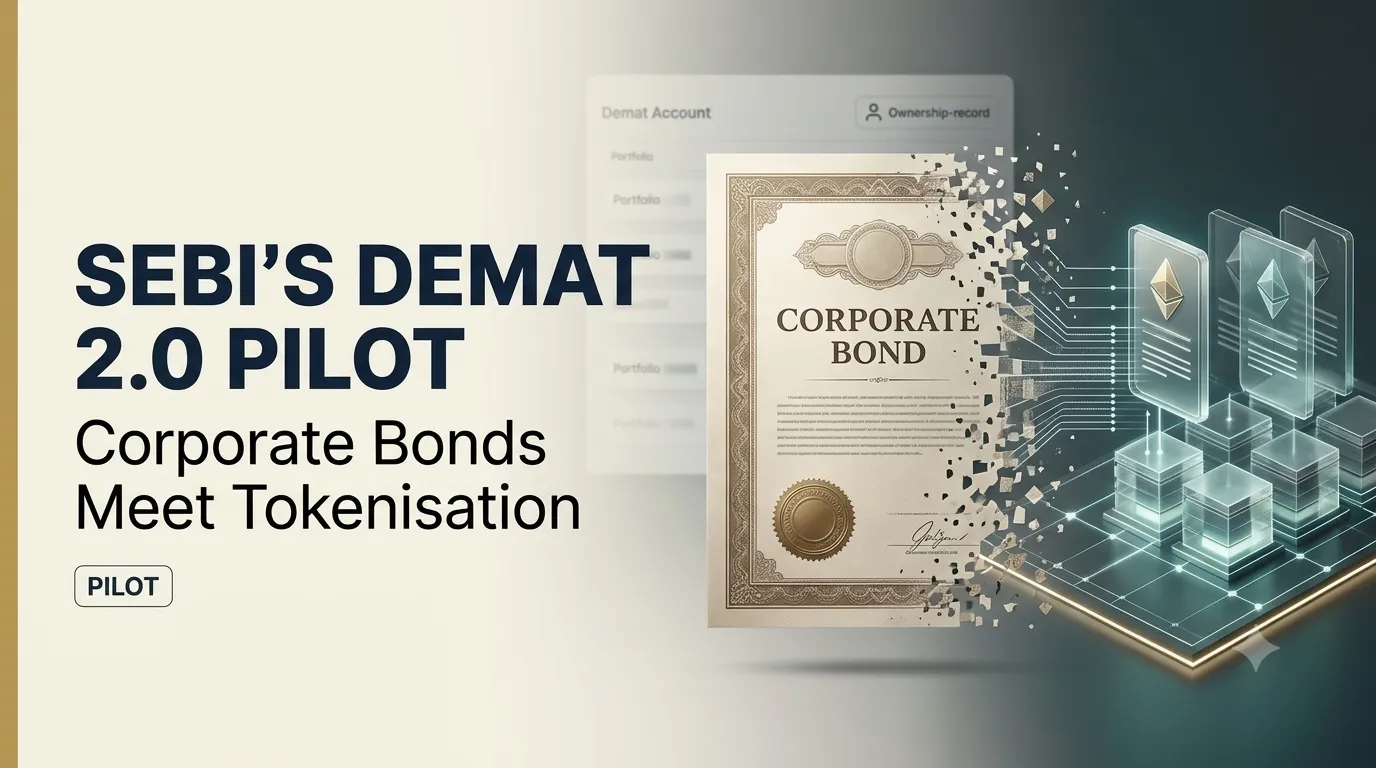
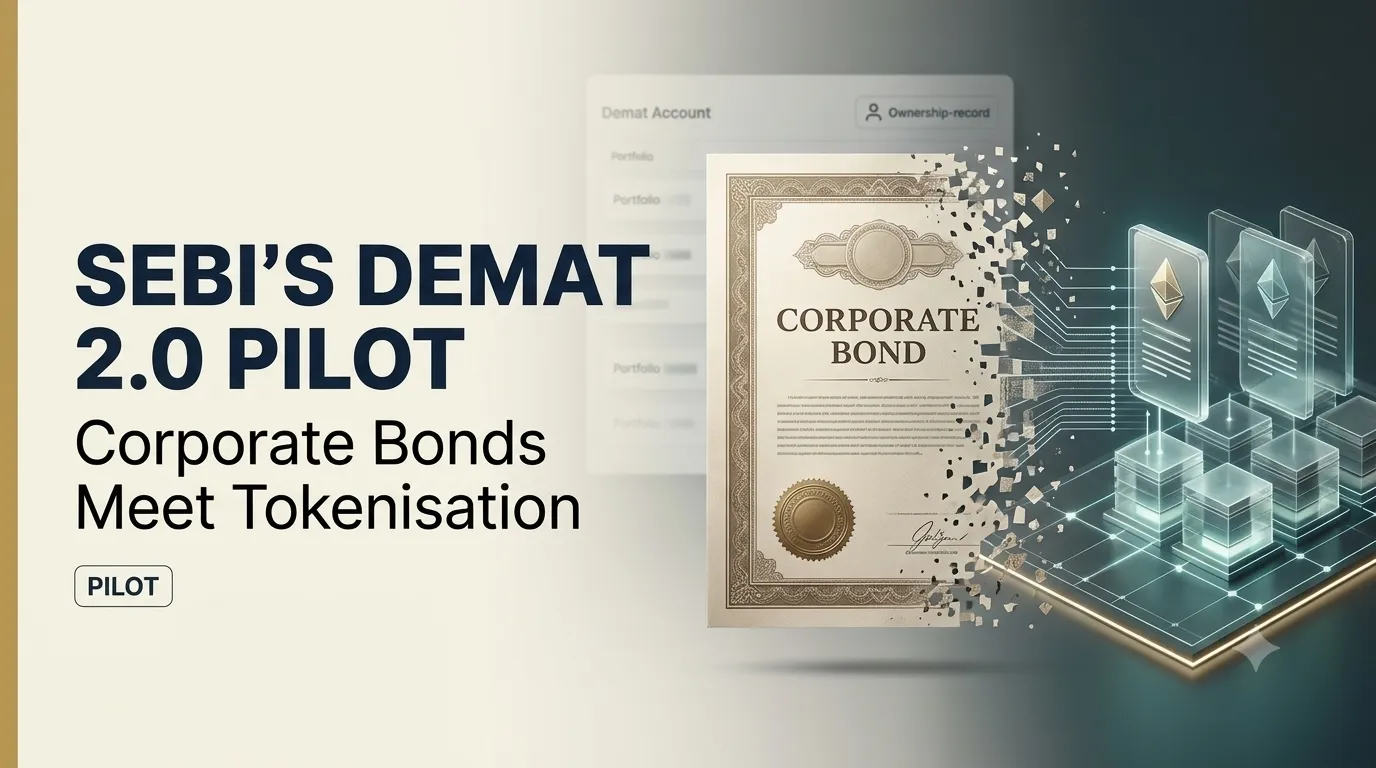
The Securities and Exchange Board of India (SEBI) has launched Demat 2.0, a pilot project to test the issuance, holding, trading and settlement of corporate bonds in tokenised form using Distributed Ledger Technology (DLT).
Under the pilot, a corporate bond is issued as a native digital token on a private, permissioned DLT network operated by market infrastructure institutions. SEBI says the technology changes how ownership, transfers and settlement are recorded, without changing the legal character or regulatory treatment of the bond.
What Exactly Changes With Demat 2.0?
Demat 2.0 is designed as a next step in the dematerialisation of securities. Instead of maintaining ownership through a conventional database architecture, the corporate bond becomes a digital token on the DLT network.
The token retains the same ISIN, coupon, maturity, covenants, rating, security and investor rights as the corresponding conventional dematerialised bond. Key terms such as coupon rates, payment dates and redemption conditions can also be encoded through smart contracts.
SEBI says tokenisation does not create a new asset class; the tokenised bond retains the same ISIN and core terms as the conventional dematerialised bond.
The model puts greater emphasis on digital systems and programming infrastructure for recording ownership and executing predefined instructions while keeping the underlying security unchanged.
How Will Investors Buy and Hold Tokenised Bonds?
Issuance will continue through the existing Electronic Bidding Platform (EBP) of stock exchanges. Bidding, modification, cancellation and allotment processes remain unchanged under the pilot.
After allotment, the securities are credited directly to the investor's Demat 2.0 account, which is an extension of the existing demat account rather than a separate account. Existing KYC information can also be used.
Investors do not need specialised DLT infrastructure or to independently manage cryptographic keys, as the depositories will manage the private keys on their behalf.
This keeps the process within the existing framework for securities markets and investment operations, even as the underlying settlement technology changes.
Why Is CBDC Part of SEBI’s New Settlement Model?
The pilot links the tokenised securities infrastructure with the RBI's e₹ pilot for the funds leg of transactions. Investors participating in the pilot use a CBDC wallet opened through their own bank.
The securities and CBDC legs are linked through DLT to enable atomic Delivery-versus-Payment (DvP). This means the bond transfer and payment occur as one linked transaction: if one leg fails, the other does not settle.
SEBI's model links the securities and payment legs so that both settle together or neither settles, removing the conventional interval between delivery and payment.
The integration also creates a more technology-driven settlement environment, where digital financial processes can work alongside regulated securities infrastructure.
Will Demat 2.0 Create a New Market for Tokenised Bonds?
Not initially. SEBI's FAQ says the pilot will not create a separate tokenised exchange or segregated market segment.
Existing RFQ and OTC reporting platforms of stock exchanges will remain part of the market structure. These channels will handle price discovery, order processing and reporting, while the DLT infrastructure will integrate the securities and funds settlement legs.
The pilot also keeps existing requirements covering credit ratings, debenture trustees, listing, disclosures, investment eligibility and investor protection. Tokenisation by itself does not create a separate credit-rating requirement.
Smart Contracts Could Automate Bond Servicing
Another part of Demat 2.0 is the use of smart contracts for scheduled corporate actions.
Coupon payments, redemptions and other scheduled actions can be executed automatically based on holdings recorded on the ledger on the relevant record date. SEBI says the model is intended to reduce repeated manual instructions and reconciliation between institutions.
SEBI’s Three-Stage Plan Moves From Issuance to Trading
SEBI has proposed a three-stage rollout for the pilot:
-
Stage I: Tokenised corporate bond issuance through EBP integration, with asset servicing on the ledger and participation initially expected to be institutional.
-
Stage II: Secondary-market trading, with access extended to retail participants. An interim peer-to-peer or demat-to-demat transfer mechanism may operate before this stage.
-
Stage III: Potential expansion to credit rating agencies, depository participants and other regulated entities, along with consideration of additional instruments and corporate actions.
The proposed rollout moves through three stages, beginning with institutional issuance before adding secondary-market trading and potentially expanding the network to other regulated entities.
What Will SEBI Measure Before Expanding Demat 2.0?
Demat 2.0 is being conducted under SEBI's Regulatory Sandbox, allowing the regulator to test the architecture and operational arrangements before considering a broader regulatory framework.
The pilot will examine:
-
Tokenised corporate bond issuance and holding
-
Integration with existing EBP, RFQ and OTC infrastructure
-
Atomic DvP using CBDC
-
Smart-contract-based servicing
-
Regulatory controls and restrictions
-
Cybersecurity, scalability, resilience and auditability
-
Clearing and settlement implications
SEBI says the pilot will also examine whether tokenisation can reduce settlement-related counterparty exposure, lower manual intervention and reconciliation, improve auditability and traceability, and integrate securities settlement more closely with central-bank money.
The initiative therefore focuses on testing how tokenised securities can operate within India's existing regulated market infrastructure rather than creating a separate market for digital bonds.




Get Free Counselling Today
and Clear up all your Doubts
 Live & recorded classes available at easeDashboard for progress trackingLakhs of practice questions


