
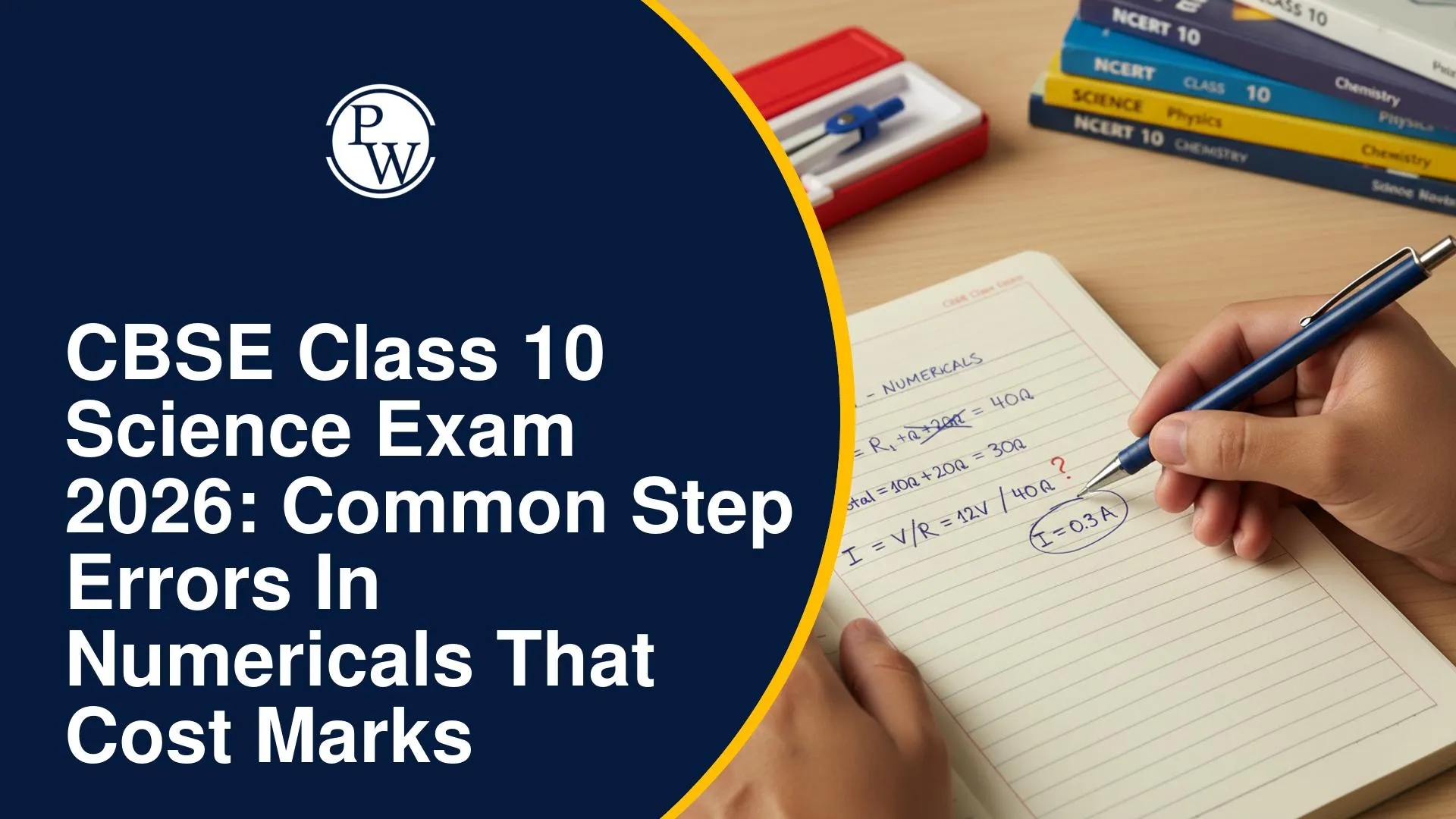
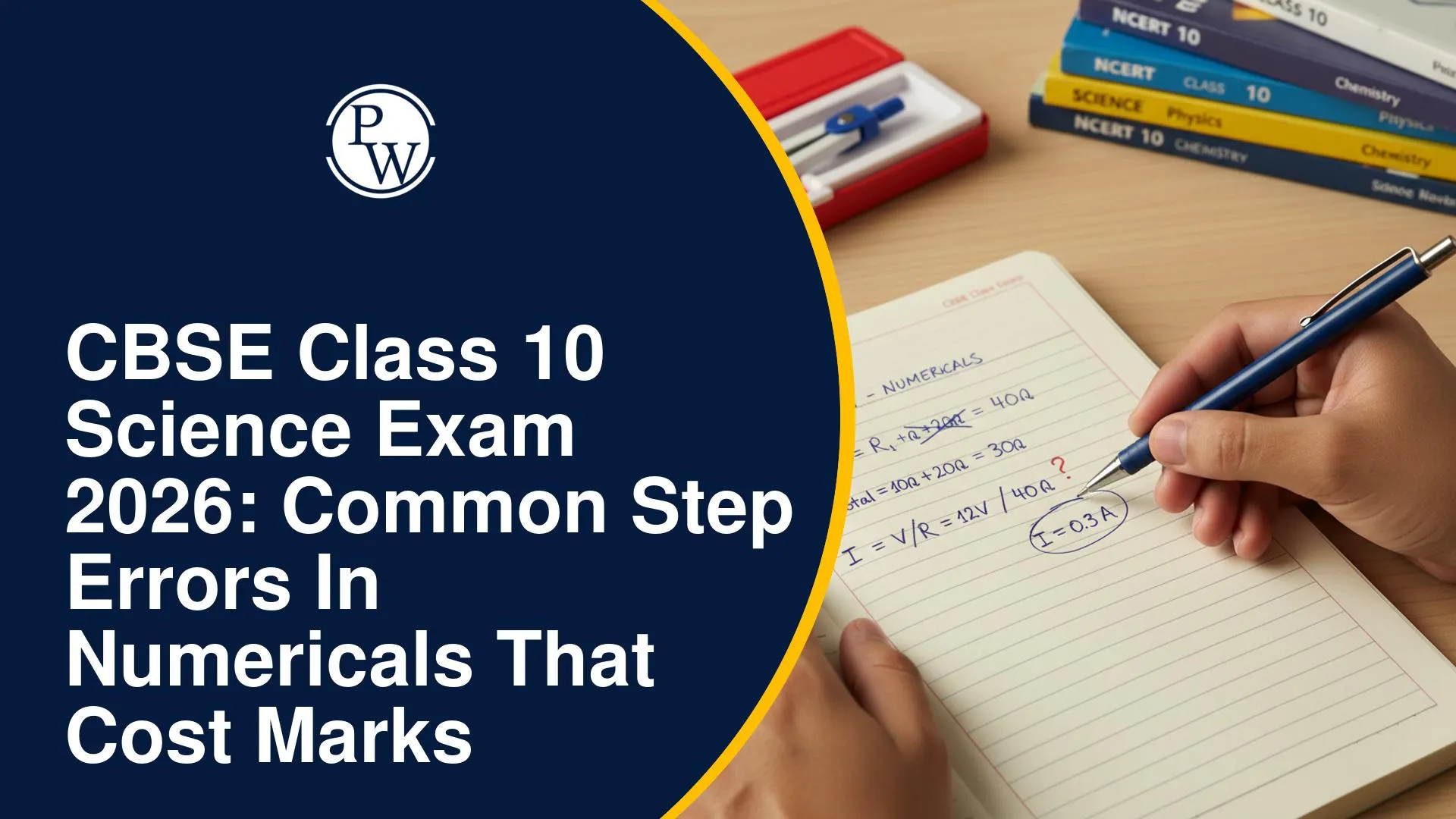
The CBSE Class 10 Science Exam 2026 is scheduled for Wednesday, February 25, 2026. For many students, the numerical sections in Physics (Light, Electricity) and Chemistry (Chemical Reactions, Mole Concept) are where the most marks are lost—not because of a lack of knowledge, but due to avoidable "step errors."
According to the latest board marking schemes, marks are awarded for every correct step, meaning even a wrong final answer doesn't result in zero marks if the process is documented correctly.
Why Step-Wise Marking Matters in CBSE 2026?
In the upcoming 2026 board exams, the focus remains on competency-based education. This means the examiner is more interested in your logical flow than just the final digit. Skipping steps or failing to show "Given" data can lead to a significant deduction, even if your mental math is perfect.
Common Step-Wise Errors in CBSE Class 10 Science Numericals
To secure a high score, students must be vigilant about the following common pitfalls:
1. Neglecting SI Unit Conversions
One of the most frequent errors is using values directly from the question without checking their units. For instance, in Electricity, if time is given in minutes, it must be converted to seconds for standard formulas.
-
The Error: Using power in Watts and time in minutes to calculate energy in Joules without conversion.
-
The Fix: Always write the 'Given' data first and convert all units to SI (Standard International) units before starting the calculation.
2. Incorrect Sign Conventions (Physics)
In the 'Light - Reflection and Refraction' chapter, sign conventions for mirrors and lenses are critical.
-
The Error: Assigning a positive value to the focal length of a concave mirror or object distance (u).
-
The Fix: Remember that u is always negative, and use the New Cartesian Sign Convention strictly for every step of the mirror or lens formula.
3. Missing Intermediate Formulas
CBSE examiners look for the explicit mention of the formula used. Jumping directly to substituting numbers can lead to a deduction in "Step Marks."
-
The Error: Directly writing 1/v − 1/(−10) = 1/5 without first stating 1/f = 1/v − 1/u.
-
The Fix: Start every numerical by writing the standard formula in its algebraic form before plugging in the values.
4. Calculation Blunders in the Final Step
Often, students perform the complex physics reasoning correctly but fail at simple cross-multiplication or division at the very end.
-
The Error: Calculating the reciprocal of 1/v incorrectly or forgetting to take the reciprocal at all in lens/mirror/resistance problems.
-
The Fix: Double-check the final division and ensure the answer includes the correct unit (e.g., Ω (Omega symbol) for resistance, cm for distance).
Strategic Tips for the Feb 25, 2026 Exam
To ensure your paper is factually accurate and structured for maximum marks:
-
The "Given-To Find-Formula" Method: List what you know, what you need, and the formula that connects them.
-
Highlight the Final Answer: Box your final answer with the correct unit to make it easy for the examiner to spot.
-
Show Your Rough Work: Keep your rough work organized on the side of the page so you can quickly re-check your calculations if you have time at the end.