CBSE Class 12 Chemistry Board Exam 2026: Student Reactions and Paper Analysis

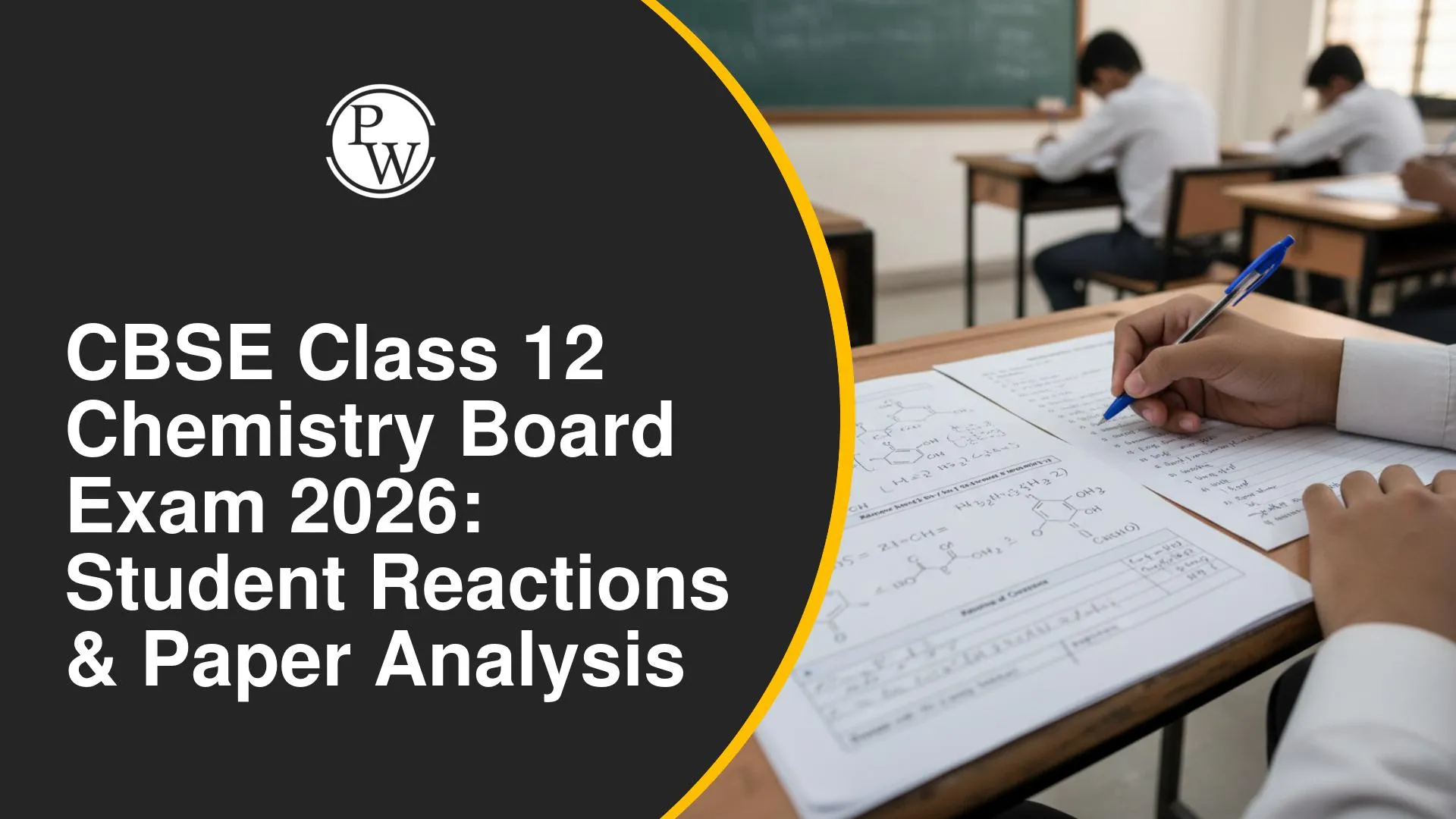
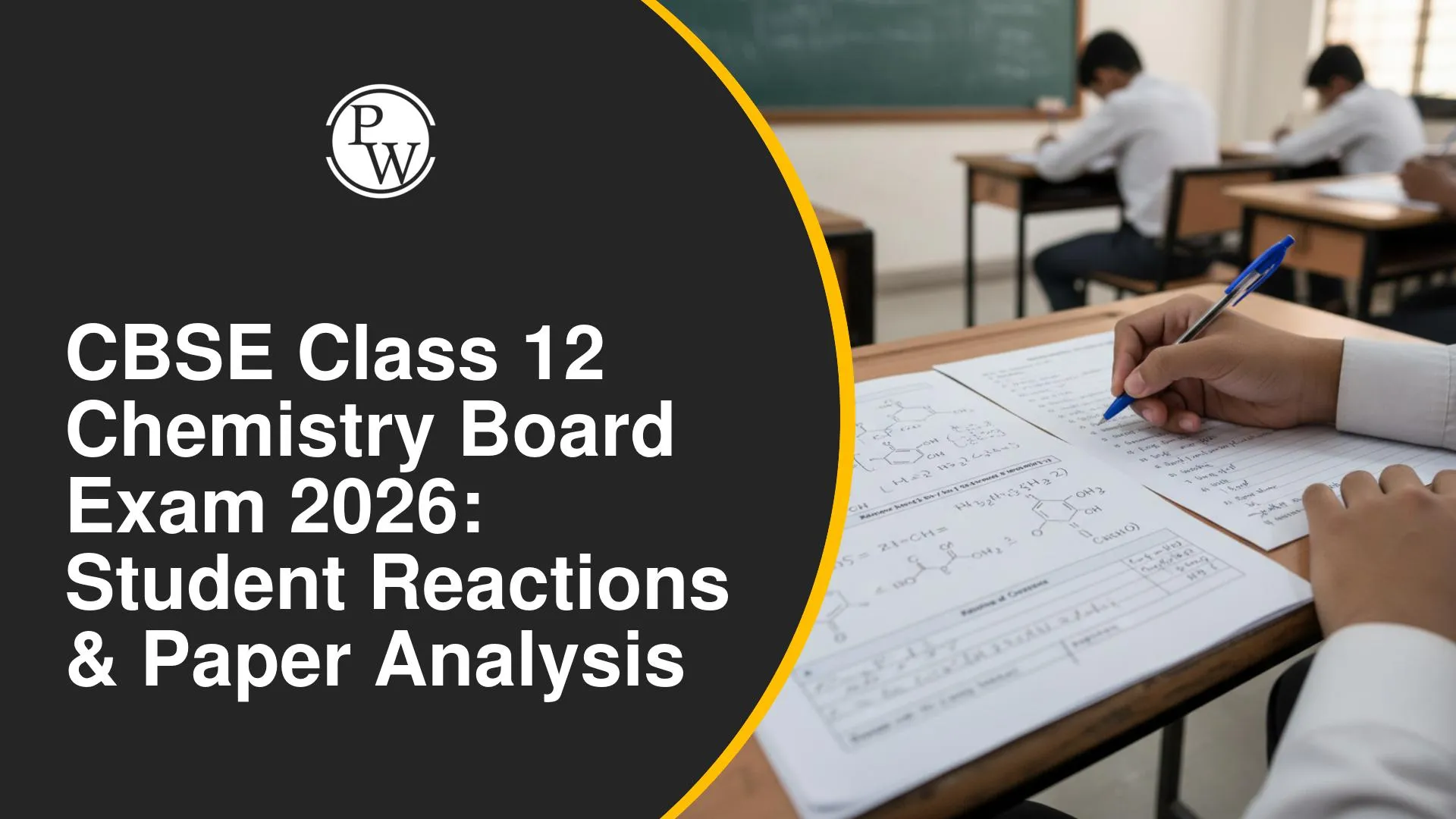
The Central Board of Secondary Education (CBSE) conducted the Class 12 Chemistry Board Exam 2026 on 28 February across India in the morning shift. Now that the exam has concluded, students have shared their reactions, describing the paper as balanced overall but slightly lengthy in certain sections.
According to early feedback, the CBSE Class 12 Chemistry Board Exam 2026 strictly followed the NCERT syllabus while focusing on conceptual clarity, application-based questions, and numerical problem-solving skills.
CBSE Class 12 Chemistry Board Exam 2026 Review Based on Student Feedback
The CBSE Class 12 Chemistry Board Exam 2026 was conducted on Saturday from 10:30 AM to 1:30 PM at around 7,574 centres nationwide. Students were required to reach examination centres before 10:00 AM and were given 15 minutes to read the question paper before starting. The theory paper carried 70 marks, while 30 marks were allotted for internal assessment.
Many students felt that:
-
The paper was strictly NCERT-based
-
Organic Chemistry was comparatively easy
-
MCQs were direct and concept-driven
-
Physical Chemistry numericals required careful calculations
-
Time management was important due to the slightly lengthy nature of the paper
Unlike some previous years, the CBSE Class 12 Chemistry Board Exam 2026 focused more on conceptual application and step-by-step problem-solving rather than purely memory-based answers.
CBSE Class 12 Chemistry Board Exam 2026 Difficulty Level: Easy, Moderate or Tough?
The overall difficulty level of the CBSE Class 12 Chemistry Board Exam 2026 was rated moderate by most students, with some describing it as moderately easy.
Key Observations from Students
-
Organic Chemistry reactions and conversions were straightforward
-
MCQs were based directly on NCERT lines
-
Physical Chemistry numericals were slightly tricky
-
Short subjective questions were manageable
-
Paper felt slightly lengthy for some students
Section-Wise Analysis of CBSE Class 12 Chemistry Board Exam 2026
The CBSE Class 12 Chemistry Board Exam 2026 included MCQs (Section A), short-answer questions, long-answer questions, and case-study-based questions. Here are the important topics highlighted in the paper:
|
Section-Wise Analysis of CBSE Class 12 Chemistry Board Exam 2026 |
||
|
Topic / Section |
Student Feedback |
Difficulty Level |
|
Overall |
Balanced and based on NCERT |
Moderate |
|
Physical Chemistry |
Numerical-heavy; required accurate formula application and step-by-step calculations (Electrochemistry, Chemical Kinetics) |
Moderate |
|
Organic Chemistry |
Direct reactions, named reactions, and conversions; largely NCERT-based |
Easy to Moderate |
|
Inorganic Chemistry |
Concept-based reasoning and NCERT line-based questions |
Easy to Moderate |
|
MCQs (Section A) |
Concept-driven; tested clarity of basics |
Moderately Tricky |
|
Case-Study Questions |
Application-based but syllabus-aligned |
Easy to Moderate |
Many students pointed out that Physical Chemistry consumed more time due to calculations, especially in topics like Electrochemistry and Chemical Kinetics. Organic Chemistry, on the other hand, was considered scoring for students who revised NCERT thoroughly.
Time Management in CBSE Class 12 Chemistry Board Exam 2026
While the paper was manageable overall, some students felt it was slightly lengthy. Numericals required step-by-step working, which consumed additional time. However, most well-prepared students were able to complete the paper within the three-hour duration.
Student Reactions Outside Exam Centres
After the exam concluded, reactions were largely positive.
Common feedback included:
-
“Organic Chemistry was easy and scoring.”
-
“Numericals needed careful calculation.”
-
“The paper was balanced and fully NCERT-based.”
-
“It was slightly lengthy but manageable.”
Overall, the CBSE Class 12 Chemistry Board Exam 2026 was not considered extremely tough. Students who focused on NCERT, practised numericals, and managed their time effectively found the paper comfortable and fair.
CBSE Class 12 Chemistry Board Exam 2026 Student Reactions and Paper Analysis FAQs
What was the difficulty level of the CBSE Class 12 Chemistry Board Exam 2026?
Was the Chemistry paper strictly based on NCERT?
Which section was the toughest in the 12th Chemistry exam 2026?
Was Organic Chemistry easy in CBSE Class 12 Chemistry 2026?